The Stone Sentinel: A Battle for the Foundation of Home in a Plastic Subdivision of Taupe
CHAPTER 1: The Weight of Granite
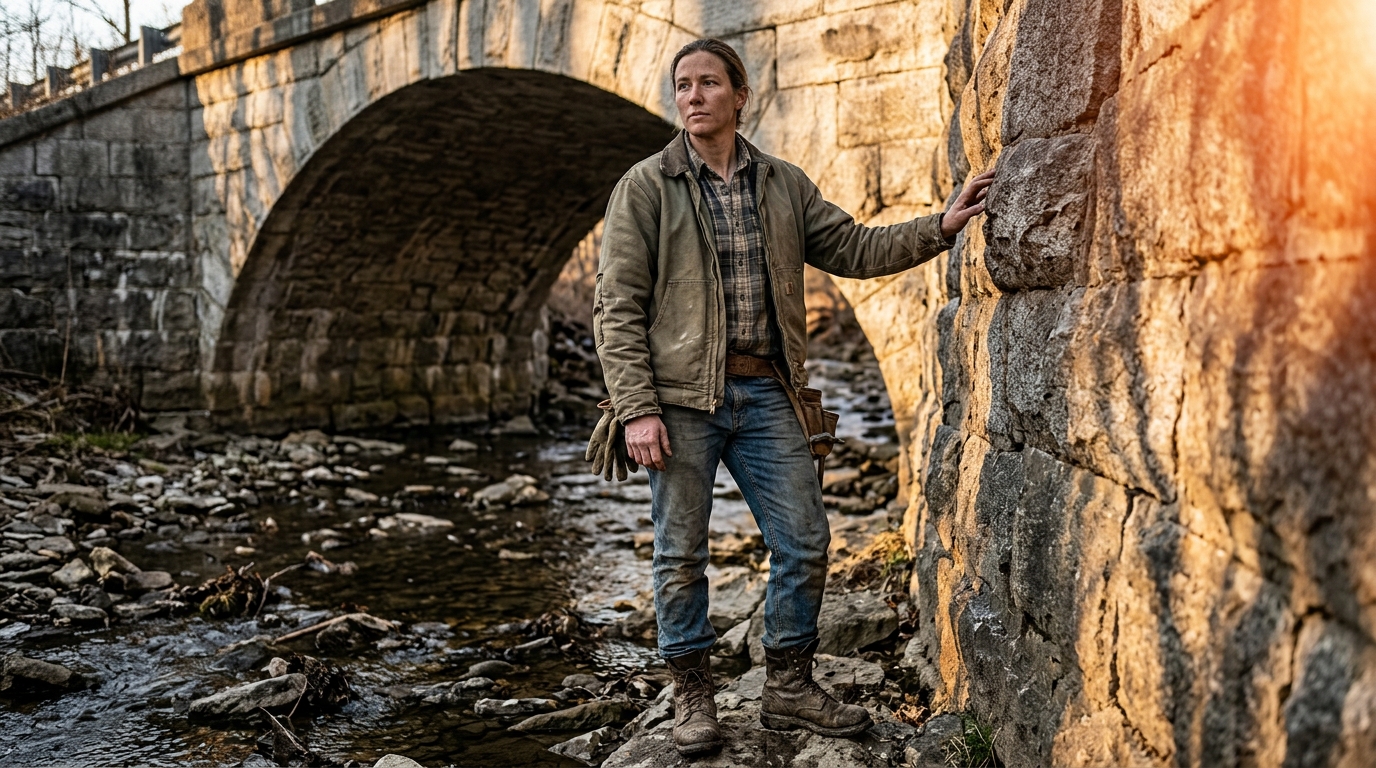
The vibration of Karen’s heels against the pavement faded, leaving behind a silence that felt heavier than the three tons of stone I had spent three months stacking by hand. I stood on the bridge, my shadow cast long and jagged across the creek bed, watching the late afternoon sun bleed orange against the limestone. My hands, calloused and mapped with faint white scars of labor, still held the phantom weight of the mortar trowel.
I was a man who understood load-bearing limits. I had designed fortifications that could absorb artillery shells and bridges that held the weight of convoys, yet I felt a hairline fracture running through my chest. This bridge was never meant to be a political statement. It was a promise to Elellena, a physical manifestation of a grief I didn’t know how to articulate in words. It was meant to be the place where we sat and watched the water, a bridge that went nowhere, a sanctuary in the middle of a neighborhood that bled taupe and beige.
I looked down at the keystone. It was solid, locked into place by gravity and the perfect, calculated geometry of the arch. Karen’s threat to bulldoze it wasn’t just an administrative annoyance; it was an assault on the only piece of my life that still felt honest. She called it a liability. I called it a testament.
A faint breeze shifted, carrying the sickly-sweet scent of her cheap perfume. It was an intrusion, a foreign element that didn’t belong in the clean, metallic scent of wet granite. I wiped my hands on my jeans, the dust—ground down from the stones themselves—coating my skin like a second layer.
I didn’t panic. Panic was for people who didn’t understand the physics of a threat. I knelt, running my hand along the abutment. My foundation was set deep below the frost line. The lateral thrust was perfectly accounted for. I knew the county codes—I had spent a week cross-referencing them before I laid a single rock. I was within the legal limits for a landscape feature.
Karen was playing a game of intimidation, counting on the fear of neighbors and the weight of an HOA handbook to do her heavy lifting. She wanted me to flinch. She wanted me to tear it down myself, to save her the cost of the contractor.
I stood up, the joints in my knees protesting the damp chill rising from the creek. I looked back toward the manicured, artificial uniformity of the neighborhood. Everything was perfectly edged, perfectly painted, and utterly soulless. It was a machine designed to grind down anything that didn’t fit the mold.
I realized then that the bridge wasn’t just my sanctuary. It was the only thing in this zip code that had a history, a purpose beyond being a property-value-inflating asset. If she wanted a fight, she wouldn’t get a shouting match on a front lawn. She wouldn’t get a plea for mercy.
I turned away from the bridge and started toward my house. I needed to see what was behind the curtain. I needed to know how deep the rot in her ivory tower went. I walked through the sliding glass door, the kitchen quiet and cold. I didn’t reach for a drink. I reached for the ledger. It was time to switch from builder to strategist, and in this game, the first move was always to document the truth before someone tried to bury it.
A flash of movement in the neighbor’s yard caught my eye—a glimpse of something structural, something that didn’t quite look like a standard Oakmont Estates feature. My pulse quickened, just a fraction. I had a starting point.
CHAPTER 2: The Geometry of a Grudge
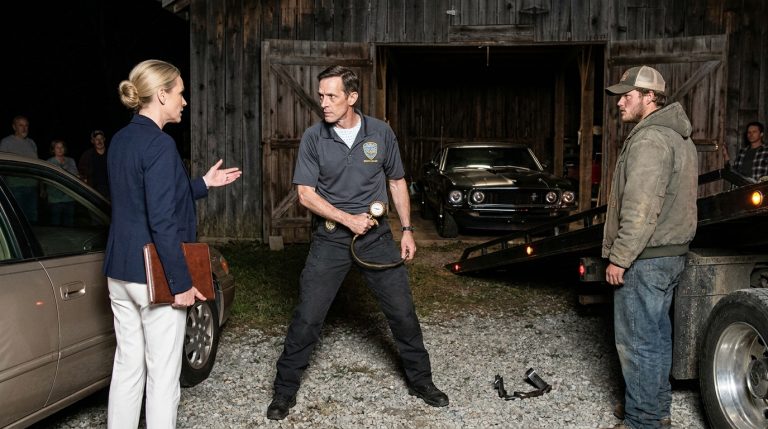
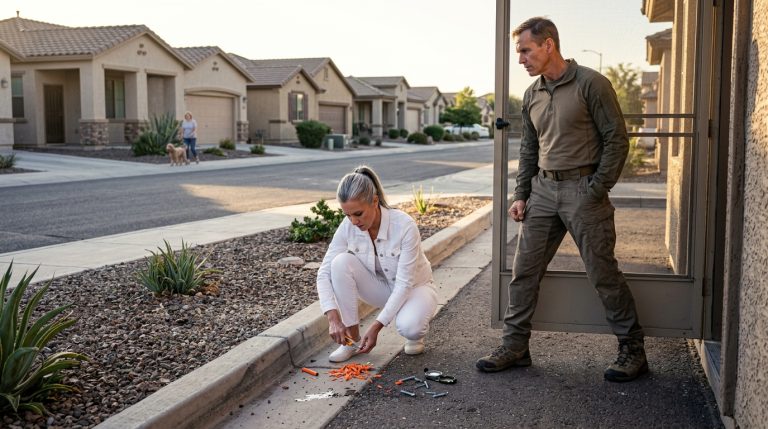
I didn’t move for a long time. The screen door stood propped open, a sliver of light from the kitchen cutting across the dark, manicured lawn of number 18. From this distance, the structure in Karen’s backyard looked like a jagged, splintered ribcage jutting out against the twilight. It was a pergola, but in the way a collapsed shed is an architectural feature. The wood was untreated, graying at the ends, and the lattice work was uneven—a clear, slapdash addition that screamed of unapproved labor.
A sharp, intrusive memory sparked behind my eyes: the silence of the funeral parlor, the heavy, suffocating air of the days after Elellena died. That silence had been a void I filled with the physical labor of stone-stacking. Now, the silence of Oakmont Estates felt different. It was expectant. It was the silence of a pressure cooker waiting for the gasket to blow.
I turned away from the sliding door and stepped back into the kitchen. The kitchen table was a mess of high-contrast life: a half-drunk mug of cold coffee, the crisp, aggressive white of the HOA violation notice, and my own hand-drawn sketches of the bridge’s load-bearing arch. I sat down and pulled the ledger toward me. My hands were steady, the military discipline I’d cultivated over two decades in the Corps taking over.
Karen wanted to talk about aesthetic harmony? She wanted to cite Article 4, Section 2? I tapped the page where the CCRs were indexed. She had opened a door she clearly hadn’t considered—the door of scrutiny.
I didn’t reach for the phone. I didn’t call her. That would be playing her game, engaging in the petty, emotional back-and-forth she thrived on. Instead, I opened my laptop and began a folder labeled Reconnaissance. I started by downloading the digital maps of the neighborhood property lines. I zoomed in on 18 Willow Lane. The structure wasn’t on the original site plan. I shifted the view to the last three years of satellite imagery. The pergola had appeared six months ago, hovering like an ugly, unkempt parasite over her stone patio.
It was a structural modification. It was external. It was, by the very definitions Karen used to bludgeon me, an unapproved improvement.
My tactical training surged to the surface, shedding the rust of civilian life. Assess the adversary. Identify the structural weakness. Apply force where the tension is highest.
I stood up and walked to the mudroom, grabbing a heavy-duty flashlight and my camera. I didn’t need to trespass, but I did need verification. I walked out the back door, the grass cool and damp against my boots, and moved toward the property line where the creek narrowed. I navigated the familiar path—the path Elellena and I had walked a hundred times—keeping my movements low, deliberate.
The creek gurgled, a constant, grounding friction against the night. When I reached the edge of the property line, I crouched. The pergola was clearly visible under the moonlight now. It was worse than it looked from the window. The joints were failing, the beam support was braced with nothing more than galvanized nails and hope, and it leaned precariously toward the fence line. If a strong wind hit that, it would drop like a house of cards.
I lifted the camera. I didn’t take a chaotic flurry of shots. I took five: one wide, three focused on the connection points, and one showing the clear lack of footings. I moved with the precision of a field engineer surveying a compromised fortification. Every click of the shutter was a rivet in a case I was building, block by block, stone by stone.
As I worked, I thought about the bridge. The bridge was built to last centuries. It was built with the knowledge of weight, gravity, and, more importantly, permanence. This pergola was built for the moment, a temporary vanity that Karen clearly thought she could hide behind the beige facade of her own authority. She was a master of the mask, and tonight, I was going to pull it down.
I heard a sudden noise—a light snapping on at the back of Karen’s house. I didn’t jump. I didn’t run. I simply lowered the camera, tucked it into my jacket, and stood motionless in the shadow of the willow tree. A figure moved inside the kitchen—a silhouette behind a glass door. I watched as she moved with that familiar, aggressive jerkiness, her posture radiating that signature, self-important tension. She stood at the window for a long moment, staring out into the darkness, perhaps looking at the same yard I was.
I waited until the light flickered off, and the house settled back into the suffocating, silent beige of the neighborhood.
I didn’t feel guilty. The righteous fire in my gut had banked into something cold, steady, and inevitable. I had spent my life building things that stood up to fire, to heavy traffic, to the relentless erosion of time. I wouldn’t be taken down by someone who couldn’t even build a wooden frame that stood square.
I walked back to my own house, my boots crunching softly on the dew-slicked earth. I didn’t go to sleep. I went back to the kitchen, opened the binder, and began to draft the formal request for the records. This wasn’t going to be a request for an “exception.” This was going to be an audit.
I picked up the pen, the weight of it familiar and balanced. Subject: Formal Request for Architectural Review Documentation. The words looked clean, surgical on the page. I wasn’t fighting for the bridge anymore. I was fighting for the ground it stood on.
My phone vibrated on the table—a text from Sarah. “Dad, just saw a post on the community board. She’s talking about ’emergency remediation’ for the bridge. She’s escalating.”
I looked at the text, then at the camera lying on the table. A small, humorless smile touched my lips. She was escalating. That was perfect. The higher she climbed, the harder the fall would be when I finally pulled the ladder.
I typed back a simple response: “Let her. We’re just getting started.”
I set the phone down and turned back to the ledger. There was a lot of night left, and I had a fortress to dismantle.
CHAPTER 3: The First Volley
The ink on the page didn’t dry fast enough. I watched the dark, wet letters settle onto the high-quality bond paper—a stark, uncompromising contrast to the beige-tinted, flimsy notices Karen favored. My hands were still steady, the muscle memory of drafting formal after-action reports for the Corps guiding the structure of the document. This wasn’t a complaint; it was a subpoena, wrapped in the polite, suffocating language of professional inquiry.
“You’re sure about this?” Sarah asked from the doorway, her voice barely a whisper. She had been standing there for a while, watching the light pool around the ledger, the stacks of printouts, and the stark outline of my draft. She looked tired, the kind of exhaustion that didn’t come from sleep deprivation but from the fraying of her own sense of security.
I didn’t look up immediately. I finished the final sentence, ensuring the citation of the bylaws was precise, down to the subsection. Only then did I turn. “Certainty is for people who haven’t done their homework, Sarah. I’ve done the work. The code is on our side.”
I walked over to the kitchen island where the printer sat. It hummed to life, the mechanical whine sounding louder than it should have in the dead-quiet house. Each sheet of paper slid out, a rhythmic, mechanical pulse, each one a brick in the wall I was building. I gathered the pages, organized them, and stapled them into a neat, heavy packet.
I left the house shortly after midnight. The streets of Oakmont Estates were unnaturally still, the streetlights casting long, distorted shadows that turned the manicured shrubs into misshapen, grasping hands. The silence here wasn’t peaceful; it was artificial, a vacuum meant to keep everyone inside their designated boxes.
I drove to the main post office, the only one open for the overnight drop. The drive took fifteen minutes, during which I didn’t listen to the radio. I listened to the engine, the friction of tires against the pavement, the mechanical pulse of the world—the same kind of grounding, tactile detail that had helped me stabilize the bridge.
When I reached the post office, I stood in the lobby, the fluorescent lights humming overhead. The certified mail form was a simple piece of paper, yet it carried the weight of a legal hammer. I filled it out with deliberate, measured strokes. Return receipt requested. Restricted delivery. The bureaucratic machinery that Karen had used to threaten me was now turning, slowly, inevitably, against her.
I walked back to the truck, the cold air biting at my cheeks. The smell of the night was dry, smelling of asphalt and distant, manicured lawns, a scent of chemical order. As I turned the ignition, I caught a glimpse of the neighborhood entrance sign—Oakmont Estates: A Legacy of Quality. I’d always looked at that sign and thought it meant pride. Now, I saw the rot beneath it. The legacy wasn’t quality; it was an adherence to a script that nobody actually wanted to read.
I returned home to find the kitchen exactly as I had left it, the silence still thick and heavy. But something had changed. The atmosphere felt charged, like the air before a lightning strike.
I pulled the folder of satellite imagery back onto the table. I went over the photos again, focusing on 18 Willow Lane. I took a magnifying glass to the high-resolution prints, searching for something, anything, that would tip the balance. My gaze drifted over the pergola photos. There, in the corner of the frame, was a small, almost invisible discrepancy—a utility pipe leading from the side of the house, disappearing into the foundation beneath the pergola.
I paused. My training kicked in, the internal alarm of a combat engineer detecting a structural anomaly. That pipe wasn’t on the original site plan. A utility line wouldn’t be routed through a temporary landscape feature like a gazebo unless it was carrying power or water to something else entirely.
I leaned closer. The pipe was encased in PVC, the kind of quick-fix, DIY modification that homeowners did when they didn’t want to pull permits. She wasn’t just hiding a structure; she was hiding a permanent, unapproved modification to her home’s utility lines.
The implications flooded my mind. If that was true, she wasn’t just violating the aesthetic standards. She was potentially in violation of county building codes, fire codes, and electrical safety standards—the kind of violations that triggered automatic, non-negotiable fines.
My heart didn’t race. It settled into a steady, predatory rhythm. The trap wasn’t just set; it had been loaded with a trigger she couldn’t see.
I spent the next two hours mapping out the next steps. I needed to know what that pipe was, and the only way to find out was to force a formal, documented request for the utility mapping of her property through the county.
I sat back, the cool granite of the kitchen island pressing into my forearms. The house was quiet, but for the first time in months, the silence didn’t feel like a blanket of grief. It felt like a foundation. I was no longer the widower sitting in the rubble of a lost life. I was a man with a target, a set of tools, and the cold, unyielding resolve of a soldier who knew exactly where the enemy’s perimeter was weakest.
Outside, the first hint of gray light touched the horizon, filtering through the trees. The bridge would be waiting for me in the morning. I would go down there, I would run my hand over the stone, and I would remember why I was doing this. Not for the bridge—the bridge was just stone and mortar—but for the woman whose memory deserved to be honored by something more than the beige silence of a place that wanted to erase her.
I stood up, my joints stiff, and walked toward the window. Looking out over the back acre, I saw the bridge arching gracefully over the creek, bathed in the soft, pre-dawn light. It looked solid, permanent, and defiant.
I was ready.
CHAPTER 4: The Red Ink
The mailbox flag sat horizontal, a dull red streak against the gray, overcast sky. I stood on my porch, the air heavy with the metallic tang of an approaching front. The humidity was climbing, making the stones of the bridge feel slick, almost perspiring with the encroaching moisture. I didn’t reach for the mail immediately. I let it sit there. It was a physical marker of the next move, a tangible piece of the conflict.
I walked down the drive, my boots crunching on the gravel. Every step was a tactical check. My eyes flickered toward 18 Willow Lane. The pergola was still there, a jagged scar against the manicured skyline of the neighborhood. The morning was quiet, but it was a brittle, fragile quiet—the kind that broke easily.
I grabbed the mail. A thick, garish red envelope lay on top, its texture coarse and cheap. No return address, just the HOA stamp. I didn’t open it until I was back inside, sitting at the kitchen table. Sarah walked in, her laptop tucked under her arm, her eyes scanning my face for a reaction.
“Did it come?” she asked.
I tore the envelope open. The fine had been updated—seven hundred dollars total. It was a masterpiece of bureaucratic aggression, a formal, typed demand for remediation that ignored the certified letters, ignored the evidence, and ignored the basic logic of the situation. It was a blunt force instrument.
I slid the notice across the table to her. Her eyes darkened as she read it, her jaw setting into a hard, sharp line. “She’s not just doubling down, Dad. She’s accelerating.”
“That’s the mistake,” I said, my voice quiet. “She’s assuming I’ll stop once the numbers get big enough. She thinks this is about the money.”
I reached for the phone. I didn’t call the HOA. I called the county planning and zoning office. I needed to confirm the status of the utility permit I had inquired about during the night. The line clicked through, the hold music a monotonous, soul-draining loop of jazz. After ten minutes, a woman named Brenda—the same clerk who had initially cleared the bridge project—answered.
“Mr. Thorne,” she said, her voice weary. “I’m looking at your request for utility mapping on Willow Lane.”
“And?” I asked, my fingers tracing the grain of the wooden table.
“It’s not good, Marcus. There’s no permit on file for any utility work at that address for the last five years. In fact, if there’s a line running under that structure, it’s a major code violation. It’s an unpermitted connection to the main grid.”
The confirmation hit me with the weight of cold, hard fact. I thanked her and hung up, the phone feeling heavy in my hand. It was the crack in the foundation I had been looking for. The pergola wasn’t just a violation of CCRs; it was a fire and safety hazard. It was the leverage I needed to force the board to act.
A sudden rumble of thunder shook the house, the vibration rattling the coffee mug on the table. The sky outside had turned a bruised, sickly purple. I stood up and walked to the back door, watching the clouds churn. I had to secure the bridge. The storm was going to be intense, and while I knew the structure would hold, I didn’t want any loose debris from the neighborhood—or from Karen’s poorly built pergola—to damage it.
I pulled on my rain gear and stepped out. The wind was picking up, whipping the willow branches against the siding of the house. I made my way down to the creek. The water was already rising, swirling with the debris of the afternoon. I checked the abutments, clearing away a pile of dead leaves and a stray plastic bag that had blown against the granite.
As I worked, I felt a strange sense of clarity. The physical act of preparing the bridge for the storm mirrored what I was doing with the HOA. I was reinforcing the perimeter, bracing for the impact, and ensuring that when the pressure reached its peak, my foundation would remain unmoved.
I noticed a flicker of movement by the fence. Karen was standing in her backyard, clutching a tarp and trying to drape it over the leaning edge of her pergola. The wind caught it, snapping the fabric like a whip. She stumbled, her face masked with a mix of fury and genuine panic as the structure groaned.
I stopped working. I didn’t help. I watched as she struggled with the failing geometry of her own creation. It was a perfect, silent illustration of the difference between us. She had built her authority on sand, on the temporary and the artificial, and now, faced with the first real pressure of the season, it was beginning to buckle.
The rain started then—a cold, hard downpour that turned the world into a blur of gray and green. I stayed by the bridge for a moment longer, watching the water surge beneath the arch. The stone held. It didn’t shift. It didn’t groan. It simply accepted the weight and the water, channeling the pressure away from the core and into the deep, stable earth.
I turned back toward the house, the rain soaking through my gear, my boots sinking into the saturated ground. The conflict was no longer a disagreement over aesthetics; it was a race to see whose foundation would hold when the storm truly broke.
I stepped inside, dripping water onto the mudroom tile. Sarah was waiting, her expression a mirror of my own determination.
“The storm is here,” she said, her voice steady.
“Good,” I replied, peeling off my jacket. “Let’s see what survives.”
I walked back to the kitchen, the red violation notice still sitting on the table. It was just paper, after all. And paper, I knew, disintegrated when the weather got rough.
CHAPTER 5: The Fissure in the Fortress
The kitchen was still cold from the night’s storm, the dampness lingering in the floorboards. I sat at the table, the phone in my hand displaying the screen capture of the county’s property records—the final confirmation that the pergola was not only unpermitted but tapped directly into the primary service line without a junction box. It was a fire hazard, a code violation, and the perfect lever.
Sarah was across from me, her eyes tracking my every movement. “They’re holding an emergency meeting tomorrow,” she said, her voice tight. “The notice just went out on the neighborhood feed. Karen is using the storm damage as a pretext. She’s claiming the bridge caused ‘unpredictable runoff’ that destabilized neighboring lots.”
I didn’t answer immediately. I looked out the window. The sky was a pale, washed-out blue, the kind of morning that feels like a clean slate, but I knew better. The bridge stood firm, the stones slick with rain, unmoved by the surge. Karen’s accusations were a desperate, transparent attempt to project her own failing structural integrity onto my work.
“She’s panicking,” I said. “When a bully starts blaming the victim for the weather, they’ve lost the narrative.”
I stood up, the chair scraping sharply against the tile. “We need to go to the community meeting. But we don’t go as defendants. We go as auditors.”
We spent the afternoon refining the presentation. I wasn’t just bringing the engineering report anymore; I was bringing the blueprint of her deception. I pulled up the high-resolution site plan from the county and marked the location of the utility tap-in. It was a clean, clinical visual. No emotion. No personal attacks. Just the raw, undeniable math of her liability.
By evening, the neighborhood felt different. People were whispering on their porches, the usual orderly, taupe-colored predictability of Oakmont Estates replaced by a sense of impending friction. I walked the perimeter of my lot, the air smelling of wet earth and rust. Mr. Henderson was out by his rose bushes, his hands buried deep in the soil, but he wasn’t pruning. He was watching the street.
When he saw me, he stood up, his knees cracking in the silence. “Karen’s been going door to door all afternoon, Marcus,” he said, his voice low. “She’s telling folks the bridge is going to drive our property taxes up. She’s scared.”
“She should be,” I said, stopping at the fence line. “She’s been running this neighborhood like it’s her own private fiefdom, but she’s forgotten that she’s accountable to the people she’s fining.”
Mr. Henderson nodded, his eyes lingering on the bridge. “I don’t think she has much support left. Not after the last fine she sent Maria. That didn’t sit well with the younger families.”
I walked back inside, the weight of the upcoming meeting pressing on my shoulders. I knew what would happen. She would try to dominate the room, to use the jargon of the HOA to drown out the facts. She would rely on the intimidation of the red paper notices. But this time, she would be facing more than just a man with a pile of rocks. She would be facing the reality of her own poor maintenance and her own secret, unapproved modifications.
I spent the final hours before the meeting preparing the physical files. I printed everything—the permit records, the photos of the pergola’s failing joints, the engineer’s report on my bridge. I organized them into a binder, the hard, plastic cover a barrier between the facts and the chaos she would try to incite.
As night settled, the house felt heavy, the silence of Elellena’s absence in the living room pressing against me. I went to the bridge, standing on the keystone under the moonlight. The water flowed beneath it, smooth and unhurried.
I was exhausted—a deep, marrow-thin fatigue that came from carrying this for weeks. But I didn’t reach for a drink to dull it. I leaned against the cold granite, closing my eyes, feeling the texture of the stone beneath my palms. It was solid. It was earned. And tomorrow, it would be the platform from which I would reclaim my peace.
I looked at the light in Karen’s window—a flickering, nervous glow—and realized with a jolt of cold realization that she was just as tired as I was. She wasn’t a monster; she was a woman whose entire identity was built on a structure that was fundamentally incapable of supporting the weight of her own ego.
Tomorrow, the foundation would finally give way.
CHAPTER 6: The Glass House
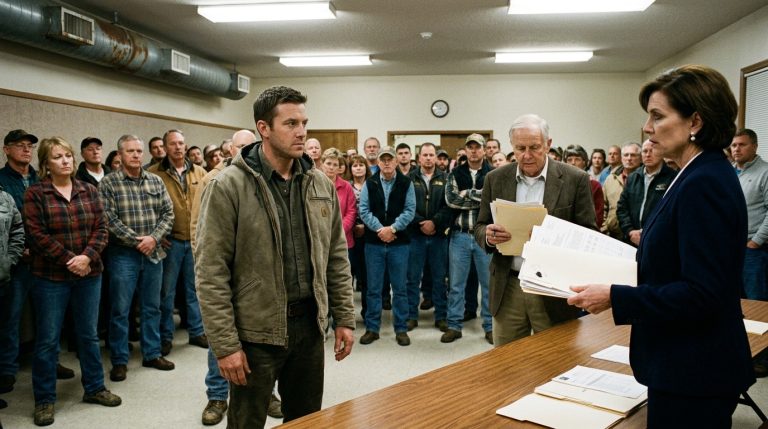
The clubhouse was a cavern of beige walls and buzzing fluorescent lights, the kind of sterile, soul-less space that Oakmont Estates considered appropriate for governance. It was packed. The air felt thin, recycled, and heavy with the smell of cheap perfume—Karen’s signature—intermingled with the damp, musky scent of rain-soaked coats.
Karen sat at the head of the folding table, her face a mask of tight, controlled fury. Beside her, the two other board members—Frank, a man who looked like he wanted to vanish into the wood grain, and a woman whose hand hovered nervously over a gavel—looked anywhere but at the crowd.
I didn’t wait for a formal introduction. I stood near the back, my binder in hand, the weight of the evidence grounding me. When the chairwoman tapped the gavel—a thin, brittle sound—I moved. I didn’t rush. I walked with the deliberate, heavy stride of a man who knew exactly what the structural load of the floor beneath him was.
“The bridge is the issue,” Karen began, her voice brittle, lacking its usual performative authority. She pointed a finger toward the door, not toward me. “It is an unapproved, dangerous structure that is bleeding our community’s resources into legal fees.”
I stepped to the front, my shadow falling over the table. The room went silent, the kind of silence that has weight. “The bridge has been inspected by a licensed professional engineer,” I said, my voice projecting, stripped of any defensive inflection. “But that’s not why we’re here.”
I placed the binder on the table. It sounded like a slab of stone hitting the laminate. Sarah reached behind me and clicked the remote. The projector flared to life, casting a bright, unforgiving image of Karen’s backyard onto the screen behind the board.
The image showed the pergola. The structure looked even worse in high definition—warped, sagging, a skeletal remnant of bad craftsmanship.
A murmur rippled through the room. I didn’t let them dwell on the visual. I pointed to the utility pipe I had tracked through the county records. “This isn’t just an unapproved structure,” I said, my tone as cold and precise as an architectural manual. “This is an unpermitted modification to the primary utility line, hooked directly into the grid without a junction box or a code-compliant safeguard.”
Karen stood up, her chair screeching against the floor. Her hand was trembling—a fine, rhythmic tremor that she tried to hide by gripping the edge of the table. “This is a private property matter! It has nothing to do with the bridge!”
“It has everything to do with the board’s commitment to safety and standard enforcement,” I retorted, not raising my voice. “You’ve spent weeks citing Article 4, Section 2 to tear down a structure that was built to last, while shielding a fire hazard on your own property from the same scrutiny.”
The room wasn’t just silent now; it was vibrating. I saw Mr. Henderson in the front row, his expression not of anger, but of a quiet, dawning clarity. Maria Garcia sat beside him, her gaze fixed on the screen, her posture firm.
“I requested these records three weeks ago,” I continued, glancing at the board members. They were looking at the screen, at the pipe, at the sagging beams. “They were never provided. Instead, I received notices, fines, and threats. If the board is to function, it must apply the rules to everyone, starting with its own leadership.”
Karen looked around the room, searching for a face that would offer her the familiar, sycophantic support she had relied on for years. She found only cold, measuring stares. The atmosphere had shifted. The fear that had kept the neighborhood compliant had evaporated, replaced by the friction of a community realizing they had been governed by a fraud.
“I move that the board perform an immediate, third-party audit of all property modifications at 18 Willow Lane,” Mr. Henderson said from the front row. His voice was steady, resonant, and echoed off the beige walls.
“Seconded,” a younger voice called out from the back.
Karen’s authority didn’t just fade; it collapsed. She stood there, trapped behind the folding table, her fingers digging into the surface, the trembling in her hand now visible to everyone in the room. She looked small. The power she had wielded through petty fines and red ink looked pathetic when held up against the reality of a sagging, rotting wooden frame.
I didn’t smile. I didn’t feel a surge of triumph. I felt only a grim, professional satisfaction. The load-bearing wall of her position had been identified and removed. Now, the rest of the structure would have to come down.
“This meeting is adjourned,” the woman beside Karen whispered, her voice barely audible.
Karen turned and fled, her heels clicking a sharp, uneven rhythm on the linoleum. I watched her go, then looked back at the bridge project files on the table. The fight wasn’t over, but the terrain had fundamentally changed. I was no longer the lone builder defending his work; I was a member of a community that was finally looking at the architecture of their own lives.
I walked back to my seat, the weight in my chest beginning to ease, just a fraction. I had brought the facts, and for once, the facts had been enough.
CHAPTER 7: The Collapse of Authority
The walk back from the clubhouse was a slow, deliberate march through the cool night air. The rain had ceased, leaving behind a slick, reflective sheen on the asphalt of Oakmont Estates. My boots struck the ground with rhythmic intensity, the sound echoing against the quiet, taupe-colored facades of the houses. Each home looked the same, yet the neighborhood felt fundamentally altered. The veil of uniformity had been torn, and the people behind those windows were no longer the passive participants they had been twenty-four hours ago.
Sarah walked beside me, her hands shoved deep into her pockets. She didn’t speak. She didn’t need to. The magnitude of what had happened—the public unraveling of the HOA’s president—was still settling into the collective consciousness of the street.
I stopped at the entrance to my driveway. The bridge was bathed in the dim, amber glow of the porch light, casting long, solid shadows across the creek. It stood as it always had: deliberate, grounded, and structurally sound. It was no longer just a memorial to Elellena; it had become a physical manifestation of a different kind of truth.
“She’s finished, isn’t she?” Sarah asked, looking toward the dark house at 18 Willow Lane.
“The position is,” I replied. “But the rot goes deeper than one person. We built this place on a foundation of silence. Karen was just the one who enforced it.”
I looked down at my hands. They were stained with the dust of the work I’d done, a fine gray grit that seemed permanently etched into the lines of my skin. I remembered a bridge I’d helped build in the service, one that hadn’t been engineered with the same level of care. It had collapsed under the weight of a heavy vehicle because the foundation hadn’t been properly set, because we had rushed to meet a deadline rather than ensure the integrity of the work. That memory had been haunting me all night, a ghost of a mistake that had cost lives. It was the same ghost I saw in Oakmont: a community built on a foundation that couldn’t support the weight of real human experience.
I climbed the steps to my porch, the wood groaning under my weight. My phone buzzed in my pocket. It was an email from the insurance provider’s risk investigator, Ms. Albright. I opened it, the glow of the screen illuminating the porch.
“Your documentation of the association’s governance practices has been received and reviewed. The findings are being escalated to the executive underwriting committee. Expect a formal response regarding the status of the master policy within forty-eight hours.”
I leaned against the railing, feeling the vibration of the house—the steady, rhythmic hum of a home that was finally moving toward some sort of resolution. I hadn’t set out to dismantle the HOA. I had only wanted to save a small, pointless stone bridge. But in the act of protecting it, I had forced the neighborhood to look at the cracks in their own foundations.
A movement at the end of the driveway drew my attention. It was Mr. Henderson. He was walking toward me, his pace slow, his shoulders slightly hunched. He stopped at the foot of the drive and looked up at me.
“The board is holding an emergency vote tomorrow morning,” he said, his voice quiet. “They’re going to accept her resignation. Frank is going to assume interim leadership.”
“Is that going to be enough?” I asked.
Henderson looked at the bridge, then back at me. “It’s a start. But the community is different now. They’ve seen that the system can be challenged. That’s not something you can just put back in the box.”
He nodded, a gesture of quiet, elderly respect, and turned to walk back toward his house. I watched him go, feeling a strange, hollow sort of peace. The battle was nearing its end, but the weight of the victory felt unexpectedly heavy. I realized that the fight had defined me these past few weeks; it had given me a focus that kept the silence of my home at bay. Now, that focus was dissolving.
I looked at the stone bridge one last time. It was strong. It was permanent. And tomorrow, it would be safe. But the quiet in the house—the silence that had been there since Elellena left—would be waiting for me when I walked inside.
I turned the key in the lock, the sound of the latch clicking home final and resolute. I had built a defense, I had fought the war, and I had won. But as I stepped into the house, I realized that I had only just begun the process of learning how to live in the aftermath.
The house was cool, the air still, and for the first time in a long time, I didn’t feel the need to reach for a ledger or a permit document. I walked into the kitchen, the room where all of this had been planned, and sat at the table. It was empty. It was quiet. It was finally, truly home.
CHAPTER 8: The Keystone of Peace
The morning arrived with a stillness that felt earned. I sat on the bridge, the granite cool beneath me, watching the light reclaim the creek. The storm had passed, leaving the air washed clean and the earth saturated. A few yards away, the small wooden gnome Maria had brought stood guard over the path, his painted eyes fixed on the horizon with a cheerful, static vigilance.
I ran my hand over the keystone—the center point of the arch, the piece that locked everything into place. It was the only part of the bridge that bore the weight of the entire structure, yet it did so without effort, held in place by the geometry of its own purpose. My fingers traced the rough, unforgiving texture of the rock. I had spent months trying to force the neighborhood to conform to my definition of “sound,” only to realize that I had been just as rigid as Karen in my own way. I had been hiding from my own silence, using the construction of this bridge as a barricade against the reality of my life without Elellena.
The realization didn’t hurt; it softened.
I heard footsteps—a slow, deliberate crunch on the gravel driveway. Mr. Henderson was walking toward the bridge, holding a small trowel and a package of seeds. He stopped at the edge of the creek, his gaze lingering on the gnome, then settling on me. He didn’t say anything, but the look he gave me was one of shared history—not of a battle won, but of a quiet, hard-fought peace.
“The board accepted the resignation,” he said, his voice raspy in the morning quiet. “Frank’s in charge, but the community, they’re talking about an open-plan review. For everything. Not just fences and mailboxes.”
“That’s good,” I said, though my focus remained on the water. “It’s about time.”
“You did a good thing, Marcus,” he added. “You showed them that you don’t have to be a bully to hold your ground. You just have to be right.”
He moved to the bank, beginning to dig a small furrow for the seeds, his movements methodical and rhythmic. I stood, my legs stiff, and walked toward the house. The project was finished. The bridge was solid. And for the first time since the funeral, the silence in the house didn’t feel like a heavy, suffocating blanket. It felt like a space—an empty, quiet room that was finally waiting to be occupied by something new.
I entered the kitchen. Sarah was sitting at the table, her laptop open, but she wasn’t coding. She was looking out the window at the bridge. When she heard the door, she turned, a small, genuine smile breaking across her face. “It’s quiet today, isn’t it?”
“Yeah,” I said, leaning against the counter. “It is.”
I looked at the counter where the red violation notices had once sat. They were gone, recycled and buried. I went to the workbench in the back mudroom, the place where I had stored the leftover stone and the wooden forms used to cast the arch. I picked up a small, weathered chisel—the one I had used to shape the keystone.
I looked at the tool, then at the wall. I wouldn’t be needing it for a while. I placed it in the drawer, the metal clinking softly against the wood. It was a symbolic closure, a quiet acknowledgment that the work of defense was over. I had spent so long building a fortress of logic and engineering that I had forgotten the point of a bridge was to connect, not to isolate.
I walked back into the living room, to the mantle where a single, framed photo of Elellena rested. I had kept it polished, kept it protected, kept it in a state of static perfection. I moved it, shifting it just slightly so that it caught the morning sun. It wasn’t a shrine anymore; it was just a memory, and memory, I realized, was meant to be lived with, not guarded.
The weight of the last few months—the stress, the tactical maneuvering, the constant, low-level hum of conflict—bled out of me, leaving behind a profound, physical exhaustion. It was the fatigue of a soldier finally allowed to lay down his pack.
I walked to the sliding glass door and looked back toward the creek. The bridge stood there, a perfect, stone arc framing the water. It was a beautiful, pointless thing, just as she used to say. But it was my pointless thing. It was a piece of order I had brought into a chaotic world, and now, it could simply exist.
I sat in the chair by the window, the sunlight warming my skin, and closed my eyes. The battle for the subdivision had been resolved, the antagonist defeated by the weight of her own deceptions, and the community had reclaimed its sense of self. But none of that mattered as much as the quiet that settled around me now.
I had built a bridge to nowhere, and for the first time, I realized I didn’t need it to go anywhere. I was already home.