The Humming Horizon: A Gritty Stand Against the Institutional Rust of Pinewood Springs
CHAPTER 1: The Weight of the Ordinance
The paper was stiff, high-grade stock—expensive, cold, and entirely designed to make me feel small. I didn’t need to read it to know what it said. The air in the kitchen felt stagnant, thick with the smell of stale coffee and the dry, metallic tang of the coming storm.
I stood by the window, my reflection ghosting over the glass. Beyond the pane, my 500-gallon propane tank crouched behind the privacy fence like a dormant beast. It was painted dark green—a tactical choice to blend with the landscaping. It had sat there for three years, a silent promise of continuity, of light when the world went dark. Now, it was just an infraction.
I reached for the notice, the texture of the paper biting against my thumb. Subsection 12.4. I pulled my engineering log from the drawer, the leather cover worn smooth by years of field work. Flipping to the index, I found the code. My eyes narrowed. The text on the notice didn’t match the digital copy I’d downloaded from the community portal last month. They had tweaked the wording. A subtle, dangerous shift in syntax that expanded their reach from aesthetic regulation to total fuel sovereignty.
It wasn’t a mistake. It was a surgical strike.
Patricia Danvers didn’t just enforce rules; she engineered them to prune the neighborhood until only the mirror images of her own aesthetic matched the landscape. I thought about the generator, the quiet hum that usually waited beneath the surface of my house, ready to roar into life. If I pulled the tank, I’d be at the mercy of the grid. If I kept it, I’d be paying a daily fine that would bleed my savings dry before the first frost.
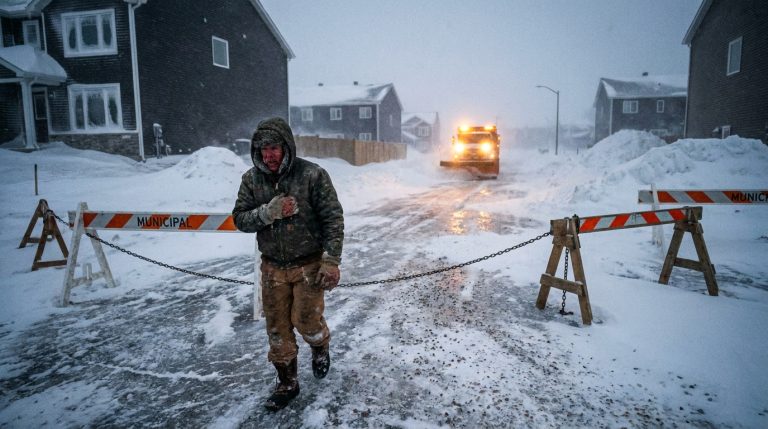
I walked to the door, my boots hitting the hardwood with a rhythmic, heavy thud. Outside, the sky was bruising, turning a deep, sickly shade of charcoal. The wind rattled the loose trim on the porch—a sign of neglect I hadn’t bothered to fix. It felt like the house itself was waiting, holding its breath.
I didn’t call the lawyer yet. I went to the side yard. The smell of oil and dry, parched earth clung to the evening. I touched the steel of the tank. It was cold, indifferent to the bureaucratic storm gathering in the HOA office. I wasn’t an engineer who dealt with feelings, but right now, the logic was undeniable: this wasn’t about safety. This was about who owned the dark.
I heard the Lexus crunching on the gravel drive down the street. It was a familiar sound—a sterile, precise mechanical rhythm. My neighbor’s curtains twitched, just a sliver of light reflecting off a glass, before vanishing. They were watching. They were all watching, and they were all terrified of the shadow of a clipboard.
I looked down at the notice one more time. There was a faint, smudged ink mark at the bottom of the page, a jagged smudge that didn’t belong on a document printed by a laser jet. It looked like a footprint—tiny, hurried, and erratic.
I wasn’t just fighting an ordinance. I was fighting someone who was making mistakes. And if there was one thing I knew about engineering, it was that every mistake had a path back to the source. I tucked the notice into my pocket, the sharp corner digging into my hip, and turned toward the dark.
CHAPTER 2: The Audit of Shadows
The silence in my kitchen wasn’t empty. It had a weight, the heavy, lingering pressure of a room that held a secret. I stared at the smudge on the paper—a jagged, gray distortion against the crisp white—and felt the first hairline fracture in the HOA’s armor.
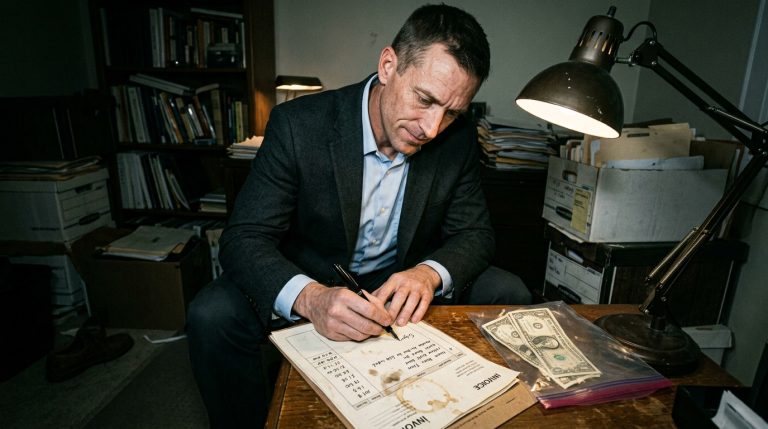
I set the notice down on the granite island. The stone was cold, pulling heat from my fingertips. I didn’t reach for my phone to call my lawyer. Not yet. David Shun liked to operate in the realm of “technically correct,” and I needed to operate in the realm of the physical. If the HOA was using altered ordinances to secure their domain, they had a paper trail. And paper, no matter how carefully filed, was susceptible to the friction of reality.
I moved to my desk, the floorboards groaning under my boots. The air in the study felt stagnant, filled with the smell of old printer toner and the faint, ozone scent of the approaching storm. I booted up my laptop, the fan kicking in with a rhythmic, mechanical rattle that vibrated through the desk—a reminder of the power I was fighting to keep.
The community portal was a digital fortress of superficial order. I bypassed the main menu, digging into the archived PDF logs of the “Operational Necessity” filings. My fingers tapped a steady, impatient beat against the mahogany surface. I was looking for the diesel generator.
I found it buried in a three-year-old budget summary. It wasn’t listed as a utility expense. It was under “Community Beautification and Structural Integrity.”
A cold, iron-like sensation settled in my gut. I started cross-referencing the installation dates against the management company’s consulting invoices. The numbers didn’t just fail to align; they danced around each other like ghosts. Every time the HOA board approved a “structural review,” a corresponding payment—often in suspiciously round, five-figure sums—was issued to a firm called Apex Management Solutions.
Suddenly, the monitor flickered. The screen went a dull, pulsating gray, then black.
“Damn it.”
I leaned back, the leather of my chair creaking. The power didn’t cut; the laptop just died. A surge? A software lockout? I reached for the power cable, my fingers tracing the length of it until I hit the brick adapter. It was hot—searingly hot to the touch.
The investigation had barely begun, and already the hardware was pushing back. I stood up, pacing the small, cramped study. The storm outside had arrived in earnest now. Rain lashed against the glass like shrapnel, a persistent, percussive sound that echoed the friction building inside my own head.
I looked at the window. The privacy fence, topped with the dark silhouette of my propane tank, was barely visible through the downpour.
I went to the garage. The air smelled of metallic dust and old motor oil, a sharp, grounding scent that cleared the fog of the study. I needed to know if their generator was as well-maintained as they claimed in their reports. If they were as meticulous as Patricia pretended, they’d have a technician on site for the storm. If they were hiding something, they’d be running on a prayer and an empty tank.
I grabbed my coat—heavy, worn canvas—and my flashlight. I didn’t take the car. I needed to move in the dark, to be a shadow among the perfectly manicured hedges.
As I stepped out onto the damp pavement, the wind caught the hood of my jacket, biting at my neck. Pinewood Springs looked different in the deluge. The pristine mailbox colors, the regulated grass, the uniform lighting—it all looked like a stage set being dismantled by the elements. The irony wasn’t lost on me. They spent thousands to maintain an image of perfect, controlled order, and a little bit of atmospheric pressure was turning the whole place into a muddy, chaotic mess.
I kept to the shadows of the hedges, my boots sinking into the saturated mulch. My heart beat a steady, slow rhythm—the pace of an engineer checking for a leak in a high-pressure line. I reached the HOA building, a brick-and-mortar monument to the rules that were currently strangling my property rights.
The diesel generator sat behind a secondary security fence, humming with a low, vibrating intensity that I felt in my teeth before I heard it. It was a 1,000-gallon beast, painted in an official, unassuming gray that blended with the brick.
I approached the perimeter. My light flickered, then caught the side of the tank. There was no inspection sticker. No service log attached to the frame. Just a heavy-duty padlock that looked newer than the paint.
I touched the metal of the housing. It was warm, vibrating with the mechanical labor of a system that wasn’t designed for long-term usage. It wasn’t just humming; it was straining. I leaned in, pressing my ear against the metal. Beneath the steady drone of the engine, there was a faint, metallic clicking—a symptom of fuel starvation or a failing pump.
They weren’t just operating a tank; they were holding it together with sheer, desperate willpower.
A flash of lightning illuminated the street, turning the rain into needles of white light. I ducked behind a transformer box, my breath hitching in my throat. A pair of headlights pulled into the HOA lot. A white Lexus, polished to a mirror sheen, glided through the rain like a predator.
Patricia.
She didn’t get out of the car. She just sat there, the engine idling, watching the building with a gaze that I knew, even from this distance, was calculating the cost of every second. She wasn’t checking the equipment. She was guarding it.
I watched her, the cold rain seeping through my coat and soaking into my shirt, the weight of the ordinance notice still heavy in my pocket. The bridge between compliance and complicity was beginning to rust, and for the first time, I realized I was standing on the wrong side of it. I reached out and brushed a layer of grit off the transformer, the metallic dust leaving a mark on my palm—a stain I knew I wouldn’t be able to wash off until this was finished.
CHAPTER 3: The Boardroom Dissent
I stayed crouched behind the transformer, my muscles coiled, waiting for the Lexus to shift into gear. The rain intensified, a relentless drumming against the metal casing that vibrated through my chest. Patricia didn’t move. She just stared at the HOA office, her silhouette framed by the windshield wipers’ mechanical sweep. She was waiting for something, or someone, and the sheer, calculated patience of her stillness was more unnerving than any outburst.
Then, the interior light of the Lexus flickered on. She picked up a phone, her face caught in the pale, artificial glow. It wasn’t the look of a woman checking her email. It was the face of a commander reviewing a failing front line. She tapped the screen, her movements sharp and rhythmic, before killing the light and shifting the car into reverse. The tires hissed against the wet asphalt as she pulled away, leaving the HOA office to sit in the darkness, illuminated only by the rhythmic, strobe-like flash of the lightning.
I waited until her taillights disappeared into the gloom before I stood up. My knees popped, a sharp, protestant sound in the quiet of the night. I looked at my palm, still stained with the dark, gritty residue from the transformer. It was a tangible piece of evidence, a microscopic layer of the very system I was attempting to dismantle.
I didn’t head home. I walked the long way, through the labyrinth of the back alleys, staying out of the reach of the streetlights. Every step felt heavier than the last, the damp cold of the night settling into my bones.
Three days later, the board meeting was held in the community hall. The room smelled of floor wax and the stale, nervous energy of a hundred residents. It was standing-room only. The air was thick, suffocating. People weren’t just sitting; they were vibrating with a latent, collective rage that had been building since the first power lines went down.
I took a seat in the back, near the ventilation duct. It rattled—a rusted, annoying sound that seemed to mock the formal atmosphere of the assembly. Patricia sat at the head of the long, polished table, a stack of folders organized with a precision that bordered on the obsessive. She looked impeccable, her navy blazer crisp, her pearl earrings reflecting the overhead fluorescent lights.
She opened the floor for public comment.
The first few speakers were the usual suspects—complaints about mailbox paint, unauthorized patio furniture, the petty grievances of a sheltered life. I waited. I watched the way she leaned back in her chair, her fingers laced together in a steeple, nodding with that practiced, flight-attendant empathy that had become the hallmark of her tenure. She wasn’t listening. She was merely holding space until the meeting could be adjourned.
Then, Frank Patton stood up.
Frank was a retired accountant, a man who viewed the world in columns and rows. He didn’t have a grievance about paint. He had a stack of papers—the same ones I had been cross-referencing in my study. He walked to the microphone, his gait slow and deliberate.
“I have a question,” Frank said, his voice quiet, lacking the performative anger of the others. “I’ve been reviewing the community’s financial disclosures for the past three fiscal years.”
The room went silent. Even the rattling vent seemed to pause. Patricia’s fingers shifted—just a millimeter, a tiny, involuntary twitch of the knuckles.
“We have a surplus in the general maintenance fund,” Frank continued, leveling a calm gaze at the board. “But we’ve been seeing recurring, unitemized consulting fees paid to Apex Management Solutions. These payments align suspiciously with the dates of structural upgrades that were never brought to a community vote. Specifically, the generator installation at the HOA office.”
The shift in the room was physical. I felt the air pressure drop. Patricia leaned forward, her expression shifting from empathy to something sharper, colder.
“Mr. Patton,” she began, her voice smooth, calibrated, “those are administrative expenditures. They are well within the board’s authorized budgetary discretion.”
“Discretion isn’t the same as transparency, Patricia,” Frank replied. He didn’t raise his voice. He didn’t have to. “When the board denies homeowners the right to install their own emergency power, citing safety and aesthetics, while simultaneously funneling hundreds of thousands of dollars into an opaque management firm to maintain your own, that isn’t discretion. That’s a double standard.”
I watched Patricia’s face. For a fleeting second, the mask slipped. There was a flicker of something raw—not guilt, but a sharp, biting panic. She looked out over the crowd, her eyes scanning the faces, looking for an ally, a way to pivot the narrative. She found none. The silence in the room was absolute, a wall of mounting, granite-like suspicion.
“I move,” Frank said, his voice steadying, “that we pause all covenant enforcement until an independent forensic audit of the management firm’s invoices is completed.”
The silence hung, heavy and electric. I stood up. It was a calculated move, one I’d played out in my head a dozen times in the quiet of my garage. My voice sounded loud, metallic, out of place in the sterile hall.
“I second that motion.”
The room exhaled. The tension, previously a tight wire, snapped. Heads turned, people leaned into the aisles, murmurs rising like a tide. Patricia’s gaze locked onto mine. It was a long, cold moment of realization. She knew, then, that this wasn’t just a disgruntled homeowner complaining about a propane tank. This was an investigation, and she was already on the wrong side of the math.
She didn’t slam the gavel. She didn’t call for order. She just stared at me, the light in the room reflecting off her pearls, masking her eyes in shadow. She was already calculating her next move, but I could see the tremor in her hands. The rust had finally begun to show.
CHAPTER 4: The Static Before the Surge
Patricia didn’t move. She remained seated as the room erupted into a cacophony of overlapping voices—neighbors demanding answers, the gavel hitting the wood with a rhythmic, desperate frustration, and the sound of chairs scraping against the concrete floor. Her face remained a mask of cool, detached poise, even as her eyes darted toward the side exit, calculating the path of least resistance.
I didn’t wait for her to regain the initiative. I moved through the crowd, the friction of people brushing past me—the smell of damp coats and stale breath—thick and claustrophobic. I needed to get to the administrative office before she could clear the digital logs or secure the physical ledgers.
“Connor,” a voice rasped. It was Frank. He grabbed my sleeve, his grip surprisingly firm. “They’re going to try to scrub the servers. If that forensic audit isn’t started tonight, those files might disappear before the ink is dry on the motion.”
“I know,” I said, my voice tight.
I pushed through the double doors into the hallway. The change in atmosphere was immediate. The roar of the meeting was muffled by the thick, industrial walls. The hallway was empty, the linoleum floors reflecting the harsh overhead lights in long, clinical strips. The building felt hollow, like a shell that had lost its purpose.
I walked toward the office, my boots clicking with a hollow, echoing rhythm. I reached the door and found it unlocked. A simple oversight, or perhaps a sign of how quickly their authority was unraveling. I pushed the door open. The office was exactly as I’d imagined: sterile, efficient, and smelling faintly of ozone and expensive perfume.
The computer terminal was still logged in, the cursor blinking on the main dashboard like a mechanical heartbeat. I sat down, my fingers hovering over the keys. I wasn’t an auditor, but I knew how to follow the flow of information. I bypassed the user-friendly interface and dropped into the backend directory.
That was when I saw it.
Tucked away in a sub-folder labeled ‘Maintenance_04,’ there were hundreds of invoices, but they weren’t for standard community upkeep. They were for something far more specific—a series of recurring payments to an entity called ‘Blue Ridge Logistics.’ I pulled up the registration for the firm. It wasn’t in Hawaii, where Patricia had been seen on that questionable trip. It was a local address, registered to a post office box in a neighboring district.
I started pulling the metadata, my heart drumming a steady, fast cadence against my ribs. The dates of the payments matched the dates of every major infrastructure ‘upgrade’ in the neighborhood. But there was a discrepancy in the timestamps. The payments were being processed at 3:00 a.m., a time when the office should have been dead quiet.
I heard the heavy thud of the front door closing in the main hall. Then, the distinct, rhythmic click of heels approaching down the hallway.
I didn’t have time to download the entire drive. I grabbed a thumb drive from my pocket, jammed it into the port, and dragged the ‘Maintenance_04’ folder to the root. The progress bar crawled forward, a slow, agonizing slide of green pixels that felt like it was taking hours.
The footsteps stopped outside the door.
I held my breath. The silence in the office was so absolute that I could hear the hum of the server in the closet, a sound that felt like a trap. The handle of the door turned, the mechanism catching on the lock I’d hastily pulled shut behind me.
“Connor?”
Patricia’s voice was calm—too calm. It had that practiced, flight-attendant smoothness, the one she used when explaining why a flight had been grounded.
“I know you’re in there,” she continued. “The security system logged an unauthorized access attempt to the admin terminal three minutes ago. You’re making a mistake.”
I watched the progress bar: 78%.
“The only mistake was thinking this was a neighborhood,” I said, my voice sounding steadier than I felt. I didn’t turn around. I kept my eyes on the monitor, watching the green bar tick forward. 82%.
“You think you’re being a hero,” she said, her voice dropping to a whisper, barely audible through the thick wood of the door. “But you have no idea what you’re pulling apart. This neighborhood isn’t just grass and mailboxes. It’s a structure. And structures require maintenance, even when the rules are… inconvenient.”
“Inconvenient for who?” I asked, my hand hovering over the ‘Copy’ prompt for a second sub-folder.
“For everyone,” she replied. 94%. “If you continue this, you aren’t just destroying my career. You’re destroying the very thing that keeps this community from falling into the dark.”
The progress bar hit 100%. A chime sounded—small, electronic, and impossibly loud in the quiet room. I yanked the drive from the port and shoved it into my pocket.
“The lights are already out, Patricia,” I said, standing up and moving toward the side window. “I’m just here to see why.”
I pushed the window open and slipped out into the cold, rainy night just as the door handle gave way. The drop was short, my boots hitting the soft, saturated earth with a muffled thud. I didn’t look back. I ran, my lungs burning, the rain masking the sound of my retreat as I disappeared into the shadows of the fence, the weight of the truth sitting in my pocket like a live grenade.
CHAPTER 5: The Digital Fracture
My boots skidded on the wet grass, the ground turning to slurry under the downpour. I kept low, my back brushing against the rough, splintering wood of the boundary fence. Every muscle in my body was taut, coiled like a spring. I could hear the muffled, angry shouts from the community hall echoing in the distance, a chaotic soundtrack to my flight.
I reached the cover of the dense hedge bordering my own driveway and slumped against the trunk of an old oak, my chest heaving. The cold was biting, soaking through my jacket, but I didn’t care. I reached into my pocket, my fingers finding the hard, plastic edges of the thumb drive. It was warm—unnervingly warm, as if it had absorbed some of the heat from the terminal.
The sound of the generator hummed in my memory, a rhythmic vibration that felt like a phantom limb. I closed my eyes, but all I could see were the scrolling lines of the Apex invoices. The discrepancy wasn’t just a simple clerical error. As I replayed the visual data in my mind, the numbers felt heavier, more deliberate. It wasn’t just embezzlement. The Apex firm was a shell, yes, but the addresses linked to it pointed back to a series of vacant lots across the county, sites that were currently tied up in municipal land-use litigation.
Patricia wasn’t just padding her pockets. She was using the HOA’s capital to stake claims on future infrastructure projects—projects that would only be viable if the current grid remained unstable. The grid instability in Pinewood Springs wasn’t just a byproduct of the storm; it was an investment strategy.
A set of headlights swept across the end of my street. I pressed myself flatter against the bark, the rough surface biting into my shoulder. A patrol car—or maybe just a late-night delivery—rolled slowly past. I didn’t move until the sound of the tires faded into the steady, rhythmic drum of the rain.
I made it into my house through the back sliding door, the glass slick with condensation. I locked it, the click of the deadbolt sounding like a gunshot in the silence of the kitchen. I stripped off my soaking jacket, the fabric heavy and saturated, and left it in a heap on the floor.
I didn’t turn on the lights. I walked to the desk by touch, the familiar geometry of the room guiding me. I inserted the thumb drive into my backup terminal, the one I kept air-gapped for security. The screen glowed to life, casting a pale, bluish light over the room. I opened the files.
The deeper I went, the more the architecture of the scheme revealed itself. There were emails—conversations between Patricia and a contact at the municipal planning office. They weren’t discussing property values. They were discussing load-balancing protocols. They were testing the limits of the neighborhood’s tolerance for outages, slowly dialing up the frequency, creating a dependency on the HOA’s own localized power solutions.
My reflection in the dark monitor looked tired—pale, etched with the lines of someone who had been fighting the dark for too long. I heard a sound from the porch.
It was faint—a soft, rhythmic tapping. Not the rain. It was the distinct, metallic strike of a key against the lock. My heart stopped.
I moved to the window, peering through a gap in the blinds. A dark sedan was parked at the curb, lights off. A figure stood on my porch. Not Patricia—the frame was broader, taller. He was hunched over the door, his movements fluid and efficient.
Panic flared, hot and sharp, but I forced it down. I grabbed the thumb drive, my hand trembling just enough to make the metal rattle against the desk. I wasn’t going to let them erase the evidence. I turned to the kitchen, toward the small maintenance hatch that led into the crawlspace under the house.
The tapping stopped. The silence that followed was worse.
“Connor,” a voice drifted through the door. It wasn’t a demand. It was a cold, pragmatic statement of fact. “Open the door. We have things to discuss regarding the integrity of the community records.”
I didn’t answer. I dropped to my knees, sliding the hatch open. The smell of damp, dark earth rose to meet me. I slipped inside, pulling the hatch shut just as the sound of splintering wood echoed through the kitchen. The lock had been forced.
I lay in the dark, the dirt cold and gritty against my cheek, listening to the heavy, deliberate footsteps of the intruder as he walked across the kitchen floor. He didn’t rush. He didn’t shout. He moved with the confidence of someone who owned the space, and the realization hit me with the force of a physical blow: this wasn’t just a search. It was a reclamation. They weren’t just going to take the drive; they were going to erase the person who had discovered the lie.
CHAPTER 6: The Anatomy of a Siege
The footsteps stopped directly above my head. The floorboards groaned—a low, rhythmic protest under the weight of the intruder. I pressed my back against a rusted HVAC duct, the metal cold and biting, and held my breath. The taste of damp earth was thick in my mouth, a gritty, metallic tang that seemed to coat my throat.
The kitchen cabinet door slammed open, the sound muffled by the floorboards but still resonant. Then came the rattle of cutlery, the clatter of plates, and the precise, systematic movement of someone who knew exactly what they were looking for. I clutched the thumb drive, my knuckles white, and tracked the movement above me. He was moving toward the office door.
“I know you’re in the crawlspace, Connor,” the voice said. It wasn’t loud, but it was clear, filtering down through the gaps in the floorboards like poisoned air. “There’s only one point of egress behind the foundation, and I’ve already got a lock on it. You can come out now, or I can start cutting into the subflooring. Either way, the hardware comes with me.”
I didn’t move. My mind raced, calculating the physical layout of the crawlspace. The house was an older build—a maze of support beams and aging, corroded wiring. I crawled backward, my movements slow and deliberate, the rough earth scraping my skin. I reached the junction where the main water line entered the house. It was a primary feed, protected by a heavy-duty shutoff valve.
If I could force a rupture—a controlled failure—I could flood the crawlspace and potentially force the intruder out of the kitchen. But the pressure differential required a precise wrenching, and my hands were slick with sweat.
The intruder began to hammer at the floorboards in the office. It was a rhythmic, violent sound—thud, thud, thud—that sent vibrations shivering through the beams above me. I felt the dust raining down, fine particles that stung my eyes. I reached the shutoff valve and braced my feet against a support beam. I wrenched the valve counter-clockwise. It resisted, the metal groaning with years of oxidation.
Give, I pleaded silently. Just give.
With a sharp, cracking sound, the valve shifted. A jet of pressurized water erupted from the seam, spraying into the dirt and creating a wall of sound and mud. The crawlspace began to fill, the water rising rapidly, cold and biting.
Above me, the hammering stopped. There was a moment of confused silence, then a string of sharp, muttered curses. “You fool,” the voice shouted from the kitchen. The intruder was scrambling now, the sound of his boots retreating toward the back door.
I didn’t wait for the water to drown me. I scrambled toward the exterior foundation vent, my movements desperate and frantic. The water was up to my chest now, swirling with debris, the cold pulling the heat from my limbs. I reached the vent, kicked the rotted wood frame, and squeezed through, tumbling out into the rain-drenched grass.
I rolled to my feet, my breath coming in ragged, freezing gasps. The intruder was already at the back of the house, his flashlight beam cutting through the downpour like a white, searching eye. I didn’t head for the street. I headed for the fence, toward the dense, overgrown brush at the edge of the property line.
I could hear him shouting into a radio now, his voice sharp and authoritative. “Target has compromised the structure. Seal the perimeter. He’s got the drive.”
I scrambled over the fence, the wire tearing at my jeans, and dropped into the wet, overgrown woods that buffered the neighborhood from the highway. My heart was a frantic, irregular drum in my chest. The “maintenance” wasn’t just a corporate shell—it was a private security apparatus. Patricia hadn’t just built a board; she had built a private fiefdom, and she was prepared to use force to keep the secrets of Pinewood Springs buried.
I didn’t look back. I ran into the dark, the weight of the data in my pocket the only thing keeping me upright. Every shadow looked like a threat, every raindrop sounded like a footstep, but as I hit the gravel of the highway shoulder, I realized that the scale of the conspiracy was larger than I’d ever imagined. They weren’t just protecting their property values; they were protecting an entire system of exploitation, and they would stop at nothing to ensure that the light—the truth—never flickered back on.
CHAPTER 7: The Blackout
I didn’t stop until the sound of the highway traffic became a roar in my ears, a wall of white noise that drowned out the pounding of my own heart. I leaned against a rusted guardrail, my chest heaving, the cold rain mixing with the grit and grime of the road on my face. My hands were shaking so violently that I nearly dropped the thumb drive when I checked to ensure it was still there. It felt heavy—a small, plastic weight that contained the gravity of the entire neighborhood’s collapse.
Behind me, the woods were dark and silent. The intruder hadn’t followed me out onto the shoulder. They didn’t need to. They had the neighborhood sealed. Every exit, every access point, was being monitored. I was in the middle of a tactical grid, and the grid was closing in.
I began to walk, staying in the long, jagged shadows cast by the highway lights. I couldn’t go back to the house. I couldn’t go to the police—not yet, not when the planning office and the HOA were clearly operating in tandem. I needed a bridge, someone who existed outside the structure of Pinewood Springs.
I thought of Janet, my coworker. She was the one who had pushed me to call Channel 7. She was the one who knew the weight of this silence.
I reached a public phone near a desolate gas station on the outskirts of town, the fluorescent lights humming with a dying, yellow flick. I pulled a few coins from my soaked pocket and dialed her number, my fingers clumsy and numb.
“Connor?” Her voice was thin, startled. It was after three in the morning. “Where are you? The news—the Channel 7 crew, they’re talking about a security breach at the HOA office. They said there was a break-in.”
“It’s not a break-in, Janet. It’s an excavation,” I said, my voice raspy. “I have the files. The embezzlement, the logistics links to the planning office, the deliberate grid instability. It’s all here.”
“Oh, God,” she breathed. “Connor, you have to get out of there. They’ve been circulating a bulletin. They’re claiming you’re responsible for the power failures. They’re blaming the engineering logs you accessed.”
The realization hit me with a cold, hollow thud. They weren’t just erasing the evidence; they were rewriting the narrative. By the time I reached the authorities, I wouldn’t be a whistleblower. I’d be the saboteur.
“I need you to meet me,” I said, looking out at the empty road. “Not at the station. Not at your house. The old substation, near the ridge.”
“That’s a death trap in this weather,” she warned.
“It’s the only place they can’t monitor,” I replied.
I set off into the darkness again, the rain turning the terrain into a slick, treacherous slide. The journey to the ridge was an exercise in pure survival. I navigated by the rhythm of the power lines, their low, buzzing hum the only constant in a world that had gone insane. Every time a car passed on the highway, I dropped to the dirt, pressing myself into the wet, decaying leaves, my lungs burning, my resolve hardening into something cold and jagged.
When I finally reached the substation, it was a skeletal, rusted ruin—a massive lattice of iron and glass standing against the storm. It had been decommissioned years ago, a relic of a time when the grid was decentralized and resilient. It felt like a fortress.
I climbed the chain-link fence, the metal biting into my palms, and dropped into the center of the yard. I huddled under the shadow of a transformer bank, waiting for Janet.
Then, the lights on the horizon went out.
It wasn’t a slow fade. It was an instant, total blackout. The glow of Pinewood Springs, which usually served as a beacon in the night, simply vanished. The silence that followed was terrifying—a complete, overwhelming absence of sound.
The HOA had finally cut the main feed. They weren’t just managing the power anymore; they were weaponizing the darkness.
A pair of headlights cut through the void, heading directly toward the substation. They weren’t moving with the caution of someone looking for a friend. They were moving with the systematic precision of a sweep. I gripped the thumb drive, the edges digging into my palm until it bled. The final chapter of this wasn’t going to be played out in a courtroom or a board meeting. It was going to be played out here, in the dark, where the only thing that mattered was the strength of the fuel you had left to burn.
CHAPTER 8: The Price of the Current
The light was blinding—a high-intensity beam that turned the rain into a wall of glittering, static fire. I didn’t run. There was nowhere left to go. I stood in the center of the substation’s iron lattice, the thumb drive held tight in my hand, and waited for the sedan to come to a halt. The engine died, the sudden absence of noise amplifying the heavy, rhythmic thrumming of my own pulse.
Patricia Danvers stepped out of the driver’s side. She didn’t look like the HOA president anymore; she looked like a woman who had spent the last three nights staring into the abyss of her own design. Her navy blazer was rumpled, her hair plastered to her forehead by the rain, but her gaze remained piercing, fixed on me with a terrifying, hollow focus.
“You have no idea what you’ve done, Connor,” she said, her voice stripped of its practiced smoothness. It was ragged, raw, and desperate. “You think this is about money? About consultants? You’re a small man in a small house, playing with forces you don’t understand.”
“I understand enough,” I said, my voice steady, though every muscle in my body was screaming for release. “I understand that you turned our homes into test sites for your own leverage. I understand that the rules were never about the neighborhood. They were about keeping us dependent, keeping us quiet while you stripped the foundations out from under us.”
She took a step forward, the gravel crunching under her heels. “The grid is a fragile, dying thing. I wasn’t destroying it; I was managing the transition. I was preparing us for a future where the utility companies failed and we remained the only ones with the capital to survive. I was protecting you.”
“You weren’t protecting us,” I said, the words coming out slow and deliberate. “You were harvesting us.”
I held the thumb drive out, catching the light. “Everything is here. The logs, the shell companies, the communications with the planning office. It’s not just an audit, Patricia. It’s an indictment.”
She stopped. The silence of the substation was absolute, broken only by the steady, rhythmic dripping of water from the rusted transformers. For a moment, she looked old—a skeleton of the image she had cultivated for years. She reached into her pocket, not for a weapon, but for a small, thin ledger.
“If you release this,” she said, her voice barely a whisper, “the neighborhood dies. Not just the HOA—the entire local economy, the property values, the very thing that made Pinewood Springs a place worth living. You think you’re being righteous? You’re just going to burn the house down to kill a few spiders.”
“Then let it burn,” I replied. “If the only way to sustain this place is through your lies, then it never deserved to stand.”
I pulled out my phone and held it up, showing her the screen. I had already pushed the data to a secure server, set to auto-deploy to the regional press if I didn’t verify my location in the next five minutes. She watched the countdown, her expression shifting from fury to a strange, vacant acceptance. She knew. The game was over.
She didn’t try to stop me. She didn’t fight. She simply turned back to her car, her shoulders slumping. As she drove away, the headlights disappearing into the darkness of the ridge, I felt the tension in my body begin to snap.
The blackout didn’t lift immediately. I sat in the shadow of the rusted transformer for a long time, the cold rain washing away the grime of the last few days. I watched the horizon. Finally, hours later, the lights of the city began to flicker back on—not all at once, but in slow, rhythmic pulses, like a heart struggling to find its rhythm again.
In the weeks that followed, the world didn’t end, but the neighborhood certainly changed. The investigation was swift, clinical, and brutal. Patricia was gone, her assets seized, her name erased from the covenant documents. I spent my afternoons in the garage, slowly repairing the small, peripheral damage the searchers had caused. I rebuilt the fence, I re-calibrated the generator, and I spent hours in the quiet, methodical labor of maintenance.
The tank was full again. The hum was steady. But the silence that followed the storm felt different. It was the silence of a structure that had been tested and had held. I often sat on the porch in the evening, watching the streetlights cast their steady, unblinking glow over the neighborhood. We were just people again—neighbors with broken fences, overdue bills, and a fragile, imperfect peace.
I didn’t consider myself a hero. I was just someone who refused to let the light be taken away. I looked at the propane tank, its green paint beginning to fade, and realized that for the first time in eight years, the hum of the machine wasn’t a warning. It was just a sound. And in the quiet of a Pinewood Springs night, that was finally enough.