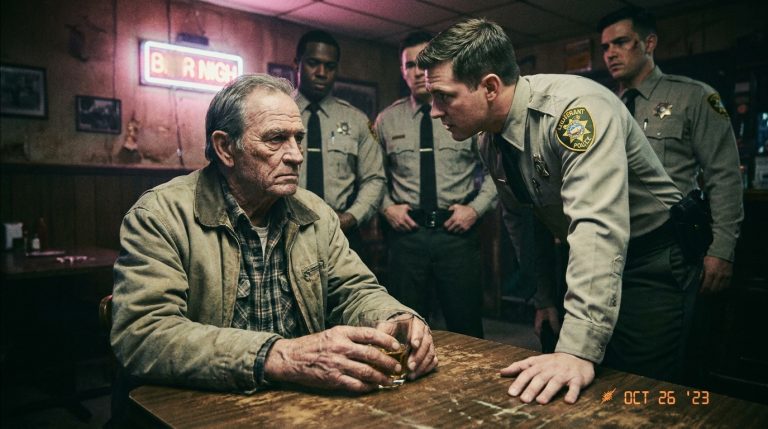
The Weight of Quiet Skies: A Silent Soldier’s Final Journey Through a World of Noise
CHAPTER 1: THE TERMINAL EXIT
The air in the terminal was too thin, smelling of burnt coffee and recycled human anxiety. Ethan kept the canvas bag tucked tight against his left side, his hand resting on the strap, not because he was afraid of theft, but because the weight of the notebook inside felt like a ticking clock against his hip.
He ignored the departure boards. He didn’t need a flight; he needed distance.
He moved through the crowd, a grey ghost in a sea of vibrant, desperate motion. He watched the way people moved—shoulders hunched over phones, eyes darting to screen reflections—and saw the vulnerability in their posture. They were loud. They were visible. He was neither.
A woman in a sharp, tailored coat brushed past him, her perfume a cloying, floral assault that made him tighten his jaw. He didn’t look at her, but he felt the way she slowed, just for a micro-second, her head tilting in that specific, inquisitive bird-like motion. Recognition. Not of him, but of the impossibility of him—a man who didn’t exist in the digital cloud of the airport’s tracking system.
He turned a corner, ducking into the maintenance corridor that ran parallel to the arrivals hall. The change in atmosphere was instantaneous. The hum of the terminal dropped to a distant, muffled vibration, replaced by the sterile silence of polished concrete and industrial ventilation.
He stopped at a trash receptacle, leaning against the cold metal casing. His heart rate remained a flat, steady line. He checked his watch. 16:42.
The sound of heels clicked on the tile behind him—sharp, rhythmic, and intentional. They were too loud for a casual stroll. He didn’t turn around. He simply shifted his weight, his eyes fixing on the distorted reflection in a fire alarm casing on the wall. A man in a dark, nondescript suit was standing ten feet back, his hand inside his jacket.
“You’re making a mistake,” Ethan said, his voice a low, gravelly rasp that didn’t travel further than the man’s ears.
The man didn’t stop. “The flight was just the beginning, Sergeant.”
Ethan stiffened. The air in the corridor suddenly felt heavy, charged with the static of an approaching storm. He looked down at his bag, the zipper slightly open, revealing the corner of the notebook. If the man knew the rank, he knew the history. And if he knew the history, the game was no longer about seats or tickets—it was about who would disappear first.
He reached into his pocket, his fingers brushing against a set of keys that hadn’t seen the light of day in five years. As the man took another step, the fire alarm in the ceiling stuttered, a single, high-pitched chirp that signaled the start of a sequence Ethan had already set in motion.
CHAPTER 2: THE SHADOWED TRANSIT
Ethan didn’t flinch. The sound of the alarm was a mechanical failure—a glitch in the terminal’s automated safety system—but it served his purpose. In the split second of auditory confusion, he pivoted. The corridor was a narrow vein of concrete and conduit, smelling of damp dust and ozone.
The man in the suit reached for the interior of his jacket, but his eyes betrayed him; they flickered toward the overhead sprinkler system, momentarily distracted by the alarm’s cadence.
That was all the opening Ethan needed. He didn’t engage, didn’t throw a punch, and didn’t offer a warning. He simply surged forward, his boots finding traction on the polished floor with surgical accuracy. He slammed his shoulder into the man’s sternum, using his own momentum to force the pursuit off balance. It was a calculated strike, blunt and efficient, aimed not at causing harm but at creating an insurmountable gap.
The man stumbled back, his heel catching on a metal floor-plate. Ethan didn’t look back. He rounded the corner, his lungs expanding in a rhythmic, controlled intake of air. His mind pulled him backward—a sharp, invasive phantom of a rainy perimeter check in a place he had spent years trying to scrub from his memory. The cold, wet bite of that night felt real against his cheek, a tactile echo of a time when every shadow held a lethal intent. He pushed the memory into a dark, locked chamber of his mind. Not now.
He exited the service corridor and merged back into the terminal, but the flow of the crowd had changed. The arrival of security at the main gate had created a bottleneck. He pulled the collar of his worn leather jacket up, his face becoming a non-entity in the swarm of travelers.
He didn’t head for the taxi stand or the ride-share zone; those were tracked, monitored, and saturated with digital eyes. Instead, he moved toward the long-term parking shuttle. The walk was long, crossing through the glass-enclosed connector bridge. The late afternoon sun was a low, blinding glare that turned the world outside into a desaturated painting of grey and orange.
Ethan watched the shuttle’s arrival through the glass. He checked his reflection—an aging man in a faded jacket, unremarkable, weary, and invisible. He was a phantom of the old guard, moving through a world that had traded substance for convenience.
As he stepped onto the shuttle, the air was stagnant, heavy with the scent of recycled exhaust and stale fabric. He took a seat in the back, placing his canvas bag on his lap. He didn’t open it. He didn’t need to. He could feel the shape of the notebook through the fabric, the hard, angular lines of the logs that had effectively turned him into a walking liability.
The shuttle lurched forward, its engine a low, rhythmic thrumming that rattled the plastic casing of the seats. Ethan looked out the window. In the glass, he saw the man from the corridor emerging from the terminal exit, his hand still tucked against his chest, his eyes searching the parking lot with a frantic, unpracticed intensity. He was good, but he was loud. He was the product of a system that believed it owned the truth simply because it could watch it.
Ethan looked away, his gaze settling on the metallic frame of the shuttle window. The cold surface pressed against his forehead, a sharp, grounding sensation that reminded him of the reality he was navigating. He wasn’t just a passenger; he was a freighted vessel carrying a truth that, if exposed, would unravel the carefully constructed reputation of the man in the pilot’s seat.
He closed his eyes for a heartbeat, letting the motion of the shuttle lull him into a state of heightened, icy alertness. He had three transfers to make before he reached the perimeter, and he had already burned one layer of his anonymity. The next move wouldn’t be as clean.
He watched the shuttle turn onto the perimeter road, the city skyline looming in the distance like a jagged, uncaring fortress. Every mile he put between himself and the airport was a mile of calculated risk. He was no longer Sergeant First Class Ethan Walker. He was simply a man with a bag, a ghost in the machine, and he was determined to keep it that way until the final debt was paid.
The shuttle hit a pothole, the metal vibrating through his frame, but he didn’t shift. He kept his hands flat on his thighs, his posture perfect, his mind clear. He was moving toward the city, toward the contact, and toward the inevitable collision with a past he had left for dead.
CHAPTER 3: THE SAFE HOUSE BREACH
The gridlock on the perimeter road was total. A city patrol car had angled across the lanes, its lightbar pulse reflecting against the rain-slicked asphalt in rhythmic, hypnotic flashes of blue and amber. Ethan didn’t move. He watched the driver of the shuttle exchange a tense, silent look with a passenger in the front, the air in the cabin thickening with the scent of damp wool and impending delay.
Ethan’s eyes scanned the periphery. The shuttle was boxed in—a sitting target in a corridor of concrete barriers. His fingers tightened around the canvas strap of his bag. He had expected an interception at the airport, but he hadn’t anticipated the reach of the surveillance net extending this far into the city’s logistics. Someone had flagged his transit ID, and they weren’t just watching him anymore; they were tightening the noose.
He didn’t wait for the shuttle driver to announce the delay. He stood up, his movements fluid and economical, and moved toward the center exit. He wasn’t drawing attention—he was simply a tired, older man who had seen enough of the city’s inefficiencies to know when a walk was faster than a wait.
As the doors hissed open, he stepped out into the rain. The cold bite of the drizzle felt sharp against his skin, cutting through the stagnant heat of the shuttle. He kept his head down, the hood of his jacket shielding his face, and navigated toward the gaps between the idling vehicles. The sound of the city was a chaotic tapestry: the hiss of tires on wet pavement, the distant wail of a siren, and the rhythmic, hollow thud of his own boots hitting the concrete.
He reached the secondary access road, a narrow strip of cracked pavement that led toward the industrial district. His safe house—a cramped, pre-arranged flat above a defunct dry cleaner—was less than two miles away. It had been his anchor for years, a place where he kept his reserve cache and, more importantly, the documents that proved exactly why he had vanished in the first place.
But as he approached the intersection, he stopped.
The front entrance of the building wasn’t just unguarded; it was open. The heavy steel door, which he had reinforced with a secondary deadbolt only months ago, hung slightly ajar, the lock mechanism jagged and deformed, as if someone had applied a hydraulic spreader to the frame.
Ethan’s breath hitched, not out of panic, but out of a sudden, crystalline realization. His trail hadn’t been picked up by accident. It had been orchestrated. The man at the airport, the gridlock on the road, the forced detour—it was a coordinated extraction. They wanted him to return here.
He drew into the shadow of a rusted dumpster, his body pressing into the cold, damp brick of the wall. He listened. Inside the flat, there was no sound of movement, no talking, only the rhythmic dripping of a leak somewhere in the plumbing. It was a classic setup: a vacuum of noise designed to draw him into the kill zone.
He looked down at his canvas bag. The logs inside were the only reason they were hunting him. He thought of Daniel Moore, the pilot, and the way he had looked at him on the plane—the silent acknowledgement that weighed more than any confession. If the people who had breached his home found the logs, they wouldn’t just take his anonymity; they would destroy the only thing he had left to protect.
Ethan didn’t retreat. He reached into his inner pocket, withdrawing a small, flat electronic key fob—a redundant override he’d kept for a scenario just like this. He couldn’t go through the front. He looked up at the fire escape, its iron rungs slick and gleaming under the streetlights. It was a rusted, precarious climb, but it was the only way into the flat that didn’t involve walking into a pre-positioned trap.
He moved with deliberate, agonizing slowness, his muscles coiled and ready. Every step on the iron grating had to be placed with precision to avoid the telltale screech of metal against rusted bolts. He pulled himself up toward the second-story window, the cold iron biting into his palms.
As he reached the ledge, he heard a muffled voice from inside, low and sharp.
“He’s not coming through the front. The perimeter sweep is a waste of time.”
Ethan froze. The voice was familiar. It belonged to the man from the airport—the one in the suit. They weren’t waiting for him to walk through the door; they were waiting for him to realize he had nowhere else to go.
Ethan pulled his bag tighter to his chest, the weight of it acting as a counter-balance as he shifted his weight toward the window. He was inside the lion’s den, but he wasn’t the prey. He was the one who had built the trap, and it was time to see if the builders had left him a way out.
CHAPTER 4: THE DECOY REVEAL
Ethan pressed his back against the brickwork, his breathing reduced to shallow, measured pulls. Above him, the rain intensified, turning the fire escape’s iron treads into slick, treacherous surfaces. Through the cracked windowpane, he watched the man in the dark suit pace the small, cramped living area of the flat. The intruder was professional, clinical—moving with the deliberate speed of someone who expected to find what they were looking for, and who was growing increasingly impatient because he hadn’t.
Ethan didn’t wait for the intruder to turn toward the window. He moved, sliding the sash upward just enough to permit entry. It was an old wooden frame, and it gave a soft, ominous groan. He froze, muscles locking into place, listening for the sound of a pistol being drawn or the shift of a boot toward his position.
Silence followed. The intruder was distracted, checking the wall safe that Ethan had emptied three years ago.
Ethan slipped into the room, his weight landing silently on the dust-covered carpet. The space was a capsule of his former life: a single chair, a desk, the faint smell of stale paper and gun oil. He kept his canvas bag held against his torso. He needed to get to the desk’s false floor—the one place he kept the truly sensitive material, the secondary layer of his deception.
He crept forward, his eyes tracking the man’s shadow against the wall. The intruder was tossing documents aside with a methodical, cold indifference.
Ethan’s gaze flickered to the desk. His heart skipped a beat—not out of fear, but because of what he saw. A small, black leather ledger sat open on the blotter. It wasn’t his. It was a recent addition, its edges crisp, the ink fresh. He crept closer, his eyes scanning the page: Asset Movement – Flight 412 – Confirmed Intercept.
It was the decoy. The realization hit him with the force of a physical blow. They weren’t just searching for the logs he carried in his bag; they were planting false evidence to frame the context of his disappearance. They were creating a narrative of corporate espionage to mask the personal nature of the conflict.
The intruder stopped pacing. He turned his head slightly, his ear cocked toward the window. “I know you’re here, Sergeant. There’s no point in playing ghost when the perimeter is already sealed.”
Ethan dropped to a crouch behind the desk, his hand reaching for the latch of the floorboard. He knew he had seconds. If he engaged, he’d be playing into their hand—forced into a violent confrontation that would alert the authorities and cement their narrative. If he left, he’d leave the ledger behind, and they would have their clean, fabricated case against him.
He pulled the ledger toward him, his thumb brushing over a line of text that caused his breath to stall: Primary Contact: Captain D. Moore.
His grip on the ledger tightened. They weren’t just tracking him. They were actively pulling Daniel into the crossfire, using the pilot as a pawn to bait Ethan into a corner. The anger that rose in him was cold, surgical, and absolute. It wasn’t the heat of a brawler; it was the icy resolve of a man protecting his own blood.
He didn’t make a sound. He carefully shifted the floorboard, revealing the space where he kept his true contingency plan—a burner phone and a set of encrypted micro-cards containing the uncorrupted logs of the past three years.
He didn’t take the ledger. Instead, he shoved his own micro-cards into the space, then stood up, his posture shifting from defensive to predatory. He had to lead them away from Daniel, and he had to do it in a way that left the decoy intact for them to find.
He turned toward the window, catching a glimpse of the man’s silhouette as he turned around. The intruder’s face was sharp, his eyes flat and devoid of empathy. He saw Ethan, and his hand moved instantly toward his jacket.
Ethan didn’t hesitate. He kicked the desk lamp toward the man, a flash of sparks erupting as it hit the wall, plunging the room into a chaotic, strobing dimness. In that flicker of shadow and light, Ethan vaulted back through the window, onto the fire escape.
He didn’t look back at the room. He didn’t look back at the decoy ledger. He plummeted down the iron stairs, his feet striking the rungs with a rhythmic, thunderous cadence that echoed through the alleyway. He had the truth, and for the first time in his life, he had a target.
CHAPTER 5: THE PILOTS CONTACT
Ethan didn’t linger in the alley. The cold rain had intensified, turning the city into a blurred smear of neon and charcoal. He moved with a predator’s economy, his body angled away from the primary thoroughfares where security cameras acted as unblinking sentinels. He knew the city—he had spent weeks mapping the dead zones, the blind spots, and the routes that existed beneath the layer of modern, digitized oversight.
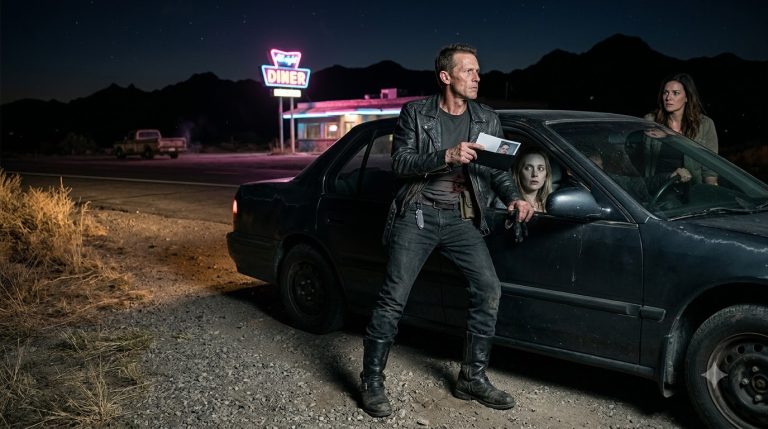
He reached the edge of the industrial district, the diner—a squat, chrome-and-glass relic of a forgotten decade—glowing like a dying ember against the darkness. It was quiet. The neon sign above the door flickered with a rhythmic, buzzing annoyance, casting distorted, elongated shadows across the sidewalk. Ethan paused, his eyes sweeping the street.
He didn’t see the man in the suit, but he felt the absence of the city’s normal rhythm. The street was too still. No cars. No pedestrians. It was a vacuum, a space carefully cleared for a meeting that hadn’t been his choice to initiate.
He stepped inside. The air was warm, smelling of burnt grease and industrial-grade cleaning fluid. A waitress in a faded apron stood behind the counter, staring at a small television mounted in the corner. She didn’t look at him. Ethan took a seat in the back booth, his back to the wall, his bag resting on the seat beside him.
He didn’t have to wait long.
The front door opened, letting in a swirl of damp air and the sound of distant, grinding traffic. Daniel Moore stepped inside. He wasn’t in uniform. He wore a heavy wool overcoat, his shoulders hunched against the chill. He looked different—older, the lines around his eyes etched deeper by the weight of a cockpit and the secrets he had been carrying.
Daniel walked toward the back, his movements heavy and deliberate. He slid into the booth opposite Ethan without a word. He didn’t look around. He didn’t signal the waitress. He simply looked at Ethan, his gaze steady, searching for something in the older man’s eyes that had been buried for years.
“You shouldn’t have come,” Daniel said, his voice barely rising above the low, mechanical hum of the diner’s refrigerator.
Ethan leaned forward, his hands clasped on the table. “They know about the logs, Daniel. They know about the flight.”
Daniel’s jaw tightened. He glanced at the canvas bag. “They know what you allowed them to know. Or did you think they were just following you because of a seat assignment?”
The implication hung in the air, sharp and cold. Ethan didn’t retreat. “I know they’re using you to flush me out. I saw the ledger in the flat. They’ve attached your name to the movement.”
Daniel’s expression flickered, a momentary break in his stoic composure—a flash of something raw and deeply tethered to the past. He leaned in closer, his voice dropping to a whisper that was almost lost in the room’s ambient noise. “They don’t care about the logs, Ethan. They care about the silence. If you don’t disappear—permanently—they’re going to initiate the protocols.”
Ethan’s blood turned to ice. The protocol. He knew exactly what that meant: the systematic erasure of every asset associated with the flight, a clean-up operation that wouldn’t stop at digital records.
“I can’t disappear,” Ethan said, his voice steady, stripped of all artifice. “Not until I know who authorized the intercept.”
Daniel looked toward the window, his eyes catching the flickering reflection of the streetlights outside. The distortion made the world seem to shift and sway, the distance between them feeling both impossibly vast and terrifyingly small. “You’re asking for a death warrant. For both of us.”
Ethan reached across the table, his fingers brushing the edge of Daniel’s coat. The touch was fleeting, a ghost of a gesture he had denied himself for years. “I’m asking for the truth. And I’m asking you to decide which side of the line you’re standing on.”
Daniel pulled back, his face a mask of iron-willed pragmatism. “There is no side. There’s just the shadow, and we’re both standing in it.”
He stood up, his coat billowing slightly as he moved. He dropped a crumpled bill on the table, not for the coffee, but for the silence. “Don’t go to the transit hub. They’re already waiting there. If you want to survive, you need to go to the docks. Pier 42. Look for the vessel with the black hull. It’s the only way out.”
He turned and walked toward the door, leaving Ethan alone in the booth.
Ethan watched him go, the weight of the moment pressing down on his chest. He reached for his bag, his hand trembling, just for a fraction of a second, before he steadied it. The decoy had been planted, the bait was taken, and now he was walking into a trap he knew was waiting for him—a trap he had to navigate if he wanted to reach the heart of the truth. He stood up, pushed the empty mug aside, and stepped out into the rain, the neon buzz of the diner dying behind him as he turned toward the dark, salt-air promise of the docks.
CHAPTER 6: THE MORAL LEDGER
Ethan walked with the measured, rolling gait of a man who knew he was being watched. The streets toward the docks were a labyrinth of rusted industrial decay, where the streetlights were sparse and the shadows were thick enough to hide a regiment. He kept his bag tight to his side, the weight of it a constant, reassuring reminder of what he had managed to salvage.
Every block he covered felt like a tightening of a screw. He was walking directly into a trap, and yet, there was no other path. To go back would be to surrender to the false narrative; to go forward was to gamble on the thin sliver of hope that Daniel was still, in some way, an ally.
The sound of his own footsteps echoed against the corrugated steel walls of the shipping containers that lined the perimeter. He stopped, pressing himself into the recess of a warehouse door, and listened.
Behind him, perhaps two blocks back, a car slowed. No headlights. Just the subtle, high-pitched whine of an electric motor creeping along the wet asphalt. They were playing with him now, keeping just enough distance to ensure he stayed on the intended trajectory.
He closed his eyes for a split second, and the phantom sound returned—the shrill, persistent tone of a cockpit warning from years ago, a mission where the navigation systems had failed and he had been forced to trust his instincts over the data. That moment had cost him his career, his standing, and eventually, his life as he knew it. He breathed through it, grounding himself in the sharp, metallic tang of the harbor air.
He reached the designated zone—Pier 42.
The harbor was a graveyard of industrial giants: colossal cranes like frozen, praying mantises, and stacks of shipping containers that glowed faintly under the distant, hazy harbor lights. He saw the vessel Daniel had described: a sleek, black-hulled trawler swaying rhythmically against the oil-slicked water of the slip. It looked too quiet. Too clean.
Ethan didn’t approach the gangway. Instead, he ducked behind a stack of shipping pallets, his eyes sweeping the deck of the ship. There was no movement. No crew.
He pulled the burner phone from his pocket. Daniel had given him the frequency, a specific channel to check once he reached the pier. He punched in the code, his thumb hovering over the call button. If this was a setup—if they were waiting for him to signal his position before closing the perimeter—then this was the end of the line.
He pressed the button.
Static hissed in his ear. Then, a voice, distant and distorted, but unmistakably Daniel’s. “You’re late, Sergeant.”
“The perimeter is tight,” Ethan whispered, his gaze fixed on the trawler. “Why this boat?”
“Because it’s not for you,” Daniel said, his tone shifting into something hard, detached, and utterly cold. “It’s for the evidence.”
Ethan’s pulse spiked. “You’re not here to help me. You’re here to sanitize the leak.”
“I’m here to make sure you don’t burn everything down for a ghost of a duty that died a decade ago,” Daniel replied. “Drop the bag, Ethan. Leave it on the pier. Walk away toward the secondary dock, and you can still catch the cargo ferry to the outer islands. It’s the only way you survive the night.”
Ethan looked at the bag in his hand. He wasn’t just protecting logs; he was protecting the only tangible connection to the man who was currently plotting his professional—and perhaps physical—dismantling. The weight of it wasn’t just physical anymore; it was a moral ledger. If he left it, he was confirming their version of the truth, validating the lie that he was just a rogue asset who had finally lost his grip.
“You’re playing the part they wrote for you, Daniel,” Ethan said, his voice hard as iron.
“I’m playing the part that keeps you breathing,” Daniel snapped, his control finally fracturing. “Drop it. Now.”
Ethan didn’t drop it. He stood up, stepping out from behind the pallets, exposing himself to the open stretch of the pier. He could see the flash of a phone light on the bridge of the trawler—someone was watching. Someone was waiting for the bag to hit the ground.
Ethan didn’t walk toward the secondary dock. He turned, his eyes fixed on the trawler’s bridge, and started walking toward the gangway. He was going to face the ghost he had spent years trying to save, and he was going to force the hand of the man who had traded his conscience for a seat in the cockpit.
The pier was silent, save for the rhythmic slap of the tide against the pier-pilings. He wasn’t a fugitive anymore. He was a man with nothing left to lose, and that made him the most dangerous thing in the harbor.
CHAPTER 7: THE INTERCEPTION
The darkness wasn’t absolute; it was a bruised, heavy grey, illuminated only by the faint, pulsing lights of the trawler’s navigation console. Ethan didn’t break stride. His boots were silent on the non-slip coating of the deck, and his hand remained locked onto the strap of his bag. The silence of the ship was wrong—too calculated, too empty.
He reached the hatch leading to the bridge, his hand finding the wheel-latch. It turned with a smooth, well-oiled precision that betrayed the ship’s apparent abandonment. He eased the hatch open, the metallic groan muffled by the relentless drumming of rain against the hull.
He slipped inside, his back pressing against the bulkhead. The bridge was bathed in the dim, red glow of emergency lighting. Daniel Moore stood at the helm, his back to Ethan, staring out at the pitch-black harbor. He didn’t turn around.
“I told you not to come, Ethan.”
“And I told you I wasn’t leaving until I knew who was signing the orders,” Ethan replied, his voice a low, steady cadence that cut through the bridge’s stale air.
Daniel turned then. He looked tired—not the exhaustion of a pilot finishing a shift, but the bone-deep weariness of a man who had reached the end of a long, dark road. He held a small, black-cased tablet, its screen illuminated with a cascading sequence of authorization codes.
“You think this is about you,” Daniel said, his voice devoid of anger. “You think you’re the protagonist of this little tragedy. But you’re just the debris left over from a collision that happened fifteen years ago.”
Ethan felt a jolt of cold realization. He remembered the flight—the one where the mission parameters were altered mid-air, the one that had cost him everything. He had blamed the command hierarchy, the bureaucracy, the invisible hands of the agency. He hadn’t realized that the betrayal was personal—that it had been directed at him by the very structure he had helped build.
“It wasn’t an intercept,” Ethan said, the pieces clicking into place with a sickening finality. “It was an erasure.”
“It was an attempt to bury a failure,” Daniel corrected, stepping forward. The light caught his face, revealing a scar along his jawline—a jagged, white line Ethan recognized from the crash. “You were the lead on that mission, Sergeant. And when things went south, when the navigation failed and the cargo was compromised, you were the only one who didn’t come home.”
Ethan stared at him. The cockpit alarm from his memory—the sound he had been hearing in his head for a decade—seemed to amplify, a ghost-sound filling the bridge. “I came home,” Ethan whispered.
“No,” Daniel said, his eyes welling with a flash of bitter, reflected agony. “You left. You disappeared into the machine, and you let the aftermath fall on everyone who was still standing. I spent ten years learning how to fly in the shadow of your reputation, wondering why my father chose his duty over his own house.”
The air on the bridge vanished, leaving Ethan gasping. The truth wasn’t an external threat; it was a wound that had never closed. He looked at the pilot—the man he had tracked, the man he had suspected of being an enemy—and finally saw the architecture of the betrayal. It wasn’t the agency. It was the legacy.
“They didn’t order the intercept,” Ethan realized, his voice trembling. “You did.”
“I needed you to face what you walked away from,” Daniel replied, his hand resting on the throttle. “I needed to see if there was anything left of the man I used to wait for by the front window.”
Outside, the distant, muffled sound of engines approached. The perimeter was collapsing. The authorities were moving in, not to rescue, but to finalize the erasure. Daniel had orchestrated his own downfall to draw Ethan into the light, and now, they were both standing on a deck that was rapidly becoming a tomb.
Ethan looked at the bag in his hand. The logs, the history, the proof—it all seemed like worthless scrap metal against the weight of the man standing in front of him. He realized then that Layer 1—the decoy logs, the corporate espionage, the hunt—had been a mirror. A mirror designed to reflect his own failures back at him until he had no choice but to acknowledge them.
“We have three minutes,” Daniel said, his voice dropping to a whisper of frantic, desperate reality. “The boats are closing the gap. You have to decide, Ethan. Are you going to keep running from the wreckage, or are you going to help me crash the plane?”
The decision hung in the stagnant air of the bridge, the smell of salt and cold iron thick and suffocating. Ethan looked out at the dark, roiling water of the harbor. He had spent ten years as a ghost, haunting the edges of a life he had forfeited. It was time to stop walking through the shadows and start burning them down.
CHAPTER 8: THE HORIZON BREAK
Ethan didn’t reach for the bag. He reached for the throttle.
“They’re not here to talk, Daniel,” Ethan said, his voice hard, locking into the cadence of a mission-critical command. “They’re here to bury the ledger and the pilot. If we move now, we can bridge the gap to the shipping lanes. The harbor patrol won’t pursue past the restricted buoys.”
Daniel looked at him, his face flickering with a final, desperate recognition. He didn’t argue. He shoved the tablet into his coat, his hands flying over the manual overrides. “The engines are cold, but the pump is primed. If I push the RPMs, we’ll hit the red line within a mile.”
“Push it,” Ethan commanded.
The trawler lurched, the heavy black hull shuddering as the diesel engine roared to life. They were moving, a dark sliver cutting through the churning, oil-slicked dark. Behind them, the pier erupted in a flurry of spotlights. The intercept boats were closing, their wake a bright, frantic white foam against the harbor’s obsidian surface.
Ethan watched the distance diminish on the radar. The interceptors were faster, but they were bound by tactical protocol; they wouldn’t risk a collision in the narrow, shallow slip of the dock. He waited until the lead boat was within a hundred yards, the glare of its mounted spotlight blinding, and then he reached for the manual ballast control.
“Port side,” Ethan ordered. “Dump the secondary tanks.”
Daniel tilted the helm. The trawler groaned, banking sharply. The sudden shift in center of gravity caused the ship to wallow, but it also sent a massive, roiling wave of displaced water toward the lead interceptor. The smaller boat crested the surge, its navigation blinded, and it swerved hard, colliding with the concrete pylons of the pier.
A chain reaction of sparks and grinding metal followed—a perfect, mechanical failure of the pursuer’s design.
The remaining boats veered wide, hesitating in the chaos. That hesitation was the window they needed. The trawler cleared the mouth of the pier, its hull vibrating as Daniel pushed the RPMs into the red. They surged forward, the harbor fading into a blur of distant, unheeded lights.
The tension on the bridge didn’t vanish; it transformed. As they cleared the buoys, Daniel slowed the engines, the roar settling into a steady, rhythmic pulse. He turned to Ethan, his posture sagging. The adrenaline was fading, leaving only the sharp, agonizing clarity of what had been lost and what had been salvaged.
“They’ll track the hull,” Daniel said, his voice flat. “But they won’t find us on the outer islands.”
Ethan reached into his canvas bag. He pulled out the micro-cards—the real ones—and held them out. He didn’t say anything. He didn’t have to. The choice was clear. They weren’t going to leak the truth to a world that thrived on the lie. They were going to keep it. They were going to hold it as an anchor, a testament to the failure they had both survived.
Daniel took the cards. His fingers brushed against Ethan’s—a brief, solid contact that grounded them both in the reality of the moment. He didn’t look at the cards. He simply tucked them into his breast pocket, close to the steady, rhythmic thump of his own heart.
Ethan walked to the bridge window, resting his hands on the cold, vibrating sill. He looked out at the horizon, where the first, faint smudge of grey light was beginning to bleed into the dark. The sky wasn’t empty; it was vast, indifferent, and finally, open.
He reached into his pocket and pulled out the small, rusted pocket-knife he had carried since the crash—the one piece of hardware he had managed to keep from that original, failed mission. He held it up, the light of the console catching the edge of the blade, and slowly began to work on the frayed, salt-worn strap of his canvas bag. It had been holding together by force of habit for a decade. He carefully cleaned the metal, trimmed the threads, and cinched the buckle, securing the bag with a functional, permanent mend.
It was a small, quiet act—a repair.
“Where do we go from here?” Daniel asked, his voice soft, the jagged edges of his anger finally smoothed away by the exhaustion.
Ethan didn’t look back. He kept his eyes on the horizon, watching the dark water settle into a rhythmic, calm peace. “We don’t go back,” he said. “We just keep moving.”
The trawler continued its steady, quiet progress away from the shore, a small, dark shape disappearing into the vastness of the dawn. There were no more ghosts to fight, no more systems to navigate, and no more lies to protect. Just the rhythm of the engine, the salt on the wind, and the quiet, steady weight of a truth they finally held in their own hands.