The Ghost in the Ledger: A Cold War Sentinel Fights for the Memory of the Forgotten
CHAPTER 1: The Weight of Iron and Memory
The gate was a bottleneck of stagnant air and impatience. Stanley Burns sat astride the Indian Chief, his spine a rigid line against the heat-shimmer of the pavement. He didn’t watch the young corporal, Miller, whose chest puffed with the frantic, brittle ego of a man who equated a uniform with divinity. Stanley watched the horizon, where the concrete of the base met the dust of the valley—a seam in the world that felt like a scar.
“License and registration,” Miller barked, the sound sharp as a whip-crack against the humid stillness.
Stanley’s hands, mapped with veins like tributaries on a dry map, did not hurry. Every movement was a calculated extraction of energy. He reached into the leather saddlebag, his fingers grazing the worn, supple texture of the pouch tied to his belt. The insignia, etched into the grain, felt cool despite the ambient temperature. It was a weight he had carried across decades, a gravitational pull that kept him anchored while the rest of the world spun into noise.
He produced the ID. It was yellowed, the plastic brittle at the edges, the face in the photo a ghostly echo of a man who had long since stopped existing in any official record.
Miller snatched the card, his face twisting into a sneer of performative authority. “What’s this, Grandpa? Something you printed off the internet?”
Stanley said nothing. He felt the vibration of the bike beneath him, the rhythmic thrum of an engine that had outlived its era. Around them, the line of cars began to hiss with annoyance, a chorus of impatient horns that masked the deeper, silent rhythm of the ghost unit that lived in the pouch.
“I have an appointment,” Stanley finally rasped, the words gravel over iron.
“With who?” Miller scoffed, his fingers smudging the chrome of the fuel tank. “The local bingo hall?”
Stanley shifted his gaze. He didn’t look at the corporal. He looked at the base historian’s office building in the distance—the destination. A flicker of something cold and sharp crossed his pale blue eyes, a defensive perimeter being drawn. He felt the texture of the air change, the way it grew heavy with the unseen history he carried.
Miller shoved the handlebars, and the bike rocked, but Stanley’s posture remained unyielding, a statue of tempered resolve. Then, the corporal reached for his radio, his grin widening, oblivious to the fact that he was triggering a sequence of events he was entirely unequipped to navigate.
As Miller turned toward the guard shack to begin his theatrical humiliation, a sudden, sharp discrepancy caught Stanley’s eye. Tucked into the side of the corporal’s open ledger on the booth counter, he saw a document—a daily gate log—partially obscured by a coffee-stained clipboard. The top line was clear, but the second line, where his own name should have been marked in the visitor queue, was physically erased, the paper fibers thinned to transparency, as if the ink had been chemically scrubbed away by something far more sophisticated than a standard pen.
He wasn’t here just to be challenged. Someone had already scrubbed his presence from the base records before he had even arrived at the gate.
CHAPTER 2: The Ghost in the Ledger
Miller’s hand, still calloused from the morning’s routine, shifted on the counter as he reached for his radio. He was completely oblivious to the vacancy staring back at him from the gate log. Stanley watched the corporal’s fingers, steady and unthinking, slide across the ledger. To Miller, that space was just a blank, a minor administrative hiccup to be smoothed over with a shrug. To Stanley, it was an abyss.
The smell of the guard shack—stale coffee, floor wax, and the metallic tang of the nearby heavy machinery—seemed to recede, replaced by a phantom scent. It was the sharp, ozone-heavy aroma of a jungle storm, the scent of earth turned to mud by sudden, violent rain. Stanley’s breathing slowed. The sensation of the damp, heavy air of forty years ago pressed against his skin, a ghost of a memory that arrived with the precision of a clockwork mechanism.
He saw the page not as it was, but as it had been. He knew the protocol for these entries. They were handwritten in triplicate, the ink bonded to the fiber. To erase a name—not just to cross it out, but to scrub it until the paper grew translucent—required a specialized chemical solvent. It was a trade-level tool. It meant someone with access to the highest echelons of the post’s administrative core had been waiting for him. They hadn’t just expected him; they had been actively pruning his existence from the record as he traveled.
“You aren’t even there, are you?” Stanley whispered. The words were a soft, gravelly murmur, lost in the noise of the idling motorcycles and the distant hum of the base.
He didn’t look back at the crowd of onlookers or the impatient drivers. His gaze remained fixed on that translucent patch of paper, the “missing” space where his identity had been stripped away. He felt the weight of the leather pouch at his belt. It was the only truth that couldn’t be scrubbed, because it didn’t exist in a database. It existed only in the physical world, in the grit and the stitching and the cold, hard reality of the men who had died in the mud.
Miller turned back toward him, his face flushed with the exertion of his own vanity. “You’re still here, old man? I said move the bike. You’re holding up the flow of business.”
Stanley ignored the command, his mind working with the cold efficiency of a chess player sensing a trap. If they were scrubbing the logs at the gate, it meant the threat wasn’t the guards themselves. The guards were merely the symptoms. The disease—the systemic erasure of the Ghost Reconnaissance Unit’s history—was being managed from within the administration building, likely by someone who understood exactly what the “Level One Legacy” clearance meant.
He reached down, his fingers moving with a deliberate, economy-of-motion. He didn’t pick up the ID card Miller had discarded on the ground. Instead, he gripped the handlebars of the Indian Chief. The rusted surface of the metal was cool, offering a friction that grounded him. He felt the engine’s heat rising through his legs.
“I have an appointment,” Stanley repeated, his voice devoid of the rasp he had used earlier. It was steadier now, stripped of the persona of the ‘senile veteran.’ “And it seems the record-keeping here is… incomplete. Perhaps I should go and discuss it with the Archivist myself.”
Miller scoffed, but his hand tightened on his radio. He was losing his footing. He could sense that the atmosphere had shifted, though he lacked the intellect to understand why. The crowd was silent now, their phones still raised, recording the shift in tension.
Stanley kicked the engine to life. The Indian Chief roared—a deep, guttural thrum that vibrated through the pavement, shaking the dust from the surrounding structures. It was a sound that had been engineered for endurance, not speed, built to outlast the crumbling infrastructure around it. He didn’t look at Miller. He shifted the bike into gear and began the slow, measured crawl forward, directly toward the gate barrier that remained stubbornly lowered.
He knew he wouldn’t get through the gate today. That was part of the plan. He needed to see how the system would react to his persistence. He needed to know which wires were live. As he rolled toward the barrier, he felt the familiar, crushing weight of the archival legacy he carried. It was a burden, yes, but it was also a compass. Every time the system pushed back, it revealed the architecture of the secrecy surrounding him.
He moved forward, the Indian Chief’s exhaust painting the air with a haze of blue-grey smoke, his eyes scanning the windows of the command building, watching for the first shadow of a reaction from the ones who had scrubbed the log.
CHAPTER 3: The Quiet Aftermath
The rumble of the Indian Chief’s engine was the only sound in the sudden, expansive silence of the gate. Stanley sat motionless, his posture a study in calculated equilibrium. The barrier—a striped arm of industrial steel—remained lowered, a physical rejection of his right to pass. He did not rev the engine, nor did he look toward the guard shack where Miller stood, his face a mask of confusion and mounting, impotent rage. Stanley simply waited, the vibration of the bike rising through his frame like a steady pulse.
He was measuring the response. The base was a closed circuit, a machine of gears and protocols, and every machine, no matter how complex, had a specific cadence of reaction. By remaining at the barrier, he was forcing the circuit to fluctuate. He could feel the weight of Captain Maria Flores’s gaze from the minivan, a sympathetic pull in the air, but he kept his focus forward. The gatehouse wasn’t the final obstacle; it was merely the entrance to a labyrinth designed to keep ghosts like him on the periphery.
Miller finally stumbled out of the shack, his movements jerky and lacking the previous sheen of arrogance. He walked up to the side of the bike, his boots crunching against the loose gravel. “You’re done, sir,” the corporal said, though the ‘sir’ lacked its usual bite. “I have orders. My sergeant is on his way down here, and he’s not going to be as patient as I am.”
Stanley tilted his head just enough to bring Miller into his peripheral vision. He didn’t turn his entire body. He kept his focus on the horizon, toward the command building. “You’re looking for a conflict, Corporal,” Stanley said, his voice a low rasp that carried the weight of experience. “But you’re fighting a ghost. You don’t have the ammunition for it.”
Miller blinked, his brow furrowing. The ambiguity of the statement seemed to unsettle him more than an overt threat. He looked at the leather pouch at Stanley’s belt—the cracked, weathered surface reflecting the dim, hazy light of the late afternoon—and then back at the veteran’s pale, unflinching eyes. He opened his mouth to retort, but the sudden, sharp wail of a distant siren—not a standard police siren, but the high-pitched, insistent cry of a base command vehicle—cut the air.
It was coming from the interior of the installation, moving at a speed that suggested zero regard for traffic regulations.
Stanley felt the air shift. The humidity, which had been thick and oppressive, seemed to thin, as if the very atmosphere were being sucked toward the approaching vehicle. He recognized the tone. It was the sound of a crisis that had been caught in the throat. He kept his hands on the grips, feeling the heat of the metal. His mind was not on the guards or the siren; it was on the Archivist. He had seen the way the gate logs were scrubbed, the way the ink had been chemically neutralized. Whoever was working in the archives wasn’t just hiding records; they were actively protecting a specific sequence of events from being rediscovered.
The command vehicle rounded the bend, its black exterior catching the sun, casting a long, fleeting shadow over the gate barrier. The vehicle didn’t slow. It came to a screeching, gravel-spraying halt just feet from the Indian Chief. The driver’s door flew open before the momentum had fully dissipated.
General Thompson stepped out.
The scene underwent an immediate, violent transformation. The air became charged with an electrostatic pressure. Miller, realizing the caliber of the arrival, snapped to attention so violently his uniform creaked. The MP who had been lurking near the gate disappeared into the background, becoming nothing more than a static object in the periphery. But Stanley didn’t move. He didn’t salute. He simply sat on his bike, his presence so absolute that the entire assembly seemed to tilt toward him.
Thompson walked toward the bike with a stride that was practiced, precise, and devoid of wasted energy. He stopped three feet away—the exact distance of a respectful, tactical perimeter. His face, usually a statue of command, held a flicker of something raw: a mixture of profound, historical reverence and, beneath it, a palpable, gnawing fear.
“Mr. Burns,” the General said. His voice was not the shout of a commander, but the low, measured tone of a man addressing a superior who existed outside the chain of command. “You shouldn’t have had to wait at the threshold.”
“The gate was closed, General,” Stanley replied, his tone neutral, neither accusing nor forgiving. “I was just checking to see if it was locked from the inside.”
Thompson’s eyes flickered toward the guard shack, then back to the leather pouch. The General’s gaze lingered on the insignia for a heartbeat—a fleeting, almost reflexive recognition—before he masked it with a professional, rigid neutrality. “It’s not locked, sir. It’s being… monitored. There have been adjustments to the visitation protocols that were not properly disseminated to the gate sentries.”
Stanley watched the General’s eyes. He saw the shift, the way Thompson chose his words with the caution of a man walking across a minefield. The General wasn’t just managing a security threat; he was managing a history that was currently being overwritten.
“I’m here to see the Archivist,” Stanley said.
The General’s jaw tightened. A silence stretched out between them, filled only by the low, steady thrum of the Indian Chief’s engine. For a second, the bustling environment of the base faded. It was just the two of them, and the vast, invisible distance of the years that separated them.
“The Archivist is currently unavailable,” Thompson said, his voice flat. “There has been an emergency maintenance in the secure vaults. The climate control system failed. The records are being moved.”
Stanley felt the friction in his own heart. The decoy. The official, bureaucratic excuse that covered the truth. The Archivist wasn’t busy moving files; the Archivist was busy sanitizing them.
“I see,” Stanley said softly. He didn’t press. He didn’t argue. He shifted the bike into neutral and let the engine die. The sudden silence that fell was deafening. “Then I’ll wait. I’m quite accustomed to waiting for the truth to be ready for the light.”
General Thompson looked at him, and for the first time, Stanley saw the full extent of the General’s predicament. He was a man caught between his duty to the machine he served and the ghost of the man who had laid the foundation for that machine’s existence.
“I have an office, Mr. Burns,” Thompson said, his voice barely audible over the wind. “Perhaps we can discuss the nature of your visit in a more appropriate setting.”
Stanley looked at the General, then back at the guard shack, where the scrubbed logs were still sitting in the open, waiting for someone to notice they were empty. He realized then that the General knew. Thompson knew about the scrubbed logs, and he was terrified of what would happen if anyone else noticed the erasure.
“Lead the way, General,” Stanley said, his voice calm, steady, and dangerously clear. “But let’s be very careful about the route we take. I wouldn’t want to get lost in the archives.”
CHAPTER 4: The Archivists Warning
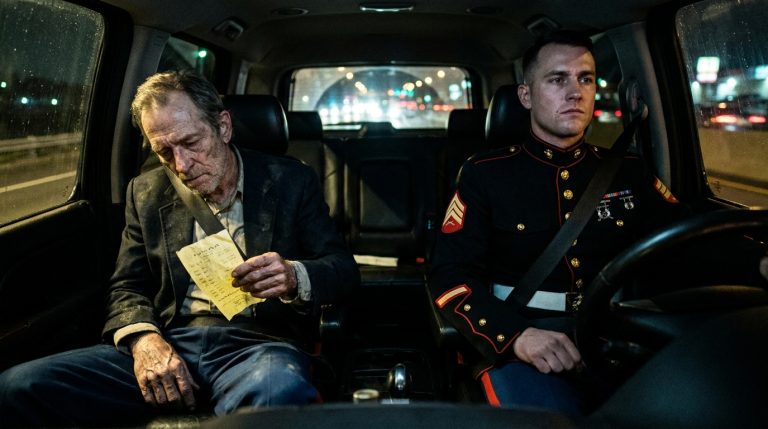
The interior of the General’s command vehicle smelled of sterile, conditioned air and the faint, lingering scent of ozone—a sharp contrast to the grit and oil of the gate. Stanley sat in the back, his hands resting on his knees, his movements still economical, still precise. He did not lean back into the leather upholstery. He remained poised, a sentinel in the center of a machine that was beginning to shudder under the weight of its own internal contradictions.
Thompson sat opposite him, his eyes fixed on the tablet computer in his lap, his jaw set in a line of strained, rigid resolve. The vehicle moved through the base with a surgical, prioritized pace, bypassing traffic and security checkpoints that waved them through without a moment’s hesitation. Every turn they made was a deliberate navigation of a power structure that was actively working to keep the Archivist hidden.
“You mentioned the records are being moved,” Stanley said, his voice low, a quiet rasp that didn’t invite dispute.
Thompson didn’t look up immediately. He tapped the screen of his tablet, his thumb lingering over a series of encrypted directories. “Maintenance is standard procedure, Mr. Burns. The vaults are forty years old. They’re failing.”
“The vaults aren’t failing,” Stanley replied. “The history inside them is.”
Thompson stopped tapping. He looked up, his gaze meeting Stanley’s. In the harsh, artificial light of the cabin, the General looked older—the skin beneath his eyes sagging, the lines of command deepening into ruts of genuine, unadulterated fatigue. “I serve the present, Stanley. I have to protect the integrity of the base as it stands today. If the records you’re looking for were meant to be accessed, they wouldn’t have been sealed at the level they were.”
“They weren’t sealed to protect the base,” Stanley said. “They were sealed to protect the people who were afraid of what those records would say about their own careers.”
The vehicle came to a smooth, silent stop before the archives—a windowless, blocky building that looked like a tomb for paper and ink. Thompson signaled the driver, who stepped out and opened the door. The air outside was hot, dry, and tasted of dust—the smell of the desert, of iron, and of old, forgotten labor.
Stanley dismounted, his joints protesting the movement. He moved toward the entrance with a slow, purposeful gait. The security at the door was dense: two MPs in full gear, backed by a technical specialist holding a handheld scanner. They didn’t recognize Stanley, but they recognized the General’s arrival, and they parted like water before a bow.
Inside, the archives were a labyrinth of sliding steel shelving units, their surfaces covered in a fine, grey patina of age. The smell here was different—a concentrated, cloying scent of decaying parchment and synthetic binder, the olfactory signature of a history that had been allowed to rot.
Stanley walked to the main terminal, but he didn’t look at the computer. He looked at the floor—the tracks of the mobile shelving. They were misaligned. One of the units, clearly marked ‘1975-1980: Special Operations,’ was stuck halfway open, the heavy steel frame shuddering against the floorboards as if something had tried to pry it open from the inside.
“The Archivist isn’t in his office,” Thompson said, his voice echoing in the metallic space. “He’s been reassigned. Effective an hour ago.”
“Reassigned,” Stanley repeated. He walked over to the stuck shelving unit. He reached out, his gnarled, steady hand gripping the edge of the steel. He didn’t pull. He examined the gap. Tucked into the side, hidden by the shadow of the shelving, was a scrap of paper—not a file, not a report, but a fragment of a yellow, carbon-copy receipt.
It was a transfer manifest for ‘Physical Assets: Sensitive.’ The ink was fresh, the stamp still visible. It wasn’t signed by the Archivist. It was signed by the Pentagon liaison office—the same office that had been conducting the Joint Chiefs briefing earlier that morning.
Stanley didn’t pick it up. He noted the location, the specific, deliberate placement of the scrap—it was a message. A breadcrumb.
“The Archivist didn’t leave,” Stanley said, his eyes scanning the surrounding shelves. He saw the missing, misfiled ledger—the one that should have held the record of his unit’s final mission. The space where it belonged was empty, not just vacant, but scrubbed, the dust wiped away in a clean, perfect rectangle. “He was purged. And whoever did it took the ledger.”
Thompson walked up beside him, his gaze falling on the empty space. For a moment, the General’s mask slipped, and Stanley saw a flash of genuine, cold fury. It wasn’t directed at him. It was directed at the empty shelf.
“If that ledger is gone,” Thompson whispered, “the cryptographic keys to the repatriation site are gone with it.”
Stanley looked at the General. The truth of the “Core” reality was beginning to bleed through the facade. The ledger wasn’t just a record; it was the final, hard-copy key to a location that hadn’t been mapped in forty years.
“They don’t know it’s a key,” Stanley said, his voice a low, hard warning. “They think it’s just a list of names. If they try to force the files, they’ll trigger a wipe of the entire local server.”
Stanley felt the friction of the room. The Archivist hadn’t just been reassigned; he had left a warning. He had realized the danger, realized the value of what he was guarding, and he had hidden the key in the only place no one would think to look: in the chaos of a purge.
He looked back at the empty shelf, then toward the back of the archive, where a single, heavy steel door stood slightly ajar.
“We need to find him,” Stanley said. “Before they finish the audit.”
CHAPTER 5: The Confrontation of Shadows
The heavy steel door, painted in a dull, industrial gray, creaked as Stanley pushed it further inward. It moved with the stubborn, grinding friction of metal on concrete—the sound of long-neglected maintenance. Beyond it lay a cramped, poorly lit utility room that housed the secondary backup for the archive’s digitization servers. The air inside was warmer, humming with the low, persistent vibration of cooling fans.
Stanley didn’t enter immediately. He stood at the threshold, his eyes adjusting to the flicker of an emergency light. The smell here was sharper, a cocktail of ozone and the dry, metallic odor of overheating circuitry. He could see the Archivist—or rather, the Archivist’s shadow—cast against the back wall by the erratic pulsing of the status lights. The man was hunched over a terminal, his fingers dancing across the keys with the frantic, rhythmic intensity of a pianist playing a desperate final concert.
“You’re working in the dark, friend,” Stanley said, his voice quiet but resonant against the steel walls.
The figure jerked, the keyboard clattering as he pulled his hands away. The Archivist turned, a thin man with glasses that caught the dim light, hiding his eyes behind reflective lenses. He looked like a man who had been running for a long time, his breathing shallow and jagged. He recognized Stanley instantly, not because they had met, but because he had spent weeks scouring the files Stanley had been trying to protect.
“You’re late,” the Archivist rasped. He gestured toward the screen, which was currently flickering with lines of cascading, corrupted data. “I’ve been waiting for someone to show up who actually knows what this is.”
General Thompson, standing just behind Stanley, stepped into the room, his eyes scanning the space for threats. He remained silent, a looming shadow of official authority that the Archivist seemed to disregard entirely.
“You have the ledger,” Stanley stated, looking at the heavy, leather-bound book sitting on the terminal desk. It was the only thing in the room that looked ancient, its surface scarred by time and the rough handling of a journey it was never meant to take.
“I have the ledger,” the Archivist confirmed. “But I don’t have the time. They’ve locked the internal server. When the override completes in three minutes, this entire room is going to be wiped. Remote-triggered purge.”
Stanley stepped forward, the floorboards groaning under his weight. He didn’t look at the screen. He looked at the ledger. He knew its weight; he knew the texture of the paper inside, each page a testament to a man who had never existed on paper. “Did you read them? The names?”
The Archivist wiped sweat from his forehead. “I read enough to know that the Pentagon liaison isn’t looking for a location. They’re looking for the proof that the unit existed. If they get this, they win. They can rewrite the last forty years of Cold War history to suit a narrative that erases your work entirely.”
Suddenly, the lights in the room dimmed significantly, and the server fans groaned, slowing to a mechanical wheeze. A power fluctuation—the archive’s primary grid was being throttled.
“They’re cutting the power,” the Archivist said, his voice rising in panic. “The purge is manual now. They’ve sent a team to the maintenance floor below us. They’re going to physically dismantle the hard drives.”
Stanley walked to the terminal. He didn’t reach for the ledger. He reached for the Archivist’s hand. He pressed his own gnarled, steady hand over the man’s trembling fingers. “Stop. Take a breath. You’ve spent forty years of your life protecting these records. You’re not going to lose them in the last three minutes.”
“How?” the Archivist whispered. “The system is dead.”
Stanley looked at the terminal. He wasn’t a technician, but he knew the logic of secrets. He looked at the leather-bound ledger, then at the physical port on the side of the terminal. It was an archaic connection, designed for the hardware of a different era. He reached into his belt pouch and pulled out a small, metallic object—a key, simple and unassuming, which had been sewn into the lining of the pouch since the jungle.
“They think this is a book of names,” Stanley said, the realization clear in his voice. “But it’s a physical encryption key. You don’t need the server to be alive. You need it to be blind.”
Stanley inserted the key into the port. The terminal’s screen didn’t flicker. It went black. A moment of absolute, terrifying silence passed, followed by the deep, resonant chime of a system accepting a master override.
“What did you do?” Thompson asked, his voice tight.
“I locked the server,” Stanley said. “Physically. If they try to force the drives now, the drive platters will shatter. The data becomes unreachable, unrecoverable, and completely private.”
The Archivist stared at the screen, then at Stanley. “You destroyed it.”
“No,” Stanley replied, his hand lingering on the ledger. “I archived it. Now, it belongs to the only people who have a right to it: the ghosts.”
The door behind them banged open. Footsteps—heavy, rhythmic, tactical—echoed in the hallway. The team was here. Stanley didn’t turn. He looked at the General. “You have a choice, Thompson. You can facilitate the audit, or you can uphold the promise. Which one is the legacy you want to leave behind?”
The General stood between the door and the terminal, his back to the incoming team. He drew a long, slow breath, his hand coming to rest on his holster. He didn’t draw, but he stood his ground. He had made his choice.
CHAPTER 6: The Final Ledger
The silence that followed the General’s decision was thick, heavy, and absolute. The tactical team stood frozen in the hallway, their weapons leveled, but their momentum had shattered against the unexpected wall of Thompson’s integrity. The General didn’t move; his silhouette remained a dark, unyielding gatekeeper, shielding the small, hum-filled room where the ghosts of the unit were finally coming to rest.
“Stand down,” Thompson’s voice cracked, not with hesitation, but with the raw, iron-clad authority of a man who had reclaimed his own chain of command. “That is an order. Secure the perimeter. No one enters this room.”
The lead officer of the team paused, his eyes darting to the terminal, then back to the General’s face. He saw the cold, immovable truth reflected there. He lowered his weapon by a fraction of an inch, a silent admission of the shift in the room’s gravity. “General, we have orders from the liaison office. The server must be audited.”
“The audit is complete,” Thompson replied. He didn’t blink. “And the findings are classified above the liaison’s clearance level. This archive is now under the direct jurisdiction of the Garrison Commander. Dismissed.”
The team lingered, the tension vibrating in the air like a plucked wire, but they slowly backed away. The metallic slap of their boots against the concrete faded as they retreated down the long, industrial corridor.
Stanley stayed by the terminal, his hand still resting on the ledger. He could feel the cooling of the hardware beneath his touch—the final, mechanical death of the server. The Archivist sat slumped in his chair, his eyes fixed on the black screen.
“They’ll be back,” the Archivist whispered, his voice trembling. “They won’t stop with a team of guards. They’ll come with paperwork, with subpoenas, with the full weight of the institution.”
“Let them,” Stanley said, his voice quiet and firm. He took the ledger—the heavy, scarred book—and tucked it securely into the pouch at his side. The weight of it was substantial, a physical anchor for the names that had been erased from history. “They can bring all the paper they want. They cannot erase the reality of what happened, and they cannot access the encryption that is now physically tied to the men who didn’t come home.”
General Thompson stepped into the room and closed the heavy steel door behind him. The sound of the latch clicking into place was final—a closing chapter. He looked at Stanley, his expression transitioning from the steel of the commander to the vulnerability of the man.
“What happens now, Mr. Burns?” Thompson asked.
“Now?” Stanley looked around the dim, metallic space. He reached out and touched a rusted cooling pipe that ran along the wall. The texture was rough, flaky under his thumb—the grit of decades of service. “Now, the ghosts can sleep. And I can finally go home.”
The aftermath of the confrontation was a study in stillness. The institutional machine continued to hum—the base didn’t stop—but the specific, predatory urgency that had hunted Stanley since the gate had been blunted. In the days that followed, the story of the archive purge became a whispered legend among the base personnel, a tale of how a “living legend” had forced the institution to confront its own amnesia.
The Pentagon liaison was quietly reassigned. The records, while inaccessible, remained protected within the architecture of the base, no longer a target for sanitization, but a sealed vault that even the General treated with a new, reverent silence.
Weeks later, Stanley sat in his usual booth at the local diner. The air was cool, the smell of damp earth drifting in from the open door—the scent of a clearing storm. He had brought the leather pouch with him. He set it on the table, the cracked leather glowing in the afternoon light.
A shadow fell across the booth. He looked up to see Corporal Miller, now in civilian attire, standing with a look of quiet hesitation. He didn’t swagger; he held a small, weathered tool—a wrench—that he had been using to work on his own motorcycle.
“I heard about the archives,” Miller said, his voice devoid of the arrogance that had once defined him. “I heard you did something that kept them from erasing everything.”
Stanley gestured to the empty seat. Miller sat down. He didn’t say anything for a long time, just watched the way Stanley’s hands, gnarled and steady, rested near the pouch.
“I wanted to ask,” Miller started, struggling for the words. “Is it… was it worth it? The years of waiting, the fight to keep them from being forgotten?”
Stanley looked at the pouch. He thought of the jungle, the rain, and the men whose names were etched into the paper inside. He reached out and, with a slow, deliberate motion, traced the insignia on the leather. He then picked up the small, worn wrench Miller had placed on the table—a tool that had been misused, but was now being held with the care of a craftsman. He laid it gently back down, the movement a quiet, symbolic repair of the connection between the generations.
“Pride is a temporary coat, Corporal,” Stanley said, his voice gentle and resonant. “But a legacy? A legacy is a bridge. You don’t build it for yourself. You build it so that those who come after don’t have to wander in the dark.”
He looked out the window. The sun was setting, casting a warm, golden light over the distant, rusting silhouette of the base. For the first time in forty years, the weight at his side felt less like a burden and more like a promise kept. The silence between them was no longer filled with the static of the past, but with the quiet, steady breath of a world that had finally, tentatively, begun to remember.