The Devil’s Crucible: A Corporal’s Calculation in the Coral Hell of the Peleliu Ridge
CHAPTER 1: THE WEIGHT OF THE DEVIL
The air in the cave didn’t circulate. It hung heavy, saturated with the metallic tang of cordite and the sweet, sickly rot of a jungle being burned away by high-velocity explosives. Corporal James Donovan pressed his back against the jagged, razor-sharp coral wall, his breath hitching in his throat. Thirty feet away, through a gap that looked more like a wound in the earth than a defensive fortification, he saw the rhythmic pulse of muzzle flashes.
The Japanese defenders inside were ghosts of a war that had ceased to follow the rules of geometry or logic. They held the Umurbrogol Pocket with a frantic, cold precision that had already swallowed fourteen men from his platoon. Donovan looked down at his Thompson submachine gun. The familiar, cold steel felt alien now. It was no longer the trench broom that had defined the European theater or the open-field skirmishes of Saipan; it was a host for something fundamentally unnatural.
Sergeant Whitmore crawled up beside him, his movements fluid and efficient despite the chaotic thunder of the USS Mississippi’s 14-inch shells vibrating through the bedrock. Whitmore set a wooden crate on the damp ground. The red-stamped letters seemed to bleed in the low light: M1 FRANGIBLE GRENADE CARTRIDGE. EXPERIMENTAL.
Donovan reached out, his fingers brushing the crate. It felt unusually heavy, the wood dense and tight. He pulled a single round from the crate. It was longer than the standard .45 ACP, the copper-jacketed projectile gleaming with a dark, dull menace. It didn’t just feel like ammunition; it felt like a concentrated focal point of all the desperation the military had bottled up over the last fifty-eight days of hell.
“They call them ‘Boom Devils’ on the radio,” Whitmore whispered, his voice barely audible over the rolling, rhythmic drumbeat of the naval bombardment.
Donovan didn’t answer. He turned the round over in his hand. He wasn’t a hero, and he wasn’t a martyr. He was an electrician from Philadelphia who knew how to bridge a circuit to produce a spark. He looked at the firing port through the jagged gap in the rock. The Nambu operator was moving again, shifting the heavy weapon to cover the gap where a squad of Marines had been pinned for three hours.
Donovan slid the magazine into the well. It didn’t slide with the smooth, oily friction of a standard mag; it clicked with a heavy, substantial thud. The bolt closed with an agonizing, grinding resistance. He checked his sight picture. The crosshairs of his iron sights danced against the shadows of the bunker’s interior. He knew the briefing had been clear: semi-automatic fire only. Overheat the barrel, and he wouldn’t just be shooting; he’d be holding a fragmentation grenade that was already live.
He glanced at the serial number on the crate: FAEXP44-772. It wasn’t just a number; it was a mark of ownership. He realized, with a sudden, sinking chill, that the military hadn’t just sent these rounds to the island—they had sent them to be field-tested. And he was the circuit breaker.
His heart rate slowed, not from courage, but from the grim, professional focus of a man who had accepted the odds. He wasn’t aiming for the bunker anymore; he was aiming for the vulnerability in the concrete. The thunder of the shells lifted. The sudden absence of sound was deafening, a physical vacuum that pulled the breath out of the cave.
“Light ’em up,” Whitmore hissed.
Donovan rose. He didn’t think about his wife back in Philly, or the life he had once measured in miles of copper wire. He thought only of the trigger pressure—the precise moment where the piezoelectric crystal would shatter, and the “Boom Devil” would finally wake up. He squeezed.
The recoil was violent, a sharp, jarring crack that felt as if someone had hammered his shoulder with a pipe. The round arced through the dim air, striking the firing port’s edge. A white flash blinded him, and the concrete, which had laughed at naval shells for three days, vanished in a starburst of gray dust and jagged shrapnel.
The hole was wider now, but through the settling dust, Donovan saw something that shouldn’t have been there. A flash of a uniform—not Japanese, but an olive-drab scrap that looked suspiciously like a piece of an experimental crate from a different sector.
CHAPTER 2: THE ANOMALY IN THE DUST
The world inside the bunker was a frantic gray blur, but the scrap of olive-drab webbing caught in the jagged teeth of the broken concrete port stood out with terrifying clarity. It was U.S. Army issue. Standard, distinct, impossible.
Donovan didn’t pull back. The adrenaline that had sharpened his senses into a lethal edge a moment ago suddenly curdled into something cold and leaden. He gripped the Thompson so tightly his knuckles ached, the serrated metal of the handguard biting into his skin. The Nambu machine gun was silent, a twisted ruin of steel and cooling brass, but the silence that followed the explosion was heavier than the gunfire had been.
“Donovan! Move!” Sergeant Whitmore’s voice was a jagged rasp, cutting through the haze of pulverized coral and dust.
Donovan didn’t move. He leaned closer to the port, his boots sliding slightly on the slick, dust-covered stone. He reached out with a trembling gloved finger, brushing the edge of the olive-drab fabric. It was stained, not just with dirt, but with a grease that smelled unnervingly like the lubricant on the M1 Frangible Grenade Cartridges he’d been issued only an hour ago.
The realization hit him with the force of a physical blow to the chest: someone from his side had been inside this bunker.
“Donovan, goddammit!”
A burst of light from a neighboring bunker signaled the arrival of mortar fire, the shells walking their way up the ridge. The ground beneath the cave floor shuddered, a deep, tectonic groan that threatened to collapse the very roof he was sheltering under. He withdrew his hand, the scrap of webbing snagging for a second before drifting into the darkness of the bunker’s interior, hidden again by the encroaching shadows.
He scrambled back, his breath ragged, the taste of dry coral dust coating his throat. Whitmore caught him by the collar, dragging him down into the relative safety of the rear trench.
“What in the hell are you doing?” Whitmore shoved him against the wet, cold wall of the cave, his eyes wide and wild. “We have a job to do. We don’t stare at the kill, we move to the next one.”
Donovan looked at the sergeant, his pulse hammering against his ribs like a trapped bird. He wanted to tell him about the fabric. He wanted to ask how an American supply marker had ended up inside a Japanese fortress that had supposedly been sealed for months. But the words died in his throat. He looked at the crate of experimental rounds still sitting by the firing position. The same serial number, the same peculiar, oily smell.
“I saw something,” Donovan started, his voice barely a whisper. “Inside. There was equipment. American equipment.”
Whitmore’s face hardened. The frantic energy of the battle seemed to drain out of him, replaced by a mask of practiced, dangerous neutrality. He didn’t ask what he saw. He just looked at the crate, then back at Donovan. “You didn’t see anything. We’re here to crack these holes open, Corporal. That’s the mission. You start seeing things that aren’t there, you lose your head. You lose your head, you get us killed.”
Whitmore grabbed a fresh magazine of the explosive rounds and shoved it into Donovan’s hand. The weight of it was suffocating. Donovan realized then that the sergeant wasn’t just directing the fire—he was protecting the secret. Or maybe he was just terrified of what that secret meant.
Donovan took the magazine, his fingers fumbling as he fed it into the weapon. The metal clicked, a hollow, final sound that echoed off the damp stone walls. He forced himself to look at the next firing port, a dark, rectangular abyss three hundred yards further up the ridge. He didn’t want to think about the fabric, or the implications of where it had come from, or why his own government would provide experimental weaponry that looked so much like the waste he’d seen inside that bunker.
He was a cog in a machine that was eating itself alive, and every trigger pull was just another rotation of the gear.
The mortar shells continued to fall, the rhythm of the explosions becoming a part of his heartbeat. He leaned out from behind the coral cover, the Thompson shouldered once more. He tried to focus on the sight picture, but his eyes kept darting back to the shattered firing port. He could still see the scrap of fabric in his mind’s eye—an intrusive, phantom image that made his hands sweat, causing the weapon to sway.
He adjusted his stance, his muscles aching from the strain. The tactical, logical part of his brain—the part that used to calculate electrical loads and ground circuits—began to partition the reality of the situation. He couldn’t trust the brass. He couldn’t trust the mission. He couldn’t even fully trust the man standing two feet away from him.
He was a soldier on the front line of an experimental war, and he was beginning to understand that the most dangerous thing on Peleliu wasn’t the Japanese artillery. It was the discrepancy between the story they were told and the ground he was walking on.
He took a breath, holding it until his lungs burned, and squeezed the trigger. The “Boom Devil” cracked, a sharp, white-hot exclamation point in the gloom. The concrete port erupted, but this time, Donovan didn’t watch the explosion. He turned his head away, focusing on the dark, empty space of the cave floor, wondering if the next shot would reveal something even worse.
“Keep pushing,” Whitmore ordered, his voice devoid of emotion.
Donovan moved. He stepped over the slick, bloody earth and the jagged chunks of shattered coral, the Thompson heavy and cold in his hands, each step taking him deeper into a mystery that felt increasingly like his own grave.
CHAPTER 3: THE FRICTION OF DESPERATION
The bolt jammed. It wasn’t the clean, mechanical failure of a standard M1; it was a sticky, dragging resistance, as if the very metal of the receiver had swelled in the heat. Donovan yanked the charging handle back, his palm slick with sweat and coral dust. It didn’t budge.
Around him, the ridgeline was a cacophony of incoming fire. The Japanese were adapting. The crack-crack-crack of their own Nambu machine guns had shifted in tone, becoming more aggressive, more targeted. Whitmore was crouching ten feet away, firing his own Thompson with a measured, rhythmic cadence, his eyes darting toward Donovan.
“Fix it!” Whitmore roared, his voice barely audible over the thumping of the naval artillery still punishing the ridge’s peak.
Donovan dropped to one knee, retreating behind the jagged, blood-stained slope of a coral outcrop. He pulled the magazine—a twenty-round stick loaded with the experimental copper-jacketed rounds—and inspected the feed lips. The brass was discolored, a dull, sickly purple near the base. Overheating. He’d been warned, but the urgency of the assault had pushed him past the threshold of the weapon’s design.
He looked at the weapon again. The handguard was burning hot; the smell of searing oil and overheated copper stung his nostrils, a sharp, acidic scent that promised catastrophic failure if he pushed it. He had a spare magazine, but it was just like this one—another fifteen rounds of unstable, temperamental power.
His mind raced through the physics of the jam. It wasn’t the spring; it was the expansion of the casing. The experimental powder load was generating pressure that, while lower than the chamber rating, was far more persistent, turning the Thompson’s internal components into a heat sink. He wasn’t just a soldier anymore; he was a failing mechanical part in a failed machine.
He took his cleaning rod, a thin piece of steel that felt fragile in his trembling hands, and rammed it down the muzzle to clear the chamber. The projectile—that weird, dense, tungsten-filled copper matrix—wasn’t just lead and casing. It was a miniaturized explosive charge that had been cooked by the cycle. If he jammed the rod too hard, if he triggered that piezoelectric detonator while it was still lodged in the barrel, he wouldn’t just lose the weapon; he’d lose his hands.
He worked with agonizing slowness, his movements precise and cold, ignoring the screams of Marines further down the slope and the rhythmic whistle of incoming mortar shells.
Clink.
The rod hit the back of the round. He exerted just enough pressure, feeling the metal give, then felt the resistance drop. The casing popped free, spinning out onto the coral. It was deformed, the brass puckered at the base like a blister. He stared at it for a split second, the reality of the weapon’s volatility sinking in. This wasn’t just an experimental tool; it was a liability. Every shot was a roll of the dice, and the house was rigged.
He looked up. Whitmore was watching him, not with concern, but with a predatory focus. “You’re lagging, Donovan. We’re on a clock.”
“The ammo is cooking the barrel, Sarge,” Donovan said, his voice hard, lacking the deference he’d shown earlier. “It’s not just the rounds—it’s the heat. We push these guns any harder, they’re going to detonate in our hands.”
Whitmore didn’t flinch. He just reloaded, the click of his magazine sounding like a death knell. “That’s what the Ordnance captain said. He also said that bunker up ahead is the main communication node for this entire sector. If we don’t open it, the entire battalion gets chewed up when they try to move across the valley floor.”
Donovan stood up, his legs shaking with a mixture of fatigue and white-hot anger. He looked toward the bunker. It was massive, a multi-tiered fortress of reinforced concrete that stood like a tombstone at the top of the ridge. He could see the firing ports—multiple, interlocking, and deadly. He thought about the scrap of fabric he’d seen earlier. If there were American supplies in these bunkers, it meant someone had been here before—someone who hadn’t made it out, or someone who had been trying to do what he was doing, and failed.
He checked his weapon again. The metal was still warm to the touch, a pulsing heat that felt like a heartbeat. He realized that the “Boom Devil” rounds were a distraction—a way to ensure the bunker was destroyed at any cost, regardless of what evidence—or what survivors—remained inside.
“I need to cool it down,” Donovan said, pointing toward a small, stagnant pool of water created by the previous night’s downpour in a nearby rock crevice.
“You have thirty seconds,” Whitmore replied, turning his back to cover the approach.
Donovan crawled to the pool, dipping the barrel of the Thompson into the murky, gray water. A hiss of steam erupted, a violent, high-pitched scream of metal protesting the sudden thermal shock. He pulled it out, wiping the grime away with his sleeve. It wasn’t perfect, but the heat had subsided.
He moved back into position, the wet barrel slick in his grip. He peered through his sights at the main firing port. He could see the shadow of someone moving inside—a silhouette that didn’t look like a soldier, but like something else, something smaller. A shiver traced its way down his spine.
He didn’t fire. He watched, his breathing steady, his finger resting on the trigger with a newfound, terrifying caution. He was the one holding the hammer, but he realized, with a clarity that hurt, that someone else had already set the stage.
CHAPTER 4: THE FREQUENCY OF GHOSTS
The static hissed, a wet, tearing sound like canvas being ripped in the wind. Donovan’s breath caught in his throat. He looked back toward the command post, a shallow depression in the rock where Miller, the radioman, sat huddled over a bulky backpack set. Miller’s face was pale, his eyes wide and unblinking as he clutched the handset to his ear, his thumb hovering over the dial.
“Did you hear that?” Donovan hissed, abandoning his position at the firing port. He crawled across the razor-sharp coral, his knees feeling the bite of every jagged edge.
Miller didn’t answer. He was staring at a small, water-resistant notebook, his pen vibrating against the paper. The transmission came again—a monotone, clinical voice reading a sequence of numbers: FAEXP44-772-B. Status: Consumed. Objective: Collateral Assessment.
Donovan reached out and grabbed Miller’s shoulder, shaking him. The radioman jumped, his hand slipping, and the handset clattered against the stone floor. The static grew, then died into a hollow, oppressive silence that was worse than the gunfire.
“Who was that?” Donovan asked, his voice low and vibrating with a sudden, sharp fear. “That’s my crate. That’s the serial number of my crate.”
Miller looked at him, and for a moment, Donovan saw a reflection of his own terror. “It’s not command, Jimmy. I don’t know who it is. I’ve been trying to filter it out since we landed, but it keeps coming back on every channel. It’s not on the frequencies we’re using. It’s like it’s… piggybacking.”
Donovan glanced toward the ridge, toward the bunker he had been aiming at just seconds before. The shadow inside that firing port seemed to be watching them now, waiting. He looked back at his Thompson. The metal was still lukewarm, but it felt heavy, a burden of lead and explosive potential that he wasn’t sure he could carry anymore.
“They’re watching the ammunition,” Donovan said, the words tasting like copper in his mouth. “They aren’t just sending us the rounds to clear the caves. They’re recording what happens when the caves come down.”
“It’s not just recording,” Miller whispered, gesturing to the notebook. He showed Donovan the page. There were columns of data—numbers, dates, and names of squads. Squads that had been reported as KIA in the last three weeks. “They’re tracking the ‘efficiency’ of the collapse. They want to see how much concrete we have to shatter before the structures stop being bunkers and start being tombs.”
The gravity of the situation settled over them like a shroud. The “Boom Devil” wasn’t a weapon; it was an experiment in structural failure, and his platoon was the control group. The scrap of webbing he’d found earlier—it wasn’t just a coincidence of war. It was part of the evidence.
Donovan looked toward the ridgeline. The battle was still raging, but the rhythm of it had shifted. The Marines were advancing, unaware that their path was being paved by an engineering test that cared little for the lives lost in the process. He thought of Whitmore, who had been so adamant that they finish the mission. Did he know? Or was he just as much a part of the experiment as the rest of them?
He crawled back to his firing position, the Thompson feeling different in his hands now. It wasn’t a tool of defense; it was a piece of high-stakes, lethal hardware, and he was the one deciding where the “test” would end. He raised the weapon, but he didn’t aim at the firing port. He angled it toward the bunker’s foundation—the point where the coral structure met the concrete, the structural weak point that Miller’s data suggested was the intended target for the “collateral assessment.”
He wasn’t fighting the Japanese anymore. He was fighting the test itself.
He didn’t fire. He watched the bunker, waiting for the shadow to move again, waiting for the truth to reveal itself in the chaos of the ridge. The air grew thinner, colder, and for the first time in the entire campaign, Donovan felt the weight of his own existence against the sheer, crushing mass of the island. He wasn’t a hero. He was a variable in an equation he didn’t control, and he had to find a way to rewrite the math before the final calculation was run.
“Keep your eyes on the port,” Whitmore called out, his voice echoing off the limestone. “We’re pushing for the final breach in ten minutes. Get those magazines ready.”
Donovan looked at the remaining crates of ammunition stacked against the wall. They looked like orderly, innocent stacks of supply, but to his eyes, they were ticking clocks. He stood up, his joints aching, and checked the bolt of his Thompson. He was going to fire, but he was going to make sure the results were anything but what the people on the other side of that radio wanted.
CHAPTER 5: THE SHIFTING GRAVE
The lurch was not a tremor of the earth; it was the structural skeleton of the ridgeline finally surrendering to the relentless pressure of the “Boom Devil” rounds. Donovan felt the change in the soles of his boots before he heard it—a deep, resonant vibration that traveled through the coral, turning the ground into something fluid and treacherous.
He lunged forward, not toward the bunker, but away from the slope, his heart hammering against his ribs. Behind him, the sound was catastrophic—a grinding, tectonic roar as the foundation of the fortress began to slide. The concrete port he had been aiming at crumpled inward like wet cardboard, but the entire face of the ridge was groaning, ready to shed its skin.
“Donovan! Get out of there!” Whitmore’s voice sounded thin and distant, swallowed by the massive collapse.
Donovan skidded to a halt as a shelf of rock, ten feet wide and thick as a tank, tore itself from the ridgeline and plummeted into the ravine below. The dust plume erupted instantly, a thick, choking cloud of white limestone and ancient, pulverized earth that reduced visibility to a few inches. He crouched, his eyes burning, his hands shielding his face. The air was thick enough to chew.
He could hear them now—not whispers, not ghosts, but the genuine sounds of men caught in the grinding teeth of the collapse. From deep within the bunker, cries rang out, muffled and desperate. They were human, undeniably human, and they were trapped beneath the very fortifications he had been ordered to dismantle.
He forced himself to move. He shouldn’t have been thinking about the “collateral assessment” or the radio transmissions now; he should have been thinking about survival. But the image of the olive-drab fabric, the scrap of American gear, kept flashing in his mind. He scrambled up the incline, his lungs laboring for oxygen in the dust-filled air.
He reached the edge of the breach. The entire front wall of the bunker had been peeled back, exposing the interior like a gutted carcass. It wasn’t just a defensive position. It was a workspace.
Donovan peered over the jagged lip of the broken rock. He saw crates—dozens of them—stacked against the back wall, but they weren’t Japanese. They were US Navy supply crates, reinforced with heavy, waterproof seals. Miller’s radio notebook had been right. They weren’t just clearing the island; they were clearing the evidence.
A movement in the dust caught his eye. A figure was stumbling out of the wreckage—a Japanese soldier, his uniform shredded, one arm hanging uselessly at his side. He didn’t raise his rifle. He didn’t even look at Donovan. He just stared at the broken crates, his face a mask of profound, hollow confusion.
The soldier collapsed, his knees hitting the coral with a dull thud. He looked up at Donovan, his eyes clouding over. He muttered something, a soft, broken sound that might have been a name or a prayer.
“Why?” Donovan whispered, though he knew the soldier couldn’t understand him. “Why were you guarding these?”
The soldier didn’t respond. He just slumped forward, his forehead touching the debris.
Donovan stood there, his hands trembling. He looked at his Thompson, then at the crates. The realization hit him with a cold, absolute certainty: the bunker hadn’t been a target because it was a military threat. It had been a target because it contained the records—the documentation of what had actually happened on Peleliu, the “assessment” data that the brass wanted buried under a million tons of coral.
The ground shuddered again, a secondary collapse that sent a shower of pebbles raining down around his boots. He had to move, but he was paralyzed by the weight of the secret. If he left now, the collapse would finish the job. The evidence would be entombed, and the “collateral assessment” would be a success.
He stepped into the wreckage, his boots crunching on broken glass and shattered electronics. He found a small, leather-bound logbook snagged on a corner of a shipping crate. He snatched it up and shoved it into his jacket, his heart rate spiking as he heard footsteps behind him.
Whitmore was approaching, his silhouette emerging from the dust like a specter. He held his Thompson at the low ready, his eyes scanning the ruin with the cold, calculating focus of a man who was looking for something—or someone—that shouldn’t have survived.
“Donovan?” Whitmore called out, his voice sharp and guarded. “Did you find anything?”
Donovan’s hand went to the logbook hidden in his jacket. He stood there, his back to the ruins, feeling the heat of the bunker radiating through his clothes, knowing that the answer he gave would be the last one he ever gave in this war.
CHAPTER 6: THE WEIGHT OF EVIDENCE
Whitmore didn’t blink. The dust from the secondary collapse still hung in the air, a fine, ghostly powder that coated their uniforms and turned the world into a monochromatic nightmare. He took one step closer, his boots crunching on the shattered concrete. The muzzle of his Thompson was pointed down, but Donovan knew that was a tactical affectation—a way to keep his options open without appearing overtly hostile.
“You look like you’ve seen a ghost, Corporal,” Whitmore said. The sergeant’s voice was remarkably steady, stripped of the frantic energy he’d displayed during the assault. It was the voice of a man who dealt in certainties, not questions.
Donovan felt the leather-bound logbook against his ribs, a hard, unforgiving rectangle that felt heavier than the weapon he carried. He forced a dry, rasping laugh. “Just the dust, Sarge. Makes you see things.”
Whitmore searched his face, his eyes lingering on the slight bulge in Donovan’s jacket. The air between them was a vacuum, pulled taut by the unspoken threat. “The dust plays tricks on the mind. It makes men keep things they don’t need, and throw away things that could save them.” He leaned in, lowering his voice. “We have a job to finish. The radio is reporting that the command post is expecting a full report on the bunker’s neutralization in ten minutes. They want to know if the primary objective is clear.”
Donovan knew what that meant. A “clear” report would trigger the final leveling of the ridge—an artillery saturation that would turn every inch of this site into a crater. It would destroy the evidence, the crates, and any chance of anyone ever knowing why this bunker was prioritized over a hundred others.
“It’s clear,” Donovan said, his voice sounding hollow to his own ears. “The bunker is gone. Nothing but rubble.”
Whitmore nodded slowly, satisfied. He turned his back to Donovan, scanning the perimeter, but he didn’t move away. He stayed close, a sentinel of the status quo. “Good. Then let’s move back to the assembly line. There’s no point in lingering where the air is this thick.”
Donovan followed, his movements mechanical, his mind racing. He had to get to Miller. He had to know if the radioman was still transmitting, or if he’d been silenced the moment he started tracking those numbers. Every step toward the assembly point felt like a betrayal. He felt the weight of every man in his platoon who had died, and he realized they weren’t martyrs—they were just data points.
They reached the edge of the assembly point, a cratered, muddy stretch of coral that had been converted into a staging area. Miller was there, hunched over his radio, but the set was open, the internals exposed. He was holding a screwdriver, his hands shaking so violently he kept dropping it into the mud.
“Miller,” Donovan signaled, keeping his voice low.
Miller looked up, his eyes darting toward the distant figures of the command detail. He whispered, “They found out. They knew I was logging the traffic.”
Donovan didn’t stop. He walked past Miller, his hand brushing the man’s shoulder. “Get ready to move,” he murmured. “We’re leaving as soon as the barrage starts.”
“To where?” Miller hissed. “There’s nowhere to go but forward into the cave complex.”
“That’s exactly where we’re going,” Donovan replied. He turned, looking back at Whitmore, who was now talking into his own radio. Whitmore’s posture was different—stiff, focused, authoritative. He wasn’t talking to the platoon leader. He was talking to someone else.
Donovan realized he had to act now. He didn’t need to save the logbook; he needed to ensure it reached someone who understood the cipher. He pulled his water-resistant canteen from his belt, unscrewed the cap, and dropped the logbook inside, folding it to fit. It was a desperate, sloppy solution, but the wax seal on the pages might hold for a few minutes.
He looked at Miller. “If I don’t come back from the next push, take this to the 1st Marine Division medical tent. Look for a guy named Henderson. He’s the only one who doesn’t report to the ordnance office.”
Miller stared at the canteen, his expression shifting from panic to a grim, hardening resolve. “Henderson is dead, Jimmy. He was killed at the ridge yesterday.”
Donovan felt the floor drop out from under him. The chain of evidence was being methodically dismantled, one person at a time. The mission wasn’t just about clearing the bunkers; it was about sanitizing the entire operation, leaving no witness who could connect the ammunition to the destruction of the evidence.
He stood in the center of the staging area, surrounded by men who were unknowingly participating in their own erasure. He felt a sudden, sharp, and terrifyingly cold resolve. If the experiment needed a variable, he would be the one that broke the equation. He checked his Thompson one last time. He wasn’t going to clear the next bunker. He was going to use it to draw the curtains back.
CHAPTER 7: THE FINAL THRESHOLD
The beacon pulse was a rhythmic, high-frequency chirping that cut through the low-level static like a surgeon’s scalpel. Whitmore didn’t reach for his radio. He simply turned, his eyes narrowing as he scanned the staging area. He knew the signal was coming from the canteen in Donovan’s grip. The secret wasn’t just in the logbook; the ammunition crates themselves were tagged, broadcasting their location to someone who wasn’t on the front lines.
Donovan didn’t run. Running was an admission of guilt, and he needed this to stay a tactical operation for as long as possible. He started toward the tunnel entrance, his boots sinking into the saturated, gray mud. The tunnel was a yawning, jagged maw that led into the heart of the ridge, a labyrinthine vein of coral that smelled of deep, stagnant water and ancient decay.
“Donovan!” Whitmore’s voice was no longer a command; it was a threat, stripped of its professional veneer. “Drop the gear. That’s an order.”
Donovan didn’t look back. He ducked into the darkness of the tunnel, the sudden transition from the harsh Pacific light to the oppressive, claustrophobic gloom of the cave making him dizzy. He felt the phantom presence of Henderson—the man Miller said was dead—guiding him toward the deeper chambers. He wasn’t hallucinating; he was following the trail of data.
He moved with a grim, practiced efficiency, keeping his Thompson tucked close to his chest. The tunnel narrowed, the walls glistening with moisture that looked like sweat on cold skin. He could hear Whitmore behind him, the sergeant’s heavy, determined tread echoing against the limestone.
He reached a junction—a split in the path where the air grew suddenly, unnaturally cold. This was the place where the “assessments” were performed. He saw the equipment—not tactical, but diagnostic. Oscilloscopes, lead-lined storage lockers, and high-frequency recording arrays hooked into the very rock of the ridge. The Japanese hadn’t just been defending this place; they had been forced to share it with a U.S. observation team that was using the cave as a pressure chamber for the “Boom Devils.”
He stopped at the central console. The crates were stacked here, thousands of them, filling the cavern with the dense, oily smell of volatile explosives. He didn’t just need to destroy the logbook; he needed to turn the experiment on itself.
“You don’t understand, Corporal,” Whitmore’s voice echoed from the tunnel entrance. He was standing there, his silhouette framed by the faint, diffused light from the surface. “We aren’t the ones in control. The data… the data saves thousands of lives by perfecting the yield. If we don’t do this here, we do it in an occupied city. Which do you want?”
Donovan looked at the sergeant, his grip tightening on the Thompson. The “moral logic” of the antagonist was laid bare—a cruel, utilitarian arithmetic that reduced human lives to variables in a detonation table.
“I want the truth,” Donovan said, his voice flat, devoid of emotion.
He didn’t wait for Whitmore to react. He raised his Thompson, not at the sergeant, but at the storage array hooked into the cavern ceiling—a massive, unstable cluster of electrical leads that were currently charging the final set of experimental rounds.
“Don’t,” Whitmore warned, raising his weapon.
“You said it yourself, Sarge,” Donovan replied, his finger tightening on the trigger. “The dust makes men keep things they don’t need.”
He fired. Not a burst, but a single, controlled shot. The round struck the primary transformer, and the cavern erupted. It wasn’t the white, crackling flash of a single “Boom Devil” round; it was a chain reaction, a cascading symphony of unstable explosive cores detonating in a pressurized, confined space. The floor dropped out, the air turned into a wall of fire, and the entire experimental suite collapsed, burying the data, the equipment, and the horrifying truth of the “collateral assessment” under an absolute, immovable weight of rock.
Donovan was thrown backward by the concussion, the darkness of the deep cave rushing to meet him. He felt the cold, hard canteen in his hand, a final, fragile shield against the collapse. He didn’t know if he was going to survive, but as the ceiling began to groan and buckle, he felt a strange, quiet peace. The equation was broken. The variable had been removed.
The last thing he heard wasn’t the roar of the ridge coming down; it was the faint, rhythmic ticking of his watch, the only sound that still made sense in a world that had gone completely, violently mad.
CHAPTER 8: THE DUST OF TRUTH
The darkness was absolute, heavy with the smell of wet limestone and the acrid, lingering tang of the detonated “Boom Devils.” Donovan lay on his side, his breath coming in shallow, ragged hitches. His ears rang with a high, constant whine, but through the ringing, he heard the sound of stones settling—a slow, geological sigh of a tomb being sealed.
His left hand was pinned, but he could feel the cold, hard weight of the canteen tucked against his chest. It was the only thing in the world that mattered. It held the logbook, the ink still fresh enough to bleed truth onto the page.
Movement above him. Not a collapse, but a deliberate, slow shifting of debris. He lay still, his eyes adjusting to the absolute absence of light. He wasn’t alone. He heard the metallic snick-click of a Thompson bolt being cycled—the sound of someone cleaning a weapon in the dark.
“I thought I heard you breathe, Corporal,” Whitmore’s voice came from the gloom, sounding strangely hollow. The sergeant was alive, though his voice lacked the hard edge of command. It sounded tired. “I spent twenty minutes digging. I wasn’t sure if I was looking for a survivor or a report.”
Donovan shifted, the motion sending a lance of white-hot agony through his shoulder. “Why?” he rasped. “Why go this far? For a report?”
Whitmore didn’t answer immediately. He sounded closer now, the rustle of his gear soft against the stone. “You think this was just a bunker, don’t you? You think the Ordnance office cares about how much concrete a round can crack.”
Whitmore sat down nearby, his heavy boots crunching on the rubble. “These caves weren’t just Japanese defenses. They were the staging grounds for the next war. The brass knew the conventional stuff wouldn’t cut it in the next theater, and they needed a field-test environment that wouldn’t make the headlines in the Times. Peleliu was a petri dish, Donovan. We weren’t clearing the ridge; we were observing the rate of structural failure under extreme conditions.”
Donovan felt the bile rise in his throat. “You sacrificed an entire division to calibrate a weapon?”
“We didn’t sacrifice them. We utilized them.” Whitmore’s tone was purely academic, the voice of the man who had been reporting to the invisible observers on the radio. “The data you have in that canteen? It’s the final output of the Peleliu series. It proves the efficacy of the C2 charge as a structural demolition tool at scale. The cost was high, yes, but the result is a strategic advantage that will end the next conflict before it starts.”
Whitmore sighed, a long, weary sound. “Give me the logbook, Jimmy. Let’s make this official. You played your part. You were the most effective variable in the set. You even managed to trigger the final sequence manually.”
Donovan gripped the canteen, his knuckles turning white. He thought of Henderson, of Miller, of the fourteen men who had died before him in the first three days. They weren’t variables. They were men who had been lied to, used as target practice for a weapon that was meant to be buried.
“You’re wrong,” Donovan whispered. He reached into his jacket with his free hand, feeling the metal edge of his combat knife. “The variable isn’t the weapon. It’s the man holding it.”
He didn’t strike out at the sergeant. Instead, he shoved his weight against the debris pinning his arm, using the leverage of the cave floor to shift the rock. The movement triggered a small, controlled landslide of loose coral between him and Whitmore.
“The logbook is already gone, Sarge,” Donovan said, his voice stronger now, finding the rhythm of his old life as an electrician, the one where he knew how to fix broken things. “I rigged the canteen to the battery of the radio array before I fired. The moment I triggered the collapse, it transmitted the entire logbook back to the Pacific Fleet’s comms center. It’s on every desk from Hawaii to Washington by now.”
Whitmore went silent. The static in the air seemed to increase, a psychic pressure that made the cavern feel like it was shrinking. The lie had been his shield, and Donovan had just dismantled it.
“You lie,” Whitmore said, but there was a crack in his armor.
“Check the frequency,” Donovan dared him.
Whitmore stood up abruptly, his boots scuffing the floor as he scrambled to the remains of the diagnostic station. He didn’t find the radio—he found only the silence of a failed experiment. In that moment of distraction, Donovan shifted his weight one last time, pulling his arm free from the debris. He was hurt, he was trapped, but he was no longer a variable.
The aftermath was long. The rescue teams didn’t find them until the next morning. They found the bunker flattened, the records incinerated, and the sergeant sitting in the dust, staring at a pile of broken electronics, his mind seemingly unmoored from the war. Donovan was found in the back of the tunnel, clutching a rusted canteen that held only water.
They returned home as heroes of a battle no one would ever fully explain. The “Boom Devil” production ended, the classified files were sealed, and the stories were buried under the weight of the peace that followed.
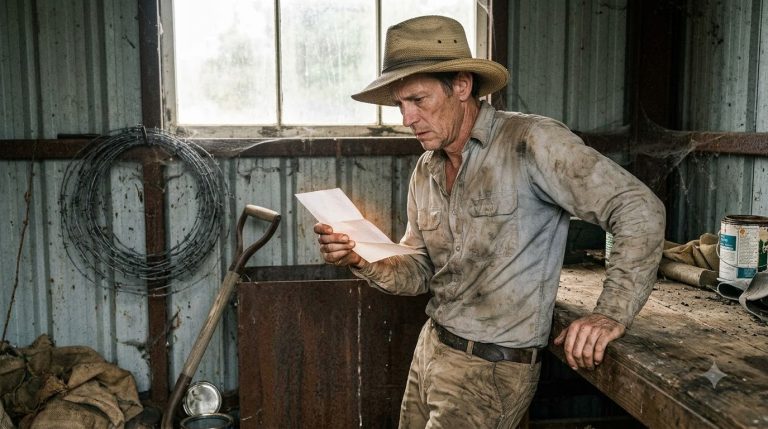
Years later, sitting in his workshop in Philadelphia, James Donovan would sometimes pick up a piece of scrap copper wire and turn it over in his hands. He never spoke of the caves or the rounds that sounded like nails being driven into the earth. He only knew that for one summer in 1944, he had been the only man who knew the true price of the victory. He had returned, he had mended the electrical lines of his neighborhood, and he had found a quiet, fragile peace in the simple, honest work of making things function properly again.
He looked out his workshop window at the quiet street, a place where concrete was just a sidewalk, not a tomb. He had survived the experiment, and that was the only calibration that mattered.