The House With No Key: How a Seemingly Forgotten Mother Locked Out the Children Who Bled Her Dry
CHAPTER 1: THE COLD THRESHOLD
The taxi door closed with a hollow thud that vibrated straight up into Helen’s shoulder. She paid the driver in exact bills, her fingers stiff from days of gripping hospital bed rails.
The front yard looked less like a home and more like a casualty of time. Overgrown crabgrass choked the flowerbeds, and a thick wedge of yellowed envelopes jammed the mailbox slot until the metal lip stayed permanently agape.
Helen dragged her small canvas grip up the two wooden steps. Her breath came shallow, burning the back of her throat with every inhalation of the damp afternoon air.
Inside, the foyer smelled of stagnant air and old dust. A single white dinner plate sat abandoned beside the kitchen faucet, crusted with graying remnants of eggs eaten weeks ago.
She walked past the counter, her eyes dropping immediately to the marble surface where an open mail folder lay exposed. Her gaze tracked down the rows of printed text, stopping hard at the itemized charges from Paris restaurants, luxury boutiques, and flight upgrades dated right through her third day in the cardiac ward.
Her fingers tightened around the handle of her bag until the knuckles turned chalk white. There was no sudden shout of rage, no dramatic sweeping of items onto the floor.
Instead, a profound, icy stillness settled over her chest. She pulled out the silver house key, dropped it onto the counter beside the fraudulent statement, and walked down the hall to the cold silence of her bedroom.
CHAPTER 2: SOUND OF BRASS
The front hallway filled with a metallic smell of shavings and graphite.
The young locksmith wiped grease from his thumb onto his denim thigh and held up a blank brass key.
—Morning, Mom. You called about new locks, he said, his voice carrying the easy casualness of someone who had never had his own home treated like a hotel lobby.
Helen did not smile. She kept her fingers buried deep in the pockets of her cardigan, her thumb pressing hard against the frayed hem of the lining.
—Every single one of them. Front, back, and the side garage door, she said, her voice dropping into a register that brook no argument. I want every old key rendered useless before the sun sets.
He blinked, catching the sharp edge in her tone, and nodded without asking questions.
The metallic clatter of brass tumblers hitting the hardwood floor sounded like small stones dropping into an empty bucket.
For months, Daniel and Lisa had treated those locks as a revolving door, letting themselves in unannounced to drop off laundry, raid the pantry, or store their oversized luggage when between trips.
Each turn of the screwdriver in the locksmith’s calloused hands felt less like maintenance and more like severing a rusted anchor chain.
When the young man finished packing his tools, he handed her a heavy velvet-lined pouch containing the new brass blanks.
—That should do it. Nobody’s getting past these without a sledgehammer, he said, hoisting his bag over one shoulder.
Helen closed the heavy front door, slid the deadbolt home with a solid, echoing thunk, and dropped the new keys into her apron pocket.
CHAPTER 3: INK AND IRON
The house was entirely quiet except for the scratching nib of a ballpoint pen against cheap lined paper.
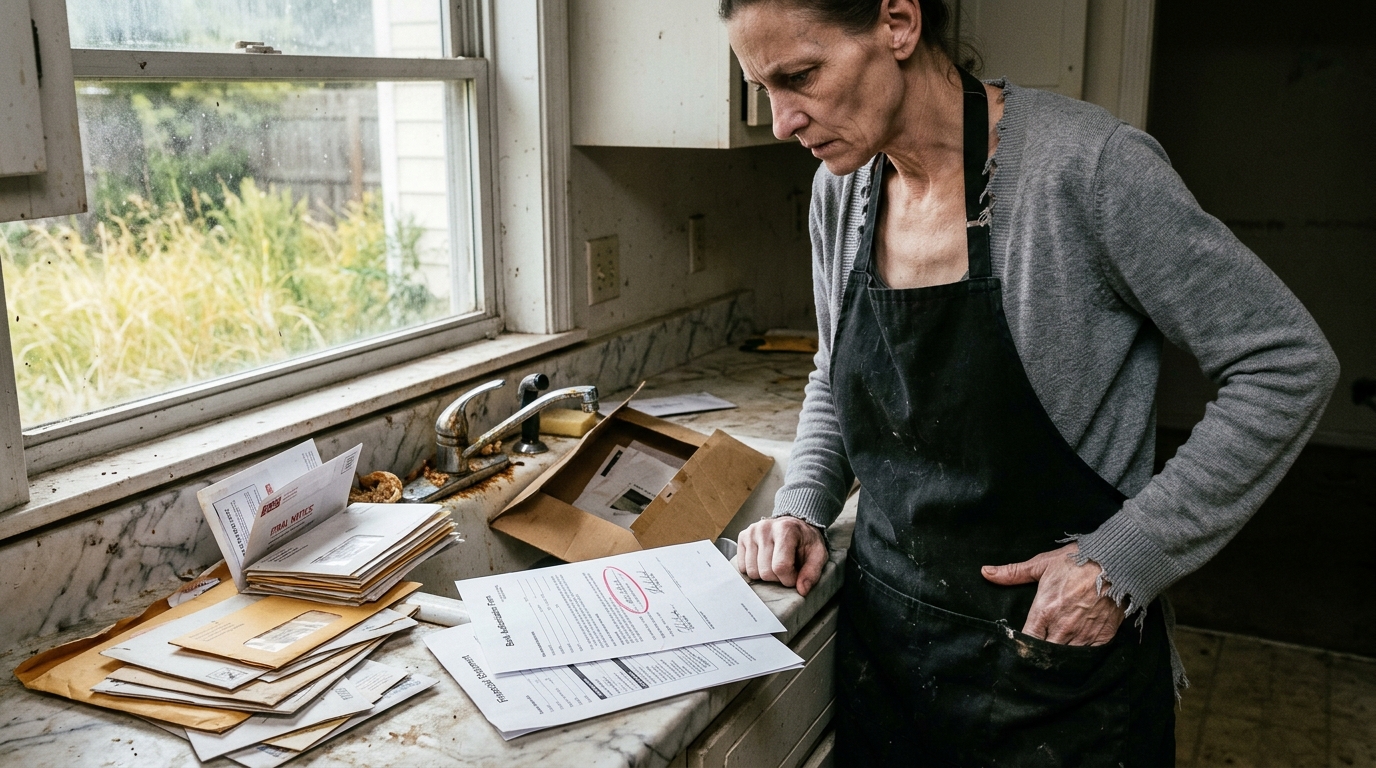
Column by column, Helen mapped out the exact math of her own abandonment.
June twelfth, nine hundred dollars at a European leather shop, matching the precise hour she lay under the rhythmic thrum of an MRI machine.
—They didn’t just forget, she whispered to the empty walls, her voice dry as parchment. They budgeted for it.
She turned the page, her eye catching a faint embossed seal near the bottom corner of an attached bank authorization form.
It was a notary stamp dated three weeks before her stroke, bearing a signature that bore a clumsy, forced imitation of her late husband’s hand.
The realization hit her like a sudden draft across the back of her neck—this wasn’t just casual neglect born of selfishness; it was a deliberate, premeditated paper trail designed to siphon her life savings before she could object.
Her jaw tightened into a rigid line.
She didn’t slam the book shut or scream into the void.
Instead, she reached for a red highlighter, dragged the marker across the forged signature with cold precision, and folded the statement into her apron pocket.
CHAPTER 4: THE EMPTY ROOMS
Dust motes danced in the afternoon sunlight streaming through panes that hadn’t been washed in months.
Monica paged through her listing notes, her sensible heels clicking sharply against the exposed hardwood.
—It’s a clean layout, solid bones, she said, though her gaze darted to the empty corners where heavy oak furniture used to stand. You’ve moved out faster than most clients manage, Helen.
Helen stood near the hallway arch, her fingers wrapped tightly around the velvet-lined pouch of brass keys in her pocket.
—There was nothing left worth keeping in these rooms, Helen said, her voice cutting through the hollow acoustics of the house.
The realtor didn’t press further, sensing a cold boundary that refused to be crossed.
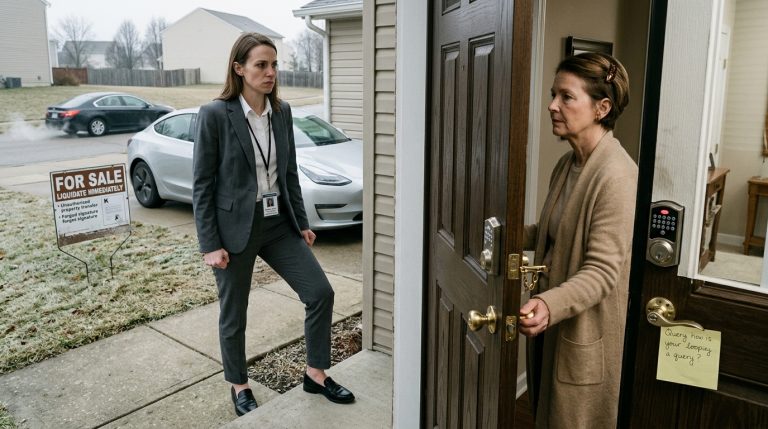
Instead, Monica flipped her pen over and began jotting down marketing specs for the front yard sign.
Every box packed and stacked by the back door represented another layer of unearned leverage stripped away from Daniel and Lisa.
The house was no longer a shared family vault; it was a marketable asset about to be liquidated entirely out of their reach.
Helen walked to the kitchen counter, picked up the forged authorization form, and slipped it inside her leather handbag alongside the new deed papers.
CHAPTER 5: THE SEALED ALBUM
The brass key rattled inside the deadbolt with a loose, mocking jiggle that refused to catch the tumblers.
Daniel twisted the handle again, his face flushing a mottled red beneath his vacation tan.
—Lisa, did you swap the locks or lose the ring? he snapped, his voice cracking against the hollow wooden frame.
—Why would I touch the locks? Lisa shoved past him, her designer bag sliding off her shoulder as she rattled the brass knob herself.
From across the street, Mrs. Kendall stood by her hydrangea bushes with a pair of garden shears, watching the sudden panic unfold with quiet steady eyes.
—You’re wasting your time knocking, the neighbor called out, her voice carrying clearly over the overgrown lawn. She moved out weeks ago. Sold everything off, too.
Daniel’s head snapped around, his jaw working silently as his eyes darted from the empty driveway to the bare windows.
—Moved? Where? We left her luggage inside the hall closet just before we flew out!
—Ask the album, Mrs. Kendall said, pointing a weathered finger at the doorstep.
Daniel dropped to one knee, snatching up the heavy, leather-bound family album resting against the welcome mat.
He flipped the cover open, his fingers snagging on a folded sheet of white paper tucked tightly between two pages of old birthday photographs.
His eyes raced across the handwritten ink lines detailing hospital dates, unpaid electric bills, and the precise cost of their European dinners.
—This isn’t real, he muttered, his hands trembling as Lisa peered over his shoulder.
—Read it out loud, she whispered, her lips losing all color.
—While you were sipping champagne in Paris, I was lying in a hospital bed alone, Daniel read, his voice dropping into a harsh rasp. You didn’t come. But you remembered my money.
The silence that followed was heavier than the suitcases they had just dragged up the walkway.
CHAPTER 6: WAVES OF AUTONOMY
The wooden frame rattled as Daniel shoved his weight against the exterior latch, his face flushed crimson through the glass pane.
—You can’t just lock us out of everything, Mom! he shouted, his voice muffled by the thick timber while Lisa sobbed quietly against his shoulder.
Helen did not blink. She set her teacup down on the saucer with a sharp, unbroken click that cut through the noise of the surf outside.
—I already have, she said, her voice steady enough to match the granite foundations of the coast.
The forged power of attorney and the bank ledgers lay locked securely inside her steel strongbox across the room, monuments to a betrayal that would never touch her accounts again.
Daniel slammed his fist against the frame one last time, realizing too late that his unearned leverage had evaporated into salt spray.
The frantic demands eventually died down, replaced only by the heavy, dragging scuffs of retreating footsteps moving back toward the gravel drive.
Helen stood up slowly, her joints aching with the honest exhaustion of a day well-lived, and walked over to latch the window against the evening breeze.
The silence that filled the small cottage was deep, unbroken, and entirely her own.