The Geometry of Patience: How One Discarded Notebook Dismantled the Perfect Suburban Facade of Maple Rest
CHAPTER 1: The Weight of Paper
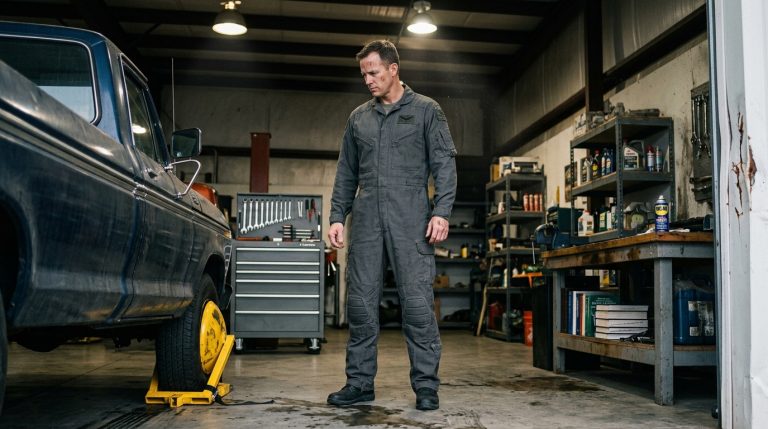
The fine was for one hundred and fifty dollars, a precise, calculated number meant to sting but not quite draw blood. I stood in the center of my garage, the space that used to define the rhythm of my life—the smell of WD-40, the precise hum of a well-maintained workspace—and looked at the wall of wreckage.
There was a dead elliptical machine, its display panel cracked like a spiderweb, and a rolling clothes rack that leaned precariously against my primary tool chest. Boxes were stacked in an uneven tower, their cardboard softened by humidity and the vague, clinging scent of stale cedar and cheap wine. It was a landfill of someone else’s ambition, occupying the floor space where my ’98 Ranger should have been.
I took a sip of lukewarm coffee. The mug was ceramic, heavy in my hand, an anchor in the sudden, sharp silence of the room.
My phone buzzed against the workbench. A text from Constance Whitfield.
Derek, darling, the HOA has standards. Let’s get that garage cleared before the weekend inspection.
She wrote like she was ordering dessert—sweet, polite, and entirely devoid of substance. My thumb hovered over the screen. I could feel the grit of the concrete floor beneath my work boots, the dry, metallic taste of iron in the air. For months, I had been the good neighbor. I had been the man who paid the fines to avoid the friction, the man who stayed quiet to preserve the peace of the cul-de-sac.
But as I looked at the rug—a thick, rolled-up monstrosity that smelled of damp cat hair and neglect—I realized the silence hadn’t bought me peace. It had only bought me a seat at the bottom of her hierarchy.
I set the coffee mug down on the workbench. It made a flat, dull clack against the metal surface. I didn’t reach for my tools. Instead, I walked to the kitchen drawer, pushed aside a set of dull steak knives and a handful of loose batteries, and pulled out a blue spiral notebook I’d bought at a Walgreens on a whim. It was cheap, thin, and the wire binding was already slightly bent.
I sat at the kitchen table and cleared a space. The house felt too quiet, the fluorescent light above the sink buzzing with a low, rhythmic frequency that seemed to vibrate through my teeth. I opened the notebook to the first page. The paper was bright white, waiting.
I didn’t feel anger. Anger was for people who liked to shout, and shouting was a waste of perfectly good energy. I felt something colder, more industrious. I uncapped a pen, the plastic clicking in the empty house.
I started at the top. The date. The time. The fine. Then, I began to log the storage, the dates the moving van arrived, and the exact cost of the parking space I was currently paying for at Hank’s place. Every entry was a brick.
My reflection in the kitchen window caught my eye—a man of fifty-four, tired but steady. Behind me, the shadows in the hallway deepened, and for a fleeting second, the house seemed to shift, as if the walls themselves were holding their breath, waiting for the first crack in the foundation. I leaned closer to the page, my pulse drumming a slow, steady cadence against my wrist. I wasn’t just writing; I was building.
The front door groaned in the wind, a long, rusted sound that shivered through the frame. I didn’t look up. I wrote down the cost of the last fine, my handwriting sharp and angular. Then, I turned the page.
CHAPTER 2: The Architecture of Evidence
The graphite tip of the pen scraped against the cheap, pulpy paper of the notebook, a dry, rhythmic sound that seemed to measure the passing seconds. I didn’t rush. The anger that had bubbled up when I first read the fine notice had been refined, distilled into something colder and far more structural. I wasn’t fighting a war of words; I was building a case.
My kitchen table was becoming a workspace. I had spread out the violation notice, the original text from Constance, and a stack of printed receipts from Hank’s garage—four months of storage fees, sixty dollars a month, totaling two hundred and forty dollars just for the privilege of keeping my truck from being towed.
The house outside was quiet. A car drifted by on the street, its tires humming against the asphalt, and for a moment, I saw the ghost of my ’98 Ranger sitting in my own garage. It was a phantom memory—the way the engine would catch on a cold morning, the specific metallic smell of the grease I’d wiped off the dipstick. That truck was a tool, a partner in the work that kept my life running. Constance hadn’t just taken my space; she had sidelined my independence.
I looked down at the notebook. I had the costs, but costs were only the surface. I needed the why.
I pulled out my phone and tapped into the search bar, the screen’s blue light washing over the table. I searched for “Whitfield Interiors LLC.” I knew the name from the moving van’s branding—the one that had shaken my kitchen windows eight months ago. The state registry was a public, dusty corner of the internet, but it held the keys to the kingdom.
Owner of Record: Constance A. Whitfield.
I leaned back, the wooden chair creaking under my weight. It was so simple it was almost offensive. She wasn’t just storing junk; she was staging. She was using my residential garage as a private, overhead-free warehouse for her business, shifting throw pillows and fake rugs into houses she was trying to flip, then charging me a fine when the very clutter she moved in started to look “unprofessional.”
The logic was viciously sound. If I complained, she held the board over my head. If I stayed silent, she kept her storage for free.
A sharp, intrusive thought sliced through my focus: What if I just cleared it?
I shook my head, the motion stiff in my neck. No. If I moved it myself, I’d be in breach of some arbitrary bylaw she’d likely invent on the spot. I needed to document the violation before I touched a single box. I reached for my camera, the weight of it familiar and grounding. I needed to turn the garage into a crime scene, one where every item was cataloged, indexed, and photographed from three different angles.
I pushed the chair back and stood up. The kitchen floor felt cold through my boots. I walked through the house, the hallway shadows stretching long and thin, like fingers pointing toward the back door.
When I stepped into the garage, the air was different. It was stale, thick with the smell of trapped dust and the faint, underlying scent of cedar from her rug. I didn’t see junk anymore. I saw a ledger.
I began with the elliptical. I shot the broken display, the serial number, the layer of fine gray dust that had settled over the handrails. Then, the boxes. I moved systematically, just as I had when I was a pipe fitter—measure twice, cut once. I took a photo of the label on every box, even the ones that just said Kitchen/Misc. I captured the clothes rack, the way it leaned against the pegboard like a wounded soldier, and finally, I panned the camera across the whole floor to show the sheer scale of the intrusion.
Every flash of the camera was a pulse, a rhythmic recording of a wrong being righted.
I stopped in front of the roll-up rug. It was thick, heavy, and smelled of cat hair. I knelt, the concrete biting into my knees, and pushed a corner aside to reveal a small, frayed tag. Whitfield Staging.
I didn’t smile. I just felt the gears in my head turn. I had the LLC. I had the photos. I had the cost. Now, I needed the law. I walked back to the kitchen, the notebook clutched in my hand like a shield. I had an old friend, Pete—a paralegal who understood the difference between a neighborhood squabble and a legal violation.
I sat back down at the table and opened the phone. My fingers hovered over his contact. If I made this call, there was no going back. I would be engaging the gears of the system, and once they started moving, they wouldn’t stop until they ground the obstruction into dust.
I looked at the blue notebook. The empty pages were still waiting. I was ready to start writing.
CHAPTER 3: The Meeting of Islands
The call to Pete had lasted less than three minutes, but it had altered the geometry of my life. He didn’t ask if I was sure; he just told me what to look for, his voice a steady, dry rasp on the other end of the line. By the time I hung up, the house felt different—less like a refuge and more like an observation post. I had my orders, and I had my notebook.
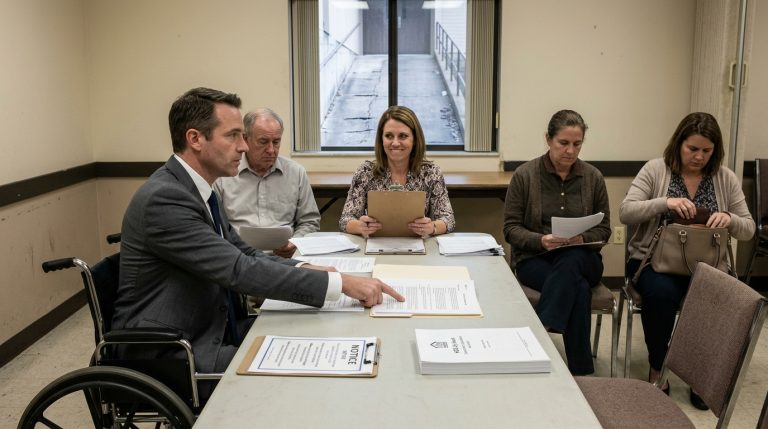
Three days later, I stood in the doorway of the community center. The building was a relic of municipal fatigue, a low-slung brick structure that smelled of burnt coffee, industrial floor wax, and the kind of stale air that hadn’t circulated since the late nineties. The fluorescent lights overhead hummed with an aggressive, buzzing frequency that made the back of my neck prickle.
The room was filled with rows of folding chairs, arranged in loose, uneven lines like a flotilla of rafts adrift in a sea of beige carpet. I recognized a few faces—the retirees who spent their mornings walking the cul-de-sacs, the young families who were already too tired to be here. They sat in the chairs, shoulders hunched, expressions guarded.
At the front of the room, behind a laminate table that had seen better decades, sat the board. Constance was there, draped in a white linen blazer that looked like armor. She was talking, her smile a fixed, polished expression that never quite reached the hardness of her eyes. Beside her, Ron sat with his hands folded in his lap, his gaze fixed on a spot on the floor near the wastebasket. He looked exactly like a man waiting for his sentence to be read.
I walked to the back of the room, the heels of my boots clicking sharply against the linoleum. I didn’t sit down. I stood in the shadows near the door, my hand resting on the heavy, textured cover of the blue notebook in my jacket pocket.
As Constance shifted, a man in a maintenance jumpsuit—a utility worker for the district—pushed through the side door, dragging a heavy bag of trash. He stopped near the board, his face flushed, and muttered something to the man sitting to Constance’s right. I couldn’t hear the words, but I saw the reaction. The board member’s face went pale, and Constance’s smile didn’t falter, but her posture tightened, her spine locking into a rigid, defensive line. The maintenance worker shrugged, his dismissive gesture cutting through the rehearsed formality of the meeting like a dull knife. It was a small, ugly moment of administrative friction, a reminder that even the most carefully managed facades had cracks.
Constance leaned forward, her voice ringing out, clear and practiced. “We appreciate everyone’s commitment to our standards,” she said, her eyes sweeping the room, stopping for a micro-second on me before sliding away. “We are committed to maintaining the integrity of our neighborhood.”
Integrity. The word hung in the stale, heavy air. I took a slow, steady breath. I could feel the sharp edge of the notebook’s spiral binding against my palm.
I looked at the people in the chairs. They were islands. That was her real power—not the bylaws, not the fines, but the isolation. She had made sure we never spoke to each other, never compared our grievances, never realized that the same hand was pulling the strings for all of us.
Gary Ostroski was sitting near the front, his forearms thick and solid as bridge cables. He wasn’t looking at Constance. He was staring at the stack of papers in front of him, his jaw set. He looked like he was reading a blueprint, searching for the point of failure. I caught his eye for a heartbeat, and he gave a barely perceptible nod. It wasn’t an alliance yet—it was an acknowledgment.
The meeting dragged on, a slow, tedious ritual of minor complaints about fence heights and mailbox colors. It was theater, designed to drain the energy out of the room until everyone stopped caring. Constance controlled the pace, her voice keeping the rhythm, her eyes monitoring the exits.
But I wasn’t here to play along. I let the boredom wash over me, using it to steady my resolve. I was observing, watching the way she leaned on Ron when she needed to emphasize a point, the way she shuffled her papers to avoid looking at the budget breakdown. Every move was a calculation, and every calculation was something I could analyze later.
When the call for public comment finally arrived, I felt the air in the room shift. A few people shifted in their seats, their attention sharpening.
Constance looked at her watch. “We have time for three comments,” she announced, her voice tight. “Please keep them brief.”
I stepped out of the shadows, the movement drawing eyes across the room. The floor was suddenly very long, the distance between the back wall and the podium feeling like a physical barrier I had to dismantle. I didn’t hurry. I walked to the microphone, the metallic rasp of my boots against the carpet sounding like a countdown.
I reached into my pocket and pulled out the blue notebook. The sight of it made the room go quiet, the buzzing of the lights suddenly feeling louder than it had a moment before. Constance leaned back, her smile freezing. She expected a complaint, a plea for mercy, a heated argument.
She wasn’t ready for a record.
I opened the book to the first page, the paper crinkling under my fingers. The air felt thin, electric. I looked at the board, then out at the sea of faces, and realized that for the first time in months, I wasn’t just a resident. I was an witness.
“I’d like to share some numbers,” I said, my voice steady, the sound filling the room and pushing back the stagnant, tired silence.
I saw Constance’s hand move, her pen scratching a note, but her eyes were locked on the notebook in my hand, and for the first time, I saw a flicker of something that wasn’t control. It was caution.
CHAPTER 4: The Paper Trail of Greed
The silence in the community center was a physical weight, thick with the smell of stagnant coffee and the sudden, sharp realization that the room had shifted. Constance didn’t move, but her hands, which had been resting calmly on the table, tightened into white-knuckled fists. Beside her, Ron looked as if he’d been struck, his gaze darting from the notebook in my hand to his wife’s rigid profile.
“I’m waiting for an answer, Constance,” I said, my voice cutting through the tension. “Whitfield Interiors LLC. Registered to your home address. The moving van that used my garage as a warehouse for eight months. The fine issued on the same day you needed the space cleared for a new client.”
I stepped back from the podium, leaving the silence to do the work. The room was no longer a meeting; it was an interrogation. Gary Ostroski was leaning forward, his eyes narrowed, and for the first time, he looked at Constance not as a colleague, but as a subject of investigation.
“I don’t know what you’re implying, Derek,” Constance finally said, her voice strained, brittle. “But this isn’t the forum for—”
“Actually,” Gary interrupted, his voice deep and gravelly, “if a board member is using association property for personal commercial gain, that is precisely the forum.”
He stood up, his massive frame casting a shadow over the laminate table. The room’s tension spiked. Constance rose to meet him, her face flushed, the polished veneer cracking. “This is a gross misrepresentation of my duties!”
I didn’t wait for the shouting to escalate. I turned and walked toward the back of the room, my focus shifting. While they fought—while the center of gravity collapsed inward—I had work to do. I navigated toward the side office, the room where the board kept the archival files. I’d seen the door left ajar during the commotion.
The air in the archives was dry and smelled of dust and decaying toner. I slipped inside, closing the door just enough to kill the noise of the argument in the hall. My hands moved with a practiced, steady rhythm. I pulled open the heavy metal drawers, the friction of the steel slides screaming in the quiet.
I wasn’t looking for broad confessions. I was looking for the debris of a career built on corners cut.
I found a ledger, its spine cracked, filled with handwritten notes regarding “unit adjustments.” As I flipped through, a set of keys fell out from a hollowed-out section of the folder. They were heavy, brass, and tagged with unit numbers that didn’t exist in our records—secondary storage units located in the county’s old industrial district.
My heart hammered against my ribs, a dull, thudding rhythm. This was it. She hadn’t just used my garage; she had been running a decentralized network of “staged” storage across the neighborhood, manipulating assessments to keep the units vacant while she used them as warehouses for her business.
I took a picture of the ledger, my hands steady. I was building the evidence for the state, for the press, for anyone who cared to look.
The door to the office handle jiggled.
“Derek?”
It was Gary. I pocketed the keys, the metal cold and biting against my leg, and shoved the ledger back into the drawer. I stepped out, my expression neutral, though my blood was moving fast.
“What were you doing in here?” Gary asked, his eyes scanning my face.
“Looking for the original bylaws,” I said, my tone flat, unbothered. “The ones that define ‘personal interest.’ I think I found everything I need.”
Gary looked at the closed drawer, then at me. A slow, knowing look passed between us. He didn’t push. He knew as well as I did that the house of cards was already in mid-collapse. “They’re arguing out there,” he said, nodding toward the hall. “Constance is trying to adjourn, but the homeowners aren’t letting her go. It’s a riot.”
“Good,” I said.
We walked back toward the meeting room. The sound of voices—angry, confused, demanding—washed over us like a rising tide. Constance was at the front, surrounded by a wall of people who were no longer smiling. The façade wasn’t just cracking; it was shattering into a thousand pieces of unusable debris.
I felt the keys in my pocket. They were a secondary secret, a piece of a much larger puzzle I was only just beginning to map. I had the decoy—the garage—but now I had the machinery of the entire operation.
The room erupted as I entered. Constance saw me, her eyes widening, and for the first time, I saw genuine fear. She knew the narrative had shifted, and she knew she no longer held the pen.
I took my seat in the back, the blue notebook open on my knee, and began to write the next chapter.
CHAPTER 5: The Midnight Ledger
The drive home was a blur of headlights and reflection. My hands were steady on the steering wheel, but the air inside the ’98 Ranger felt charged, ionized, as if the lightning I’d ignited in the community center was still seeking a place to ground. The brass keys in my pocket were a heavy, irregular weight against my thigh, a physical reminder that the “misunderstanding” was now a full-blown civil war.
I didn’t go straight home. I needed to see the warehouse.
The address I’d decoded from the ledger led to a cluster of forgotten cinderblock units on the edge of the industrial district, a place where the streetlights hummed with a dying, orange glow. The asphalt here was cracked, sprouting weeds that looked like dry, skeletal fingers reaching for the tires. I parked at the far end of the lot, away from the prying eyes of any night-shift security, and walked the remaining distance on foot.
The silence here was different. It wasn’t the manicured, fearful silence of Maple Rest Estates; it was the hollow, indifferent silence of a graveyard for commerce.
I reached the unit marked on the tag. The door was industrial-grade, dented and scarred, with a padlock that looked like it hadn’t been turned in a year. I fished the brass key from my pocket. It slid into the lock with a reluctant, grinding protest of rusted tumblers. It turned, and the heavy door gave way, revealing a space that smelled intensely of cedar, mothballs, and the sweet, cloying scent of cheap perfume—Constance’s signature.
I clicked on my flashlight. The beam cut through the dark, illuminating rows of stacked boxes, velvet-covered chairs, and framed prints that were identical to the ones that had once choked my garage. It was a museum of her staging business, a sprawling, decentralized empire built on the back of neighbors who thought they were simply being “neighborly.”
She wasn’t just storing junk. She was using these units to hold inventory for houses she didn’t own, waiting for the right moment to sweep in and place it, charging the homeowners “consultation fees” for the furniture she was essentially squatting on.
I began to work, my movements efficient, practiced. I didn’t just photograph; I checked the shipping labels. Some of them were marked with the addresses of local properties, some of which had been reassessed at suspiciously high values. The connection was there, hidden in plain sight, a map of institutionalized exploitation that stretched across the entire county.
I was three units deep, documenting the scale of the inventory, when the crunch of gravel reached my ears.
I froze. My flashlight beam cut to the floor, plunging the unit into shadow. Someone was in the lot.
I crept to the edge of the door, peering through the gap. A sedan—a familiar, white SUV—was idling near the entrance, its headlights extinguished. Constance. She wasn’t just worried; she was hunting. She must have seen me at the meeting, seen the look in my eye, and deduced that I wasn’t just bluffing with a notebook.
She stepped out of the vehicle, her silhouette sharp and frantic. She wasn’t wearing her blazer now; she was in a dark windbreaker, her hair windblown. She moved toward the units with a purpose that was entirely devoid of the “sweet as syrup” persona she wore for the board.
I retreated into the depths of the unit, my heart a dull, rhythmic thud against my ribs. I had the ledger, the photos, and the keys, but I was currently standing in the center of her hidden empire, and she was coming to lock the door.
This was the escalation. The decoy secret—the garage—was fully shattered, and the deeper, institutional truth was now staring me in the face. She hadn’t just been stealing my time; she had been stealing the agency of an entire neighborhood, and she was prepared to do whatever was necessary to keep that truth buried.
I heard the screech of a metal door being forced. She was in the unit next to mine.
I reached for my phone. I didn’t call Pete; I called Gary. He picked up on the first ring.
“I’m at the industrial units, Gary,” I whispered, keeping my voice beneath the sound of her pacing in the next unit. “She’s here. I have the evidence. Everything.”
“Derek, get out of there,” Gary’s voice was urgent, devoid of its usual calm. “She’s already filed an injunction against you. She’s claiming you’re harassing her. She’s not stopping, man. She’s going to use the police.”
“Let her,” I said, my gaze fixed on the sliver of light beneath the door. “If she calls the cops, she has to explain what she’s doing in a warehouse full of stolen inventory at midnight.”
I hung up. The sound of her footsteps stopped. She was right outside my door. The handle began to turn, a slow, metallic scrape that resonated in the hollow space of the unit.
I held my ground, the flashlight gripped in my hand like a tool. The door began to open, a sliver of the cold, dead street outside spilling onto the concrete floor. The game was over. There was no more maneuvering, no more notebooks, no more polite requests. Just the hard, cold truth of what she had done, and the inevitable collision of our two realities.
CHAPTER 6: The Weight of the Truth
The door pushed back with a heavy, protesting groan, and there she was. Constance stood in the frame, her face pale, the mask of the polite HOA president finally discarded. In her hand, she held a set of keys, the metal jingling faintly in the silence. When her gaze landed on me—standing amidst the evidence of her double life—she didn’t scream. She didn’t call the police. She just went perfectly still, her eyes darting to the open ledger on the floor.
“You have no idea what you’ve done,” she whispered. Her voice lacked the syrup now; it was thin, sharp, and brittle.
“I think I do,” I said, my voice steady, grounding. I didn’t move. I kept my hand on the edge of the workbench, keeping the flashlight beam directed squarely at the stacks of inventory surrounding her. “I know about the units. I know about the reassessments. And I know why you needed my garage. You weren’t staging homes, Constance. You were cannibalizing them.”
She took a step into the room, her movements jerky, like a puppet with tangled strings. “The neighborhood was failing! I was protecting the property values! I was doing what no one else had the spine to do.”
“You were stealing,” I corrected her. “You were using people’s trust as a currency to cover your own debts. That’s not leadership. That’s a grift.”
She reached for a box, her fingers trembling, and for a moment, I saw the true weight of her reality. She was a woman drowning in a sea of her own making, fighting to keep a brand afloat that had been hollowed out from the inside. She wasn’t a mastermind; she was just someone who had believed that if she controlled the narrative, she could control the outcome.
I heard the sound of gravel crunching outside—Gary’s truck pulling into the lot. Her head snapped toward the door. She knew the momentum had shifted. The institutional isolation she had used to protect herself was gone; she was exposed, cornered, and entirely alone.
“It’s over, Constance,” I said. “The ledger is documented. Gary is here. And by morning, the rest of the board will have the keys to every one of these units.”
She didn’t try to argue. The realization hit her, not as a thunderclap, but as a slow, agonizing deflation. She let the keys fall to the concrete. They hit the floor with a flat, final sound. She turned, her back to me, and walked out into the cold, industrial night. She didn’t look back. She didn’t run. She just walked away from the empire of junk she had sacrificed her life to build, leaving it all behind—the furniture, the boxes, the staged illusions—in the dark, empty warehouse.
I didn’t follow her. I waited until I heard the white SUV pull away, the sound fading into the distance.
Gary walked through the door a moment later, his face grim. He took one look at the stacks of inventory, the ledger, and the keys on the floor, and he let out a long, shuddering breath. “My God,” he whispered. “It was all here.”
“It’s all yours now,” I said, handing him the blue notebook.
The weeks that followed were a blur of depositions, board reviews, and the quiet, steady restoration of order. I went back to the garage on a Saturday morning in January. The air was crisp, the sky a deep, piercing blue. I pulled the ’98 Ranger into its rightful place, the sound of the tires crunching on the clean, empty concrete the most satisfying thing I had ever heard.
I spent the afternoon fixing the pegboard. One of the hooks had been bent during the months the junk was piled against the wall, a small, stubborn kink in the metal. I took a pair of pliers and a hammer, working the iron until it was straight again. It was a simple task, repetitive and honest, the kind of work that made sense.
I hung my wrench back on the hook. The garage was mine again.
Gary stopped by later that afternoon. We stood in the driveway, the cold biting at our cheeks, and looked at the house. The neighborhood felt different. The tension that had hovered over the cul-de-sac for years had lifted, replaced by a strange, quiet sense of relief.
“You really didn’t want the money?” Gary asked, nodding toward the small claims settlement that had arrived in the mail that morning.
“I got what I wanted,” I said, looking at the garage, at the way the light hit the clean, orderly tools. “I got my space back.”
He nodded, a small, tired smile on his face. “We’re going to be okay, Derek. We’re actually going to be okay.”
I watched him walk back toward his house, the familiar rhythm of the neighborhood returning in the quiet of the winter evening. I turned and walked into the garage, closing the door behind me. I sat on my stool, the familiar smell of sawdust and WD-40 wrapping around me, and for the first time in a year, I just breathed. The work was done. The truth was out. And the silence, finally, was exactly what it was supposed to be.