The Structural Architect: How One Man Used A Legal Binder To Dismantle A Suburban Tyranny
CHAPTER 1: THE COLD ANCHOR
The phone call ended with a click that sounded like a mechanical safety being engaged. Five hundred dollars for removal. Two hundred for the violation. My breath hitched in my chest, a singular, sharp inhale of air that tasted of motor oil, dry dust, and the stale, lingering scent of my own hard-won peace.
I looked down at the canary yellow device clamped to the front driver-side tire of my 1978 Ford F-150. It was an absurdity of industrial paint and thick steel, a jagged, unnatural intruder in the sterile, organized sanctity of my private garage. I had rebuilt this engine bolt by painstaking bolt, a restoration that demanded total precision, a devotion to the physics of machinery that had been my anchor since the day I retired from the Corps. Now, it was held hostage by a piece of equipment that screamed incompetence.
I didn’t yell. I didn’t pace. The hot, visceral pulse in my temples—a vestige of field stress I thought I had left behind—began to ebb, receding like a tide as my mind sharpened into a cold, singular focus. In the Corps, we didn’t get angry at the bridge that wouldn’t hold the weight; we inspected the materials, identified the fatigue, and calculated the exact pressure required to bring it down safely.
The notice on the windshield was secured with an aggressive adhesive that threatened to pull the finish off the glass. I didn’t tear it off. I leaned in, my shadow stretching across the polished concrete floor, and read the fine print. Creekwood Estates HOA. Karen Miller. The name felt hollow, the title a flimsy shell.
My boots crunched softly on the concrete as I backed away, my eyes cataloging the angle of the boot’s lock, the scuff marks it had already left on the custom powder-coated finish of my rim. A ripple of sharp, surgical realization moved through me: they had entered my property. They had crossed the threshold of a locked, private residence to apply force to my asset. This wasn’t a matter of covenants or trash cans; this was a trespass, and for the first time since my service ended, I knew exactly what my mission was.
I reached for my camera, the lens cool against my skin. I began the documentation, framing the boot within the context of the closed garage door, the interior walls, and the precise, unmistakable boundary of my private lot. Each photograph was a wire, a tension line being anchored into the ground.
The garage door was closed, the seal intact. Everything I needed to dismantle them was right here, etched into the physical reality of the scene. The rage was gone, converted now into a form of kinetic energy that hummed just beneath the surface of my skin. They thought they were the architects of this community, but as I framed the final shot of the lock, I knew the truth. They were just the load-bearing walls about to be gutted.
My phone vibrated in my pocket—a notification from my bank. A routine update, but it felt like a countdown. The silence in the garage was no longer empty; it was heavy with the coming work. I turned the camera off and looked at the truck, then up at the dark, looming rafters of the garage. The first step was already clear.
Then, I noticed the discrepancy. A faint, jagged scratch on the lower frame of the garage door itself, hidden by the shadow of the rubber seal. It was fresh. They hadn’t just walked in; they had forced the door the moment I stepped out to grab the mail. They had been watching.
CHAPTER 2: THE ANATOMY OF A BREACH
I didn’t step back. Instead, I knelt, the concrete biting into my knees through my work pants. The scratch was faint, a silver line of exposed wood where a metal tool—likely a pry bar—had slipped against the door jamb. It wasn’t the work of a professional. It was the frantic, clumsy move of someone who didn’t want to be caught but had no patience for finesse.
The adrenaline that had been a dull hum now sharpened, focusing into a cold, clinical awareness. My mind, trained for decades to map structural stress points in bridge abutments, instantly reconfigured the scene. They had been inside. Not just on the property line, not just in the driveway, but within the secure envelope of my garage. That changed the math. This was no longer a disagreement over HOA aesthetics; this was a targeted violation of a secure space.
I pulled a small penlight from my pocket and swept the beam across the floor. My work boots had left dust patterns, but there, near the rear tire of the F-150, I spotted a smudge of dark, synthetic oil—not the high-grade stuff I used for the Ford, but a cheap, viscous lubricant. Someone had been standing here, leaning against the fender while they worked the boot onto the wheel.
A memory intruded, unbidden—the smell of a base camp in the Hindu Kush, the heavy, suffocating silence of a perimeter that had been probed in the night. It was the same sensation: the feeling of being watched by someone who didn’t understand the ground they were standing on. I gripped the penlight until my knuckles went white. I had been lax. I had allowed my private sanctuary to become a point of vulnerability.
I stood up, the movement fluid and controlled. Documentation was the first directive. I went back to the camera, but this time I didn’t frame the truck. I framed the perimeter. I photographed the pry mark from three distances, the smudge of oil, and the precise alignment of the overhead garage door track. If they had been bold enough to breach the door once, they would return to ensure their “violation” was being monitored.
The rage that I had suppressed earlier was a cold, solid weight in my stomach now. It wasn’t the chaotic, explosive heat of a man wronged; it was the calculated, simmering temperature of an engine coming up to operating speed. I needed the schematic.
I left the garage, pulling the heavy steel door down behind me with a final, resonant clang that echoed through the quiet suburban morning. I crossed the driveway to the house, my pace measured. Inside, the environment was different—the air was warm, smelling of stale coffee and the neutral, sanitized scent of a house that felt less like a home and more like a staging area.
I walked directly to the dining room. The binder I had received at closing—the CC&Rs, the bylaws, the articles of incorporation—sat on the mahogany table. It was a thick, pretentious block of paper, the edges already curling from lack of use. I pulled out a fresh legal pad and a red pen. I didn’t turn on the overhead light. I let the natural morning gray filter through the windows, casting long, sharp shadows across the pages.
I started with Article 7, Section 3B. I read it, then reread it, breaking the syntax down into its constituent parts, searching for the loophole they were exploiting. “No commercial vehicle… shall be parked or stored within the community unless fully enclosed within a garage.”
The wording was clear, but the implementation was a lie. They were defining the interior of my garage as “publicly visible” because of a door that had been cracked for ventilation for a few minutes. I marked the passage in red. Then, I turned to the Articles of Incorporation. I needed to see who actually owned the management contract, who authorized the booting company, and where the liability chain stopped.
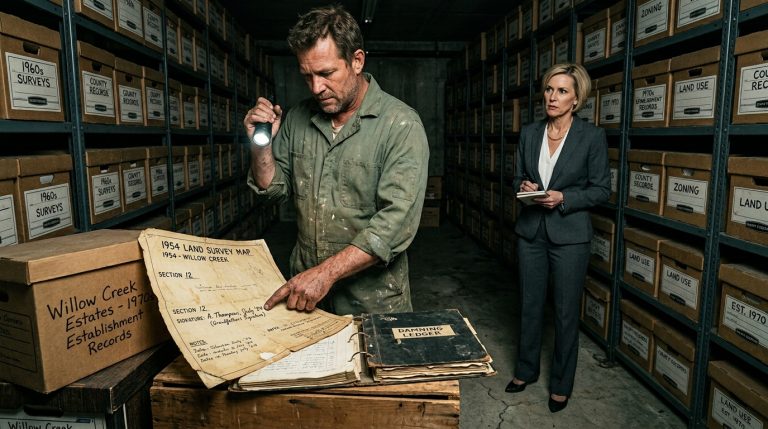
Hours dissolved. The coffee in my mug went cold, a layer of oil forming on the surface. My notes grew into a complex web of cross-references. I was tracing the authority, but what I found was a void. There was no mention of immobilization, no protocol for towing, and no indemnity clause that protected them from the kind of trespass they had committed on my floor.
The house felt too quiet. I kept finding myself glancing toward the front window, toward the street where the beige fortresses of my neighbors stood in uniform rows. Karen Miller and her “Prestige Community Management” weren’t just following rules—they were writing their own, hidden beneath the weight of 150 pages of legal jargon, betting that no one would take the time to read the fine print.
I hit a dead end in the bylaws regarding emergency entry. Article 9, Section 1 allowed entry to “abate any violation,” but it was predicated on a 48-hour notice. I had received nothing. No email, no physical letter, no knock on the door. They hadn’t just bypassed the rules; they had fundamentally broken the contract of the HOA.
I leaned back, the leather of my chair creaking. The red marks on the paper were a map. I was starting to see the infrastructure of their racket. It wasn’t about the truck. It was about the process. They needed the process to be opaque so they could operate in the dark.
I grabbed my phone, intending to call the management company, but then I stopped. My thumb hovered over the screen. No. If I called now, I was just a victim complaining. I needed to be an inspector. I needed to document the breach of the 48-hour notice as a matter of law, not a matter of opinion.
I heard a car pull into the driveway of the house across the street. I stood, moving to the window, and parted the curtains just enough to see. It was Karen Miller’s SUV. She stepped out, her movements brisk and efficient, her eyes darting toward my house before she hurried inside.
She knew. She knew I was here, and she knew I was looking. The realization didn’t make me angry. It made me smile, a thin, sharp expression that didn’t reach my eyes. She thought she was holding the cards, but she hadn’t realized that I had already memorized the deck.
I went back to the table and flipped to the back of the binder, looking for the Articles of Incorporation. I needed to see who sat on the board. The names were listed in small, unobtrusive font. There were three of them. Miller was the president. The others were listed, but there were no contact numbers.
I began to draft my letter. It wasn’t a plea. It was a formal demand for the structural integrity of my home and the return of my rights. Every word was chosen for its weight, every sentence structured to leave them no room for maneuver.
The sun moved across the sky, shortening the shadows on the table. My pen moved with mechanical rhythm. I was building my defense, layer by layer, brick by brick. When I finished, I didn’t feel tired. I felt exactly where I needed to be. The breach was discovered, the perimeter was being reinforced, and the first shot had been loaded.
I walked to the kitchen and poured the cold coffee down the sink. The house was no longer a staging area; it was a command center. I looked at the front door, at the lock I had checked three times today. I was ready.
CHAPTER 3: THE FIRST SALVO
I didn’t answer immediately. I watched the screen, the caller ID displaying an unknown number. It was likely Prestige Community Management, or perhaps an automated line checking to see if I’d finally broken and paid the fee. I let it ring four times, counting the pulses, my hands steady. When the voicemail clicked on, I waited, then picked up and hit the record button on my secondary device—a small, handheld digital unit I had pulled from my toolbox.
“This is Mark Reynolds,” I said, my voice as neutral as a steel beam. “I am recording this interaction for legal purposes. If you are calling regarding the unauthorized immobilization of my vehicle, be advised that I am currently documenting the event and compiling a formal response.”
The line crackled. A woman’s voice, tight and practiced, responded. “Mr. Reynolds, this is Brenda from Prestige Community Management. We’re calling to inform you that your 24-hour grace period for the violation fee is nearing its end. If the payment isn’t processed by tomorrow morning, the late penalties will begin to accrue, and the next step will involve a formal notice of intent to lien.”
She said it with the same clinical detachment as an automated teller. No empathy, no flexibility, just a conveyor belt of consequences.
“Brenda,” I countered, the name feeling foreign on my tongue, “you cited a violation of community standards regarding ‘unauthorized storage.’ I have reviewed the CC&Rs. My vehicle is fully enclosed within my private garage. By what specific clause are you claiming a violation?”
“The garage door was open, Mr. Reynolds. When the garage door is open, the interior is a common visual element subject to the board’s aesthetic oversight. It’s in the supplementary guidelines.”
“Supplementary guidelines,” I repeated. “Are those the same guidelines that were never mailed to residents, or were they updated without a community vote?”
The silence on her end was immediate. She hadn’t expected a resident to distinguish between bylaws and supplemental, unenforceable guidelines.
“I’ll have our compliance officer contact you,” she said, her voice sharpening.
“I look forward to it,” I said, and ended the call.
I didn’t sit down. I grabbed the printed demand letter I had spent the afternoon perfecting. It was time for the delivery. My sedan was in the driveway, its engine cold, but I didn’t need it. I lived three blocks from Karen Miller, and walking would give me time to analyze the terrain.
I walked out into the cooling evening air. The neighborhood was deceptively tranquil. Sprinklers hissed in the distance, and the scent of freshly cut grass masked the underlying decay of a community governed by fear. I watched the houses as I passed. Everything looked perfect—lawns trimmed to the inch, trash cans hidden, shutters painted in approved earth tones. But there was a sterility to it, a lack of life. It felt like walking through a high-end model home display, where nothing was real and no one actually lived.
My paranoia, or perhaps just my heightened awareness, began to pick up on the details. A security camera above a neighbor’s door seemed to tilt toward me as I passed. A curtain twitched in a window. It wasn’t just Karen; the entire community was being conditioned to monitor one another.
I reached the Miller residence. It was, as I expected, the largest lot on the cul-de-sac. The lawn was an aggressive, unnatural shade of green, and the house itself loomed over the sidewalk, a beige monument to suburban ego. I walked up the drive, my boots crunching on the pristine pavers. I didn’t rush. I didn’t skulk. I walked like a man who had a legal right to be there.
I reached the front door and pressed the chime. It sounded like an expensive, digitally synthesized birdcall.
A moment later, the door moved. A chain clinked—a brass, high-security secondary lock. Karen Miller’s face appeared in the gap. She was wearing a silk robe, her hair meticulously styled even at this hour.
“Mr. Reynolds?” Her voice was a thin, tight line. “What are you doing here?”
“I’m delivering a formal notice, Karen.” I held up the envelope. “It concerns the illegal immobilization of my property.”
“I told you, speak to the management company. I don’t get involved in the day-to-day enforcement.”
“You signed the violation notice,” I said, my gaze steady. “And you authorized the entry into my garage. That’s not ‘day-to-day.’ That’s a direct action against a homeowner. You are the president of this association, not the manager of a prison camp. You have a fiduciary duty to the residents, not just a mandate to harass them.”
She stepped back, her hand tightening on the door. “You’re harassing me, Mr. Reynolds. If you don’t leave my property, I will call the police and report a trespass.”
“I am currently on the doorstep of a public-facing residence, delivering legal correspondence,” I said, my tone flat. “That is not trespass. What you did in my garage—that is. I suggest you read this letter. It outlines the specific state codes you’ve violated. It also outlines the liability you are personally assuming as the president of a board that failed to provide notice.”
I slid the envelope through the gap in the door. She didn’t take it. It fell to the floor inside the foyer.
“You’re making a mistake,” she said, her voice rising, losing its rehearsed composure. “This community has standards. We won’t allow people like you to bring down the value of our homes with your junk.”
“It’s a 1978 Ford, Karen. It’s worth more than your entire landscaping budget.”
She slammed the door. I stood there for a beat, listening to the heavy thud of the frame, then the sound of the deadbolt sliding home. I turned around and walked away, my boots hitting the pavement with a rhythmic, measured cadence.
I didn’t feel a rush of victory. I felt the weight of what I had just initiated. I had just declared war on a woman who had spent years building a power base out of petty spite. As I turned the corner and headed back toward my house, I noticed a silver sedan parked half a block behind me. It had been there when I started my walk, and it was still there now, its headlights off, watching.
I didn’t acknowledge it. I just kept walking. The tension in my neck was a physical ache, a constant reminder that I was no longer an invisible citizen. I was a target. And that was exactly where I needed them to be.
CHAPTER 4: THE ALLIANCE OF THE DISPOSSESSED
I didn’t turn around to look at the silver sedan. Instead, I kept my pace even, the rhythm of my boots on the pavement a steady, defiant heartbeat against the artificial quiet of the neighborhood. I unlocked my front door, entered, and immediately engaged the deadbolt. The click of metal against strike plate was the most honest sound I’d heard in days.
I moved through the house, keeping to the shadows, and stood near the foyer window, watching the street. The sedan remained stationary for another minute, its outline blurred by the dim glow of a flickering streetlight. Then, with a slow, deliberate roll, it pulled away, turning the corner and vanishing into the labyrinthine layout of the subdivision. They were watching, which meant they were worried. And worry, in a structural sense, is the first sign of instability.
I went back to the dining room. My command center was waiting. I needed more than just a legal argument; I needed a network. I opened my laptop and checked the local neighborhood forum I had been monitoring. It was a digital ghost town of complaints about lost cats and unapproved holiday lights, but beneath the noise, there were threads of genuine discontent.
I started drafting a series of messages, not on the forum, but through private, encrypted channels. I didn’t reach out to everyone. I looked for the specific triggers I had noted: the houses with the over-trimmed lawns that looked like someone was trying to hide a mistake, the homes where the garage doors were always kept tightly closed. These were the people who were already living under the thumb of the HOA, the ones who had the most to lose and the most to gain.
I reached out to Brian Henderson, the man I’d seen earlier struggling with his mower. I kept the message brief, clinical, and objective. I didn’t frame it as a rebellion; I framed it as a request for data. “I am documenting a pattern of inconsistent enforcement regarding community bylaws. If you or your neighbors have faced fines for minor or non-safety related infractions, please share the documentation. You are not alone.”
I sent twenty of these messages, my fingers moving across the keys with the practiced efficiency of a man running a mission brief. Then, I waited.
The response was slower than I expected. The silence of the neighborhood stretched out, heavy and expectant. But then, an hour later, the first chime sounded. It was a message from a neighbor I didn’t recognize by name, only by the house number. “They fined us for the color of our mailbox. It didn’t match the ‘standardized’ charcoal. We paid fifty dollars. I have the notice.”
I opened a new tab and began to build the master spreadsheet. Date. Fine amount. Reason. Violation notice number. The data began to fill the cells, forming a grid of systemic extortion. This wasn’t a series of unfortunate accidents; it was a revenue stream. Karen and Prestige were treating this neighborhood like a mine, extracting cash from the residents by creating artificial problems and selling the solutions in the form of fines and management fees.
As the list grew, the shape of the corruption became clear. It wasn’t just arbitrary; it was seasonal. The fines spiked in the spring—when lawn maintenance and exterior painting were the focus—and again in the winter, when holiday decorations provided a fresh set of “violations.”
I heard a soft knock at the back door. I froze. I hadn’t invited anyone, and at 9:00 PM, nobody was out. I moved to the kitchen, my hand gripping the edge of the counter, and peered through the blinds.
It was Brian Henderson. He looked nervous, clutching a manila folder to his chest. I opened the door.
“Mark?” he whispered, his eyes scanning the dark yard. “I got your message. My wife, she—she wants to help. We’re tired of being afraid.”
“Come in,” I said, stepping aside.
We sat at the kitchen table. He emptied the folder: four violation notices, each one more ridiculous than the last. A twenty-dollar fine for a grass height of 3.2 inches. A fifty-dollar fine for an “unauthorized” porch light fixture. A hundred-dollar “administrative fee” for a late payment that had been mailed on time.
“They treat us like we’re on parole,” Brian said, his voice trembling with a mix of fatigue and anger. “I come home from a twelve-hour shift, and the first thing I do is measure my lawn. I hate it. I hate living here.”
“You don’t have to,” I said. I pulled my laptop around so he could see the spreadsheet—the growing list of names, the aggregate total of the fines. “This is the structure of it, Brian. They aren’t enforcing rules. They’re farming you. And the only way to stop it is to expose the math.”
“What can we do? Karen has the board, she has the lawyers, she has Prestige. They own the system.”
“The system is built on the assumption that you won’t fight back,” I told him, my voice calm and firm. “They rely on the fact that you’ll pay the fifty dollars because it’s easier than the alternative. But if you stop paying, if you challenge the validity of every single one of these notices in a court of law, their cost-to-benefit ratio crashes. They cannot afford to fight five hundred families simultaneously. It’s a resource management issue. They run out of administrative hours, they run out of legal budget, and then, the whole thing folds.”
Brian looked at the spreadsheet, then at me. “You really think we can get them to quit?”
“I don’t think,” I said. “I’ve analyzed the materials. Their foundation is rotten. We just need to apply the right amount of pressure at the right time.”
He nodded, a slow, determined look settling onto his face. “What do I do?”
“You start by finding three more people who have been fined. Don’t tell them to rebel yet. Just ask them to look at the bylaws, specifically Article 7. Don’t let them pay another cent until they’ve documented the challenge. We need to create a surge of procedural delays. We turn their own paperwork into a wall.”
He stood up, the folder back in his hands, but this time it wasn’t a weight; it was a weapon. “I’ll talk to the guys on the next street over. There’s a group of us who’ve been talking. We just didn’t know how to move.”
“Now you do,” I said.
I walked him to the door and watched him disappear into the shadows. I felt the first real spark of momentum. The fear wasn’t gone—the silver sedan was proof of that—but the isolation was broken. The neighborhood was starting to connect, and in those connections, I saw the true potential for a collapse.
I returned to the dining room and looked at the empty space where the binder had been. I felt a sudden, sharp ache of exhaustion in my shoulders, a reminder that I was only one man, and the fight had only just begun. But then I looked at the spreadsheet, at the names that were turning from numbers into people, and I realized I wasn’t fighting this alone anymore.
I picked up the red pen and underlined the total sum of the fines collected by Prestige. It was a massive number, a testament to their greed, but also a target. I’d have to be careful. They were cornered now, and a cornered beast is always at its most dangerous. But I had the schematics, and for the first time in years, I had a team.
CHAPTER 5: THE TRAP IS SET
I didn’t head straight to the teller window. I stood for a moment near the entrance, observing the flow of the lobby. It was quiet, the marble floors polished to a mirror finish that seemed designed to intimidate. My goal was simple but dangerous: I was going to pay the eight-hundred-dollar extortion fee directly to Prestige Community Management, and I was going to do it in a way that left no room for legal deniability.
I walked to the teller, a young man who looked like he hadn’t slept, and produced my credit card.
“I need to initiate a wire transfer and a manual credit card payment to the following account,” I said, sliding a slip of paper across the counter. It contained the exact routing number for Prestige’s corporate account. “Please ensure the memo line reads: ‘Payment under protest for release of illegally seized property, Account 4217-OD.'”
The teller blinked, his eyes scanning the slip. “That’s… an unusual memo, sir. Our system might flag it.”
“Flag it,” I said, my voice steady. “I need an itemized receipt for the transaction, and I need the merchant’s authorization code recorded on the ledger. This is a high-stakes financial dispute.”
He hesitated, then reached for his manager, a woman whose name tag read Sarah. She arrived with a tight, practiced smile that didn’t reach her eyes. She looked at my slip, then at me.
“Mr. Reynolds,” she said, recognizing the name from my frequent visits to the records department. “This is a payment to an entity that has been the subject of several inquiries this week. Are you sure you want to proceed with this, knowing the nature of the dispute?”
“I’m certain,” I replied. “I need the paper trail, Sarah. Please proceed.”
The process felt agonizingly slow. I stood there, watching the cursor blink on her screen, feeling the eyes of the other patrons on my back. My heart rate was steady, but my mind was scanning the lobby for threats. The silver sedan had been a warning; I knew they wouldn’t take the challenge to their revenue stream lightly.
When the receipt finally printed, I checked it twice. The timestamp, the merchant ID, the memo line—everything was perfect. I was no longer a victim of a bullying HOA; I was now a documented plaintiff in a financial crime.
As I stepped out of the bank, my phone vibrated. A text from Brian. “They’re here, Mark. Two guys in a truck. They’re at the Gables’ place. They’re putting a boot on her car.”
I didn’t hesitate. I sprinted to my sedan. The escalation wasn’t a surprise—it was a logical reaction. By attacking their revenue, I had forced them to accelerate their aggression. They were doubling down, trying to clear as much cash as possible before the walls closed in.
The drive back to the neighborhood was a blur. I didn’t care about speed limits. My mind was already mapping the tactical situation: Mrs. Gable was elderly, vulnerable, and exactly the kind of target they thought they could break.
When I skidded to a halt in front of the Gables’ house, the scene was already in progress. The same greasy-jump-suit man from before was kneeling by the front tire of a small, nondescript sedan. Mrs. Gable was on her porch, her hand over her mouth, her face pale.
I didn’t call out. I didn’t approach the man directly. I grabbed my camera from the passenger seat and began recording from the safety of my own vehicle. I captured the man’s face, the markings on his truck, the lack of proper licensing, and the look of cold, predatory efficiency in his movements.
“Hey!” I shouted, finally stepping out. “That’s an unlicensed act, and I have the county sheriff on speed dial. Do you have a vehicle immobilization license for this county?”
The man looked up, his expression hardening. He wasn’t scared; he was irritated. “We’re just doing our jobs, man. Go back to your house.”
“You’re committing a crime,” I said, my voice projecting clearly to the neighbors who were starting to peek through their curtains. “I have documentation that your company is currently under criminal investigation. Every boot you place today is another count in a conspiracy to commit extortion.”
He stood up, his hand moving toward his belt. For a second, I thought he might come for me, and I braced, my muscles coiling. But he looked at the camera, then at the neighbors watching from their driveways, and he backed down.
“Whatever,” he spat, grabbing his tools and jumping back into his truck. He didn’t finish the job. He just shoved the truck into gear and roared away, tires spinning on the pristine pavement.
Mrs. Gable walked down to the porch steps, her legs shaking. “Thank you,” she whispered. “They… they said I owed three hundred dollars for a ‘non-compliant’ garden gnome.”
I looked at the garden. A small, cheerful gnome with a red hat sat among the roses. It was the most innocent thing I’d ever seen. I felt a surge of rage so intense it was almost blinding, a physical pressure in my chest. They weren’t just taking money; they were terrorizing people.
“They won’t be back,” I said, my voice low and dangerous. “Not here, and not anywhere else. We’ve set the trap, Mrs. Gable. Now we just have to wait for them to trip the wire.”
I looked down the street. The houses looked the same as they had this morning, but the air felt different. It was charged with the static of a storm front. I hadn’t resolved the conflict—I had only succeeded in pissing off the beast. I knew they were planning their next move, and it wouldn’t be a boot on a tire. It would be something far worse.
I turned back to my car, my hands gripping the steering wheel until the leather groaned. I had the bank receipt, I had the video of the illegal immobilization attempt, and I had a community that was finally beginning to wake up. The context was set. The trap was sprung. Now, it was just a matter of how much damage they would try to do before the state finally pulled their license.
CHAPTER 6: THE REGULATORY STRIKE
I stared at the screen, the blue light of the monitor reflecting in my glasses. Dave was leaning over my shoulder, his finger tracing a line on the printed audit he’d pulled from the state’s public access portal.
“Look at the dates, Mark,” he whispered, his voice sharp with the focused intensity of a man who’d spent thirty years in the JAG Corps. “They’re filing the fine assessments as ’emergency maintenance,’ but look at the corresponding work orders. There are none. They’re charging the community for repairs that never happened, and the money isn’t going into the reserve fund. It’s going into a holding account managed by a third party.”
I felt the blood go cold in my veins. This wasn’t just a racket; it was money laundering. The boot on my tire, the fines for the garden gnomes—those were just distractions, the noise they created to keep the residents looking at their lawns instead of the bottom line.
“If they’re using the HOA as a vehicle for a secondary company’s revenue, they’re in breach of every fiduciary duty they signed on for,” I said, my voice barely audible over the hum of the cooling fan. “And if the DBPR finds this, they won’t just lose their license. They’ll be looking at criminal referrals.”
“Exactly,” Dave said, straightening up. “But we have to trigger the audit. A simple complaint won’t do it. We need to create a surge in the system. We need the state to see that this isn’t just one disgruntled homeowner—it’s a systemic, community-wide infection.”
“I’ve got the neighborhood list,” I said, gesturing to the spreadsheet. “If I can get fifty homeowners to file a joint petition for an emergency audit, the state has to acknowledge it. They don’t have the option to look away.”
The weight of the task hit me like a physical blow. We were two men in a dining room, going up against a corporate entity that had entire departments dedicated to legal obfuscation. But looking at the ledger, I felt a grim, focused clarity. This was the structure. This was the root of the rot.
“I need to print these,” I said, grabbing the stack of draft complaints. “And I need to get them signed tonight. If we file this by tomorrow morning, the investigation into their license will be the least of their problems.”
We spent the next four hours in a fever of productivity. We weren’t just printing papers; we were building the case file. Every piece of documentation we had—the bank receipts, the videos of the booting attempts, the highlight-laden copies of the CC&Rs—went into organized, tabbed binders.
By the time the sun began to bleed into the sky, our dining room table was a battlefield of evidence. I walked out the front door, the air crisp and biting, the neighborhood still sleeping. I moved from house to house, a ghost in the morning mist, slipping the packets through mail slots. I didn’t knock. I didn’t talk. I just dropped the weight of the evidence on their doorsteps and moved on.
I was three streets over when I saw it: the silver sedan, idling at the intersection. It didn’t move. It just watched.
I stopped. I didn’t hide. I walked right up to the passenger-side window. The driver, a man in a dark suit with a face like a shuttered door, didn’t flinch.
“You’re working for Prestige,” I said, my voice cutting through the silence of the morning. “You’re not here to monitor the neighborhood. You’re here to see who’s signing the papers.”
He didn’t speak. He just looked at me, his eyes devoid of anything resembling humanity. He put the car in gear.
“Tell Karen,” I said, leaning closer to the window, “that the audit is coming. And tell her she’s going to need a better lawyer than the one she’s paying to hide these books.”
He drove away, slowly, leaving me standing in the middle of the empty street. I didn’t feel afraid. I felt a surge of cold, sharp triumph. I had engaged them, I had confirmed their surveillance, and I had handed the neighborhood the ammo they needed to blow the whole thing wide open.
I turned back toward my house, my pace quickening. The final phase was starting. The petition would be signed, the audit would be triggered, and the facade would finally, inevitably, collapse. I had the schematics, I had the evidence, and I had the resolve to see it through to the end. The neighborhood was awake now, and they were ready to reclaim what was theirs. The only thing left to do was stand back and watch the structural failure.
As I reached my driveway, I saw the front door of my garage standing open. I stopped, my heart hammering against my ribs. I hadn’t left it open.
I reached into my pocket, feeling the cold weight of my keychain, and slowly, methodically, began to approach the dark maw of the garage. They had tried to boot my truck, they had watched my house, and now they had entered my property again. This wasn’t a game anymore. This was a direct violation of the space I’d built with my own two hands.
I stepped over the threshold, the concrete cooling my boots, the scent of motor oil and sawdust hanging thick in the stagnant air. The garage was silent, but it wasn’t empty. My workbench had been disturbed. My tools, arranged with surgical precision, were shifted, the layout slightly altered. Someone had been here. Someone had been searching for something.
I didn’t turn on the light. I let my eyes adjust to the darkness, my pulse slow, my breath even. I knew what they were looking for: the digital copy of the binder, the files, the evidence.
I walked to the F-150 and rested my hand on the hood. The metal was cool, solid, and dependable. They hadn’t found it. I had hidden the external drive, the one with the encrypted backups, in the one place they would never think to look—the cooling fan shroud of the truck itself.
I stood in the center of my garage, the silence pressing against my ears. I was being watched, I was being probed, and I was being tested. But as I looked at my tools, at the engine I’d rebuilt, I knew I had already won. I knew where the cracks were, and I knew exactly how to make them expand. I didn’t need the light to see the path forward. I just needed to hold my ground until the audit hit.
CHAPTER 7: THE ANNUAL MEETING
I didn’t turn on the lights. I stood in the dark, the scent of motor oil and sawdust suddenly feeling like the only honest things left in this zip code. My hand moved over the hood, tracing the lines of the steel, while my mind methodically cataloged the disturbance of my workbench. They hadn’t just looked for the drive; they had searched for patterns, for connections, for the way I’d organized my defense. They were trying to get inside my head, to understand the structural logic of the man who had turned their own bylaws into a noose.
I walked to the corner of the garage, pulled back a loose piece of pegboard I’d modified months ago, and retrieved the encrypted thumb drive from its hiding spot. It was small, a sliver of plastic and metal that held the collective grievances of five hundred neighbors. It was the keystone of the entire operation.
I left the garage, locking the side door with a heavy thud that sounded like a final warning. I didn’t head back to the house. I walked to the end of the driveway, looking out at the street. The neighborhood was quiet, the houses looming like monolithic, beige-clad observers. The silver sedan was gone, but I knew better than to think they had retreated. They were just repositioning, waiting for the one moment where they could regain control: the Annual HOA Meeting.
The next three days were a blur of tactical preparation. Dave and I met in the “Jag-Tac”—his dining room—to finalize the petition and the motion for recall. We were no longer just two veterans playing a game of chess; we were the architects of a complete administrative overhaul. Every time the phone rang, I expected a threat. Every time I stepped onto my porch, I scanned the horizon. The tension was a physical presence, a tightness in my chest that didn’t let up.
The night of the meeting arrived with an unnatural, stifling heat. The air was thick, heavy with the scent of ozone, as if the neighborhood itself were waiting for the atmospheric pressure to break. I dressed with precision—a crisp shirt, a sturdy pair of slacks, nothing that would signal weakness. I felt like I was back in a briefing room, about to present the final analysis of a failing project.
When I arrived at the community clubhouse, the parking lot was already overflowing. Cars were double-parked along the curbs, the suburban silence replaced by the low, agitated hum of a crowd that had reached its breaking point. I saw the Hendersons, the Gables, the Sanchez family—everyone we’d reached, everyone who had been tired of the fines, the intimidation, the petty, manufactured authoritarianism.
I pushed through the double doors and was hit by the sound—a cacophony of voices, arguments, and whispered confidences. The room was packed. People stood three deep along the walls, the air conditioning struggling against the combined body heat and mounting tension.
At the front of the room, behind a folding table that looked entirely too small for the stakes, sat Karen Miller. She was flanked by her two board members—shadows who looked as if they were already preparing to fold—and Barry from Prestige Management. Barry was fidgeting with a stack of papers, his face pale, his eyes scanning the crowd with a desperate, darting movement.
I walked to the front, my strides measured, the weight of the binder in my hand a grounding force. I didn’t look at Karen. I didn’t look at the board. I looked at the room, at the faces of the people who had finally decided that their homes were worth more than their fear.
Karen banged her gavel, the sound tiny and pathetic against the roar of the crowd. “Order! I call this meeting to order!”
I didn’t wait for her to begin. I stepped toward the microphone set up on the podium, my movements calm, my presence absolute. I waited for the silence to ripple outward, the crowd sensing the shift, the energy in the room coalescing into a single, focused point of intent.
“Point of order, Madame President,” I said, my voice carrying into every corner of the clubhouse without the need for the speaker’s amplification.
Karen’s face tightened, a flicker of genuine fear crossing her features. “Mr. Reynolds, there are no points of order. We have a set agenda—”
“The agenda is a formality,” I interrupted, my voice steady, uncompromising. “The business of this evening is the accountability of this board and the management company you’ve empowered to exploit this community. I have here a petition for the immediate recall of the president and the board, signed by over thirty percent of the homeowners. And I have here the results of a preliminary audit of your financial records.”
I placed the binder on the table. It sounded like a slab of concrete hitting a hollow surface.
“Barry,” I said, turning to the Prestige representative, “I have the ledger entries you tried to hide. I have the work orders that don’t exist. And I have the confirmation from the state DBPR that your license is currently under formal review.”
The room went absolutely still. It was the kind of silence that precedes a total system failure—a vacuum where the only thing that existed was the truth. Barry stood up, his chair scraping violently against the floor. “This is… this is slander! We have legal counsel on retainer—”
“Sit down, Barry,” Dave said from behind me, his voice a low, authoritative rumble that stopped the man in his tracks. “Your legal counsel can’t help you with a criminal referral.”
I looked at Karen. The mask of the HOA president, the beige-clad dictator of Creekwood Estates, was finally slipping. Her eyes were wide, darting from the binders to the crowd, her mouth working silently as she tried to find the words to reclaim her authority. But there were no words. The authority was gone. It had evaporated the moment we stopped being afraid of the fines.
“All those in favor of the motion to recall the board and terminate the contract with Prestige Management,” I said, my gaze sweeping over the sea of faces, “please rise.”
Every chair in the room scraped as the residents stood. It wasn’t a sudden surge; it was a wave, a slow, inevitable movement of collective power. There was no shouting, no cheering—just the sound of two hundred people standing up, a physical statement that was far more powerful than any speech.
Karen stared at them, her posture collapsing, the weight of her failed regime finally manifest in the air. She looked small, diminished, the beige fortress of her authority crumbling in the face of the people she’d spent years trying to control.
I turned back to the microphone, the silence of the room now a clean, empty space. We had done it. The trap had closed, the audit was triggered, and the rot had been exposed. The fight wasn’t over—there would be lawyers, there would be proceedings, there would be the long, slow crawl of the regulatory system—but the structure was gone. The board was dead. And the neighborhood? The neighborhood belonged to the people again.
I didn’t smile. I just felt a deep, profound sense of relief, a release of tension that had been building since the day I found the yellow boot on my tire. I reached out and took the gavel from the table, placing it gently, firmly, in the center of the binder.
The system was reset. Now, it was just a matter of time.
CHAPTER 8: THE RECONSTRUCTION
The silence that followed the recall vote wasn’t empty; it was dense, filled with the collective exhalation of two hundred people who had spent months holding their breath. I stood at the podium, my hands resting on the cool, synthetic wood of the lectern, watching the board members scramble. They were no longer the arbiters of community standards; they were just three people who had bet their futures on a house of cards that had finally folded.
Karen Miller didn’t look at the crowd. She kept her eyes fixed on the table, her hands trembling as she gathered her things. The mask was completely gone, leaving only the hollowed-out expression of someone who realized, too late, that the power she wielded was only as strong as the people who allowed her to keep it. Barry, the Prestige representative, had already disappeared through the side exit, his cheap suit a blur against the shadows. He wouldn’t be back.
“The board is dissolved,” Dave said, his voice cutting through the remaining tension. “As of this moment, the interim board assumes control. We will be conducting a full forensic audit of all accounts, and I suggest that anyone with knowledge of the Prestige shell accounts come forward immediately.”
The reaction was immediate—a murmur of agreement that grew into a low, steady hum of relief. I stepped down from the podium and walked back to the row where I’d started. Mrs. Gable caught my eye, her face no longer pale, a small, genuine smile lighting her features. She nodded once, a gesture of quiet, profound thanks. I nodded back. It was done.
The next few weeks were a systematic process of dismantling the infrastructure of the old regime. We replaced the locks on the clubhouse, archived the corrupt files, and formally notified the state authorities of the board’s voluntary dissolution. The “Creekwood Estates HOA” remained, but it was no longer a weapon. It was an organization, a tool for maintenance and community, stripped of the petty tyranny that had nearly destroyed us.
The final blow came three months later, in the form of a formal notice from the state’s Department of Business and Professional Regulation. Prestige Community Management had not only lost its license; it had been fined a quarter-million dollars, and the principals were facing criminal charges for systemic financial fraud. The evidence we had painstakingly assembled—the bank receipts, the audit trails, the witness affidavits—had been the bedrock of the case. They had built a business model on the assumption that nobody would ever look closely enough at the math. They were wrong.
I saw Karen one last time on a Tuesday morning. I was in my driveway, the garage door wide open to the sun, waxing the fender of my F-150. Her house was packed, the front lawn empty of its manicured perfection. As she pulled out, her car filled with boxes, she stopped at the end of the driveway and looked across the street at me.
Our eyes met. There was no defiance left, no sense of injustice, no flicker of the imperious, rule-obsessed tyrant she had played for so long. There was just an exhaustion, a total depletion of spirit. She looked away, shifted her car into drive, and pulled out of Creekwood Estates. She was gone, and the neighborhood didn’t seem any smaller for her absence. In fact, it felt significantly more spacious.
I turned back to my truck, the light catching the polished surface of the fender. The yellow boot was a distant memory, a symbol of a threat that had tried to lock down my independence but had only succeeded in highlighting the flaws in the system that allowed it to exist.
I walked to the corner of the garage, where a small ceramic gnome with a red hat sat perched on a workbench. It was the one Mrs. Gable had given me, a gift of solidarity that had become a permanent part of my workspace. I polished the ceramic with a soft cloth, the small, cheerful face reflecting the light of the morning sun.
The garage door remained open. I didn’t care who saw what was inside. I didn’t care about the aesthetic standards of a management company or the petty grievances of a board that no longer existed. I had rebuilt this truck from the frame up, bolt by bolt, and in doing so, I had learned that nothing is truly beyond repair if you have the patience to see the structure for what it is.
I picked up a wrench, the weight of it familiar and grounding in my palm, and returned to the engine block. I wasn’t just fixing a vehicle. I was keeping the machine running, steady and true. The community was quiet—a real, genuine, unforced quiet—where the only sounds were the distant play of children and the wind through the trees.
I took a deep breath, the air clean and free of the ozone sting of conflict. The project was complete. The structure was sound. And for the first time in a very long time, I was perfectly content with the work at hand.