The Untold Fortune Of The Black Sheep Daughter Who Brought Her Entitled Family To Their Knees
CHAPTER 1: SILENCE ON LINE ONE
The gold-embossed invitation sat on the edge of the mahogany desk, its edges crisp under the soft hum of the air conditioner.
I didn’t open it. I picked up a plain blue bic pen—scratched, capped with cheap blue plastic—and rolled it slowly between two fingers, feeling the familiar plastic ridge against my thumb.
The intercom on my desk buzzed once, sharp and low.
“Miss Sullivan,” Sarah’s voice came through, completely steady. “Your brother Marcus is on line one again. That makes six calls in twenty minutes.”
I clicked the cheap pen once. The sound was tiny in the quiet office, swallowed by the thick carpet. “Put him through, Sarah.”
The line clicked over, and Marcus’s voice hit my ear before I even brought the receiver to my face.
“Sophia? Where the hell have you been? I’ve been trying to get ahold of you since breakfast!”
I leaned back, watching the morning traffic crawl eight hundred feet below along 5th Avenue. “Hello, Marcus.”
“Don’t ‘Hello, Marcus’ me,” he snapped, his breath raspy against the receiver. “Mom is driving Dad crazy. The family reunion is in forty-eight hours, and Dad says you haven’t sent back your RSVP. He wants to know if you’re actually showing up this year or if you’re still hiding out in that damp Brooklyn hole.”
I spun the cheap plastic pen across my knuckles. “I received the invitation.”
“Great. Wonderful,” Marcus said, his voice dripping with that familiar, rehearsed impatience. “Look, Dad’s offering to cover your train ticket if money is tight. Just tell him you’re coming so Mom stops wringing her hands over your ‘lifestyle choices.’ You’re thirty-seven, Sophia. Drawing little computer pictures isn’t paying the electric bill, is it?”
“I manage my bills, Marcus.”
“Right. That’s why Olivia had to pick up the check at Christmas,” he scoffed. “Just wear something decent this time. No paint-stained sweaters. Dad’s bringing two senior partners from the firm.”
I let the silence hang on the line for three full seconds, listening to the heavy, impatient rhythm of my brother’s breathing.
“I’ll be there,” I said quietly. “And tell Dad he won’t need to buy my train ticket.”
“Whatever. Just don’t be late,” Marcus grunted, and the line went dead.
I set the phone back into its cradle, resting the cheap blue pen directly beside the gold invitation.
Outside my office door, the quiet machinery of my company kept running—traders shifting blocks of digital assets, servers processing millions in real-time transactions, and attorneys finalizing property deeds in three time zones.
My family thought I was broke, starving, and stubborn.
They were about to find out just how wrong a family could be.
CHAPTER 2: THE STUDIO ILLUSION
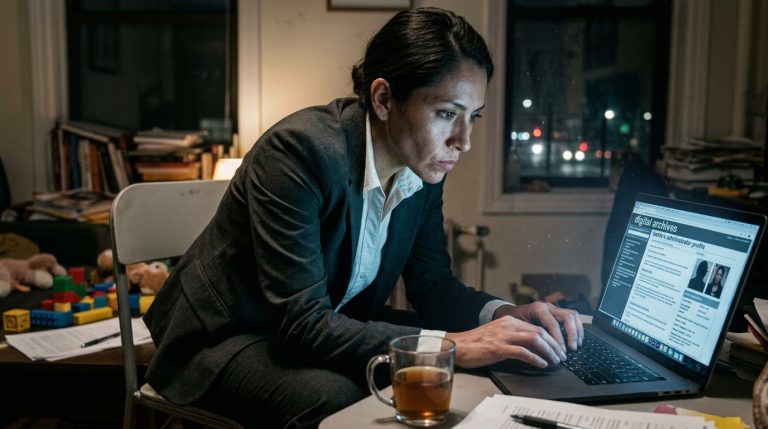
The drive from Manhattan to Brooklyn took twenty minutes, but stepping into the four-hundred-square-foot studio on Atlantic Avenue felt like stepping fifteen years into the past.
I unlocked the double deadbolts and pushed the heavy metal door open. The apartment smelled faintly of old radiator heat, dried turpentine, and cheap coffee—an environment I paid twelve hundred dollars a month to maintain solely as a set. A single easel stood near the window, holding an unfinished canvas of gray geometric shapes. On the laminate countertop sat a single mug and a rusted kettle.
I tossed my keys onto the counter, picked up a worn canvas apron from the back of a wooden chair, and pulled it over my head.
A heavy, deliberate double-knock rattled the thin wood of the door.
I didn’t rush. I walked over, turned the latch, and pulled the door inward.
Alina Sullivan stood in the narrow hallway, her beige cashmere coat spotless against the peeling yellow paint of the corridor wall. Her eyes didn’t meet mine first; they swept past my shoulder, taking in the cramped space, the tiny kitchenette, and the single mattress resting on a pine frame in the corner.
“Sophia,” she said, her voice dropping into that familiar, mournful register reserved for tragic relatives. “Look at this place.”
“Hello, Mom,” I said, stepping back to let her enter. “You usually call before coming to Brooklyn.”
She stepped inside, taking short, precise steps as if trying to minimize contact between her Italian leather pumps and the worn linoleum floor. She set her leather handbag on the edge of the small wooden table, carefully avoiding a stray smudge of charcoal.
“Your father is at his wit’s end, Sophia,” she began, smoothing her coat down with trembling fingers. Her silver bracelet clicked against her wristwatch—a nervous habit she’d had as long as I could remember. “Marcus told us you were being difficult on the phone. The reunion is in two days, and you’re still playing these games.”
“I told Marcus I’d be there,” I said, leaning against the counter and crossing my arms.
“Yes, but how?” She turned, her eyes wide with a mixture of exasperation and genuine distress. “He said you refused to let your father buy your train ticket. Sophia, look around you. You’re thirty-seven years old. You’re living in a closet. You’re painting on scraps of wood while your sister is buying her second property in the Hamptons!”
“Olivia works hard,” I said softly, watching the way her knuckles tightened around her handbag strap.
“Olivia listened to your father!” Mom’s voice rose, cracking slightly at the edge. “She took the sensible path. Your father built a legacy, Sophia. Sullivan Investments is respected. But every time we go to the country club, people ask what my oldest daughter is doing, and I have to pretend you’re ‘finding your artistic voice.'”
She reached out, her hand hovering near my arm before dropping back to her side.
“Your father had a meeting with his partners this morning,” she continued, lowering her voice to a conspiratorial whisper. “He’s willing to create a position for you. Strategic communications. A real salary, health insurance, a modern office in Midtown. You can leave this dreadful place tomorrow.”
I looked down at her face, tracing the sharp line of her jaw—the same jaw line I saw in the mirror every morning. She wasn’t lying; she genuinely believed she was offering me a lifeline out of misery.
“And if I say no?” I asked.
“If you say no,” she said, her voice turning cold, “your father is done. No more safety net. No more quiet checks when rent is due.”
I almost laughed. In fifteen years, I hadn’t taken a single dime from them. The “checks” she spoke of were mythic constructs Arthur Sullivan used to preserve his pride in front of his wife.
“I don’t need a safety net, Mom,” I said quietly.
Her eyes hardened. “You are so stubborn. Just like him. But you don’t have his mind for business, Sophia. You’re chasing ghosts on a computer screen while the real world passes you by.”
She grabbed her handbag off the table, her gaze landing for a fraction of a second on a plain navy-blue leather ledger resting tucked beneath a pile of sketchbooks near the window. She didn’t recognize the silver seal stamped on its spine—the mark of the holding company that currently held seventy percent of Sullivan Investments’ commercial paper.
She turned back to me at the doorway, her hand resting on the brass knob. “Wear something proper on Friday. Your father won’t tolerate an embarrassment in front of his partners.”
The door clicked shut behind her, the heavy deadbolt dropping into place.
I walked over to the wooden table, picked up the plain navy-blue ledger, and opened it to the first page. Row after row of debt maturity dates lined the cream paper, all carrying Arthur Sullivan’s bold, angular signature at the bottom.
I closed the book, set it down, and pulled my phone from my pocket.
“Sarah,” I said into the receiver. “Has the family flight manifest been confirmed for Friday morning?”
“Yes, Miss Sullivan,” Sarah replied. “Your father booked standard commercial coach seats for the entire family.”
“Cancel them,” I said, looking out the grime-streaked window at the Manhattan skyline gleaming across the river. “Send the car service to their addresses at six in the morning. They’re flying on my aircraft.”
CHAPTER 3: THE BOARDING GATE TRAP
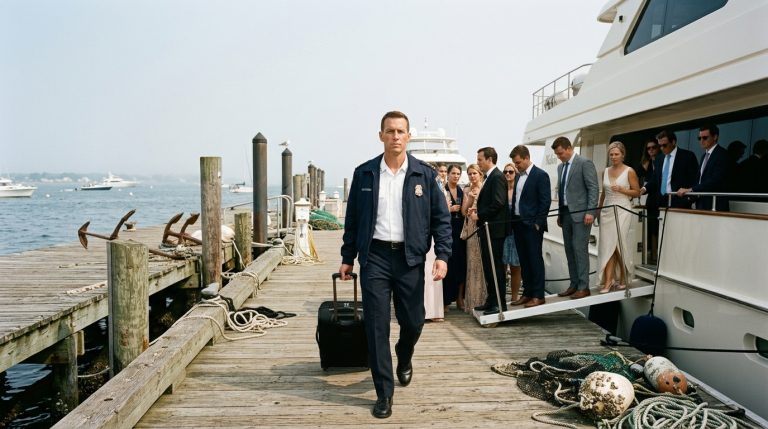
The passenger doors opened almost in unison.
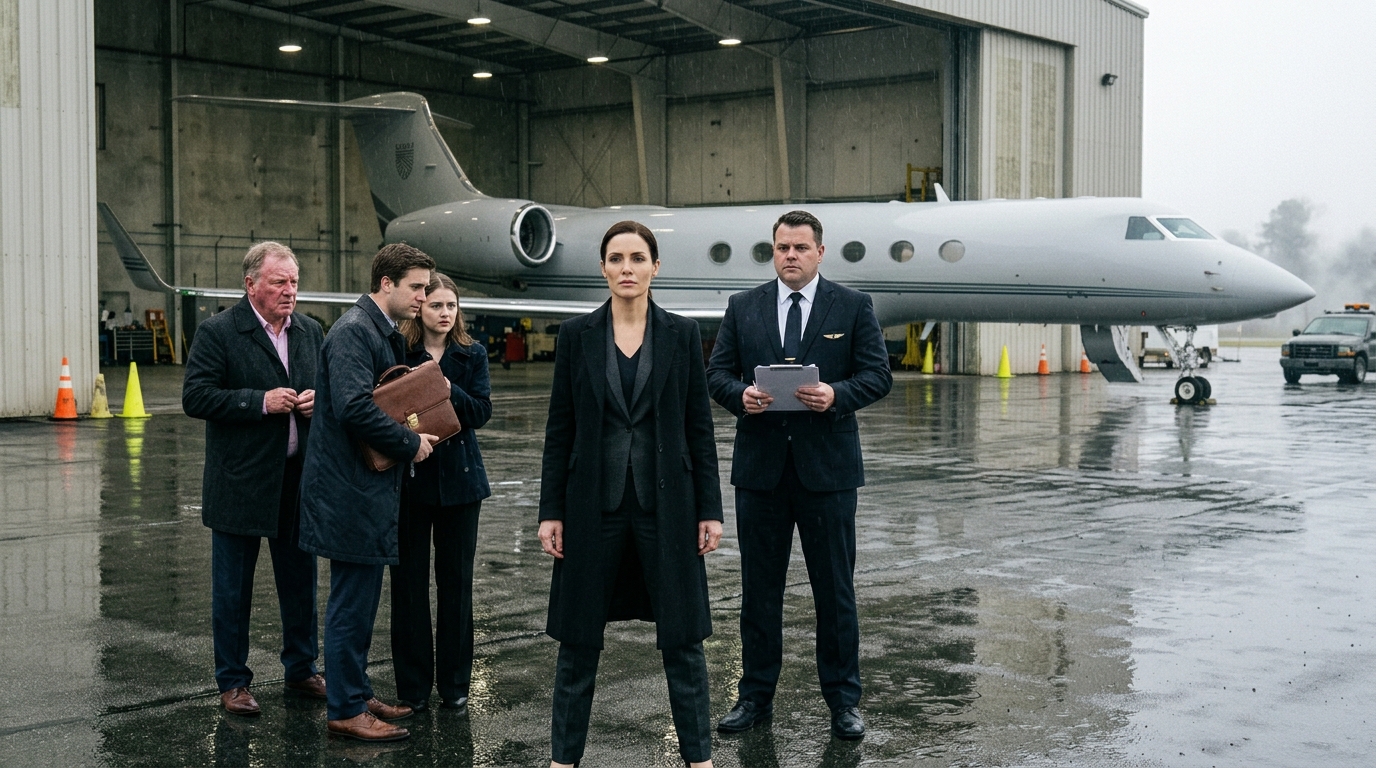
My father stepped out first, his leather-gloved hands instantly tugging at his lapels as he squinted into the grey morning drizzle. Marcus slid out right behind him, holding a leather briefcase like a shield, while my sister Olivia emerged from the second car, her designer heels clicking sharply against the damp concrete.
Arthur Sullivan took three brisk strides toward me before stopping dead in his tracks. His eyes traveled slowly from my dark wool coat up to the massive white fuselage resting inside the open hangar bay—a twin-engine Gulfstream bearing a minimalist silver crest on its tail.
“What is the meaning of this?” Dad demanded, his voice slicing through the low whine of the tarmac generator. “Where are our commercial tickets? I spent twenty minutes arguing with the driver because he refused to take us to the main terminal.”
“The driver was following instructions,” I said calmly.
“Your instructions?” Olivia pushed past Marcus, her phone tucked into her coat pocket. Her jaw was set, her eyes darting between the aircraft and my face. “Sophia, what kind of sick stunt is this? Did you take out a payday loan to rent a private jet for twenty minutes just to flex on us?”
“The aircraft isn’t rented, Olivia,” I said.
Marcus let out a short, harsh bark of a laugh. “Right. And I suppose you bought it on a struggling artist’s salary? Dad, call a yellow cab. We’re going to miss the flight to the resort because she wanted to play dress-up.”
“No one is calling a cab,” I said.
My flight director, a thickset man in a tailored dark uniform, stepped out from the hangar holding a clipboard. He stopped two paces behind me, bowing his head slightly. “Miss Sullivan, fuel parameters are locked. We are cleared for takeoff as soon as your guests sign the manifest and standard non-disclosure agreements.”
Arthur’s face flushed a deep, mottled red. His right hand twitched against his coat button—his invariable sign when a junior analyst challenged his authority at the board table.
“Non-disclosure agreements?” Dad’s voice boomed across the asphalt. “I am your father! I do not sign legal disclaimers to travel to a family gathering! Who gave this man authorization to address me?”
“I did,” I replied, standing my ground as the cold wind whipped hair across my cheeks. “This is a private aircraft operating under strict corporate liability protocols. If you want to attend the reunion on the island, you sign the manifest. Otherwise, the local regional terminal is three miles down the service road. You can catch the 10:00 AM commuter flight—if there are seats left.”
Silence descended on the tarmac, heavy and sudden, broken only by the steady idle of the jet engines.
Olivia looked at Dad, then back at the sleek aircraft ladder leading into the warm, walnut-paneled cabin. Her lip quivered slightly—not with sadness, but with the sudden, terrifying realization that the social ground under her feet was shifting.
“Dad…” Marcus muttered under his breath, leaning in close to Arthur. “The regional flight is grounded until noon because of the coastal fog. I checked the weather radar on the drive over.”
Arthur’s chest rose and fell in heavy, deliberate breaths. He looked at the clipboard in the flight director’s hands, then down at my boots, and finally directly into my eyes. For the first time in fifteen years, he didn’t look down at me—he looked straight at me.
“You think you’re very clever, don’t you?” Dad said softly, his voice dangerously low. “You think spending money you don’t have on empty flash will make me forget that you abandoned this family’s legacy?”
“Sign the paper, Dad,” I said, my voice steady as stone. “The engines are burning fuel.”
With a harsh snatch of his wrist, Arthur grabbed the pen from the flight director, scribbled his signature across the top line without reading a single word, and shoved the clipboard back into the man’s chest.
“Let’s get this farce over with,” he growled, sweeping past me toward the stairs without looking back.
I watched Marcus and Olivia fall into line behind him, their stiff shoulders drenched in the light morning rain as they climbed into my world.
CHAPTER 4: THE TARMAC AUDIT
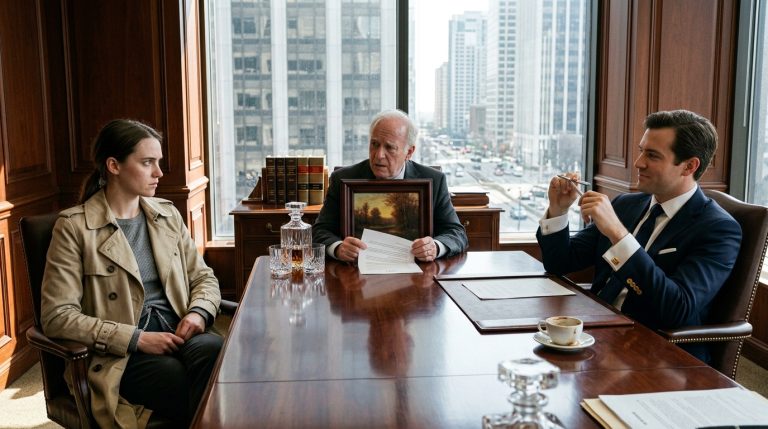
The heavy oak doors of the room swung open.
Arthur walked in first, his posture rigid, though the persistent dampness on his wool trousers from the island rain gave him an uncharacteristically disheveled look. Marcus and Olivia trailed behind him, their eyes wide as they took in the floor-to-ceiling glass wall overlooking the private marina.
“Enough of the theatricals, Sophia,” Arthur said, pulling out a heavy leather chair opposite me. The wood scraped harshly against the polished marble floor. “We are on your private retreat. You’ve made your little point about your lifestyle. Now explain what this is really about.”
I didn’t answer right away. I pulled the cheap blue bic pen from my pocket, set it beside the stack of ledgers, and slid the top folder across the polished table until it stopped directly in front of him.
“Open it, Dad,” I said quietly.
Arthur sneered, resting his hand on the cover without lifting it. “I don’t need to read your vanity project summaries—”
“—It’s not a project summary,” I interrupted, my voice completely flat. “That is an itemized transaction record spanning fifteen years.”
Marcus leaned over Arthur’s shoulder, flicking the cover open with a pale finger. “What is this? Dates and dollar amounts?”
“Read the line entries, Marcus,” I said, leaning back in my chair.
Olivia stepped closer, her designer bag cutting into the crook of her arm as her jaw went slack. “Wait… December 2011? ‘Rejection of $50,000 convertible seed note. Reason provided by Arthur Sullivan: Digital art is a scam for teenagers.'”
“Turn the page,” I said.
Arthur’s hand twitched against the table edge. He flipped the heavy cardstock over. His eyes scanned down the black ink figures, his chest tightening visually as he read.
“November 2015,” Olivia read aloud, her voice dropping an octave. “‘Rejection of $1 million equity round. Reason provided: Sophia needs a real job at Sullivan Investments.’ Current valuation of that rejected equity slice…” She stopped, her breath catching in her throat.
“Say the number, Olivia,” I said softly.
“…One hundred and twenty million dollars,” she whispered.
“That’s absurd!” Marcus snapped, his face flushing crimson as he slapped his hand onto the wood table. “You can’t just print fake numbers on thick paper and claim you’re worth a hundred million! Where is the audited proof? Where are the institutional backing statements?”
“Look at the bottom seal on page three, Marcus,” I said, pointing a finger at the blue ink stamp. “That is the clearing mark from the Depository Trust & Clearing Corporation. You worked at Dad’s firm for six years. You know what that stamp means.”
Marcus stared at the mark, his lips parting slightly, but no sound came out.
Arthur didn’t look at the seal. He stared directly at the plain navy-blue leather ledger resting just to the right of my elbow—the exact same book my mother had overlooked in Brooklyn.
“You’ve been holding these records,” Arthur said, his voice terrifyingly quiet, though a faint tremor shook his lower lip. “You tracked every time I refused to help you.”
“I tracked every time you told me I was nothing without your permission, Dad,” I corrected him. “And then I tracked what your arrogance actually cost this family.”
“You think you’re a genius because you got lucky on internet pictures?” Arthur suddenly slammed both palms on the table, standing up so fast his chair rolled back two feet. “You know nothing about real capital! You have no idea what it takes to protect a legacy!”
“I know what happened to your commercial paper portfolio last quarter, Dad,” I said, sliding the blue bic pen two inches to the left.
Arthur froze mid-breath, his knuckles turning white against the edge of the table.
CHAPTER 5: THE TRAP IN THE DINING ROOM
The tension in the room was so thick it felt like trying to breathe underwater.
Arthur’s hands finally dropped from the edge of the wood table. He straightened his spine, tugging at the lapels of his damp jacket in a frantic, almost mechanical attempt to regain his corporate armor.
“You’re bluffing,” Arthur said, though his voice lacked its usual booming resonance. “You’re trying to rattle me before dinner. Sullivan Investments is rock solid.”
“You mortgaged the firm’s core assets last October, Dad,” I said, tapping the blue bic pen against the leather cover of the ledger. “You used the commercial real estate portfolio as collateral to short the digital asset market. You were absolutely certain the sector was going to collapse. You told the board it was ‘fake internet money.'”
Marcus whipped his head around to look at our father. “Dad? What is she talking about? You said the third-quarter losses were just a temporary market correction.”
“Quiet, Marcus,” Arthur snapped, his jaw muscles working furiously. He turned his attention back to me, pointing a trembling finger across the table. “I took a calculated risk. A strategy you wouldn’t understand because you’ve never managed real risk in your life. The market fluctuated. It happens. The debt is held by an aggressive firm out of Chicago—Apex Holdings. I’ve already scheduled a restructuring meeting with them next week. I will handle it.”
“There is no meeting next week,” I said.
I opened the navy-blue ledger, bypassed the early investment rejections, and flipped to the very last page. I spun the heavy cardstock around and pushed it across the table until it stopped precisely in front of his empty plate.
“Look at the corporate structuring for Apex Holdings, Dad,” I said quietly.
Arthur stared at the page, his eyes darting across the lines of legal print. His breathing turned shallow, coming in short, harsh gasps as he read the parent company listed at the top of the corporate tree.
“Sullivan Digital Empire…” he whispered, the words catching in his throat like broken glass.
“I bought Apex Holdings three years ago,” I said, letting the cheap blue pen drop onto the table with a sharp clatter. “I bought them specifically to acquire their distressed debt portfolios. And when your firm defaulted on its first margin call six months ago, Apex didn’t sell your debt to a competitor. They absorbed it into the parent company.”
Olivia sank slowly into her chair, her manicured hands covering her mouth.
Arthur’s face went completely pale. The authoritative patriarch who had spent fifteen years treating me like a naive child was suddenly gone, replaced by a terrified old man realizing the floor had just dropped out from under him.
But true to form, Arthur Sullivan didn’t surrender. His panic curdled instantly into bitter, desperate rage.
“You set me up!” Arthur yelled, his fist slamming against the table so hard his water glass tipped over, spilling cold water across the polished wood. “You manipulated the market! You intentionally drove up the asset prices to trigger my margin calls! That’s corporate sabotage, Sophia! I’ll have the SEC rip your little empire apart!”
“I didn’t manipulate anything,” I said, my voice cutting through his tantrum with cold precision. “I built a product people wanted. You bet against it because your ego couldn’t handle the fact that my ‘computer doodles’ were more valuable than your traditional paper. You bankrupted your own firm to prove a point, and you lost.”
“I am your father!” he roared, pointing a shaking finger at my face. “You will cancel this debt immediately! You will sign a release form right now, or so help me God—”
“—Or what?” I interrupted, leaning forward until my hands were flat against the table. “You’ll cut me off? You’ll stop paying my rent? You’ll stop inviting me to the country club?”
Arthur’s mouth opened, but no words came out. The threat was empty. He had absolutely nothing left to take from me.
“The debt matures at midnight, Dad,” I said softly. “And I am not restructuring.”
CHAPTER 6: THE QUIET TITLE TRANSFER
Arthur didn’t move for three full seconds. The vein on his right temple throbbed against his pale skin, a tiny, erratic biological marker of a man whose lifelong illusion of absolute control had just shattered against the table.
“You can’t do this,” he whispered, his voice pitching high and thin. He looked past me toward Marcus, then toward Olivia, looking for an anchor that wasn’t there. “Marcus, talk to her. Tell her what this does to the family name!”
Marcus didn’t speak. He looked down at his own manicured hands, carefully pulling his phone out and setting it face-down on the table, completely backing away from Arthur’s desperate gaze. Olivia simply stared at the navy-blue debt ledger, her chin trembling as she quietly leaned back into the shadows of her chair.
“The name remains yours, Dad,” I said, stepping back from the table and smoothing my wool jacket down. “The equity, however, transfers tonight.”
From the folder near my elbow, I pulled out a clean, three-page debt equity conversion agreement, drafted by my legal team two weeks ago. I slid it across the wood until it rested beside the cheap blue bic pen.
“Apex Holdings will absorb ninety percent of Sullivan Investments’ voting shares in exchange for complete forgiveness of the defaulted commercial paper,” I said, my voice steady, practical, and devoid of heat. “You will retain your office title. You will retain your pension draw. But you will never make an investment decision for that firm again.”
“And if I refuse to sign?” Arthur demanded, though his hands were shaking so violently he had to press them flat against his thighs to hide the tremors. “If I force you to foreclose?”
“If I foreclose at midnight,” I said, “the receivership filing becomes public record at eight o’clock tomorrow morning. Every client on Wall Street will know that Arthur Sullivan lost his life’s work shorting digital assets. The firm will be liquidated by Friday.”
Arthur stared at the white paper on the table. The audacity, the entitlement, the unearned authority he had projected for fifteen years drained out of him, leaving behind only the cold arithmetic of a failed gamble.
He picked up the cheap blue bic pen. His fingers fumbled with the plastic barrel, scratching the blue ink against the first signature line with a sharp, jagged stroke. He signed his name three times, flipping the pages with a harsh snap of his wrist, before dropping the pen onto the wet table.
“Are you satisfied?” Arthur rasped, looking up at me with eyes dark with bitter defeat. “You bought us out. You proved your point.”
“I didn’t buy you out to prove a point, Dad,” I said, gathering the signed documents into a clean manila envelope and tucked it into my bag. “I bought you out so you could never use money to patronize me again.”
I turned toward the glass doors leading out to the veranda.
“The resort staff has prepared dinner for all of you in the main pavilion,” I added, looking back over my shoulder at my family. “Your return flight to New York is scheduled for nine in the morning. Enjoy your stay on the island.”
I walked out of the conference room, the heavy oak doors gliding shut behind me with a quiet, solid click that cut off the room’s suffocating silence.
The rain outside had stopped, leaving the night air clear and sharp with the scent of salt water. I walked down the stone path toward the marina, listening to the gentle rhythm of the tide hitting the concrete dock.
I reached into my coat pocket, pulled out the cheap, scratched blue bic pen I had carried from my tiny studio apartment in Brooklyn, and rolled it between my fingers one last time.
I dropped it into my pocket, sat down on the wooden bench at the edge of the dock, and watched the quiet dark water of the harbor. The fifteen years of noise, patronization, and quiet condescension were finally gone.
There was only the peace I had built with my own hands.