The Quiet Litany of Healing Hands and the Weight of Fallen Stars
CHAPTER 1: THE TENSION OF SILENT MERCY
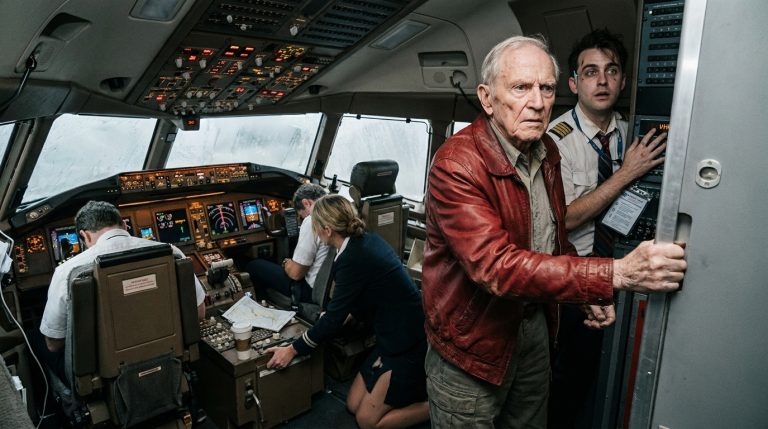
The fluorescent lights of Treatment Room 4 hummed with a low, parasitic vibration that always made the back of Rachel’s teeth ache toward the end of a twelve-hour shift. The air smelled of industrial bleach and the faint, copper tang of old blood dried into the floor seams. Under her palms, the old man’s sleeve was a ruin of stiffened, grease-darkened wool and fraying canvas. The heat radiating from his forearm felt like a brick left out in the August noon.
“Rachel, step back from the gurney.”
Eleanor Green’s voice didn’t rise, but it had the flat, crushing weight of an iron press. She stood in the doorway, her linen blazer immaculate, her lanyard clinking against a silver brooch shaped like a stylized caduceus. Behind her, two evening-shift residents hovered like nervous ghosts, their clipboards held against their chests like plastic shields.
Rachel didn’t look up. She kept her fingers pressed hard against the margins of the wound, where the grey skin of the old man’s wrist met a jagged, weeping laceration that smelled distinctly of anaerobic rot. “He needs a wide-spectrum cephalosporin and six liters of saline before his kidneys shut down, Eleanor. His systolic is sitting at eighty-two. If I lift my hands, he bleeds through the mattress.”
“He has no intake file. He has no registered identification,” Eleanor said, her shoes clicking two measured steps into the room. The sound was dry, like twigs snapping underfoot. “The state board is auditing our Medicare compliance this quarter, Nurse Carter. You know the emergency-intake mandate requires a verified biometric scan or a legal proxy signature before we clear clinical assets. You are performing an unauthorized invasive procedure.”
“He’s an old man dying in a faded coat,” Rachel murmured. Her voice was small, caught in the space between her teeth, but it stayed level. She could feel the pulse under the man’s jaw—faint, rapid, like a trapped bird throwing itself against wicker. “His name is Sam. That’s all the identification his heart cares about right now.”
Through the grimy window of Room 4, the low winter sun was dying across the gravel parking lot, casting long, desaturated purple shadows across the linoleum. Rachel’s thumb brushed against a hard ridge near the man’s elbow—a knot of silvered scar tissue that felt like an old bullet track. The man’s eyes flickered open, yellowed and milky with cataract film, looking through her toward the ceiling tiles as if counting the water stains.
“The system doesn’t recognize ‘Sam,’ Rachel,” Eleanor said. A cold draft leaked from the ventilation grate, rattling the plastic packaging of a sterile drape on the counter. “Linda has already logged the incident. If that line goes into his vein without a physician’s counter-signature, the hospital’s liability shield is voided for the entire wing. I am ordering you to step away.”
Rachel looked down at the small notebook peeking from her scrub pocket—the blue fabric frayed at the corner where she’d carried it through three waves of infection and forty individual passings. She thought of her father’s dry, papery hand in the hospice room, the way the night nurse had quietly turned off the alarm monitors just so he could sleep through the final hour without the machines screaming at his transition.
She reached for the IV start kit with her left hand, the plastic crackling in the sterile silence of the room. “Then you’ll have to write the reprimand while I find the vein, Eleanor.”
The needle slid home with a tiny, dry click against the safety sheath.
CHAPTER 2: THE FRAGILE SEAMS OF DISGRACE
“The board doesn’t care about the color of his skin under the fever, Rachel. They care about the pixel count on the morning news feed.”
Jenna’s breath smelled of cold chicory coffee and anxiety. She was shaking as she squeezed a lukewarm paper cup into Rachel’s palms in the corridor behind the laundry chute. The light here was low, filtered through dusty wire glass, hitting the green paint of the walls until they looked the color of stagnant pond water.
Rachel took a slow sip. The tea was bitter, the styrofoam cup squeaking against her thumb. She had spent the last three hours sitting on a plastic chair in the administrative anteroom, watching the glass door of Eleanor Green’s office rattle every time the heavy bass from a live-broadcast van thrummed through the street outside. Her scrubs felt heavy, stiffened by thirty-six hours of continuous wear, the right cuff still bearing a stiff, rust-colored smear where Sam Brooks’s bandage had leaked before the morning shift took over.
“They took the server logs, Jen,” Rachel said, her voice dropping into the low, raspy register that came with a missed night of sleep. She adjusted the collar of her top, her fingers catching on a loose thread. The frayed texture felt like everything else in St. Jude’s—held together by habit and old glue. “They didn’t just lock my profile out of the pharmacy terminal. They cleared the whole intake history from yesterday afternoon. Nancy’s screen was blank by six a.m.”
“Linda says it’s a compliance quarantine,” Jenna whispered, her eyes shifting toward the main hallway where the soft shuck-shuck of the floor buffer sounded like a rhythmic lung. “But it isn’t. I saw the tech guys from the third-floor annex down there. They weren’t using hospital badges. They had those little blue clip-on passes with the unindexed silver seal. The ones that don’t match the state department logo.”
Rachel reached into her pocket, her fingers finding the small cardboard box security had given her when they stripped her lanyard. Beneath the extra pens and the half-empty tube of zinc ointment, her fingernail scraped the edge of the tattered photograph she’d retrieved from the lobby floor after Sam Brooks collapsed. She hadn’t looked at the front yet—not while the reporters were lining the curb like crows on a fence line—but her thumb traced the back of the heavy fiber paper. There was a violet ink stamp there, half-smudged by sweat, showing three letters inside an unjoined circle: O-X-I. It didn’t mean anything to her, but the ink had an old, chemical smell, like vinegar and coal tar.
The elevator at the end of the hall dinged with a bright, institutional chime that felt completely wrong for the silence that followed. Two men in dark, charcoal wool overcoats stepped out, their shoes hitting the linoleum with identical, heavy thuds. They didn’t look at the signs for the maternity ward or the cafeteria; they walked with the smooth, geometric precision of people who already had the blueprints mapped behind their eyes.
“Rachel,” Jenna breathed, her hand tightening on Rachel’s elbow until the styrofoam cup buckled, spilling a dark brown line down the front of her apron. “Don’t go back to the desk. Just take the back stairs through the boiler room.”
“I have two patients in 312 who don’t know how to adjust their own traction rigs, Jenna,” Rachel said, though she didn’t move. She watched the two men stop outside Eleanor’s office. One of them didn’t knock; he simply turned the brass handle with a single, downward flick of a gray-gloved wrist. The door closed behind them without a click.
She didn’t run. Instead, she walked toward the staff exit, the air growing colder as she neared the double glass doors that led to the lower parking lot. Through the pane, her old sedan looked small and grey under the winter sky, its rear bumper rusted out along the exhaust well.
As she reached the gravel, a young man in a yellow rainproof jacket jumped from the side of an unmarked utility van, a heavy lens balanced on his shoulder like an iron club. “Nurse Carter! Just a statement on the Brookline protocol violation—was the patient domestic or foreign?”
Rachel didn’t look at the lens. She kept her head down, her boots crunching into the frozen slush between the cars. Her hand was jammed deep into her pocket, her fingers pressing so hard against Sam Brooks’s tattered photograph that she could feel the old paper beginning to split between her knuckles.
She got into the driver’s seat, the cold vinyl groaning under her weight. When she turned the key, the engine coughed twice before catching, the rattle of the fan belt filling the small cabin. She pulled out onto the avenue, her eyes checking the rearview mirror out of a habit she didn’t fully understand until she saw the black utility van pull away from the curb three hundred yards behind her, its headlights remaining dark against the grey afternoon.
When she reached her apartment five blocks away, the small space felt different—colder, the smell of Oliver’s tinned salmon hanging heavy in the kitchen. She didn’t turn on the overhead light. She sat at the laminate table, her coat still zipped to the chin, and emptied the cardboard box onto the scarred wood.
The tattered photo fell face up.
It wasn’t a family picture. It was a high-contrast aerial shot of an unpaved airstrip cut into a dense, grey forest, the grain so coarse it looked like it had been taken through cheesecloth. In the lower right corner, written in a fine, archival script that looked like her father’s ledger notes, were five numbers and a single name: 71-04-09 / ANADYR.
Behind her, the radiator clanked, a dry bubble of air bursting through the iron pipe with a sound like a small pistol shot. Rachel reached for her phone to search the name, but before her thumb could touch the screen, the display went white. A single line of text typed itself across the glass, character by character, without a sender address:
The line you crossed didn’t stop at the intake desk, Nurse Carter. Keep away from the window.
Through the thin cotton curtains, the orange glow of the streetlamp across the asphalt suddenly died, plunging the small kitchen into the cold, flat grey of a winter dusk.
CHAPTER 3: THE SHADOWS OF ANADYR
The sudden darkness in the kitchen felt heavy, almost physical, pressing against Rachel’s chest until her breath came short. The silent screen of her phone glowed like a dead eye against the scarred laminate table, the warning text still burning into her retinas. Outside, the low, steady rumble of a heavy diesel engine sat beneath the window, vibrating through the old floorboards and up into the soles of her shoes.
She didn’t move toward the window. Her training in the trauma bay had taught her that when a room went unstable, the worst thing to do was change your profile before you understood the parameters of the leak. She slid out of the chair slowly, her weight shifting onto her heels to keep the floorboards from groaning. The apartment was cold; the radiator had gone silent after its last iron strike, leaving only the smell of dust and the faint scent of Oliver’s tinned salmon hanging in the damp air.
Her fingers found the edge of the cardboard box again. She slid her thumb under the tattered photograph, feeling the split in the heavy fiber paper where she had pressed too hard. 71-04-09 / ANADYR. It felt less like a clue and more like an anchor pulling her down into something that had nothing to do with charts or dosage calculations.
A sharp, metallic scrape cut through the engine noise outside—the sound of an iron mailbox flap dropping on the porch downstairs. It was followed by a single, deliberate footstep on the bottom stair, then nothing. Just the idle of the black van waiting in the dark.
Rachel crept toward the small hallway, her hand brushing along the wallpaper where the seams were lifting, the rough, dry texture catching under her palms. The front door of her apartment had a brass peephole, cloudy with age and scratched by generations of keys. She leaned into it, her breathing shallow against the wood.
The stairwell was empty, illuminated only by the faint green exit sign over the fire door. But resting on her welcome mat was a thick, moisture-resistant manila envelope, unaddressed, its heavy metal clasp bent flat against the paper.
She unlocked the deadbolt with a soft, practiced twist, minimizing the click, and dragged the envelope inside before resetting the iron latch. The paper felt heavy, stiffer than standard stationery, chilled by the winter draft that cut under the doorframe.
Back at the kitchen table, using the dim backlight of her frozen phone, she tore the top seal. Inside lay a bound cluster of document copies, the upper margins aggressively struck out with dense, black grease pencil. But where the text remained clear, her eyes caught her own name highlighted in a pale, faded yellow ink, dated three weeks prior to Sam Brooks ever walking through the doors of St. Jude’s.
It was an active internal audit authorization from the Department of Defense, flagged with a tier-one warning protocol: Medical assets to be isolated immediately upon contact with Subject Echo-Seven. Any unauthorized treatment to be processed under emergency asset protection protocols.
“They knew he was coming,” Rachel whispered to the empty room. Her throat felt dry, like she had swallowed powdered chalk. The hospital wasn’t trying to avoid a malpractice suit from a local board; they were following a pre-set quarantine instruction to let an old man expire quietly before his file could be opened. The decoy secret of administrative liability that Eleanor Green had thrown at her in the treatment room was just a paper wall to hide a much larger, darker machinery.
A sudden, sharp vibration shook the window pane behind her. She turned, her pulse spiking into her ears, as the headlights of the black van across the street flared to life, casting long, fractured shadows of the window frames across the kitchen ceiling. The lights flickered twice—a slow, deliberate signal—before the vehicle shifted into gear, its tires crunching over the frozen slush as it rolled slowly into the dark avenue.
Rachel looked down at the documents, her fingers tracing the faded ink of the highlighted text. She wasn’t just a suspended nurse anymore; she was an active impediment in a national security ledger she didn’t know how to read. She gathered the papers against her chest, the heavy grain of the envelopes cold against her scrub top, knowing that the morning wouldn’t bring an apology or an administrative review—it would bring the hammer.
CHAPTER 4: THE DESCENT OF STONE AND STARS
The morning did not break so much as the dark turned into a heavy, wet grey that clung to the windows of St. Jude’s like damp cheesecloth. Rachel stood inside the staff entrance, her fingers gripping the edge of her winter coat. She hadn’t slept. The documents from the manila envelope were tucked flat against her ribs, wrapped in a thin plastic wash-bag to keep the sweat from blurring the ink.
Across the drive, the quiet was severed by the mechanical synchronized downshift of heavy diesel engines. Six black SUVs swept through the circular entrance gates, their tires spraying frozen gravel against the lower brickwork with a sound like small gunfire. They didn’t slow down for the ambulance bays or the visitor parking indicators. They moved with absolute, geometric momentum, pinning the front entrance in a perfect crescent lock before the brake lights even flared.
“Rachel, you shouldn’t be here,” Jenna’s voice came from behind the intake desk, dry and trembling. She was trying to staple a stack of discharge forms, but her fingers kept missing the alignment bar. “Eleanor has been on the phone with corporate legal since four a.m. They brought in extra security guards from the metro district. They’re looking for you.”
Rachel didn’t look at her. Her eyes were fixed on the lead vehicle. The doors opened in unison—a single, heavy thud of reinforced steel striking rubber seals. Men and women in full Marine dress uniforms stepped onto the wet asphalt, their brass buttons catching the dull, flat glare of the early morning light. Their white gloves were immaculate, their steps striking the pavement with a sharp, terrifying precision that silenced the low hum of the idling engines.
At the front walked a man whose posture looked like it had been carved out of an iron rail. His coat was pinned with rows of silver stars and deep-seated operational medals that had no names on the standard registers. Lieutenant Colonel Marcus Reed. His face had the grey, weathered texture of an old stone monument left out in the wind.
The automatic glass doors of the lobby slid open with a long, mechanical hiss. The silence that followed was total. The ambient chatter of the waiting room, the rhythmic rattle of the reception printers, the low murmur of patients waiting for the outpatient lab—everything froze. Nurses on the mezzanine level leaned over the brass railings, their pens resting forgotten against their clipboards.
Eleanor Green descended the main staircase, her heels clicking against the terrazzo floor with an artificial speed that betrayed the tremor in her hands. She was pulling her navy blazer down, her lanyard swinging wildly against her chest. “Lieutenant Colonel Reed,” she said, her voice echoing too loud in the cavernous space. “This is a private municipal facility. If you are here for a public relations transfer, you have to clear it through our administrative office on the fourth floor.”
Reed didn’t pause. He stopped exactly three feet from her, his gloved hands remaining clasped behind the small of his back. The air around him smelled of wool, cold salt water, and high-grade fuel oil. “Miss Green,” he said, his tone smooth but carrying the low, grinding resonance of a granite millstone. “I am not here for a transfer. I am here to secure the operational continuity of Subject Echo-Seven.”
“The patient was stabilized and processed under our standard indigent care protocol,” Eleanor said, her chin lifting, though the skin around her throat was white and tight. “He was transferred to an off-site psychiatric recovery unit at midnight, per the Department of Defense flag on his file. We followed the risk mitigation directives to the letter.”
“You followed a decoy administrative directive designed to clear the room before the encryption window closed,” Reed shot back, his eyes narrowing until they looked like two pieces of chipped flint. He drew a slim leather folder from beneath his left arm and opened it with a single, sharp snap of his wrist. “Colonel Samuel Brooks has spent thirty-four years under deep operational cover. The systemic failure your staff attempted to induce by delaying his intake almost compromised a network that doesn’t exist on your maps.”
A low, collective murmur passed through the balcony seats. Linda, standing by the central monitoring station, slowly lowered her headset to the desk.
“We had no baseline metrics to verify his status,” Eleanor faltered, her hand reaching out to touch the edge of the mahogany reception counter for support. “The system—”
“The system didn’t save him,” Reed cut her off, his voice dropping into a quiet that felt heavier than a shout. “She did.”
He didn’t turn his head, but his gloved hand gestured toward the shadow of the laundry chute corridor. Rachel stepped out into the bright, buzzing glare of the lobby floor. Her old cotton scrubs were creased, her hair pulled back into a hasty knot that was coming undone at the temple, but her hands were steady.
As she walked toward the center of the room, the two security guards Eleanor had stationed near the elevators slowly took their hands off their belts and stepped back into the shadow of the vending machines. The Marines behind Reed shifted their alignment, creating an open lane that separated Rachel from the administrative desk.
“Nurse Carter,” Reed said, his expression remaining perfectly immobile, though his eyes softened by a fraction of a millimeter as they caught the blue corner of the notebook sticking out of her pocket. “The Colonel is breathing because you refused to read the ledger they gave you. But the information he carries isn’t finished with this room yet.”
He pulled a single, heavy sheet of paper from the leather folder—a document bearing no header, only a pristine signature line at the bottom that was completely blank.
“You need to sign this non-disclosure exemption, Rachel,” Eleanor whispered from the side, her lips barely moving as she tried to catch Rachel’s eye. “If you sign it, the hospital can reinstate your license by noon. The board will cover the back pay. We can make the viral video disappear.”
Rachel looked at the blank paper, then at the rows of silver medals on Reed’s chest, and finally back at the corridor where she had spent ten years of her life tracking the small, quiet exits of people who had no names left to give. The decoy was broken, but the absolute truth was still locked behind the stone-hard calm of the man standing before her.
CHAPTER 5: THE KINTSUGI OF RETURN
The letterhead was crisp, the heavy cotton bond paper a stark contrast to the faded blue hospital-grade forms Rachel had spent a decade filing. It didn’t rattle as Eleanor Green held it out across the mahogany reception counter. The silence in the lobby had shifted from the cold, clinical terror of the morning to something softer, an exhausted stillness that smelled faintly of damp wool and old rain drying on the floor tiles.
“Nurse Carter,” Eleanor said. Her voice lacked its usual sterile edge, sounding thin, like gauze stretched past its structural limit. Her blazer remained buttoned to the throat, but the fabric was creased around the shoulders, sagging under the weight of a long night spent answering to people who didn’t live on the hospital’s grid. “On behalf of the board of trustees and the administrative council of St. Jude’s, we offer our formal apology. Your temporary suspension is dissolved. You are reinstated to active clinical duty effective immediately, with a full restoration of seniority and retrospective compensation.”
Rachel looked at the document. Her fingers didn’t move to take it right away. Instead, her thumb traced the edge of the blue notebook in her pocket, the familiar linen fabric soft and frayed against her skin. She looked past Eleanor’s shoulder toward the central nurse’s station where the yellow light of the telemetry monitors kept its rhythm.
Linda was watching her from the medicine cart, a bottle of saline held stationary in her hand. Jenna stood beside her, a tear leaking down her cheek, leaving a clean track through the pale powder on her face. Jenna was holding her own small pocket journal now—a cheap, black notebook with a cardboard cover, its corners already beginning to round from the friction of her palms. The sight of it felt like a tiny fissure opening in the sterile gray wall of the institution, a place where something small and resilient could take root.
“The exceptions clause in the emergency triage protocol has been revised,” Eleanor added, her eyes dropping toward the terrazzo floor before rising to find Rachel’s face again. There was an unfamiliar humility in the set of her mouth, a quiet recognition that the lines she had spent her life guarding had almost choked the life out of the very sanctuary they were meant to preserve. “The medical director has signed an addendum. Compassionate intervention will no longer be classified as a liability event if a clinical pulse is recorded at the boundary.”
Rachel extended her hand and took the letter. The paper was dry, slightly textured, carrying the faint indentation of an old manual press where the board chairman had signed his name. It didn’t feel like a victory; it felt like a repair. Like the golden lacquer her father used to brush into the fractures of his old ceramic teapots, highlighting the breaks instead of pretending the porcelain had never fallen.
The crowd of onlookers—the shift supervisors, the physical therapists from the basement annex, the visitors holding paper bags from the cafeteria—began to disperse, their movements quiet, almost reverent. The heavy automatic glass doors slid open, letting in the cool, sharp scent of the winter air as the last of the black utility vans pulled away from the curb outside, its dark shape vanishing into the gray flow of the avenue.
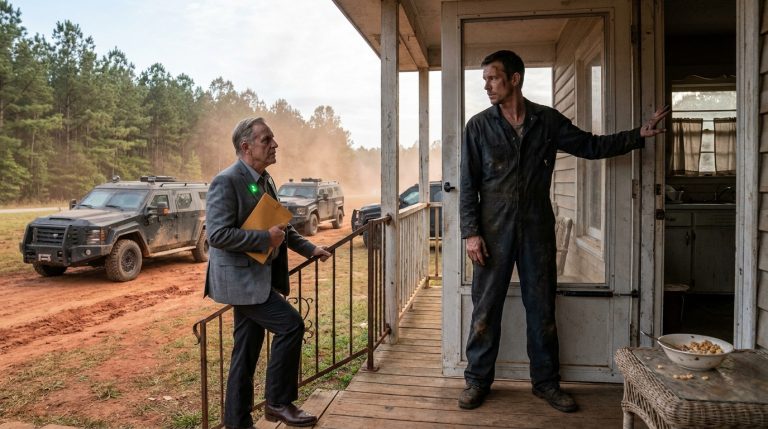
The wooden steps of the rear porch groaned softly under Rachel’s boots as she carried the tray out into the Sunday sun. The afternoon was clear, the sky the pale, washed blue of cheap cotton that had been laundered too many times.
Sam Brooks sat in the old wicker rocker, his legs covered by a faded flannel blanket that had belonged to Rachel’s father. His military jacket was gone, replaced by a soft, oversized wool sweater that swallowed his thin shoulders, the grey wool pilling at the cuffs. A polished ash cane rested against his knee, its brass tip catching the golden slant of the light.
“The tea is hot, Sam,” Rachel said, setting the porcelain cups onto the small iron table between them. The tea was a simple orange pekoe, the steam rising in straight, unbroken lines through the still air, smelling of dried leaves and woodsmoke.
Sam reached out his good hand, his fingers shaking slightly as they locked around the handle of the cup. His skin was still pale, the yellowish pour of the infection gone, leaving behind the deep, dry lines of a face that had known too many seasons under heavy weather. “The nurses at the annex told me you didn’t sign the non-disclosure order Reed brought into the lobby,” he said, his voice a low, gravelly rasp that sounded like dry leaves moving across asphalt.
“I signed the reinstatement, not the silence,” Rachel murmured, sitting in the opposite chair. She watched a sparrow drop onto the rusted iron railing of the porch, its feathers ruffled against the chill. “They wanted to lock your name back into the drawer, Sam. I told them the drawer was broken.”
Sam let out a dry, rattling laugh that turned into a soft cough. He took a sip of the tea, his eyes looking out over the small patch of brown grass that made up her back garden. “Thirty-four years I spent keeping the lights out, Rachel. Checking the parameters of operations that vanished from the maps before you were born. When the fever took me on the interstate, I thought the final reality was just going to be a cold floor and an empty intake screen.”
He reached into his sweater pocket and pulled out a small piece of paper—a photograph of three young children sitting on an unpainted wooden bench under a massive birch tree. The edges of the image were silvered with age, but the smiles were bright, the ink preserved against the damp.
“They live in Vermont now,” Sam said, his thumb brushing over the small faces. “They don’t know anything about Anadyr or the encryption registers. They just think their grandfather is an old soldier who forgot the way home. Because you held that line at the desk, I get to see them next month without a courier waiting at the gate.”
Rachel leaned her head against the high back of the wicker chair, her eyes tracking the golden light as it moved across the worn pine boards of the porch floor. The friction of the last week—the public trial, the viral footage, the terrifying descent of the military escort—seemed to dissolve into the quiet rhythm of the old man’s breathing.
She knew the hospital would still have its budget meetings on Monday; the hours would still be too long, the staffing too thin, and the bureaucracy would continue to grind its slow, administrative gears. But looking at the small notebook in her pocket, and the old man sitting in her father’s blanket, she knew that the quiet force of simple human care didn’t need the system’s permission to bend the world toward mercy.
“Drink your tea, Sam,” she said softly, her fingers wrapping around her own warm cup. “It gets cold fast out here.”
The old soldier nodded, his eyes closing as he let the rocking chair find its slow, natural cadence in the fading sun.