The Architect of Order: A Calculated Dismantling of Suburban Tyranny in the Pursuit of Quiet Justice
CHAPTER 1: The Fracture
The fabric groaned before it tore. It was a high-frequency scream of synthetic fibers against wood, a sound that sliced through the mundane silence of Oakmont Estates. I didn’t turn immediately. I remained crouched in the dirt, my fingertips tracing the damp soil around the base of a sky leaf verbena seedling. The air inside the nursery had been a steady, humid seventy-two degrees; now, a gust of dry, oppressive heat rushed in, carrying the scent of asphalt and manicured lawns.
“This is your final notice, Mr. Evans.”
Karen’s voice had the texture of gravel grinding in a glass. I rose slowly, my left knee clicking—a sharp, familiar reminder of a life defined by engineering and kinetic impact. I faced her. She was a monument to belligerent entitlement, her pink tracksuit vibrating with the effort of her own self-importance. Beside her, the contractor shifted his weight. He was a man-shaped void of intelligence, his eyes tracking the movement of a dust mote rather than the gravity of his own trespass.
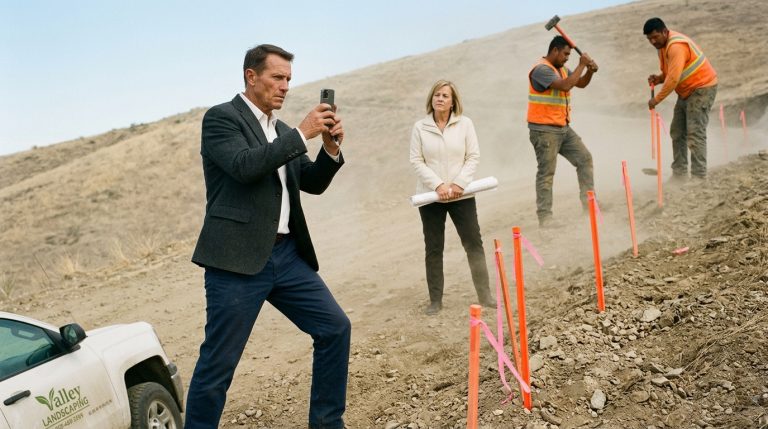
He yanked the crowbar. The pine frame, braced for wind but not for malice, splintered. A ragged section of green mesh peeled away, exposing the nursery to the unrelenting glare of the afternoon sun. I watched the leaves of the verbena recoil. They were delicate things, bred for the dappled shadow of an ecosystem that had been dying long before I arrived.
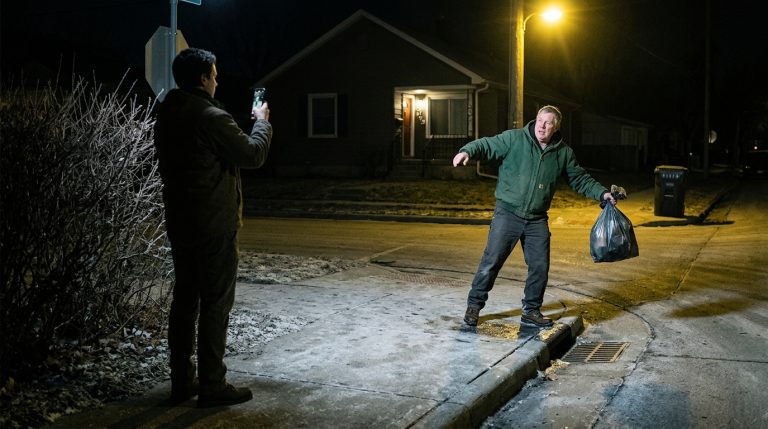
My hand moved to my pocket. It was a practiced, efficient motion, honed by years of assessing infrastructure integrity in places where a structural flaw meant the difference between safety and catastrophe. I pulled out my phone, the screen cool against my palm.
“Karen,” I said. My voice was a flat, calibrated instrument. I didn’t reach for anger; anger was a loss of control, and control was the only currency that mattered here. “You are currently documenting your own liability.”
She barked a laugh, a sharp, ugly sound. “I am enforcing the bylaws. Section seven, paragraph four. Temporary structures are a blight, and you are finished.”
I didn’t answer. I wasn’t looking at her anymore. I was panning the camera across the scene: the contractor’s vacant, slack-jawed expression; the jagged, splintered wood; the way the sunlight hit the soil, beginning the process of dessication. Every frame was an admission of guilt. Every second of her monologue was a structural failure in the foundation of her own life.
She stepped forward, her heels digging into the lawn, her shadow stretching long and dark across my work. “Did you hear me? Clear this out by tonight, or—”
“Or what, Karen?” I asked. I stopped recording, the file automatically syncing to a secure cloud server. The weight of the phone felt immense. “You think you’re tearing down a screen. You have no idea what you’ve actually broken.”
The contractor turned to her, his brow furrowing as if he’d just realized the gravity of the static in the air. “Ma’am?”
I took a step toward them, my gait deliberate, my eyes tracking their weaknesses—the way she pulled at the fabric of her sleeve, the way he adjusted the crowbar. They were predictable variables in a system I had already solved.
“The county conservation department is currently on their way,” I lied—or perhaps, it was a prediction of a future I was about to dictate. “And they are going to be very interested in why you thought you had the jurisdiction to destroy a protected scientific site.”
The silence that followed was heavy, metallic. Karen’s smug mask flickered, just for a fraction of a second, revealing a sliver of genuine, unadulterated fear.
Then, she straightened, the clipboard in her hand serving as her shield. “We’ll see about that, Mr. Evans. You have no idea who I am.”
“I know exactly who you are, Karen,” I said, my gaze locking onto hers with a cold, absolute certainty. “And that is exactly why you’re about to lose everything.”
I turned my back on them and walked toward the greenhouse, leaving them standing in the patch of light where my privacy had once been. I could hear the contractor murmuring, his voice suddenly thick with hesitation. I didn’t care. The structural analysis was complete. The load-bearing walls of her life were already under stress; all I had to do was apply the weight.
CHAPTER 2: The Shadow Log
The silence that followed Karen’s retreat was not the peaceful stillness of a Sunday afternoon in Oakmont Estates. It was the heavy, pregnant quiet that precedes a landslide. I watched her pink tracksuit fade into the distance, a garish smear against the muted greens and browns of our cul-de-sac, until she finally disappeared behind the manicured hedge of her own property.
I stayed where I was for a long moment, the air around the ruined privacy screen tasting of splintered pine and ozone. My knee throbbed—a deep, rhythmic ache that seemed to sync with the pulse in my neck. For a split second, the bright, filtered sunlight of the suburban afternoon warped. I was back in Helman Province, the heat rising off the scorched earth in shimmering waves, the sound of tearing fabric replaced by the sudden, sickening metal-on-metal grind of a damaged support strut on a bridge construction site. The hyper-vigilance, which I had spent months trying to suppress with lawnmowing and quiet routine, surged to the surface. I gripped my phone tighter, the sharp edges of the casing digging into my palm, forcing me back to the present.
I wasn’t in a combat zone. I was in a backyard. The enemy wasn’t an insurgent group with IEDs; it was a woman with a clipboard and a god complex. The mission was the same: assess, stabilize, and prepare the counter-strike.
I walked to the greenhouse, the movement of my body stiff and deliberate. The destruction of the privacy screen was an aesthetic wound, but the exposure of the seedlings was a tactical catastrophe. I pulled a roll of industrial-grade heavy-duty tarp from the storage shed, my hands working with a memory that pre-dated my military service, back to the years of structural engineering before the world turned into a series of stress tests and conflict zones.
I rigged a temporary shade over the most vulnerable of the sky leaf verbena. My movements were surgical, efficient, and entirely devoid of the frantic energy that usually follows a confrontation. As I clamped the tarp to the remaining frame, I ran a mental diagnostic of the day’s events.
Karen had made a critical, amateur mistake: she had brought an unauthorized third party onto private property to destroy permitted assets. In the eyes of the law—or at least the bureaucracy she worshiped—that wasn’t just a violation; it was a tort.
I retreated into the house, the cool, conditioned air of the living room hitting my sweat-dampened skin like a tonic. Sarah wasn’t home; she was still at the school, and for that, I was grateful. I didn’t want her to see the residue of the fight on my face. I sat at the dining room table, the documents I had meticulously organized during the past three months spread out before me.
I took out a legal pad and began to map the battlefield. I drew a line down the center of the page. On the left: Karen’s “official” justifications—the subsections, the paragraphs, the cited HOA bylaws. On the right: The reality—the permits, the county ordinances, and the fundamental jurisdictional hierarchy that Karen seemed to believe she was exempt from.
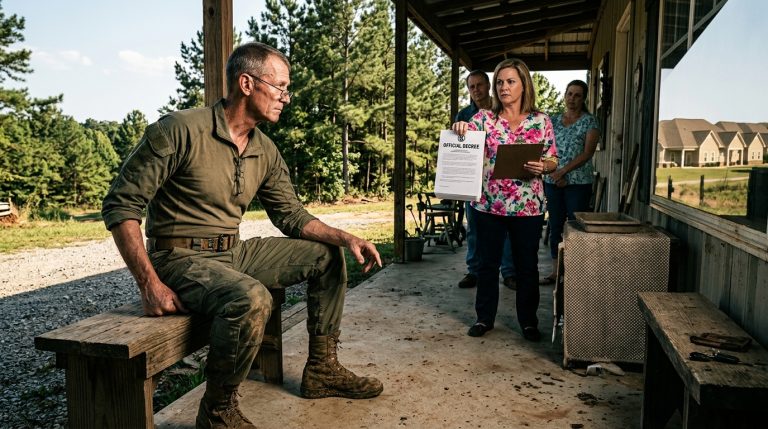
I picked up the violation notice she had taped to my door two weeks ago. It was printed on thick, high-quality stock, the HOA seal embossed in the corner. Section 4, Paragraph 2: Clutter and Unsightly Objects. My eye caught the signature: Karen Miller, President.
I opened my laptop. I had already bypassed the HOA’s primary website firewall three weeks ago, during an idle evening of curiosity that had quickly turned into a comprehensive investigation. Accessing the server was trivial; the HOA had outsourced their IT to a discount firm that treated cybersecurity as an optional luxury. I didn’t need to steal anything—not yet. I only needed to observe.
I navigated to the folder labeled “2026_Contracts.” There, buried beneath a sub-folder of mundane landscaping invoices, was the record I had been hunting. I opened the PDF labeled Donnie_Demolition_Project_May.
My breath hitched—not with adrenaline, but with cold, calculated satisfaction.
The invoice was for two thousand dollars, billed for “removal of temporary structures, Lot 72.” But the signature on the authorization form wasn’t the secretary’s, nor was there any evidence of a board vote. It was a digital stamp of Karen’s own signature. And the bank routing number for the payment?
I cross-referenced the digits. The routing number didn’t belong to a professional demolition firm. It traced back to a small, private account held at a local credit union. A quick search of the credit union’s public registry revealed the account holder: Donald Miller.
Karen hadn’t hired a contractor. She had funneled neighborhood funds to her own relative to commit a crime on her behalf.
I leaned back, the chair groaning under my weight. The phantom pressure in my shoulder finally dissipated. I wasn’t fighting a war of attrition anymore. I had found the pressure point. Every bridge has a structural limitation, a single bolt that, if loosened, causes the entire span to lose its integrity. Karen had just handed me the wrench.
I didn’t smile. I reached out and saved the PDF to three separate, encrypted drives. One would stay in the house, hidden behind the wall paneling in the garage; one would go to George, the retired litigator I’d been watching from afar; and the third would stay with me.
I looked at the window, out toward the cul-de-sac. Somewhere behind those walls, Karen was likely celebrating her victory, sipping wine, and preparing her next violation notice. She was planning the next move in a game she thought she was winning.
She had no idea that I wasn’t playing the game by the HOA bylaws. I was playing by the laws of physics. And in physics, for every action, there is a reaction—equal in force, and inevitable in its delivery.
I reached for my phone and dialed the number I had stored under a generic, encrypted label.
“George,” I said, when he picked up on the second ring. “It’s Mark Evans. I have the invoice. You were right about the relative. It’s time to start the audit.”
The line was quiet for a moment, then George’s voice came back, rich with the anticipation of a long-awaited argument. “I’ll have the coffee on, Mark. You’d better bring a heavy coat. It’s going to get cold for them before it’s over.”
I hung up, the silence of the house returning, but it felt different now. It wasn’t the silence of a retreat. It was the quiet of a firing line.
CHAPTER 3: The Ally in the Den
The coffee George poured was black, bitter, and strong enough to jump-start a dead engine. I sat in his study, a room that smelled of dust, old law journals, and the faint, sharp scent of pipe tobacco he hadn’t smoked in a decade. The shelves were packed with leather-bound volumes that looked less like books and more like historical records of human error and retribution.
“You’re vibrating, Mark,” George said, not looking up from the spread of documents he had arranged on his desk. He was a man of precise movements, his fingers thin and steady as he slid a copy of the HOA bylaws toward me. “It’s a natural reaction to the start of a conflict. Adrenaline is a tool. Don’t let it become a master.”
I took a sip of the coffee, letting the heat settle the static in my nerves. “It’s not just adrenaline. It’s the sheer inefficiency of their operation. It offends the engineer in me.”
George let out a short, dry laugh. “Inefficiency is the hallmark of the amateur tyrant. They rely on the fact that most people are too tired to double-check their math. Karen has been operating under the assumption that the ‘bylaws’ are a static, untouchable stone tablet. She hasn’t realized yet that she’s been writing her own indictment with every signature.”
He tapped the file I had brought—the PDF of the demolition invoice. “This,” he said, tapping it with a fountain pen that looked like it had seen the inside of a courtroom since the nineties, “is the crowbar. The embezzlement is the leverage. But to use it effectively, we can’t just go to the police. The police in this county are notoriously lazy when it comes to civil disputes. We need to frame this within the HOA’s own internal structure. We need to create an audit scenario that she cannot refuse without revealing her own guilt.”
“She’ll stall,” I said, my voice cutting through the quiet of the study. “She’s already stonewalling the committee members who asked about the landscaping fees.”
“Then we make the cost of stalling higher than the cost of compliance,” George countered. He leaned back, his eyes narrowing. “That’s where you come in. You’re the ‘county conservation partner.’ Use that. File a formal, written request for the HOA to provide a record of all ‘temporary structure’ enforcement actions. Cite the county’s environmental protection mandates. If she denies the request, she’s not just denying a neighbor; she’s obstructing a government-sanctioned environmental oversight process. That moves her from a civil liability to a potential statutory violator.”
I felt a cold, clear clarity settle over me. It was the same sensation I got when I was on site, staring at a structural blueprint and identifying the weak point that would bring the entire thing down. It wasn’t about fighting; it was about precision.
“And if she refuses?” I asked.
“Then we go to the county council,” George said, his voice dropping into a register that signaled total, clinical finality. “And we show them exactly what happens when their partner is harassed by a corrupt HOA president. But before we escalate, we need to bring in someone who knows the digital footprint. Someone who can track where else that money has been flowing.”
He glanced toward the door, and as if on cue, a soft knock echoed through the room. Maria walked in, her laptop tucked under her arm like a weapon. She looked tired, her eyes rimmed with the exhaustion of someone who had spent the last forty-eight hours scraping server logs, but her posture was rigid.
“I’ve got the full scope,” Maria said, setting the laptop on George’s desk. She opened it, the screen casting a pale, bluish light over the cluttered room. “Karen isn’t just skimming from the maintenance funds. She’s been manipulating the billing cycle for the last eighteen months. She flags ’emergency repairs’ that never occurred, funnels the payment to the shell account, and then ‘reconciles’ the budget by cutting back on the actual neighborhood maintenance schedule. That’s why the park lawn has been dying, and why the clubhouse lights have been flickering. She’s literally draining the neighborhood’s physical integrity to fund her own lifestyle.”
I looked at the data scrolling across the screen—an endless sequence of line items, timestamps, and routing numbers. It was a beautiful, devastatingly simple architecture of greed.
“She thinks she’s being clever,” I murmured, watching a graph of the HOA’s declining reserves correlate perfectly with the spikes in payments to the ‘Donnie Demolition’ account.
“She thinks she’s protected by the complexity of the system,” Maria said, her fingers dancing across the keys. “But every transaction leaves a signature. She’s the only one with authorization privileges on the digital portal. Everything points back to her account. She didn’t even use a proxy for the login sessions.”
I looked from the screen to George. “When do we move?”
“We don’t,” George said, a thin, sharp smile spreading across his face. “We wait. We wait for the next board meeting. We let her keep making mistakes. The more she tries to cover these tracks, the more damage she’ll do to her own reputation. Let her double down on the ‘unauthorized structure’ narrative. Let her keep sending those notices. Every notice she sends is a recorded act of retaliation against a county project. We’re building a fortress of evidence, Mark. When we hit, we hit with everything at once.”
I felt a sudden, fleeting shadow of doubt. I turned toward the window, looking out into the night. From here, I could see the silhouette of my own house, and beyond it, the faint, flickering porch light of Karen’s residence. The neighborhood looked tranquil, but I couldn’t shake the sensation that the houses were eyes—watching, waiting, the silence of the cul-de-sac a thin, fragile veil. Was I being seen? Was there a shadow moving in the peripheral of my vision, or was that just the ghost of the mission bleeding into my perception?
I turned back to the study, shaking off the thought. Paranoia was just another form of noise. I needed the signal.
“We need to document the retaliation,” I said, my voice steadying. “Every piece of paper, every phone call, every time she shows up at my property line. I’ll be the lightning rod. I’ll keep the pressure on the greenhouse. I’ll make it obvious that I’m not backing down. You two keep digging into the financials. If we can link the ’emergency repair’ fraud to the demolition contractor, we won’t just have a civil case. We’ll have a criminal referral.”
George nodded, his eyes bright with the quiet intensity of a man who had spent his life waiting for a case this satisfying. “It’s a deal, then. You stay in the line of fire, and we’ll make sure that when she tries to pull the trigger, the gun blows up in her hand.”
I stood up, the chair scraping sharply against the hardwood floor. I was tired, but for the first time in months, the exhaustion felt earned. I was no longer a victim of a system I couldn’t control. I was an architect of the system’s failure.
As I walked out of the study and into the quiet hallway of George’s home, I could still feel the phantom weight of the desert heat, the persistent, nagging fear that I was being watched from the shadows of the neighboring houses. But I pushed it down, locking the paranoia away behind a wall of cold, hard facts. I had the invoice. I had the alliance. And I had the leverage.
Karen Miller thought she was the guardian of Oakmont Estates. She didn’t realize that she was already standing on the edge of a cliff, and I had just finished measuring the depth of the drop.
CHAPTER 4: The Digital Breach
The laptop screen was a portal into the skeleton of the neighborhood. Maria sat across the dining room table, her face illuminated by the harsh, flicker-free glow of her display. It was three in the morning, the hour when the rest of Oakmont Estates was lost in a dreamless, suburban sleep. Outside, the streetlights cast long, distorted shadows across the pavement, and the wind rattled the loose siding on the house next door—a sound that, only a week ago, would have been nothing more than a nuisance. Now, it was a reminder of the fragility of the structures I was trying to deconstruct.
“Look at this,” Maria whispered, her voice barely audible over the hum of the cooling fan. She tapped a key, and a cascade of raw data flooded the screen. “She thinks she’s being careful by deleting the logs, but she doesn’t understand how the cloud architecture actually functions. She’s deleting the file reference, not the metadata. The trail is still there, buried in the background processes.”
I leaned in, my eyes tracking the columns of numbers. The data was a cold, objective record of greed. There was a specific line item that kept recurring—a disbursement for ‘General Maintenance’ that peaked during the final week of every month. Each entry was accompanied by a digital signature that looked, at a glance, like a standard system validation stamp.
But as I looked closer, I noticed a discrepancy.
“The signature,” I said, pointing to a string of hexadecimal code. “It’s inconsistent. Look at the timestamp on the validation. It’s offset by exactly four minutes from the entry time. That’s not a system automated process. That’s a manual override.”
Maria’s eyebrows arched. She dove into the code, her fingers moving with the fluid grace of a concert pianist. “You’re right. She isn’t using the HOA’s primary administrative login. She’s using a secondary, guest-level account that shouldn’t have writing permissions. She created a back door into the ledger.”
The realization hit me with the force of a physical blow. Karen hadn’t just been stealing money; she had been systematically rewriting the history of the association’s finances. She was creating a paper trail that showed the ‘authorized’ board members approving expenditures they had likely never even heard of.
“She’s gaslighting the entire board,” I said, a dark, grim satisfaction rising in my chest. “She’s not just embezzling. She’s creating a conspiracy of her own making, framing her own board members as accomplices.”
“And if they find out?” Maria asked, her gaze lifting from the screen to meet mine. “They’re timid people, Mark. They follow her because they’re afraid of her. If they realize she’s been using them as fall guys for her own fraud, they’ll break.”
“They won’t just break,” I corrected, my voice cold, surgical. “They’ll testify. Once they realize they’re looking at jail time for her decisions, their loyalty will evaporate. We don’t even need to force the issue. We just need to give them the evidence that they’ve been implicated.”
I walked over to the kitchen counter, the tiles cold beneath my bare feet. I poured a glass of water, watching the liquid ripple in the dim, amber light. I thought back to the promise I had made to David in the heat of Helman. He had wanted to build something that would last, something that had a purpose. I had taken that purpose and turned it into an engine of destruction. Was that what he had meant when he said, “Build this for me”?
The thought was a brief, sharp tremor in my resolve, but I quickly suppressed it. The conservation project was still the heart of the truth—the butterflies needed the verbena, and the verbena needed the protection. If the protection required the total demolition of a tyrant, so be it.
“We need to get this into the hands of the board members who aren’t in her pocket,” I said, turning back to the table. “Anonymously. We feed them the breadcrumbs. Let them start asking the questions. When she tries to shut them down, she’ll be the one acting out of line. She’ll be the one creating the public scene.”
“I can automate the distribution,” Maria said, a slow, determined smile spreading across her face. “I have a mailing list of every homeowner in the estates. I can target specific households—the ones who have been asking questions about the annual dues. It won’t look like a hack. It’ll look like an internal leak.”
I nodded, feeling the structural integrity of my plan tighten. “Make sure it’s clean. No digital fingerprints. If this traces back to us, she’ll bury us in retaliatory lawsuits before we even get to the meeting.”
“I know what I’m doing, Mark,” she said, already back to the code.
I sat back down, the silence of the house pressing in on me. I looked out at the window again. The cul-de-sac was still and lifeless, but for the first time, I felt like the predator, not the target. The neighborhood was no longer a place of conflict; it was a laboratory, and I was holding the acid that would dissolve the rot.
But as I watched the data flow across Maria’s screen, I felt a strange, nagging sensation—a flicker of motion in my peripheral vision, a silhouette passing behind the neighbor’s fence. I stood up, moving toward the glass, but there was nothing there. Just the empty street, the shadows, and the silence.
Was I becoming paranoid? Or was the system finally beginning to fight back?
I returned to the table, my hands steady, my mind sharp. I would worry about the shadows later. For now, there was work to be done. We had a tyrant to dismantle, and the blueprints were finally laid out before us.
CHAPTER 5: The Bait
The humidity had spiked within minutes, the air thickening with the metallic tang of an approaching front. I stood on the back porch, my eyes fixed on the greenhouse. Even in the dim light, I could see the stress points where I had clamped the temporary tarp. If this storm hit with the intensity the weather reports predicted, the wind would peel that tarp away like a bandage from a fresh wound, exposing the sky leaf verbena to the ravages of hail and driving rain.
This wasn’t just a storm. It was a deadline.
I grabbed the heavy-duty canvas reinforcements from the shed, my movements rapid and instinctive. I didn’t think about the legal files or the evidence I’d spent all night parsing; I thought about the physical load-bearing capacity of the frame. I stepped out into the grass, the first heavy drops of rain hitting the dirt like buckshot.
I was halfway to the greenhouse when a set of high-beam headlights flared to life at the end of the cul-de-sac. They didn’t move. They just sat there, glaring at my backyard like the eyes of a nocturnal predator. It was Karen’s golf cart, parked at the edge of the county-owned parcel that bordered my property. She wasn’t just patrolling; she was watching.
I didn’t stop. I continued toward the greenhouse, my jaw set, my hands moving with cold, calculated precision as I tightened the clamps on the support beams. Every turn of the wrench was an act of defiance. I knew she was documenting this—she was likely standing in the rain with her clipboard, waiting for the wind to tear my work apart so she could snap a photo of the resulting “hazardous debris.”
She wanted me to panic. She wanted me to lose my temper, to storm over there and give her the confrontation she needed to frame me as a violent, unstable presence in the neighborhood.
I didn’t give her the satisfaction. I finished the reinforcement, my muscles screaming from the exertion, the rain soaking through my shirt and turning the soil into a slick, treacherous mud. I stood for a moment, letting the water run down my face, my pulse steady despite the chaotic battering of the wind. I stared directly at the lights of her cart. I didn’t hide; I didn’t flinch. I just stood there, an immovable silhouette in the downpour, until the engine sputtered to life and the cart crawled away into the darkness.
She would be back. She was testing the structural limits of my resolve, probing for a structural failure.
When I finally retreated back into the house, my clothes were plastered to my skin and the floor was coated in wet clay. Maria was standing by the dining room table, her laptop closed, her face pale.
“I just got an alert,” she said, her voice tight. “Someone accessed the HOA administrative server from an internal terminal. They didn’t just look at the logs—they wiped the entire backup sequence for the last month. They’re erasing the evidence before we can even distribute it.”
The cold that seeped into my bones wasn’t just from the rain. It was the realization that we were being hunted in our own digital ecosystem.
“She’s not just a tyrant,” I said, a grim, razor-thin smile touching my lips. “She’s a cornered animal. She knows something is coming, even if she doesn’t know what it is. She’s destroying her own records to hide the trail.”
“If the backups are gone, we can’t prove the embezzlement,” Maria said, her hands trembling. “We have the files on our drives, but without the official server verification, she’ll just claim they’re fabricated—that we hacked the system and inserted the discrepancies ourselves.”
I walked to the table, looking at the black screen of the laptop. I had been an engineer for twelve years. I knew that when a structure is compromised, you don’t just try to patch the holes; you force the collapse under controlled conditions.
“She’s trying to clear the board,” I said. “She’s hoping that by deleting the history, she’s erasing the crime. But she’s forgotten one thing: she’s already filed the board meeting minutes that confirm the expenditures. She can delete the digital ledger, but she can’t delete the public record. We don’t need the server if we have the physical copies of the minutes she signed and distributed.”
“She’s been collecting them,” Maria said. “She forces a physical signature from every board member at the end of every meeting.”
“Then we don’t need the server,” I said, my voice dropping to a low, dangerous register. “We need those physical copies. They’re the only evidence she can’t wipe with a keystroke. And I know exactly where she keeps them.”
“In the clubhouse safe?” Maria asked.
“In her own study,” I said. “She’s too arrogant to trust a community safe. She keeps her ‘official’ records at home so she can ‘review’ them whenever she wants.”
I looked at the window again. The storm was intensifying, the thunder shaking the very foundations of the house. It was the perfect cover for a structural intervention.
“Maria, check the meeting schedule for the clubhouse,” I said. “Is there a board meeting tomorrow?”
“Yes,” she replied, her eyes widening. “Why?”
“Because if she’s planning to wipe the records,” I said, my eyes fixed on the distant, dark shape of her house, “she’ll have to bring the physical copies to the meeting to ‘re-validate’ the new ledger. She’s going to come out of that house with the last remaining evidence of her fraud.”
I went to the utility closet and pulled out my gear. Not for destruction, but for observation. I had the tools to finish this. The storm wasn’t going to break me; it was going to wash away the last of her defenses.
“Prepare the digital release,” I said, my voice sharp enough to cut through the thunder. “If she thinks she’s winning, let her walk right into the trap. We aren’t going to ask her for the records. We’re going to force her to present them to the entire neighborhood.”
The war had just entered its final phase, and the structural integrity of Karen Miller’s world was about to hit zero.
CHAPTER 6: The Pressure Point
The morning light was deceptive. It was clear and sharp, cutting through the windows of my living room and illuminating the dust motes dancing in the air, but the house felt cold—a structural chill that no heater could touch. I stood by the kitchen island, staring at the folder I had prepared. Inside were the physical copies of the board meeting minutes, the ones I had spent the last twenty-four hours verifying against Maria’s digital reconstruction.
They were unassuming, stapled sheets of paper, yet they were the fulcrum upon which Karen’s entire existence rested.
I looked at the clock. 7:00 AM. In twelve hours, the board meeting would convene at the community clubhouse. That would be the point of failure.
My knee ached, a deep, grinding sensation that pulled my mind back to the Helman Province. I saw the bridge again—the structural failure of the main support strut that had sent our equipment plummeting into the ravine. It was a failure of calculation, of missing a microscopic crack in the steel that had widened under the pressure of the load. I felt that same tension now, a phantom sensation of a foundation giving way, the feeling that if I moved too quickly, the whole project would shatter before I reached the target.
I shook the image away, the movement sharp and physical. I was not building a bridge; I was burning one.
I walked to the front door and looked out. The cul-de-sac was waking up. A neighbor was backing his car out of his driveway; another was walking a dog. They were part of a system that Karen had manipulated for years, a population she treated as a variable to be managed, never as an entity that could exert force of its own. She was about to be proven wrong.
The sound of an engine made me tense. It was a familiar, low-register hum—the golf cart. Karen was already on patrol.
I watched through the blinds as she cruised past my driveway. She didn’t look at the house; she didn’t stop to glare or inspect. She kept moving, her posture stiff, her gaze fixed rigidly ahead. It was the movement of someone trying to project absolute, unshakeable confidence while internally bracing for an impact she couldn’t see. She knew something was wrong. She could feel the shifts in the neighborhood—the quiet, the guarded looks from neighbors who were usually polite and deferential.
She was losing control of the environment, and her response was to tighten her grip. I knew that. I had counted on it.
I went to the garage and checked the gear. I had everything I needed: the digital files on the encrypted drives, the physical copies of the minutes, and the timeline that George had spent his entire retirement refining.
The front door opened. Sarah walked in, her face etched with the weariness of a long shift. She looked at the folder on the table, then at me. She didn’t ask what was inside. She knew. We had moved past the stage of explanations.
“You look like you haven’t slept,” she said, her voice soft but steady.
“I’m fine,” I said, moving to the counter to pour a cup of water. My hands didn’t shake. “I’m just waiting for the final report to be finalized.”
“Is it going to be worth it?” she asked. She didn’t mean the butterfly project. She meant the cost—the time, the energy, the slow transformation of our quiet retreat into a theater of war.
“It was never about the project,” I said, realizing it for the first time. “It was about proving that the structure of this place wasn’t something she could just own. She turned the neighborhood into a hierarchy, and now, we’re leveling it.”
“Be careful, Mark,” she said, touching my arm. “People like her don’t just disappear. They fight back.”
“Let her,” I said. “Fighting back is exactly what I need her to do. The harder she fights, the more of the foundation she’ll rip up on her way down.”
After she left the room, I sat back down at the table and opened the folder one last time. I found the specific page—the October minutes, the one Karen had falsified to authorize the demolition. I took a red pen and marked the signature line. It was a small, almost invisible detail, but it was the crack in the steel.
The phone on the table buzzed. It was George.
“I’ve got it, Mark,” he said, his voice clipped and urgent. “I spoke to the state auditor. They’ve been alerted to the potential embezzlement, but they need a ‘community-verified’ trigger to launch an official intervention. They need the board to formally request an audit. They need the motion to pass.”
“She’ll block it,” I said. “She’ll try to adjourn the meeting before a vote can even be called.”
“That’s why you’re going to be there,” George said. “We have the proxy votes from half the neighborhood. Even if she shuts down the floor, the bylaws stipulate that a special motion can be called if one-third of the membership is present and agrees to bypass the chair. You need to be ready to step in the second she loses control.”
“I’ll be there,” I said.
I hung up and stood up, the chair pushing back with a sharp, dissonant scrape against the floor. I walked to the window and looked out at the street. The sun was rising, the light hitting the houses of Oakmont Estates in a way that made them look like perfect, pristine models of order. But under the surface, the connections were frayed. The bolts were rusted. The weight of the structure was too great for the supports to handle.
I checked my watch. 8:00 AM.
The final phase had begun. I had twelve hours to prepare for the collapse. I didn’t feel nervous; I felt focused. The ghost of the bridge in Helman Province was gone, replaced by the reality of the blueprint in front of me. I had analyzed the stress, I had identified the weakness, and I had set the charge.
All that was left was to watch it fall.
CHAPTER 7: The Culmination
The Oakmont Estates clubhouse was a structure designed for beige compromises and polite murmurs, but tonight it felt like a bunker. The air was stagnant, heavy with the collective heat of fifty residents pressed together in the small, low-ceilinged room. At the front, behind a folding table that looked entirely too small for her presence, Karen Miller sat with her hands folded, a monument of forced stability. Her face was a mask of rigid geometry—taut skin, unblinking eyes, and a mouth pulled into a line that suggested she was holding back a scream.
I stood at the back of the room, my body calibrated to the room’s acoustics. To my left, George was a calm, granite presence, his eyes scanning the room like a hawk surveying a field. Maria sat near the projector, her fingers hovering over a remote. The residents were a sea of shifting postures—some wary, some clearly agitated, others glancing nervously toward Karen, waiting for the signal to fall into line.
“Welcome,” Karen began, her voice hitting a register of practiced, brittle authority. “We have a full agenda, and I intend to keep to it. Any questions regarding community projects will be addressed at the end of the meeting. In writing.”
“Point of order, Madam President,” George said, his voice cutting through the hum of the room with the precision of a scalpel. He didn’t wait for her to recognize him. He began walking toward the front, the sound of his footsteps rhythmic and loud in the sudden, sharp silence.
Karen’s face darkened, her hand tightening around the gavel as if it were a weapon. “Mr. Gable, you are not recognized. Please take your seat.”
“I don’t need recognition to address a failure of fiduciary duty,” George replied. He stopped at the head of the table. The entire room seemed to lean forward, the tension so acute that I could hear the fabric of people’s clothing shift. “As members of this association, we have been presented with information that suggests the executive committee has been bypassing board oversight to misappropriate community funds.”
Karen’s mouth opened, then closed. For the first time, her control over the physical environment faltered. She looked left and right, searching for an ally among the two board members flanking her, but they were staring at their own laps, their faces white.
“This is an unauthorized disruption,” Karen shouted, her voice rising into that familiar, shrill tone of entitlement. “I will have you removed if you continue to impede the business of this association!”
“The business of this association is currently under audit,” I said, stepping out from the shadows of the back row. I walked toward the front, the weight of the folder in my hand feeling substantial—like the weight of a support beam ready to be shifted. I reached the table and placed the folder directly in front of her.
Karen didn’t look at it. She looked at me, her eyes burning with a raw, desperate hatred. “You. This was your plan all along. Your little ‘conservation project’—it was just a pretext to stir up trouble.”
“It was a project to preserve something valuable, Karen,” I said, my voice quiet, even, and entirely devoid of the anger she was so desperately trying to provoke. “You just happened to be the invasive species that tried to kill it.”
Maria hit the remote.
The projection screen behind Karen flickered to life, showing the invoice—the one for ‘Donnie Demolition.’ It was blown up to four times its size, every pixel of the falsified signature and the routing number clear and undeniable. The room erupted. A murmur, then a rising tide of indignant shouting, filled the space.
“That’s a fabrication!” Karen shrieked, standing up so abruptly that her chair tipped backward with a loud, wooden crack. “I have no knowledge of this document! It’s been forged by Mr. Evans!”
“Then explain the bank records, Karen,” George said, his voice calm, projecting to the back of the room. “Explain how community dues were funneled into an account registered to your own brother-in-law. Explain why the maintenance budget has been gutted while your personal ‘administration expenses’ have tripled.”
She looked around the room, finally realizing that the sea of faces wasn’t filled with the usual, cowed deference. It was filled with the hard, sharp edge of collective betrayal. The neighbors she had fined for paint shades, the young couple she had harassed for a play-set—they were standing now, their eyes fixed on her with a singular, unified focus.
She reached for the gavel, her hand trembling. She gripped it and brought it down—crack, crack, crack—a frantic, rhythmic thumping that sounded like a failing engine. “Adjourned! The meeting is adjourned! Everyone out!”
But nobody moved.
She turned to her board members, her voice dropping to a desperate, snarling whisper. “Do something! You’re the board! Adjourn the meeting!”
The board member to her left, a man who had spent three years following her every instruction, finally looked up. His eyes were red, his expression one of profound, dawning horror. “I didn’t authorize this, Karen,” he said, his voice cracking. “I never saw these invoices. You told me the funds were for the new sprinkler system.”
The room went silent, a sudden, absolute drop in pressure that made the hair on the back of my neck stand up. Karen stood frozen, her hand still clutching the gavel, the projection of her own fraud looming over her like a shroud.
“The vote of no confidence,” I said, stepping into the space she had vacated behind the table. I looked at the crowd, then back at her. “All those in favor of removing the president for gross misconduct, signify by saying ‘aye’.”
The room was a roar. It wasn’t just a vote; it was a release of years of stifled frustration. It was the sound of a structure finally giving way.
Karen stood for a moment, her chest heaving, the reality of her defeat finally sinking in. She looked at the folder, then at me, then at the neighbors she had controlled for so long. She didn’t say a word. She turned, grabbed her empty clipboard, and walked toward the double doors at the back of the clubhouse.
She moved with the gait of a woman who had just had the ground pulled out from beneath her. I watched her go, the sharp edge of the folder still under my hand. The pressure in my chest had evaporated, leaving behind a cold, clear clarity.
She was gone. The board was dismantled. The neighborhood was silent, waiting for the dust to settle. I had done what I came to do. I had protected the project, but more importantly, I had restored the space.
I looked at the crowd. There was work to do—the audit, the cleanup, the long, slow process of repairing the community’s trust. But for the first time in eighteen months, the air in Oakmont Estates didn’t feel thin.
It felt like it was finally, truly mine.
CHAPTER 8: The Aftermath
The clubhouse was empty, the chairs pushed back in a disorganized scatter, the floor littered with the remnants of the meeting—discarded flyers, crumpled papers, and the lingering, stale scent of cheap cologne and stress. I stood at the folding table, the gavel lying on its side like a discarded toy. I picked it up, weighing the wood in my palm. It felt light, devoid of the authority it had possessed only an hour ago. I set it down gently, letting it go.
Karen had been gone for ten minutes. I knew she was at home, tearing through her own belongings, likely throwing her life into boxes with the frantic energy of a drowning person. She would lose the house, the standing, the false prestige she had spent years constructing. That was the payoff. The antagonist had been defeated by the very systems—the bylaws, the audits, the records—she had weaponized against others. Poetic justice.
I walked to the front of the clubhouse and pushed open the double doors. The night air was cool and crisp, a sharp contrast to the suffocating heat of the meeting. Outside, a few neighbors were gathered in the parking lot, their voices hushed, their expressions a mix of relief and exhaustion. When they saw me, the murmurs stopped.
I didn’t offer a victory speech. There was no need. The silence was enough.
George and Maria walked over to join me. George took a deep breath of the night air, his hands resting on his cane. “It’s over, Mark. The sheriff’s deputy is already on his way to serve the injunction. She won’t be spending another night as the president of this association.”
“She’s done,” Maria added, her voice quiet. “I checked the server logs one last time. She’s wiped everything she could, but she left behind the breadcrumbs for the forensic accountants. She’s going to be fighting this in court for the next five years.”
I nodded, watching the light from the clubhouse window spill out onto the pavement. I felt a sense of deep, hollowed-out calm. The ghosts of Helman Province, which had haunted every corner of this project, seemed to have retreated, the noise in my head finally silenced by the success of the mission. The promise to David had been kept. The nursery was safe, and the ecosystem of the neighborhood had been scrubbed clean of the rot.
I walked home alone, the path through the cul-de-sac familiar and quiet. When I reached my backyard, I went straight to the greenhouse.
Inside, the environment was exactly as it should be. The humidity was holding steady, the air rich with the scent of damp earth and greenery. I reached out and touched the frame of the structure—the galvanized steel supports I had installed after the first attack. It was solid, unyielding, a physical testament to the fact that I had finally built something that could endure.
I found a small, jagged piece of the original privacy screen still caught on a support beam—a remnant of the conflict, a reminder of the day everything had nearly been lost. I pulled it free, the fabric fraying in my grip. I turned it over in my fingers, feeling the coarse texture of the material, then let it drop to the dirt floor.
Symbolic closure.
I spent the next hour walking the rows of sky leaf verbena, checking the misting system, adjusting the ventilation. There was a rhythm to it—a quiet, mechanical peace. I realized then that my arc was complete. I hadn’t come home from the war to be an engineer of conflict; I had come home to be an engineer of life.
Sarah was waiting for me in the kitchen when I returned. She didn’t say a word, just poured me a glass of water and set it on the table. She looked at me, really looked at me, and saw that the tension had left my shoulders, the hard, defensive lines of my face finally softening.
“Is it done?” she asked.
“Yes,” I said, the word feeling lighter than it had in months. “It’s done.”
“What now?”
I thought about the nursery, the butterflies, the quiet, restored order of the neighborhood. “Now,” I said, “we go back to the way it was supposed to be. Just living.”
I walked to the window and looked out at the garden. The moon was high, casting a silver light over the yard. There were no golf carts patrolling. There were no violation notices waiting on the porch. There was just the quiet, rhythmic breathing of a neighborhood that had survived its own tyranny.
I turned away from the glass, my steps steady, my mind finally quiet. The war was over. The ground was clear. It was time to start the real work—the work of growing, of healing, and of finally, truly, coming home.