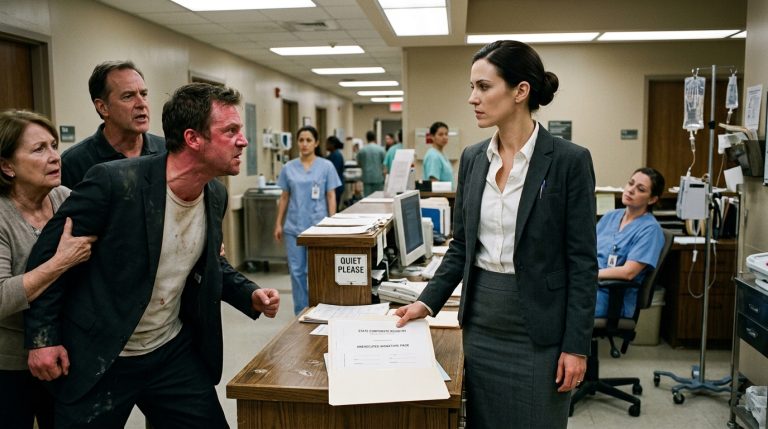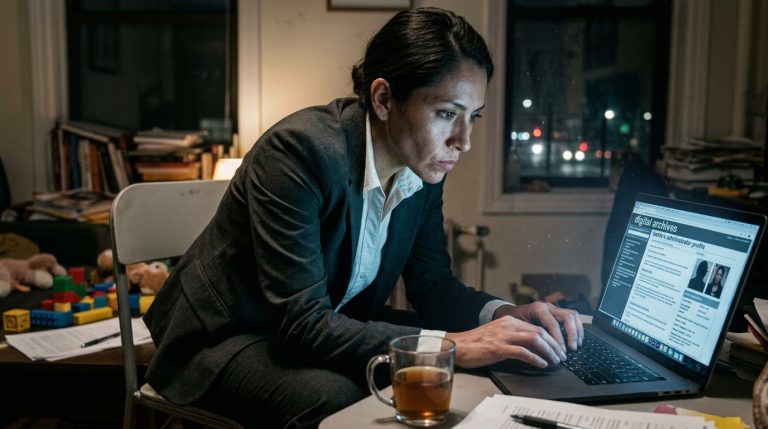
Building a Life of Absolute Sovereignty When the Family That Erased You Demands a Seat at Your Table
CHAPTER 1: THE ENVELOPE ON THE DESK
The kettle hissed on the stove, but I didn’t turn to look at it.
My fingers rested on the thick, cream-colored paper of the government inquiry resting right beside my coffee mug. The seal at the top was crisp, official, and entirely unauthorized.
Delphine had used my title, my credentials, and my institutional affiliation to sponsor a visa application for a cousin I hadn’t spoken to since graduation.
There was no phone call asking for permission. No polite inquiry. Just the cold assumption that my life and my hard-earned credentials were public property for the family to harvest whenever their convenience required it.
I reached for the heavy silver pen on the desk, the metal cold against my skin.
It was the same pen I used to sign off on surgical rotations and board certifications, the tool I had bought for myself the day I finally made chief.
I didn’t rush. Rushing meant letting their panic dictate my pulse.
Instead, I pulled a fresh sheet of letterhead toward me, squaring the edges against the edge of the dark wood table.
My reflection stared back from the dark glass of the window, calm, steady, and entirely untethered from the ghost of who I used to be.
I wrote the rejection clearly, blocking out each letter with deliberate, unhurried pressure.
To whom it may concern, I do not consent to this application. I was neither informed nor consulted.
I signed it with my full name, the ink soaking into the fiber of the page without a smudge.
No drama. No shouting matches across a dining room table. Just the hard, administrative wall of reality colliding with their entitlement.
I slipped the document into an envelope, sealed it, and dropped it into my briefcase right beside my case files.
The kettle finally clicked off, plunging the kitchen into a sudden, absolute quiet.
I poured the hot water over the tea bag, watching the amber color bloom in the ceramic cup, and listened to the distant hum of traffic outside my apartment window.
They thought distance was just a geographic gap they could cross whenever it suited them.
They didn’t understand that I had built an entire fortress out of the silence they left behind.
CHAPTER 2: THE COFFEE SHOP TRAP
The café smelled of burnt chicory and damp upholstery.
Deline kept her fingers neatly laced around her own cup, the diamond on her left hand catching the harsh midday glare through the plate-glass window.
She didn’t look like a mother welcoming her daughter back after years of engineered absence.
She looked like a campaign manager reviewing polling numbers before a tough election.
“You look well, Maris,” she said, her voice dropping into that familiar, measured cadence she used whenever she wanted to sound reasonable while backing someone into a corner. “Busy, but well.”
I didn’t answer. I set my cup down on the scarred wood table, letting the ceramic make a sharp, deliberate clink.
She waited for a polite nod, a softening of the eyes, anything to bridge the gap she had spent the last decade widening.
When none came, the tight skin around her jaw twitched with a faint, involuntary pulse.
“We were hoping,” she continued, leaning forward just enough to close the physical distance, “that since you’re in town for the rotation, we could talk about Silas.”
There it was. The pivot.
The entire coffee date wasn’t an apology or a reconciliation. It was an administrative ambush disguised as maternal concern.
“Silas is stable,” I said, my voice flat, entirely stripped of the warmth she expected. “He’s under the care of the primary attending team.”
“Of course he is,” Deline sighed, her hand fluttering toward her collar in a theatrical display of distress. “And the staff is adequate, for a regional facility. But with your position, your influence… we were wondering if there’s any chance he could be transferred to your hospital.”
She paused, letting the request hang in the space between us like a heavy wool blanket.
“You’d have better resources, a smoother recovery,” she added, her tone sharpening with subtle entitlement. “And maybe you could oversee his case a little more closely.”
I blinked once, keeping my breathing even and shallow.
They spent years treating my career as a pipe dream, a waste of time, something to be traded away for a community college administrative certificate.
Now, the exact title they mocked had become a utility tool they wanted to weaponize for their golden son’s convenience.
“I don’t run admissions,” I said quietly.
“Of course,” Deline pressed, her smile tightening until it looked carved from plaster. “But with a single note, a phone call from the chief physician… it’s a simple courtesy for family.”
I picked up my bag, the zipper scraping against the canvas with a dry, metallic rasp.
“Thank you for the coffee,” I said, standing up from the booth before she could formulate her next rehearsed line.
Deline froze, her hands hovering awkwardly over her paper cup like she couldn’t comprehend a version of the script where I didn’t wait for her dismissal.
CHAPTER 3: THE STOLEN RESEARCH
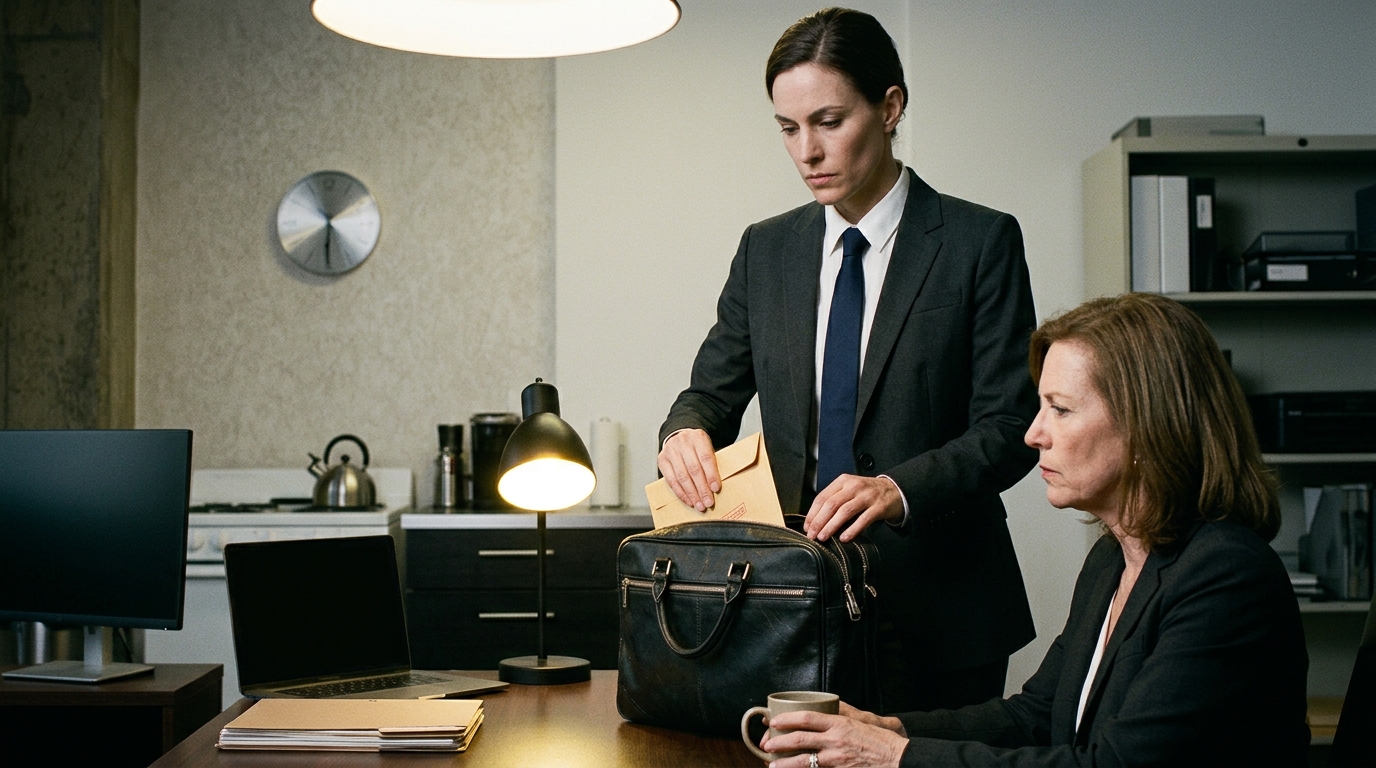
The desk lamp cast a harsh, yellow circle over the paper.
I flipped open the folder, my thumb catching on a jagged crease in the margin.
It was the original draft of my public health disparity paper, completed seven years ago during my brutal term at UT Austin.
I remembered the night I printed it, sliding it across the kitchen table to ask my advisor for feedback before final submissions.
Except my advisor hadn’t kept it. Silas had.
Buried beneath my handwritten corrections was a secondary stapled packet bearing a university grant receipt.
The name at the top wasn’t mine. It was Silas Broly, awarded full funding for a public health initiative identical down to the specific demographic metrics I had spent months compiling.
He didn’t just inherit family pride; he built his academic resume on the quiet, unacknowledged theft of my labor.
The room felt suddenly airless, the silence pressing against my eardrums like altitude sickness.
They didn’t just erase me from family portraits and dinner invitations. They stripped away my intellectual footprint, claiming my achievements while calling me a waste to my face.
I reached for my silver pen, the metal cold and steadying against my palm.
I didn’t yell or smash a glass against the wall. Rage was a luxury for people who still expected fair play from thieves.
Instead, I pulled the digital archive file from my laptop, lining up the metadata timestamps of my original draft side-by-side with Silas’s published grant proposal.
The submission dates didn’t lie. The digital fingerprints were crisp, undeniable, and completely unalterable.
My phone vibrated against the wood, a quiet, insistent buzz that broke the hum of the apartment refrigerator.
It was an unknown local number, but I already knew whose shadow was attached to it.
I let it ring out once, twice, listening to the flat electronic pulse echo through the empty room.
They thought distance and silence were tools to keep me small. They didn’t realize I had spent years learning how to build an unbreakable paper trail.
CHAPTER 4: THE PUBLIC STAGE
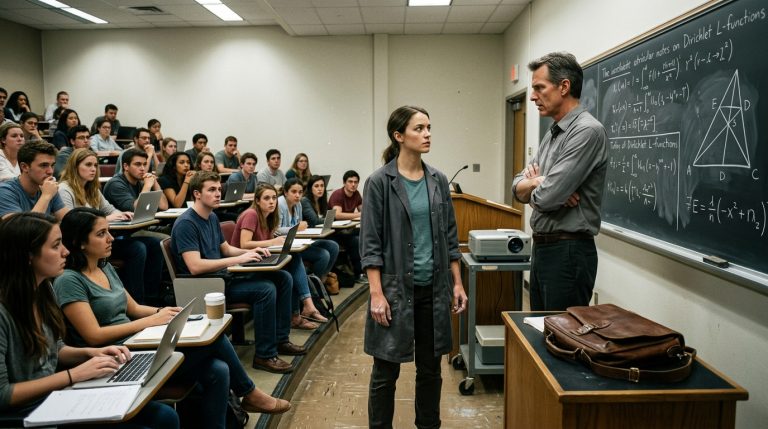
The auditorium lights were stark, cutting across the rows of seating like an administrative ledger.
I didn’t use notes. I didn’t need a prepared speech to recount what systemic erasure looked like when dressed up as family protection.
“We talk often about barriers in medicine,” I began, my voice steady against the hum of the sound system. “We talk about funding, about access, about structural inequality.”
I paused, letting the silence settle into the room just like the quiet they used to enforce at home.
“But the hardest barrier to dismantle isn’t always institutional. Sometimes, it’s the quiet sabotage sitting right across the dinner table.”
In the front row, a young resident blinked, leaning forward as if the words struck too close to her own history.
I didn’t name cities. I didn’t drop surnames. I didn’t need to.
The mechanics of entitlement were universal: the calculated minimization, the stolen credit, the demand that you shrink so someone else could stand tall under artificial lights.
“When you build a life out of silence,” I said, my knuckles whitening against the grain of the podium, “you learn that applause from strangers will never replace respect from blood—unless you realize that you never needed their permission to matter in the first place.”
The applause didn’t erupt like a stadium cheer; it started as a slow, deliberate wave of recognition that filled the hall with undeniable weight.
Afterward, as I stepped off the stage through the side exit, my phone buzzed twice in my coat pocket.
An incoming text from an unknown local number lit up the screen with a single phrase.
You’ve gone too far this time.
I didn’t reply. I simply slipped the phone back into my pocket and walked out into the cool evening air.
CHAPTER 5: THE FINAL LEDGER
The hospital corridor was dead silent at midnight, the fluorescent lights humming a low, steady note.
My badge clicked against my collarbone as I walked toward the third-floor cardiac ward.
Russell and Deline were already waiting outside Silas’s private suite, their postures rigid with the exhausted entitlement of people who expected the world to rearrange itself at their command.
“You ignored your mother’s messages,” Russell said, stepping directly into my path with his chest puffed out in that old police-academy stance he never quite dropped.
I didn’t stop. I kept moving forward until he was forced to take a half-step back to keep from colliding with me.
“Your son is receiving standard care from the attending medical team,” I said, my voice as cold and flat as a stainless-steel tray. “My presence here is neither required nor requested by the staff.”
“He’s your brother,” Deline hissed, her voice trembling with a toxic mix of grief and fury as she pushed off the waiting room wall. “After everything we provided, after every chance we gave you, you stand there acting like a stranger!”
“You made sure I was a stranger seven years ago when you drew up the resignation papers,” I replied, my eyes locked on hers without a single blink.
Silas pushed the door of his suite open a fraction, his face pale, leaning heavily against the doorframe.
“Just make the call, Maris,” Silas rasped, his voice thin and desperate. “Tell them to transfer my credentials, clear my records. You owe us that much after using the family name to get where you are.”
The sheer audacity hung in the air, thick and suffocating.
They weren’t apologizing. Even with monitors beeping down the hall and their golden son cornered by his own failing health, they still believed they could bully reality into submission.
“I didn’t use your name, Silas,” I said, my words cutting through the hallway like a scalpel. “I erased it. And the grant committee already has the metadata proving whose research you stole.”
Deline’s face drained of color, her mouth opening and closing without a sound as the final pillar of their control collapsed inward.
Russell lunged forward, his face mottled with rage, raising a finger to point directly in my face.
“You arrogant, ungrateful—” he roared, his voice cracking with sheer fury.
I didn’t flinch, didn’t step back, and didn’t let him finish the sentence.
I turned my back on them completely, walking down the sterile hallway toward the elevators while their desperate demands dissolved into absolute, impotent silence.
CHAPTER 6: THE CLOSED DOOR
The morning sun filtered through the apartment window, casting clean, unbroken lines across the hardwood floor.
There were no frantic phone calls left to ignore, no unauthorized paperwork to reject, and no rehearsed scripts waiting for me in a crowded café.
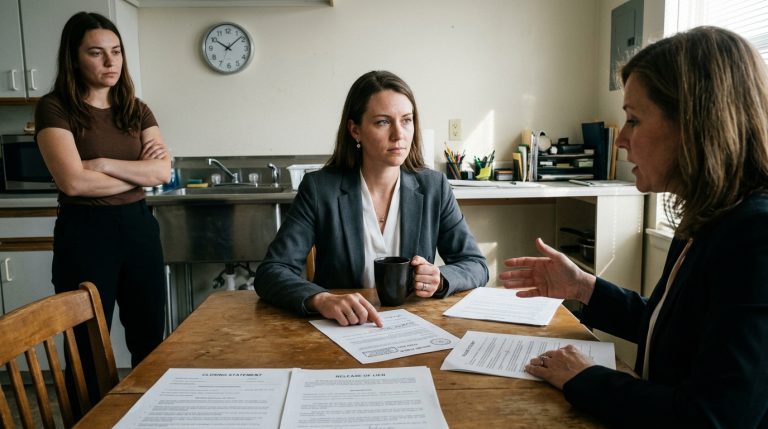
The medical board inquiry into the visa sponsorship had been formally closed with a single administrative keystroke, citing lack of applicant consent and invalid credential usage.
Silas’s stolen grant application had been flagged by the review committee, quietly reverting the credit to its original author without requiring a public confrontation or a tearful courtroom confession.
They didn’t break down, and they didn’t offer a gracious apology.
People like Deline and Russell didn’t know how to surrender; they simply ran out of leverage when the world stopped playing by their rules.
I walked over to the kitchen counter, picked up the kettle, and set it on the burner.
The water began to heat, rising from a soft murmur to a steady, rhythmic hiss before clicking off entirely.
I poured the hot water over a fresh tea bag, watching the dark amber liquid settle into stillness in the ceramic mug.
Outside the window, a neighbor was walking a dog down the sidewalk, and the distant hum of morning traffic rolled past like a quiet tide.
I sat down at the wooden table, wrapping my hands around the warm ceramic.
For the first time in my life, the silence in the room didn’t feel like an empty chair or an erased name.
It felt like space I had carved out with my own two hands, entirely earned and entirely mine.