The Empty Chair At Thanksgiving Was The Match That Lit A Decade Of Cold Reckoning
CHAPTER 1: THE HARBOR VIEW
The salt air off Charleston Harbor carried the faint, sharp smell of low tide and roasting coffee.
I wrapped both hands around the ceramic mug, feeling the steady heat against my knuckles.
Down on the street, a delivery truck ground its gears, but up here on the third-floor balcony, the world moved at a sensible, unhurried pace.
My phone sat face down on the small iron table beside me.
For eleven years, that little rectangle had been an anchor of dread, buzzing with empty promises or sitting in agonizing, dead silence.
Now, it was just a tool.
I took a slow sip, letting the dark roast settle.
Three hundred miles away in Connecticut, the morning frost was probably glazing the empty driveway of the house I used to scrub.
They would be waking up by now.
Lauren would be rushing through her kitchen, checking her calendar, while Michael scrolled his phone before another suburban commute.
They still thought I was hiding in the shadows of grief.
They still thought the silence meant I was waiting by the landline like I had for a decade.
My fingers traced the edge of the mug.
Gerald hadn’t called yet, which meant the lawyer’s office was still quiet.
The house was sold, the accounts were consolidated, and every financial thread they had taken for granted had been cleanly snipped.
I didn’t feel vindictive.
I just felt remarkably, wonderfully light.
A seagull cried out over the harbor, banking hard against the pale morning sky.
I looked down at the blank screen of the phone, knowing the storm was coming, and for the first time in my life, I didn’t care.
CHAPTER 2: THE EMPTY DOORSTEP
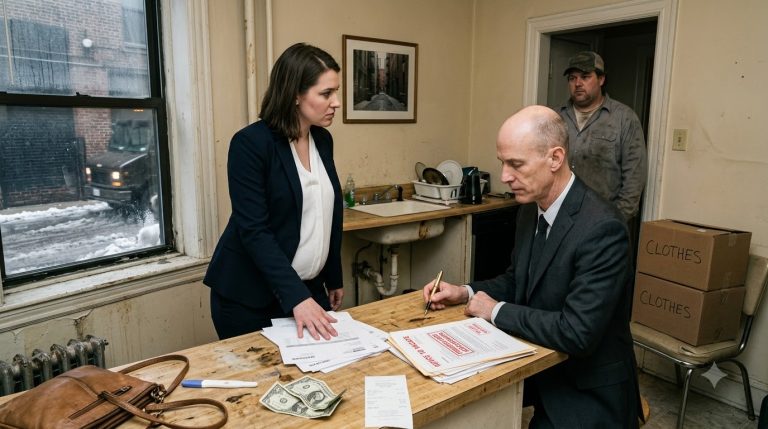
Lauren stared at the empty hallway where the cherry-wood console table used to stand.
Her fingers tightened around the strap of her leather handbag.
“I don’t understand,” she said, her voice bouncing strangely in the hollow room. “She told us two weeks. The furniture should still be here.”
Michael stepped past her, his boots scraping against the bare hardwood.
“She didn’t just move, Lauren. Look around.”
He pointed toward the kitchen archway.
The counters were stripped down to the white laminate, wiped clean of every trace of thirty-eight years of life.
There were no pictures on the walls, no rugs in the foyer, not even a stray magnet on the refrigerator.
It was as if my entire existence in Connecticut had been surgically erased.
Lauren marched into the kitchen, her heels clicking sharply against the floorboards.
She yanked open the drawer beneath the wall oven—the one where I used to keep the foil and parchment paper.
Inside, sitting right in the center of the empty wood, was a single folded piece of paper.
She picked it up, unfolding it with a jerky motion.
It wasn’t a note from me.
It was a final demand notice from a regional bank, addressed to Michael, dated two months prior, warning of an impending default on a commercial equipment loan.
Michael had left it on my kitchen counter during his last hurried visit, and I hadn’t thrown it away.
“What is that?” Michael asked, narrowing his eyes as he walked into the kitchen.
Lauren’s face went completely pale, the color draining until her skin matched the white laminate.
“Nothing,” she muttered, quickly folding the paper and shoving it into her coat pocket. “Just… an old bill.”
“That wasn’t an old bill,” Michael snapped, stepping closer. “Give me that.”
“I said it’s nothing!” Lauren’s voice cracked, the high-pitched panic cutting through the silent house.
She looked around the empty room, her chest rising and falling in rapid, shallow breaths.
“She didn’t just sell the house, Michael. She closed the accounts. I tried pulling funds from the trust yesterday morning and the routing number came back invalid.”
Michael stared at her, the blood draining from his own face.
“Invalid? What do you mean invalid? Dad’s estate is supposed to cover the expansion.”
“Dad’s estate isn’t there,” Lauren hissed, her hands shaking as she clutched her handbag. “The lawyer’s office wouldn’t even take my call.”
CHAPTER 3: THE SILENT LINE
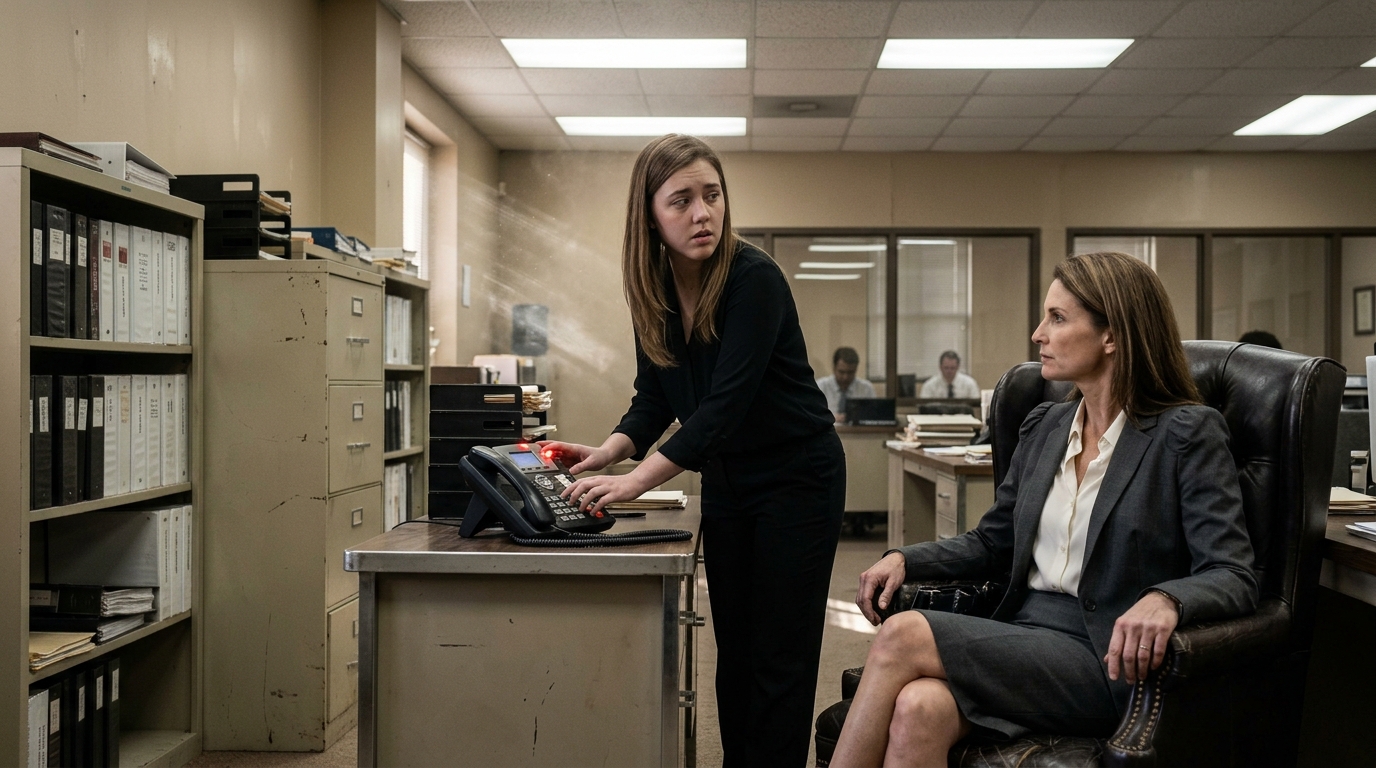
Gerald’s legal assistant stared at the blinking light on the multi-line console, her fingers hovering nervously over the plastic key.
“That’s the third direct line ring from Connecticut in twenty minutes,” she said, her voice dropping to a cautious whisper.
Across the room, I sat in the wingback chair, watching the dust motes drift through a shaft of afternoon sunlight.
My phone remained face down in my leather purse, completely silent, insulated by Charleston’s quiet distance.
“Let it ring,” I said, my tone flat and even.
“They’re threatening a formal injunction with local probate,” she replied, pressing a pen hard against her notepad. “They claim Gerald’s temporary leave means you’re operating without legal representation.”
“Gerald filed every extension and asset transfer before he stepped away,” I countered, adjusting the strap of my bag. “They are scrambling because the accounts are bone dry.”
The phone chimed again, a short, clipped electronic pulse that rattled against the glass partitions of the office.
They weren’t worried about my safety anymore; they were worried about their impending loan defaults.
The bank notice Lauren had dropped on my old kitchen counter wasn’t an isolated incident.
It was the tip of an iceberg built on decades of living beyond their means while expecting my husband’s estate to act as an endless safety net.
“They have Michael parked outside the Charleston courthouse trying to locate the new filing address,” the assistant muttered, checking a text message on her personal phone.
I didn’t blink.
Let him sit in the humidity.
Let him stare at blank filing cabinets.
For ten years, I sat at a table built for seventeen people, watching my phone screen stay black while they lived their busy lives.
Now, the shoe was on the other foot, and the silence was entirely of their own making.
“Give them the general inquiry email address,” I said, standing up and smoothing my skirt. “The one that requires forty-eight hours for a standard response.”
CHAPTER 4: THE CLOSED DOOR
I stood just inside the corridor, keeping out of his direct line of sight while the clerk shuffled papers behind the high mahogany partition.
Michael looked older than his years, his shoulders hunched inside a wrinkled sport coat as he clutched a packet of rejected probate forms.
“I tell you, there has to be an oversight,” Michael muttered to the empty air, his voice echoing off the tile floor. “She couldn’t just walk away from fifty years of local history without a court signature.”
“The signature is valid, sir,” the clerk replied flatly without looking up from her stamp. “The transfer was executed under sole survivor provisions. There is no estate left to contest.”
Michael slammed his palm against the counter.
“That’s my inheritance! That’s what was supposed to keep my business afloat after the supply chain collapsed!”
The raw desperation in his voice didn’t evoke my pity; it only laid bare the transactional nature of the phone calls he had avoided placing for a decade.
He didn’t want his mother back.
He wanted a bank teller who didn’t ask questions.
I turned slowly on my heel, my sensible walking shoes clicking softly against the marble corridor as I walked back toward the exit.
The legal wall was absolute.
Every asset was locked under my name, every property deed transferred, and every backdoor closed tight.
He could bang on courtroom doors until his knuckles bruised, but the money he treated as a birthright was gone into the sunlit harbor of Charleston.
CHAPTER 5: THE FINAL EMAIL
I tapped my fingernail against the edge of the wooden desk, feeling the solid, heavy grain beneath my hand.
The screen displayed three separate messages sent within the hour, each one vibrating with the frantic energy of people who had just realized their financial floor had vanished.
Lauren was demanding an explanation for the closed trust.
Michael was threatening legal retaliation over commercial liabilities.
Jennifer was weeping through a digital keyboard about how unfair it was to be cut off without a warning.
“You can’t just erase us,” Lauren’s latest line read, the digital ink bleeding across the white screen. “We’re your blood. We’re supposed to be taken care of.”
I didn’t feel a single twinge of guilt as I placed my fingers on the home keys.
For ten years, I had tried to buy their affection with holiday roasts, custom-made dining tables, and silent financial bailouts while they treated my existence as an inconvenient chore.
They weren’t mourning a mother; they were mourning a vanishing ATM.
My response needed to be as clean and surgical as the removal of a bandage.
I didn’t yell, and I didn’t trade insults.
I simply laid out the unvarnished reality of a decade spent eating alone in a house built for seventeen people.
“The money you are looking for belongs to the life your father and I built through decades of labor,” I typed, keeping my rhythm steady. “You cannot inherit a relationship you spent ten years actively avoiding.”
I hit send before second-guessing could creep in, watching the message vanish into the fiber-optic ether toward Connecticut.
The screen went dark, reflecting my own calm, resolute face in the glass.
There were no more phone calls to wait for, no more holiday dinners to burn in an empty kitchen.
The accounts were locked, the bridge was burned, and the final boundary was set in absolute stone.
CHAPTER 6: THE UNLOCKED GATE
I picked up the pen, feeling its balanced weight between my fingers.
Jennifer’s email sat open on the screen, full of therapy breakthroughs and belated apologies, asking to rebuild our relationship on my terms.
For eleven years, I would have dropped everything for that exact sentence.
I would have packed a bag, bought a plane ticket, and rushed back to Connecticut to play the forgiving matriarch.
Not anymore.
The hard truth was that healing didn’t mean reopening the door to people who only knocked when their accounts were empty.
It meant keeping the gate locked until trust was actually earned through consistent, unselfish action over time.
I set the pen back down without writing a single word of reply.
The silence wasn’t cold; it was clean.
I walked out onto the balcony, stepping into the warm Charleston air as a breeze lifted from the harbor.
Down on the sidewalk, a neighbor waved up with a friendly smile, and I raised my hand in return, completely at peace with my own company.
The empty chair at Thanksgiving was a decade behind me now, replaced by a life I built entirely with my own hands.
If they wanted a mother in their lives, they knew where to find me, but they would walk the distance on their own two feet.
I pulled a fresh ceramic mug toward me, breathing in the scent of roasted coffee as the morning sun climbed higher over the water.