The Dusty Floors of Inheritance: How One Woman Reclaimed Her Foundation from a Calculated Family Betrayal
CHAPTER 1: THE COLD THRESHOLD
The casserole had barely begun to cool when I stepped back from the stove, wiping my hands on a towel that still smelled like last summer’s lavender.
I’d been up since six, scrubbing and arranging things just right for my first dinner as a homeowner.
By 6:35, tires crunched on the gravel outside, and my stomach coiled tight as I smoothed my skirt.
Isolda stepped through the front door first in expensive suede boots, tracking dust across the floor I had just mopped twice.
Dad followed, his eyes skimming the crown molding and the photos on the wall like an appraiser sizing up a rental property.
“This place,” Dad said, his voice flat and assessing, “has good bones. Feels like it should belong to everyone, doesn’t it?”
I forced a tight, practiced smile, unsure if it was meant as a compliment or a warning.
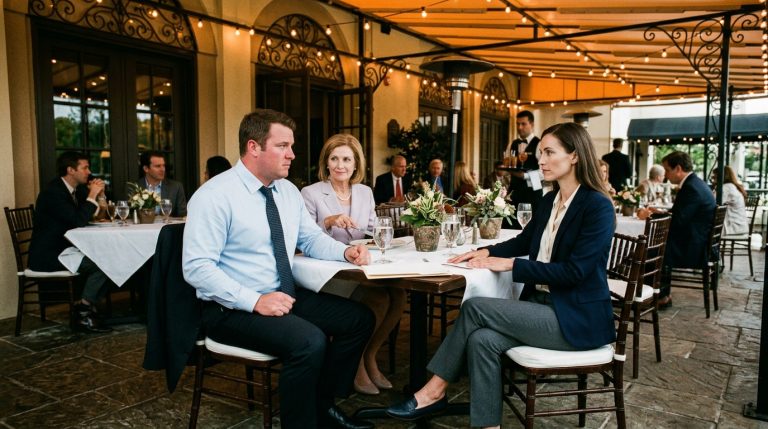
We sat down to dinner, but the salad remained untouched while Isolda scrolled endlessly through her phone under the edge of the mahogany table.
During the main course, I caught Mom glancing at the clock on the mantel with practiced indifference.
When I brought out the homemade apple cobbler, Dad didn’t look at the crust or taste the fruit.
Instead, he folded his linen napkin with deliberate precision, set it beside his plate, and locked his eyes onto mine.
“We’ve discussed it,” Dad said, the shift in his jaw mirroring the exact look he gave me when I tried to apply out of state at fifteen. “This house should come back to the family.”
I blinked against the sudden drop in the room’s temperature, my voice catching somewhere behind my ribs.
Mom didn’t look at me as she nodded, her tone devoid of warmth. “You’ve done well, honey, but it’s too much house, and we think it’s time you refocus.”
Isolda stood up abruptly, disappearing down the hallway before reappearing with my old green college suitcase.
“We packed your essentials,” Isolda said, her voice entirely procedural as she set the bag near the entryway. “Just so this can be smooth.”
I managed to whisper that I was the legal owner, but Dad only offered a thin, paper-dry smile.
I didn’t give them the satisfaction of a tear or a raised voice; I simply picked up my phone, my wallet, and the polished keys.
I laid the keys gently next to my untouched wine glass on the table and walked out the door without looking back.
Outside, the evening air bit sharply against my wrists as I tossed the suitcase into the trunk of my car.
The heavy thump of the bag against the back panel echoed like a metronome keeping time with a reality I refused to accept.
I drove into the dark without a destination, the streetlights blurring past like faceless ghosts of a life I had built with my own hands.
When I finally pulled into the buzzing, over-lit lot of a roadside gas station, my fingers trembled against the cold steering wheel.
The phone in my pocket vibrated against my thigh, flashing an unfamiliar number that felt less like a coincidence and more like an anchor dropping.
My thumb hovered over the screen before I answered, my voice dropping into a flat, level register.
“This is Jolene,” I said.
CHAPTER 2: THE MORTGAGE WARNING
“What kind of changes?” I asked, my voice dropping into that flat, dangerous register reserved for people who realized they were being robbed in broad daylight.
“There was a request to add co-owners to your mortgage and to update the primary contact details,” Alexis said from the bank’s department line, her tone far too chipper for a Sunday morning under flickering gas station lights. “We flagged it because it didn’t come through the secure portal and the information seemed inconsistent.”
I turned fully toward the windshield, one hand gripping the plastic ring while the engine sat dead and cold beneath the hood.
“I didn’t authorize any changes,” I said, my thumb pressing against the seam of my phone case until the plastic groaned. “I haven’t shared access with anyone.”
A long, heavy pause hummed through the wire, broken only by the distant roar of a semi-truck out on the highway.
“That’s what we thought,” Alexis replied, her professionalism sharpening into something hard. “You are still listed as the sole legal owner. No co-owners, no power of attorney, nothing shared. We’ve locked the account for now and logged the attempted change.”
I swallowed hard against the dry ache in my throat, my eyes tracking a moth throwing itself blindly against the buzzing overhead bulb.
“Do you have the names they used?” I asked.
“Vernon and Mara Shipman.”
It wasn’t the names that sent a slow, freezing shiver down my spine; it was how unsurprised I felt hearing them.
“Thank you for calling,” I said, my voice steady as an anchor chain dropping into deep water. “Please send me documentation of the attempt.”
“Of course, and Miss Shipman, I’m sorry.”
I ended the call and sat in the absolute quiet of the vehicle, the neon gas station sign humming like a trapped insect above the roof.
I didn’t cry, and I didn’t scream, but something inside me clicked shut—hard and permanent—like a heavy vault door sliding into place.
I turned the ignition over, the engine coughing once before catching, and pulled back out onto the dark asphalt toward home.
When I slowed to a crawl outside my driveway, my original key didn’t even catch in the tumbler; the lock had been swapped out entirely, leaving me staring at unfamiliar brass.
I stepped back off the porch, looking up at windows where soft amber curtains had been replaced by stiff, cold blue-white blinds.
The front door swung open before I could turn around, framing a young woman in a stranger’s hoodie who looked down her nose at me.
“You, Jolene?” she asked, her arms crossed lazily over her chest.
“This is my house,” I said, my tone lacking any room for debate.
The stranger tilted her head, completely unimpressed by my presence. “I was told you wouldn’t be coming back.”
I stared past her into the hallway where my grandmother’s runner rug had vanished, replaced by cheap synthetic grey.
“Told by who?” I demanded, my hands curling into tight fists inside my coat pockets.
“Mara and Vernon,” she replied smoothly. “They said you had some instability, that you left voluntarily.”
My jaw clenched so hard my back teeth ached, but I refused to give her the theatrical breakdown she had clearly been briefed to expect.
Instead of arguing, I turned away from the threshold without another word, letting the click of my heels against the concrete serve as my only reply.
As I buckled my seatbelt, a neighbor walked past our front lawn with a golden retriever, nodding in my direction as if I hadn’t just been locked out of my own life.
“Morning, Jolene,” she said, entirely unbothered by the stranger standing in my doorway.
I managed a tight nod, pulled the shifter into drive, and left the neighborhood behind as the crushing silence settled over the dashboard.
CHAPTER 3: THE PAPER TRAIL
“People think real estate theft only happens between strangers,” Barbara said, her voice dry and clipped as she smoothed down a stack of county documents. “It doesn’t. The worst of it always happens between people with matching last names.”
I didn’t blink, keeping my eyes locked on the notarized deed stamped with my name and mine alone.
“They didn’t just stumble into this,” Norah said from across the counter, her arms folded tightly against her chest. “They had a blueprint, and they’ve been mapping it out for years.”
My mind flashed back unbidden to a humid afternoon when I was twenty-two, standing outside the den and hearing my father say, Once she signs, it’s ours to manage.
Back then, I had pushed the memory away because I wanted to believe my family operated on love rather than logistics.
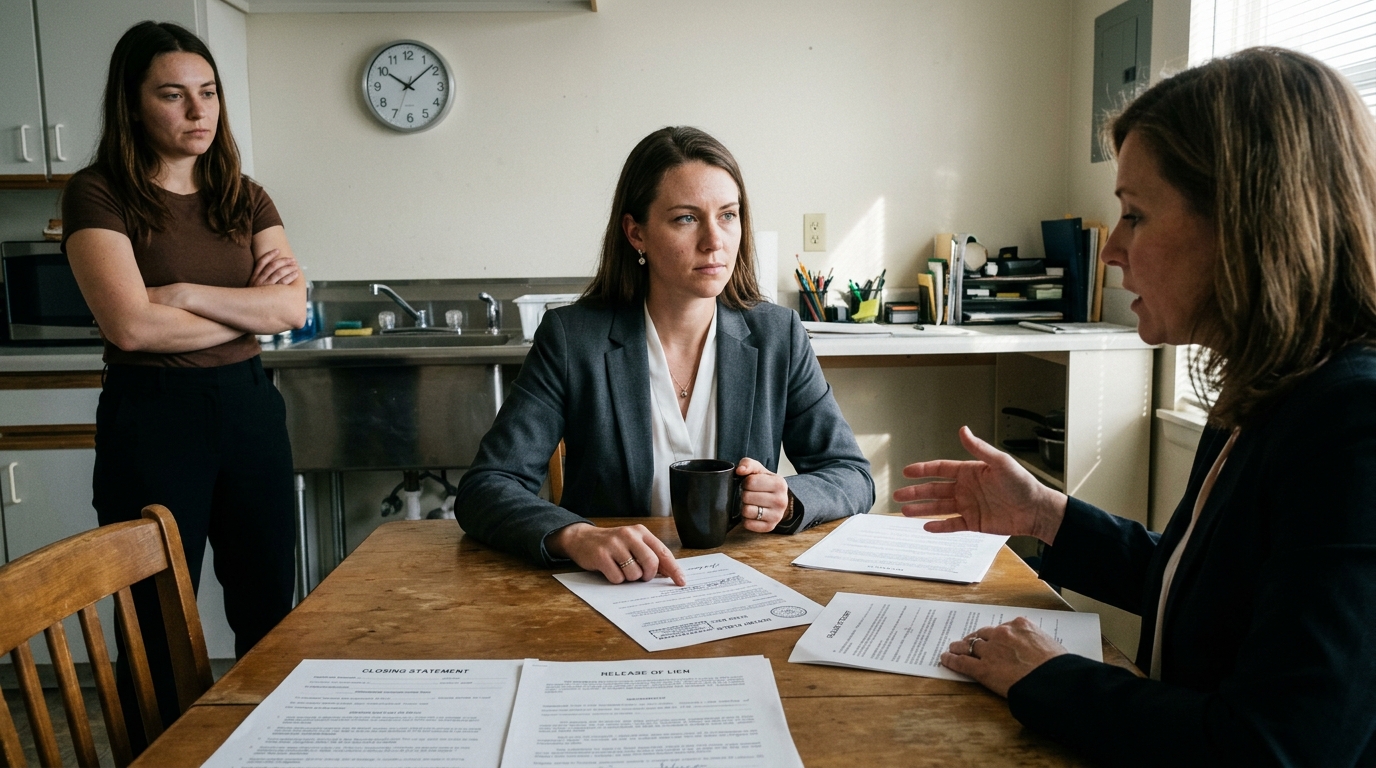
Now, sitting in the quiet safety of Norah’s kitchen with a lawyer who had seen every flavor of familial greed, the scaffolding of their long-term plan came sharply into focus.
“Document everything,” Barbara instructed, sliding a yellow highlighter across the page. “Don’t engage emotionally. Forward every piece of communication straight to my office.”
The clinical precision of her instructions acted like cold water thrown over a fever, washing away the last remnants of my hesitation.
Without access to the cloud security archives I once kept, I had to rely entirely on what could be touched, printed, and verified in the harsh light of reality.
“I have the closing statement from the bank six months ago,” I said, my voice steady and level. “And I have the release of lien signed by the county clerk.”
“Good,” Barbara replied, jotting a quick note on her legal pad. “We’ll build an airtight wall of paper that no amount of family entitlement can smash through.”
The air in the room felt lighter, purged of the suffocating gaslighting that had kept me doubting my own footing for months.
I wasn’t a helpless daughter waiting for permission anymore; I was a legal owner arming herself with undeniable facts.
As Barbara packed her briefcase and headed toward the door, my phone buzzed against the table with an incoming call from an unknown number.
I let it ring out, watching the screen flash in silence until it clicked over to voicemail.
“They’re going to push back hard once they realize we’re using the county records,” Barbara warned, pausing with her hand on the doorknob.
“Let them,” I said, my fingers closing around the warm handle of the coffee mug. “Paper doesn’t lie.”
CHAPTER 4: THE NEIGHBORHOOD WITNESS
A rusted sedan slowed to a crawl near the curb, its muffler humming a low, rattling baseline that set my teeth on edge.
Mrs. Kavanagh stepped out from behind the neighboring hedge, her wool slippers crunching softly against the dry winter grass.
“Jolene,” she said, her voice dropping into a cautious, guarded register as she pulled her cardigan tighter around her shoulders. “I saw those deputies out here last week. People on the street have been talking.”
I kept my hands buried deep inside my coat pockets, feeling the cold metal of my car keys pressing against my palm.
“They had no business changing those locks,” I said, my tone flat and unyielding.
“Oh, I know they didn’t,” Mrs. Kavanagh replied, her eyes darting toward my old driveway down the block before dropping back to my face. “Your parents were over there three times last month before you even noticed, measuring windows and moving boxes in through the back gate like they owned the place.”
The words landed with the dull thud of a heavy hammer striking wet clay, confirming every silent suspicion I had harbored in the dark.
They hadn’t acted on a sudden impulse during that suffocating dinner party; they had orchestrated the invasion slowly, right under the noses of people who assumed family loyalty trumped the law.
“Did anyone else see them?” I asked, my gaze locking onto hers.
“Mr. Henderson from number twelve mentioned seeing your father swap out the router box weeks ago,” she whispered, leaning in slightly. “He thought it was just family helping out with internet troubles. None of us wanted to interfere.”
That single sentence—none of us wanted to interfere—sliced straight through the illusion of community safety I had trusted for years.
Entitlement survived not because it was invisible, but because good people chose to look away when boundaries were crossed by familiar faces.
“I’m not asking anyone to interfere,” I said, my voice cutting through the rattling hum of the sedan’s engine. “I’m just documenting who was there when they broke the door.”
Mrs. Kavanagh blinked, her expression shifting from cautious hesitation to a quiet, hardened respect.
“You’re a lot stronger than your mother gives you credit for, Jolene,” she murmured, patting my arm once before turning back toward her porch.
I watched her shuffle away, realizing with absolute clarity that the illusion of safety had burned to ash, leaving only the hard, unyielding ground beneath my boots.
CHAPTER 5: THE COURTROOM LEDGER
Barbara stepped forward before the judge could even finish settling her papers, her briefcase snapping open with a sharp, metallic echo.
“We submit the complete chain of title, Your Honor,” Barbara said, her voice cutting cleanly through the sterile chill of the room. “Sole ownership, paid in full six months prior to the unlawful entry.”
Vernon rose immediately, his jaw working as he leaned into the microphone with an air of aggrieved paternal authority.
“We supported our daughter for years, and this is a severe misunderstanding,” Vernon argued, his tone dripping with false martyrdom. “We were merely stepping in to manage family assets because she showed signs of instability.”
“Mr. Shipman,” Barbara interrupted smoothly, holding up a certified bank document. “Do you deny submitting unauthorized changes to the mortgage department?”
“I deny any malicious intent,” Vernon shot back, his face flushing a dark, ugly red as his composure cracked under the weight of the evidence. “If she had simply listened to reason, none of this administrative mess would have been necessary.”
Isolda shifted restlessly beside him, crossing her arms tightly over her chest.
“The property was always intended to stay within the family circuit,” Isolda chimed in, her voice defensive. “Jolene has never cared about proper household management anyway.”
The judge raised her glasses, peering down at the exhibits with a critical eye.
“Miss Shipman, you may take the stand,” the judge instructed.
I stood up slowly, walked to the witness box, and took the oath without a single tremor in my hands.
“I bought that house alone, I paid every mortgage installment with my own earnings, and my family broke in while I was away at work,” I said, looking directly at the bench. “They didn’t just try to take a building; they tried to wipe out my legal existence.”
Vernon inhaled sharply across the aisle, opening his mouth to object, but the judge raised a single hand to silence him entirely.
“This court finds overwhelming evidence that Miss Jolene Shipman is the sole legal owner,” the judge declared, her gavel coming down with a definitive crack. “The restraining order is upheld, and the state’s financial crimes unit will proceed with a full inquiry into the fraudulent mortgage applications.”
Vernon slumped back into his chair, his face pale and slack, while Mara stared blankly at the floor.
I didn’t smile, and I didn’t gloat; I simply stood up, gathered my folder, and walked out of the courthouse into the bright midday sun.
CHAPTER 6: THE WORN HARDWOOD
The synthetic blue curtains were already bundled into a heavy trash bag by the entryway, stripped away alongside the stranger’s potted plants and misplaced picture frames.
I walked from room to room, letting my bare soles absorb the uneven dips and natural grooves of the timber beneath my feet—imperfections that proved this space belonged to reality, not a staged performance.
My phone buzzed once on the kitchen island with a final message from Barbara confirming that the financial crimes unit had formally logged the fraudulent records.
I didn’t reply, and I didn’t look for an apology when a cream-colored envelope bearing Mara’s rigid handwriting slid through the mail slot moments later.
I picked up the envelope, tossed it unopened into the metal fire pit on the back patio, and touched a single match to the corner.
The paper curled and blackened under the flame, turning years of conditional manipulation and calculated betrayal into grey ash that drifted away on the winter wind.
When I stepped back inside, the silence of the house didn’t feel heavy or empty; it felt clean, solid, and entirely my own.
I walked over to the kitchen counter, poured a fresh cup of coffee into my favorite chipped ceramic mug, and let out a long, slow breath that finally reached the bottom of my lungs.
Boundaries weren’t built out of anger, and they didn’t require shouting to hold their weight against the tide of unreasonable demands.
I sat down at my own desk, looking out the window at the quiet street where the neighborhood hummed with ordinary life.
The story they tried to write about me was gone, burned away down to the studs, leaving only the truth standing in its place.
I took a slow sip from the mug, locked the front door against the cold, and settled into the quiet permanence of a foundation I had built with my own two hands.