A Kiln in the Crosshairs: A Master Sergeant’s Tactical Dismantling of a Suburban Tyrant’s Empire
CHAPTER 1: THE ULTIMATUM
The afternoon sun glinted off the steel frame of the kiln, a stark, industrial contrast to the perfectly manicured beige lawns of Oakmont Estates. My hands, still dusty from a morning session on the wheel, were steady. Sergeant’s hands don’t shake when the threat is localized.
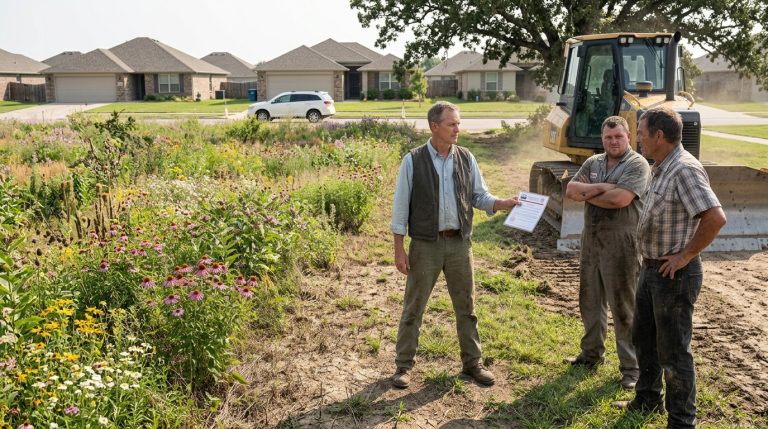
“It’s a fire hazard, Mark,” Karen said. Her voice was thin, sharp, the kind of sound that cuts through a conversation without asking permission. She stood on the edge of my property, heels planted firmly in the sod, her finger pointing at the kiln with a gaudy, diamond-encrusted ring catching the light. “A violation of Section 4, subsection C. You have seventy-two hours to dismantle it, or the fines start at five hundred dollars a day.”
I didn’t answer immediately. I looked past her at the line of identical mailboxes, the rows of houses that looked like they had been born from a mold, devoid of grit or history. The quiet was heavy, artificial. My pulse didn’t race; it slowed. This was the terrain of the skirmish, not the front line, but the rules of engagement remained identical. Identify the aggressor, assess the leverage, neutralize the threat.
“The kiln is built to fire-brick standards, Karen,” I said, my voice measured. I kept the tone low, professional. Giving her nothing to escalate, just data. “I’ve checked the zoning. This property is exempt.”
She smiled then, a tight, thin-lipped expression that didn’t reach her eyes. It was the look of a woman who had never lost a game of bridge, never mind a battle of wills. “The board amended the covenants two months ago, Sergeant. All properties, without exception, are now under the purview of the Architectural Review Committee. Ignorance of the update is, unfortunately, not a defense.”
She handed me a folded sheet of paper. The edges were uneven, a shoddy photocopy that smelled of toner and ego. I took it, feeling the texture of the paper—flimsy, cheap, yet designed to carry the weight of financial ruin.
“Seventy-two hours,” she repeated, turning on her heel. The sound of her sneakers on the pavement was the only noise in the street.
I looked down at the paper, then back at the kiln. The sun was hot on my neck, but a cold, precise anger began to settle in my gut. It wasn’t the volatile rage of a man who’d lost his way; it was the focused, glacial resolve of a man who had built bridges under mortar fire. I walked over to the kiln and laid my palm against the cool, heat-rated aluminum brick. It was a solid, honest thing.
Sarah stepped out onto the porch, her brow furrowed, a silhouette against the bright, empty living room. She didn’t need to ask. I could feel her eyes on my back, tracing the tension in my shoulders. I stood there for a long moment, watching the shadows stretch across the lawn. The HOA thought they had just issued an order to a civilian. They had no idea they had just declared war on a combat engineer. And as I turned to walk back toward the house, I realized the violation notice wasn’t just a threat—it was a blueprint for her downfall.
CHAPTER 2: THE BLUEPRINT OF BUREAUCRACY
The workshop air was still, heavy with the fine, ghost-white dust of pulverized clay. It usually smelled like earth and potential. Now, it smelled like ozone and the metallic tang of an approaching storm. I picked up the violation notice again. Under the harsh, unforgiving light of the fluorescent overheads, the ink seemed to bleed into the cheap paper. Covenant 4C1. Subsection C. The language was cold, devoid of human context, a sterile set of instructions designed to prune anything that grew too far outside the box.
I didn’t move toward the door. I stayed at the workbench, my fingers tracing the edge of the paper. My mind, trained in the brutal, binary logic of combat engineering, began to deconstruct the threat. Karen wasn’t just a neighbor; she was a system administrator for a closed-loop environment. She didn’t want safety; she wanted compliance. I looked at the kiln, my cathedral of fire, and the shadow it cast against the workshop wall looked like the silhouette of a bunker.
A memory flared—not of the kiln, but of the road outside Kandahar. The heat, the smell of cordite, the specific, terrifying stillness of a pressure plate IED before it turned the world into a spinning, light-filled hell. My left hand began to tremor, a phantom reaction to a phantom threat. I clenched it into a fist, the knuckles turning white against the scarred skin. Centering, the therapist had whispered. Don’t fight the earth; let the earth stabilize you.
I breathed, a long, slow intake of air that burned the back of my throat. I had to look at the paperwork. Not as a victim, but as a surveyor. I cleared a space on the bench, pushing aside a half-turned bowl. I pulled my laptop toward me, the screen casting a pale, sickly light onto the workbench. The HOA website was an labyrinthine construct of dead links and password-protected portals, but I knew my way around firewalls better than most.
The amendment Karen cited—the one that supposedly stripped me of my exempt status—wasn’t just a change in policy. It was a surgical strike. I navigated to the hidden archive, the place where the meeting minutes were buried in an endless sea of PDFs. I found the entry from two months ago. It was a unanimous vote by the board. Karen, Gerald, Stan. No public forum mentioned. No notification sent. It was a quorum of three, operating in the dark.
“Sneak attack,” I muttered. The words felt like gravel in my mouth.
I printed the document, the printer’s mechanical grind sounding like a rifle bolt cycling. Sarah walked in then, her steps soft, cautious. She stopped when she saw the stacks of paper—property records, the original purchase agreement, the new amendment. She didn’t ask what I was doing. She knew the look. She’d seen it in the months after I came home from Germany, when I would spend hours rearranging the tools in the garage until every wrench was perfectly aligned by size and weight.
“It’s not just the kiln, is it?” she asked. Her voice was steady, a grounding wire for my fraying nerves.
“It’s a pattern,” I said, not looking up. I highlighted a section of the amendment that defined ‘structure’ so broadly it could include a shed, a mailbox, or a well-placed stone. “They’re not just enforcing rules. They’re redefining the reality of the property line. If they can force me to move the kiln, they can force me to do anything. If they can force me to do anything, they own this five-acre plot.”
I looked at her, my expression tight. “They want to standardize the chaos, Sarah. They don’t want a neighbor; they want a tenant.”
She walked over, placing a hand on my shoulder. The heat of her touch was a startling contrast to the cold calculation in my head. “We have the lawyer, Mark. We have Dave.”
“Dave is a scalpel, Sarah. He’s great for the courtroom, but we’re not at the trial yet. We’re in the reconnaissance phase.” I picked up the violation notice, its edges feeling sharp, almost abrasive against my skin. “They think they’re dealing with a civilian. They think this is about aesthetics.”
I turned back to the screen, the cursor blinking like a heartbeat. The HOA was a structure, just like a bridge, just like an IED. Every structure has a load-bearing point. Every structure has a flaw in the engineering. Karen’s flaw was her arrogance—her assumption that she was the only one who understood the blueprint.
“I need to know what they’ve done to the others,” I said, my voice dropping. “I need to see the entire history of these violations.”
“Mark, you’re going to burn yourself out before this even starts,” she said, her voice rising with concern.
“I’m not burning out,” I replied, and I meant it. The anger had left me, replaced by a cold, efficient clarity. “I’m just getting started.”
I clicked ‘Save’ on the archive file and stood up. The workshop seemed larger now, the shadows deeper. I walked to the window, looking out over the property line where Karen had stood only an hour ago. The grass was trimmed, the fence straight, the entire estate a perfect, sterile grid. But for the first time, I didn’t see a neighborhood. I saw an occupied zone. And I was the only one on the ground with the training to map it.
CHAPTER 3: THE KANGAROO COURT
The community clubhouse was a three-car garage transformed into an altar of suburban conformity. It smelled of industrial-strength floor wax and the kind of stale, recirculated coffee that’s been sitting in a glass pot since the morning commute. I walked in, the heavy binder of my technical specifications tucked under my arm like a shield. My boots, work-hardened and dusty, felt entirely out of place on the pristine, epoxy-coated floor.
Karen Miller sat at the center of a folding table that had been draped in a white tablecloth. To her left, Gerald sat with his spine hunched, his eyes tracing the grout lines between the tiles as if they were a complex puzzle. To her right, Stan stared ahead with the vacant, satisfied expression of a man who’d surrendered his free will years ago. The room was packed. About a dozen homeowners were perched on folding chairs, their expressions a mixture of nervous curiosity and practiced apathy. They didn’t look at me. They looked at their feet.
“Mr. Turner,” Karen said, the syllables crisp and practiced. Her smile was an accessory, something she put on and took off at will. “You’re punctual. We appreciate that. Efficiency is a cornerstone of the Oakmont experience.”
I didn’t offer a pleasantry in return. I simply pulled out a chair and sat down across from her. I placed the binder on the table, the thud of it echoing in the quiet room. “I’m here to address the violation notice regarding my kiln,” I said, my voice steady, stripped of any inflection. “I have the schematics, the fire marshal’s initial feedback, and the survey documentation.”
“We’ve already reviewed the documentation provided in your appeal, Mark,” Karen said, dismissively waving a hand toward a stack of papers in front of her. She didn’t bother to open it. “This is not a technical debate. It is a covenant enforcement hearing. The structure is unapproved, and therefore, it is a liability.”
“It’s not a liability,” I countered, my eyes locking onto hers. I didn’t blink. “It’s a professionally engineered asset that complies with every county ordinance. If you’re claiming it’s a hazard, I want to see the safety assessment conducted by a certified fire inspector.”
A flicker of annoyance crossed Karen’s face, gone as quickly as a shadow in a lightning strike. “The board is not required to provide an independent assessment to residents, Mr. Turner. We have our own standards, and they are designed to maintain the aesthetic integrity of Oakmont Estates. That kiln—that monstrosity—violates the visual landscape we’ve worked so hard to curate.”
“Visual landscape,” I repeated, the irony thick enough to choke on. “So, this isn’t about safety? It’s about how it looks from the street?”
“It’s about property values,” Gerald squeaked from the left. He didn’t look up, his fingers tapping a nervous, erratic rhythm on the table. “Everything here is tied to the uniformity of the development. That’s what you signed up for when you bought the lot.”
“I signed up for a contract that acknowledged the exemption for my plot size,” I said, my gaze shifting to Gerald. “An exemption that was supposedly overridden by an amendment I was never notified of until three days ago. I want the record of that vote. I want the names of the board members who were present and the date of the meeting.”
Karen leaned forward, the light reflecting off the glass of the overhead tubes and masking her eyes. “You’re asking for transparency from a board that is already being entirely transparent, Mark. We are the stewards of this community. We make the decisions that keep the property values high for everyone—including you. Surely you don’t want your house to be the one that drags everyone else’s equity into the dirt?”
The room went deathly quiet. A woman in the back row shifted, the metal of her chair screeching against the concrete. I felt the familiar, cold detachment—the same sensation I’d felt before a mission-critical bridge demolition. I wasn’t angry anymore. I was assessing the explosive potential of their arrogance. They believed they were immovable because they had the keys to the room. They didn’t realize that a lock is only as good as the bolt holding it in place.
“I’m not asking for equity, Karen. I’m asking for due process,” I said, my voice dropping an octave, gaining the weight of a command. “The variance process you’ve laid out is designed to fail. You’re demanding a three-month wait for a quarterly meeting while charging five hundred dollars a day for the privilege of waiting. That’s not enforcement. That’s extortion.”
Karen’s jaw tightened. The accessories of her smile fell away, revealing the serrated edge beneath. “If you find our policies so oppressive, Mr. Turner, you are more than welcome to sell your property and move to a community that tolerates industrial hazards in the backyard. But as long as you are here, you will comply.”
She looked at Gerald and Stan. They both nodded, a perfect, synchronized movement that was almost robotic in its precision.
“The board has reviewed your case,” she said, her voice turning icy. “Your appeal is denied. You have seventy-two hours to begin the removal of the kiln, at which point a daily inspection will confirm your compliance. If you fail to do so, we will authorize a lien against your property for the accrued fines. This meeting is adjourned.”
She stood up, gathering her papers with a neat, sharp movement. She didn’t look at me as she turned away. She acted as if I had already ceased to exist. I sat there for a moment, the silence of the room pressing in on me like the weight of deep water. The homeowners in the chairs began to stand, their faces averted, their body language defensive, ashamed.
I looked at the back of Karen’s blazer as she walked toward the door that led into her main house—a house that was, I now knew, a palace built on the backs of the rules she enforced so ruthlessly. I stood up, my muscles tight. I didn’t shout. I didn’t make a scene. I simply picked up my binder, the cold, hard weight of it grounding me. I had everything I needed now. I had seen the faces of the enforcers, and I had mapped the terrain of their arrogance. As I walked out into the biting evening air, I felt the first, faint pulse of the endgame beginning to beat. The road back to normalcy was going to be longer than I thought, but for the first time, I knew exactly which markers to blow.
CHAPTER 4: THE RECONNAISSANCE
The darkness of Oakmont Estates was not natural; it was curated. Streetlights, spaced at mathematically precise intervals, cast long, sterile pools of amber light across the asphalt. I walked toward my truck, my footsteps heavy, the only sound in the neighborhood. My golden retriever, Gus, was waiting in the cab, his tail thumping against the upholstery—a rhythmic, grounding sound. I climbed into the driver’s seat, the leather cold against my legs, and tossed the binder onto the passenger side.
I didn’t drive away immediately. I watched the clubhouse. A few minutes later, the side door opened, and a man emerged—Bob, the mechanic I’d seen earlier. He was walking toward his own driveway, his head down, his shoulders slumped in a posture of resignation. I started the engine, the low rumble of the truck cutting through the suburban silence, and pulled alongside him.
“Bob,” I called out.
He stopped, peering through the driver’s side window, his face illuminated by the harsh glow of the dashboard lights. “Turner. Rough night, huh? I told you she wouldn’t budge. She never does.”
“She’s counting on that,” I said, leaning out. “She’s counting on everyone feeling like they’re the only ones who have a problem. You ever talk to the Garcas? The ones down on Elm?”
Bob frowned, leaning against the door frame. “Yeah, I know them. Nice folks. Why?”
“Just checking the map,” I said. “Hop in. I want to show you something.”
For the next two hours, the neighborhood ceased to be a quiet collection of beige houses and became a grid of grievances. We stopped at the Garcas’ house, standing in the shadows of their lawn as they described the destruction of their garden—the arbitrary, vicious nature of the enforcement. Then, we moved on to a younger couple, the Hendersons, who had been ticketed because their kids’ swing set wasn’t ‘earth-toned’ enough. Every conversation was a piece of the mosaic, a data point that confirmed the pattern I had already identified.
Karen wasn’t just managing the neighborhood; she was maintaining a specific kind of surveillance state. I pulled the high-quality body camera I’d purchased from my pocket, the device feeling small and potent in my palm. It wasn’t about catching her in the act of being rude; it was about catching the administrative mechanism of her abuse.
“She keeps these records, doesn’t she?” I asked Bob, as we stood under the dim light of a street lamp.
“She has an office in the clubhouse,” Bob said, his voice dropping to a whisper. “Stan keeps the keys, but I’ve seen her going in and out at all hours. She’s obsessed with the files. It’s like her library of sins.”
“She’s not just keeping files,” I said, the thought solidifying in my mind. “She’s building a database. Every violation, every fine, every complaint—it’s all archived.”
I went home and spent the rest of the night in my workshop. I installed the security cameras I’d ordered—four of them, discreet, high-definition. I mounted them in the rafters, angling them to catch not just my property, but the way Karen moved along the boundary line. I wasn’t just defending my perimeter anymore; I was extending it. I logged into the cloud server I’d set up, creating a folder for every neighbor I’d spoken to that night.
In the bottom of a box of old records from the original property purchase, I found something I hadn’t noticed before—a stray note tucked behind the architectural review bylaws. It was a scrawled set of numbers, a tally of fines collected from different sections of the neighborhood. It was misaligned, tucked away, a clerical error in her system of absolute control. It was the first physical discrepancy—a sign that her bureaucratic machine wasn’t quite as impenetrable as she wanted everyone to believe.
I sat back, the blue light of the monitor washing over my face. The workshop, usually a place of creation, now felt like a command center. I wasn’t making pottery tonight. I was assembling an intel package. I thought about the tiles, the commission I’d done years ago, and the way the world felt like it was finally starting to connect. The kiln, cold and dark in the corner, sat waiting. I hadn’t fired it since the ultimatum, but the internal geometry of the brickwork—the way I’d calculated the airflow, the insulation, the thermal mass—offered a blueprint for my own next moves.
I looked at the cameras on the monitor. Each one showed a slice of the street, a frozen, digital representation of the world Karen Miller wanted to control. My job now was to find the crack in that image. The reconnaissance was complete; now, I had to move to the next phase of the engagement. I took a deep breath, the smell of damp earth and clay filling my lungs, and prepared for the long, slow work of the coming days.
CHAPTER 5: THE MOSAIC DISCOVERY
I didn’t move. I couldn’t. My eyes were fixed on the screen, tracing the iridescent, deep-cobalt swirls of the bathroom mosaic featured in Oakmont Interiors. The photographer had done a masterful job, the lighting capturing the way the glaze broke at the edges of each tile, the precise, characteristic spiderweb crackle that occurs only when the Raku process is executed with a specific, high-temperature shock. It wasn’t just similar. It was a fingerprint.
My hand reached out, my fingers hovering over the glossy surface of the screen as if touching the cold ceramic. I remembered the rhythm of those three months. The smell of the raw, wet clay in the studio, the way the copper carbonate felt like dry sand against my skin, the precision of the kiln firing. I had sold those tiles to Seline, the high-end interior designer, with the understanding that they were for a ‘private estate.’ I had never been told the address, never been told the name, and certainly never imagined they would end up in a mausoleum of suburban vanity run by the very person currently trying to dismantle my own life’s work.
A cold, crystalline clarity settled over me. It was a reversal of fortune so profound it felt almost theatrical. She was policing my workshop for ‘aesthetic disharmony’ while living in the literal, physical embodiment of the craft she deemed a nuisance. It was the ultimate, weaponizable hypocrisy.
The phantom scent of sulfur and burning pine—the Raku reduction process—filled my nostrils, a memory triggered by the visual. I felt a sudden, sharp pressure in my temples. My mind raced back to Kandahar, to the way the air shimmered before the blast. I gripped the arms of the chair until my knuckles popped. Focus. This wasn’t a memory to be buried; it was a tool to be used. The kiln was more than just my therapy; it was the manufacturer of the evidence that would blow the HOA board wide open.
I stood up and walked to the storage rack, my movements mechanical and precise. I pulled down the heavy banker’s box labeled Commissions 2022. It was dusty, the cardboard soft at the edges, but the contents were pristine. I cleared the workbench and began to spread the files out, the rustle of paper sounding deafening in the quiet studio.
There it was: the original contract. I flipped to the back, to the supplemental notes I always kept. Project Riverflow. The name had been a whim, an attempt to capture the fluidity of the design, but now it felt like a prophecy. I found the invoice, the bold, black ink confirming the price—thirty-two thousand, seven hundred and fifty dollars.
I looked back at the screen. Karen’s bathroom was a temple of excess, and I was the architect of its most significant feature. She had labeled my work a ‘hazard’ and a ‘commercial disruption,’ yet she had personally paid a premium to bring that exact energy into her sanctuary. The paradox was a weapon. If she destroyed my kiln, she was destroying the source of her own opulence. If she forced me to dismantle the structure, she was implicitly attacking the aesthetic foundation of her own master bathroom.
I grabbed my phone, the screen unlocking to show the photos I’d taken during the committee hearing. I compared the angle of the bathroom tiles in the magazine to the architectural plans I had for the room I’d thought I was building for. It was a perfect match. I felt a surge of cold, dark adrenaline. This wasn’t just a win; it was an eviction.
I left the files spread out and walked to the door, stepping out into the cool night. The neighborhood was silent, a landscape of dark, sleeping houses, all except for the clubhouse, where the exterior light remained on, a solitary eye watching the street. I felt a strange, detached satisfaction. I had identified the decoy—the kiln as a nuisance—and now I had found the real secret: the hypocrisy that fed the machine.
I returned to the workshop and began to draft the next phase of the operation. My hands didn’t tremor. I logged into my secure email, my fingers flying across the keys. I wasn’t just a veteran, and I wasn’t just a potter. I was a man who had built bridges under fire, and I knew exactly how to calculate the structural integrity of this HOA empire. I sent a message to the designer, Seline. My tone was clinical, precise, and entirely devoid of emotion.
I am aware of the installation at 124 Magnolia Lane.
I didn’t need to say anything else. She would know what it meant. She would know that her client’s aesthetic vanity had just become a liability. As I pressed ‘Send,’ the monitor illuminated my face, the light reflecting off the camera lens in the corner. I had stopped defending my workshop. I was now actively targeting her house. The war had changed theaters, and for the first time, I was the one holding the map.
CHAPTER 6: THE AFFIDAVIT LEVERAGE
I moved with the muscle memory of a man clearing a breach. The rain was a deafening roar, a chaotic, relentless wall of water hammering against the post-and-beam construction of my studio. I grabbed my rain slicker, the fabric heavy and stiff, and sprinted toward the detached shed. The path, usually a quick jog, was already turning into a sluice of mud. My boots slipped on the slick grass, but I didn’t slow. Every second the kiln remained exposed to the horizontal spray was a second of risk.
I reached the shed, the metal latch cold and slick under my grip. Inside, the fire blanket was neatly folded—a testament to the meticulous standards I’d maintained since the fire marshal’s first visit. I grabbed it, the heavy canvas smelling of dust and oil, and ran back out into the deluge. The wind was a physical force now, pulling at my clothes, trying to divert me from the kiln. I could see it through the gray sheet of rain, the dark steel frame a solid, unyielding silhouette.
I vaulted the low retaining wall, my breath coming in jagged, rhythmic hitches. I was back in the zone—the same focused, tunnel-visioned state I’d occupied in Kandahar when the rain had turned the dusty roads into treacherous quagmires. The mission wasn’t just about the kiln anymore; it was about the integrity of the evidence. If the kiln was damaged, the HOA could use the ‘safety hazard’ narrative to justify an emergency seizure. I wouldn’t give them that opening.
I reached the kiln and began to wrap it, my movements efficient and practiced. The canvas was heavy, soaked through, but I secured it with the bungee cords, pulling them taut until the steel frame was completely shrouded. I stepped back, my chest heaving, the cold rain soaking through my skin until I was shivering. But the kiln was safe. I had successfully managed the environmental variable.
I retreated to the house, shaking the water off like a dog, and found Sarah waiting in the kitchen. She took one look at my drenched clothes and the intensity in my eyes and stopped in her tracks.
“The designer,” she said, her voice soft but urgent. “Did she respond?”
I walked to the kitchen island, pulling my phone from the pocket of my slicker. The screen was wet, droplets of water blurring the notifications. I wiped it clean and tapped the icon. Seline had responded. A single, short message.
I am not interested in being part of your neighborhood dispute, Mr. Turner. However, I am a professional. My invoices are a matter of record, and I do not tolerate professional harassment. If you need a formal statement regarding the work performed, I will have my firm’s counsel prepare one to ensure accuracy and limit liability for all parties involved.
She was terrified. She hadn’t denied the connection; she had simply tried to create a wall of legal jargon between herself and the fallout. She was bracing for impact, just like I’d calculated.
“She’s breaking,” I said, a grim smile touching my lips. “She’s not going to fight the affidavit. She’s going to give it to us just to make sure we don’t drag her firm into the public record. She’s trying to protect her reputation, but in doing so, she’s going to sacrifice her client.”
“And if she gives us the statement?” Sarah asked, walking closer, her eyes searching mine. “What happens then? You’re going to present this at the annual meeting?”
“The annual meeting is in a week,” I said, looking out the kitchen window at the storm, the rain still drumming against the glass. “That’s exactly when I’m going to drop the anvil. Not just the tiles, but the entire history of the ‘prohibited commercial activity.’ I’m going to make the board look not just corrupt, but profoundly, embarrassingly hypocritical.”
“Mark, this is going to get ugly,” Sarah said. “Karen isn’t going to go down quietly. If she loses the HOA, she’s going to come for you personally.”
“She’s already coming for me,” I said, my gaze shifting to the folder on the counter—the one filled with the violation notices, the fine statements, and the evidence of the kickbacks Bob had given me. “The only difference is that now, I’m the one who decides how the engagement ends.”
I spent the rest of the night reviewing the affidavit draft I’d written, refining the language to make it as legally airtight as possible. I was no longer a resident being managed by a board; I was an adversary who had identified the structural failure in their defense. I felt the weight of the binder, the physical manifestation of months of work, and realized that every document inside it was a piece of artillery.
The rain continued to hammer, but I wasn’t listening to the storm anymore. I was listening to the rhythm of my own pulse, steady and unwavering. The tactical situation had shifted in my favor. I had the leverage, I had the evidence, and I had the resolve to use both. When the sun came up, the neighborhood would still look like a perfect, beige, curated grid, but the war for its soul had already been decided in the dark. I closed the folder, the click of the metal rings sounding like the safety coming off a weapon. The target was locked.
CHAPTER 7: THE ANNUAL MEETING
The air inside the community clubhouse was a physical weight—hot, stale, and saturated with the scent of cheap floor wax and the collective, low-grade anxiety of a hundred residents. It felt like the briefing room before an operation, only the audience was a cross-section of suburban exhaustion rather than a platoon of engineers. I stood near the back, my eyes tracking the room’s geometry, identifying the exits, the podium, and—most importantly—the line of sight between the board table and the packed rows of chairs.
Karen Miller sat at the center, her navy-blue pantsuit immaculate, her expression a masterclass in performative serenity. She looked every bit the queen of this domain. Gerald and Stan flanked her, their faces slack and unreadable, like mannequins positioned for a display. The meeting was already underway, a droning monotone of procedural banalities that were designed to bore the dissent out of the attendees.
I waited. My rhythm was steady, my breathing calibrated to the cadence of a man who knows exactly when to initiate the sequence. Alex, the young lawyer, leaned in close to me, his voice a barely audible rasp over the drone of the budget report. “The server is ready. Once you hit the trigger, the blog post goes live, and the lean documentation hits the public record. Are you ready?”
“Proceed,” I said.
He tapped his phone, the subtle motion hidden by the darkness of the rear wall. A moment later, the projector at the front of the room flickered to life. The agenda, a dull list of landscaping maintenance, was abruptly overridden. In its place appeared a slide that didn’t belong: a scanned copy of the affidavit from Prestige Interiors, followed by the high-resolution images of the bathroom tiles I had produced two years ago.
The room erupted. It wasn’t the sound of an argument; it was the sound of a collective intake of breath. Karen turned, her face a mask of confusion that shifted, in the span of three seconds, to incandescent, white-hot rage. She stood up, her gavel hitting the table with a sharp, frantic crack. “What is this? Who did this?”
I stepped out from the shadows of the back row, walking down the center aisle with the calm, deliberate stride of a man patrolling his own territory. The room parted. I could feel the eyes of the neighbors—Bob, the Garcas, the young families who had been fined for the color of their doors—watching me. They weren’t looking at me with the weary pity they’d shown a month ago. They were looking at me with a sudden, sharp recognition.
I reached the podium. Karen’s eyes were locked onto mine, her face a shade of sickly, mottled gray. “Mr. Turner,” she hissed, her voice barely carrying over the murmur of the crowd. “This is an official meeting. You have no right to hijack the equipment.”
“I’m just clarifying the record, Karen,” I said, my voice steady, amplified by the house speakers. “We were discussing the budget, and I thought it was important that the community understood where the money goes. You’ve been very vocal about prohibited commercial activity, about aesthetic disharmony, about the ‘rules.’”
I gestured to the screen, where the mosaic of my own work was blown up to monumental size. “These tiles were commissioned from my studio for over thirty thousand dollars. You paid that money to live with the very work you’ve been trying to fine me for creating. You’ve been living inside my art while trying to burn down my workshop. Is that the Oakmont standard?”
The shouting began then, a rising roar of voices that started in the middle of the room and spread like a brushfire. It was the sound of a long-standing silence being violently broken. Karen tried to bang the gavel, her face contorting, but the gavel slipped from her sweating palm and clattered onto the epoxy floor.
Stan, his eyes wide and vacant, stood up and retreated toward the side door, his body language signaling a complete collapse of his allegiance. Gerald simply stared at the floor, his hands clutching the edges of the table as if it were the only thing holding him upright in a hurricane.
I didn’t smile. I didn’t gloat. I held my ground at the podium, watching the machine of their authority grind to a halt. The evidence, the legal pressure, the public exposure—it was all functioning exactly as I’d calculated. I saw a man in the front row reach for his phone, recording the scene, his expression one of profound, dawning empowerment.
Karen looked around the room, desperately seeking a supporter, a crony, anyone who would rally to her side. She found nothing but sets of eyes that were finally, definitively, closed to her influence. She grabbed her briefcase, her movements frantic and clumsy, and bypassed the side exit, heading instead for the main double doors. She looked like a woman who had just realized the floor beneath her had been cut away.
I stayed at the podium, the binder still under my arm, watching the door swing shut behind her. The room was still chaotic, a swirling eddy of anger and triumph, but for me, the mission was moving into the final, denouement phase. The board was shattered, the leverage had been deployed, and the community—my community—was beginning to reclaim its own agency. I looked at the screen one last time, the cobalt tiles shimmering under the projector’s beam, and felt a strange, quiet satisfaction. The structure was gone, but the truth remained.
CHAPTER 8: THE AFTERMATH
The morning sun hit the neighborhood with a different quality—less like an interrogation lamp and more like a quiet invitation. For the first time since moving to Oakmont, the street didn’t feel like a series of interconnected cells. It felt like a collection of homes. I walked down the driveway, Gus padding quietly at my heels, his tail brushing against the dew-heavy grass. The for-sale sign on Karen’s lawn, which had appeared overnight, was a stark, bright orange punctuation mark on the end of the previous chapter.
The legal aftermath had been a whirlwind of signed settlements and reimbursed fines, but the personal transformation was slower, more internal. As I reached the end of my property, I saw Maria and Hector Garcia in their front yard. They were planting a mix of marigolds and peppers, their movements unhurried and full of purpose. When they saw me, they didn’t offer a cautious wave; they stood up, their hands caked in the same dark, rich soil I worked with every day, and gestured for me to come over.
“The soil is better today, Mark,” Hector said, a wide, genuine smile breaking across his face.
I leaned against the fence, the wood sturdy and well-maintained under my hand. We talked for an hour about the new garden, the upcoming neighborhood barbecue, and the sheer, absurd relief of not waking up to a violation notice. There was no mention of the board, no mention of the tiles, no mention of the war. That chapter was closed, the conflict resolved not through a final, violent clash, but through the patient application of pressure—the same way I centered clay on the wheel.
I returned to the workshop, the structure feeling different now—not a bunker, but a studio. I walked to the kiln. It was cold, the fire bricks silent and sturdy. I took a small, chipped ceramic piece I had set aside months ago—a reject, something I’d intended to smash—and began to work on it. I used a thin, gold-tinted resin to bond the broken shards back together, the Kintsugi process transforming the fracture into a feature.
The epiphany of Layer 2 was no longer a locked secret; it was a settled reality. The kiln had never been an eyesore. It was the anvil upon which I had hammered out my own recovery. The HOA’s war against it had been a physical manifestation of their need to control the unmanageable, a desperate attempt to ignore the fact that life is inherently prone to cracks. By accepting the kiln, by accepting the work, and by standing my ground, I hadn’t just saved a machine; I had saved the version of myself that was capable of making things.
Sarah came into the workshop, her presence as steady and warm as the sunrise. She didn’t say a word, just watched as I carefully aligned the last piece of the bowl. The gold seam glowed under the work light, a bright, beautiful map of the break.
“It’s better now,” she whispered.
“Yeah,” I said, putting the tool down. “It’s stronger at the seam.”
I walked outside to the yard. The gargoyles still stood near the mailbox, their grotesque, satirical faces now etched with a layer of grime that gave them an air of weary, dignified service. They weren’t weapons anymore; they were landmarks of a time when I’d had to be aggressive to ensure our survival. I ran my hand over the head of the ‘Karen’ gargoyle, the texture rough and indifferent under my palm.
I took the small garden tool I’d kept in my pocket and began to loosen the dirt around the base, preparing the ground for a row of native wildflowers. The struggle had been real, the cost had been high, and the scars—both on the neighborhood and on me—would remain. But looking out over the property line, over the woodland edge where the wild, uncurated growth began, I felt a deep, resonant peace. The authority was gone. The rules had been rewritten. The kiln was silent, ready for the next firing, and for the first time since leaving that dusty road in Kandahar, I wasn’t waiting for the next explosion. I was just living in the quiet, the most difficult and rewarding project I had ever undertaken.