The Wellspring of Power: A Systematic Deconstruction of Suburban Tyranny and the Price of Autonomy
CHAPTER 1: THE LINE IN THE DUST
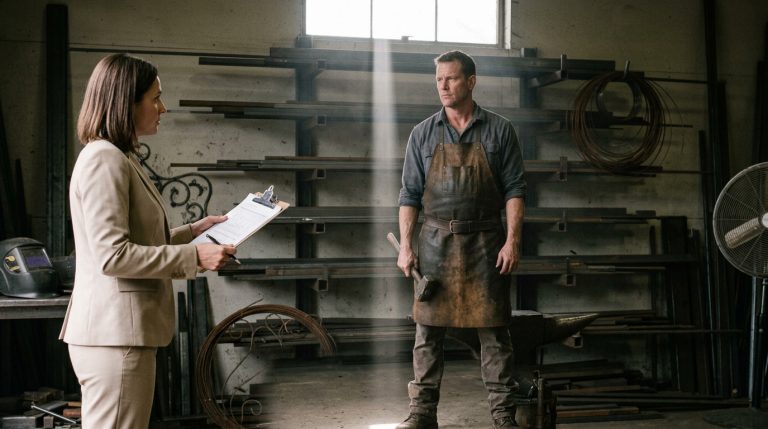
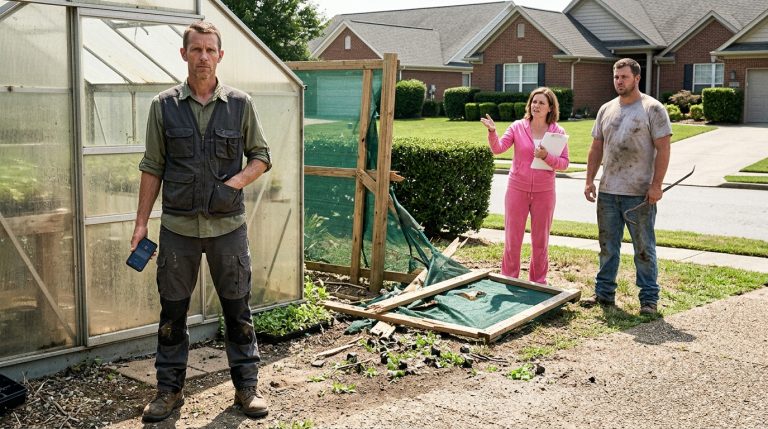
The metal of the clipboard was cheap, a stamped-out piece of aluminum that felt like a toy, yet it held the weight of a decree. Karen’s knuckles were white as she pressed it against her chest, her floral mumu standing in stark, garish contrast to the deep, silent green of my Georgia pines.
“Emergency bylaw 7.4,” she repeated, her voice dripping with the syrupy, artificial authority that set my nerves on edge. She hadn’t moved an inch since she marched onto my property. “You will cease operation of this pump by Monday morning. The Oakridge Estates HOA requires access to the pump house for asset management.”
I didn’t look at her face. I looked at the property marker—the small, weathered surveyor’s peg embedded in the dry Georgia clay—and then at the position of her polished loafers. She was a trespasser. A bureaucrat masquerading as a feudal lord, standing on the only dirt in the county that wasn’t hers.
The drought had turned the community’s retention pond into a jagged scar of cracked mud, but here, on my pasture, the well was a steady, rhythmic thrum—a heartbeat of cold, pressurized water that I had fought for. It was mine. The permit was filed. The geological surveys were paid in full. The silence of the woods, usually a sanctuary, felt suddenly crowded by her presence, by the buzz of her voice, by the sheer, unmitigated audacity of her claim.
“You’re standing on private land, Karen,” I said, my voice intentionally flat, devoid of the heat that was beginning to coil in my gut. I checked the pressure gauge on the pump. The needle was steady. It was the only thing that mattered.
“I am standing on HOA-regulated territory,” she corrected, tapping the clipboard with a sharp, rhythmic frequency. Her eyes were hard, fixed on the gushing spray of the irrigation line near the barn. “We’ve done the math, Mark. We’ve assessed the impact. This water belongs to the collective, not to a single resident who refuses to respect our drought protocols.”
The math. She spoke of numbers like a weapon. I thought about the three days of drilling, the vibration of the rig in my chest, the thousands of dollars I had poured into the ground to ensure Sarah and I would never have to ask anyone for permission to survive. My jaw tightened. The predator-prey lens clicked into place—a familiar reflex from the Corps of Engineers. I didn’t see a neighbor; I saw a variable that needed to be calculated and neutralized.
“You’re mistaken about the jurisdiction,” I said, finally meeting her eyes. They were wide, frantic, and oddly empty, the look of someone who had convinced themselves of a lie so thoroughly that they were now blind to the physical world. “And you are currently in violation of my property rights.”
She didn’t flinch. She just straightened her posture, the clipboard acting as a shield, and offered a tight, smug smile. “Monday, Mark. The pump house. Don’t make this difficult.”
As she turned to leave, the setting sun glinted off the metal of the clipboard, casting a momentary, jagged flare of light across the grass. I looked down and noticed, for the first time, a small, distinct indentation in the soft soil where she had stood—a perfect, boot-shaped hole left in my property. I knew then that she wouldn’t stop. She would double down, and in doing so, she would reveal exactly how much she had to lose.
CHAPTER 2: THE PAPER ARCHITECTURE
The boot-shaped depression in the Georgia clay was already filling with shadows as the sun slipped behind the treeline. I didn’t look back at it. I turned, my boots crunching on the gravel, and walked toward the house with a gait that felt heavier than it had ten minutes ago. The air was cooling, but the internal heat of the confrontation—that familiar, metallic tang of an approaching engagement—remained locked in my lungs.
Inside, the house was a sanctuary of straight lines and ordered surfaces. Sarah was in the kitchen, the soft, amber glow of the pendant lights playing over the granite island. She looked up as I entered, her brow furrowed with the kind of practiced concern that usually meant she had heard the distant, droning cadence of Karen’s voice through the open window.
“She was here,” I said, bypassing the preamble.
Sarah set her coffee mug down with a sharp clack. “I saw her through the study blinds. She was pacing. What did she want this time?”
“She’s trying to claim the well as a ‘community asset’ under a new emergency bylaw,” I said, my voice steady, stripped of the jagged edges of my own temper. I walked to the office, the door clicking shut behind me to seal out the domestic calm. It was time to switch modes.
I sat at the mahogany desk and pulled out the thick, leather-bound binder that housed the history of this property. This was the terrain. This was the armor. I began pulling out the deed, the title insurance, and the original, ironclad CC&Rs. My hands moved with the efficiency of a man running a diagnostic on a failing engine.
I opened the binder to the Article 3, Section 2B page—the one I had practically memorized during the purchase phase five years ago. I placed the highlighter over the text, the neon yellow tip trembling not from doubt, but from the raw focus of an impending maneuver. The words were clear: exempt agricultural tract. The HOA had no jurisdiction, no leverage, and absolutely no legal pathway to the water beneath my pasture.
But as I reached for the digital file of the survey plat map, the screen flickered. The office lights hummed, an uneven, grating sound that vibrated in the base of my skull. The monitor died. A sudden, sharp pop from the external breaker box silenced the steady, low-frequency thrum of the house.
I stood, my pulse spiking. I walked to the breaker box mounted on the far wall. The main switch had tripped, but when I flicked it back, it didn’t engage. It snapped backward, loose and dead. I grabbed a flashlight from the utility drawer and headed for the garage, the beam cutting through the gloom of the hallway.
The master breaker panel in the garage was locked behind a metal cabinet door. I pried it open with a flathead screwdriver. The smell of scorched plastic hit me before the light did—a sharp, acrid scent of overheating copper. My irrigation pump system, connected via a secondary line to the main house panel, had suffered a surge.
I crouched, tracing the wires. It wasn’t a standard electrical failure. The wiring had been tampered with. A small, bypass connector—a neat, professional piece of hardware—was spliced into the main load line. It was designed to trigger an overload if the pressure gauge hit a certain threshold. It was an engineering hack, crude but effective, meant to force my system into a fail-safe shutdown.
Karen hadn’t just come to complain. She had been here earlier, perhaps under the guise of an “inspection,” and had sabotaged the line to ensure my pump would eventually trip its own safety mechanism. She was trying to force a “nuisance” out of me by creating a technical failure she could point to as evidence of my incompetence.
I stared at the bypass, the cold realization settling over me like a sheet of ice. She wasn’t just a petty tyrant; she was willing to move into the physical, destructive realm. She was a saboteur.
I didn’t remove the bypass. I reached into my bag and pulled out my digital camera. I documented the splice from three angles, the flash illuminating the scorched wires in high-contrast relief. Every photo was a brick in the wall I was building. Every wire she’d touched was a piece of evidence she had surrendered.
I closed the cabinet and walked back into the kitchen, the bypass connector held securely in a small plastic evidence bag in my pocket. Sarah watched me, her gaze shifting to the bag.
“What is that?” she asked, her voice dropping to a whisper.
“The opening move,” I said, my voice as cold as the water in the well. “She wanted a fight over the water. She just gave me a fight over criminal interference.”
I moved past her toward the office, stopping only to take a long, deliberate drink of water from the tap. It was cold, pure, and for now, still mine. The house felt different, narrower, the walls closing in like a trench. I sat back down at the desk and opened the HOA engagement binder, writing the date and time at the top of a fresh, clean sheet of paper.
The battle wasn’t just in the courts or on the lawns anymore. It was in the wires of my house. I pulled out my phone and dialed the local emergency service line—not for a fire, but to report the tampering. I needed a police report. I needed an official record of the intrusion. I watched the clock, the seconds ticking by with the slow, agonizing precision of a countdown.
She wanted to shut off my water. I was going to shut off her life as president.
CHAPTER 3: THE COLD TRAIL OF PAPER
The report was brief, professional, and entirely sterile—exactly what I needed. Officer Miller—no relation to the HOA president, a fact that provided a small, grim sense of irony—had arrived at the house within the hour. He had documented the scorched wiring, photographed the bypass connector, and listened to my measured, factual account of the events leading up to the power surge. He had been non-committal, as police officers tend to be when stepping into the swamp of suburban disputes, but he had taken the evidence bag. That was the win.
Once he pulled away, his cruiser’s taillights bleeding into the darkness of the driveway, the house felt silent. Sarah was standing in the doorway of the office, her arms wrapped around herself. The chill of the night seemed to have followed her inside.
“You’re escalating it, Mark,” she said, not as a question, but as a realization.
“She touched the infrastructure of this home, Sarah,” I replied, turning back to the desk. The desk lamp cast a long, sharp shadow over the HOA binder. “She isn’t playing by the rules of a neighborhood meeting anymore. If she’s willing to sabotage a load line to make a point, she’s willing to do more. I have to create a paper trail that reaches further than she can.”
I spent the next several hours in the tactical silence of the office, drafting the formal rebuttal. I was no longer addressing the HOA board as a neighbor; I was addressing them as a litigator would, setting the foundation for the eventual breach-of-contract suit. I cited Article 3, Section 2B of the CC&Rs with a surgical precision that felt less like writing and more like setting a trap. I included the incident report number from the police, the photos of the bypass, and a demand for a formal audit of all board-approved contractor expenditures for the last three fiscal years.
It was a request that would look like a nuisance to the uninitiated, but to anyone with a passing understanding of HOA finances, it was an invitation to an audit of her entire tenure. I sent it via certified mail, return receipt requested, to the management company and every individual member of the board.
I didn’t sleep. The adrenaline had leveled off into a cold, focused clarity. By dawn, I was standing in the kitchen, watching the light crawl across the counter. My phone buzzed—a notification from the community portal. Karen had posted again. The familiar, syrupy authority was back, though there was a new, brittle edge to her phrasing.
“A certain resident on an oversized lot continues to prioritize their own vanity over the survival of our shared resources. We are monitoring the situation and will be taking necessary action to protect the long-term viability of Oakridge Estates.”
I stared at the screen, the reflection of the morning light catching the sharp edges of my jaw in the window glass. She was doubling down, exactly as predicted. She was painting the narrative for the neighborhood, creating the villain before the facts could catch up.
I set the phone down and walked out to the barn. The air was crisp, smelling of damp earth and iron. I needed to know more about the landscaping company she used. It was the only tangible link between her and the financial mismanagement I suspected. I drove to the local town records office as soon as they opened, spending the better part of the morning digging through commercial license filings and municipal vendor logs.
The landscaping company, Green Horizon Aesthetics, was registered to a holding company. Digging deeper into the municipal filing for that holding company, I found it. The registered agent was a man named Arthur Vance. A quick search of the county’s voter registration and property deeds confirmed the connection: Arthur Vance was the brother-in-law of Karen Miller.
The fraud wasn’t just a suspicion; it was a documented reality. The landscaping company wasn’t an independent contractor; it was an extension of her own household. She wasn’t just managing the neighborhood; she was treating the HOA budget as a private bank account.
I sat in the dim, dusty silence of the records room, the hum of the copier the only sound. I felt no surge of triumph, only a deepening of the resolve. I had the nexus of her control: the financial tether. Now, I needed to know who else on the board was aware of this, and how much leverage she held over them. I moved to the board meeting minutes, scanning through five years of entries.
It was a meticulous record of petty, incremental shifts in power. I tracked the voting patterns, seeing how quickly she moved to replace dissenting voices with silent, compliant allies. Every vote was a unanimous motion. Every expenditure was passed without debate. She hadn’t built a board; she had built a private court.
By the time I left the records office, the sun was high and brutal. I had the map of her kingdom, and every road led back to her. The next move was mine, and I would make it with the precision of an engineer—slow, methodical, and inevitable. I looked at the binder in my passenger seat. It was growing, the weight of the evidence accumulating like snow before an avalanche. She was still sitting on her throne, holding her clipboard, completely unaware that the foundation had already been compromised.
CHAPTER 4: THE ARCHITECTURE OF A FALL
I closed the binder, but the numbers remained burned into my retinas: the double-billing, the inflated material costs, the sheer, systematic extraction of neighborhood funds. The smell of the paper—that distinct, slightly acidic tang of Xerox toner—reminded me of a project in the Balkans, years ago. We had been tasked with restoring a municipal water system that had been gutted from the inside by local contractors. The corruption there had been tangible, a physical resistance in every valve and pipe we touched. I remember the feeling of realizing that the enemy wasn’t the artillery in the hills, but the man holding the schematic in the office next to mine.
I stood up and walked to the window. The trees bordering my property line looked different now—less like a sanctuary and more like a perimeter. Karen had chosen this hill to die on, but she had underestimated the type of opposition she was inviting. My phone buzzed on the desk. Another notification from the community portal.
“The board has noted a concerning trend of unsubstantiated rumors circulating regarding our financial management. We remind all residents that the Oakridge Estates HOA operates under a strict code of ethics.”
A code of ethics. The phrasing was so hollow it felt like a physical affront. I didn’t respond. The digital realm was a trap, a landscape she had terraformed to favor her own echo. I needed to move the fight into the analog world, into the places where paper records and actual, physical consequences lived.
Sarah appeared in the doorway, clutching a cup of tea. Her knuckles were white, and her eyes, usually so sharp and observant, were shadowed with an exhaustion I recognized all too well. “I saw the post, Mark. She’s not stopping. And people are starting to talk at the pool. It’s not just the book club anymore.”
“Let them talk,” I said, moving to the safe where I kept the backups of the original deed and the plat maps. “She’s using the noise to cover the tracks. Every time she sends out a blast like that, she’s signaling that she knows the pressure is building. She’s not trying to convince the neighbors anymore; she’s trying to convince herself.”
“What happens if she just doubles down again? What if she tries to cut the power to the house entirely, rather than just the pump?”
“Then she’ll be committing a felony that doesn’t involve water rights,” I said, turning to face her. “And I’ll have the police report waiting before the electrician leaves the scene. She’s cornered, Sarah. She just doesn’t know it yet.”
I needed to see Amelia Albright. The initial letter had been the first volley, but now we had the smoking gun—the connection between the brother-in-law’s holding company and the landscape maintenance contracts. This was the shift from a nuisance complaint to a criminal investigation, and I needed to ensure that my legal strategy didn’t just target the HOA, but the individual responsible for the fraud.
I drove into the city in the late afternoon, the urban sprawl of Atlanta rising up like a concrete cage. The office of Albright, Finch, and Montgomery remained an island of terrifying efficiency. When I was ushered into her corner office, she didn’t waste time with pleasantries. She looked at the documents I laid out on the mahogany table—the printouts of the landscaping company’s registration, the link to Arthur Vance, and the cross-referenced meeting minutes showing the lack of board oversight.
She went through the papers slowly, her eyes tracking the lines of ink with the focus of a hawk. When she looked up, the steel in her expression was even sharper.
“You did the work, Mr. Davies,” she said, tapping the folder. “Most clients just want me to fix the mess. You’ve brought me the blueprint of the collapse.”
“I want to know if this is enough to force a recall,” I said. “I don’t just want a retraction. I want the board gutted.”
“A recall is a political act, not a legal one,” she replied, leaning back. “But a recall fueled by documented evidence of financial misconduct? That’s not a political act. That’s a civic insurrection. If you feed this to the neighborhood, if you make it impossible for them to ignore, the board will have no choice but to call for a vote to save their own skins.”
She stood up and walked to the window, looking out over the city. “There is a risk, of course. If you go public with this before we file the suit, she might try to scrub the records. She might try to destroy evidence.”
“I already have copies of everything,” I said. “And the records office is already on notice that I’ve requested them.”
She smiled, and for the first time, it felt like an acknowledgement of a peer. “Then we don’t hold the fire. We build the bonfire.”
I left the skyscraper feeling a strange sense of equilibrium. The city noise, the press of the crowds, the heat reflecting off the glass—it all seemed muted compared to the singular, cold objective I was carrying back to the cul-de-sac. I had the fuel. I had the spark. All that was left was to choose the right moment to ignite it. Karen had spent years building her house of glass, and she had spent the last week throwing the first stones.
CHAPTER 5: THE SIEGE OF SILENCE
I stood in the darkness of the kitchen, my hand resting on the cool marble of the island. Through the thin sliver of the blinds, I could see the silhouette of a sedan parked just beyond the reach of the porch light. It was an unmarked model, nondescript and aggressive in its stillness. My phone, sitting on the counter, was dark, but my internal alarm was screaming.
I didn’t turn on the lights. I walked to the hallway closet and pulled out the high-powered tactical flashlight I used for property inspections. I didn’t reach for a weapon—violence was a failure of strategy—but I gripped the flashlight with the intent of a man holding a floodlight to a crime scene.
I stepped onto the porch. The air was thick with the scent of pine and impending rain. As my boots touched the wood, the sedan’s engine cut out. The silence that followed was heavy, artificial. I walked down the steps, the gravel crunching with a deliberate, rhythmic sound. I stopped twenty feet from the car. The driver’s side window rolled down, revealing the face of the man from the management company, the one who had sent the initial, automated fine notifications. He looked tired, his eyes darting to the house and then to me.
“Mr. Davies,” he said, his voice forced into a professional neutrality. “I’m here to ensure that the cease-and-desist order regarding the pump house is understood. We’ve had reports of continued activity.”
“Your cease-and-desist is a legal nullity,” I said, my voice cutting through the humid morning air. “And your presence on this property, at this hour, constitutes a secondary violation. I have the entire interaction documented.”
He didn’t look at the camera I knew was mounted on the porch eaves, but his shoulders tightened. He was a messenger, nothing more, a low-level functionary sent to probe the defenses of the target. He was a piece of Karen’s architecture, a structural beam she was using to prop up her failing control.
“We are acting on behalf of the Oakridge Estates HOA,” he said, the words practiced. “We have the right to investigate potential resource misappropriation.”
“You have the right to leave,” I said, pointing the flashlight’s beam toward the main road. “And if you return, you will be doing so in the presence of a sheriff’s deputy. I’ve already established a contact line with the precinct regarding the tampering incident from two nights ago. Do you want to explain to them why you’re sitting in a dark driveway at 4:00 AM?”
He hesitated, the engine idling for a beat before he shifted into reverse. He didn’t offer a rebuttal. He didn’t need to. The fact that he had been sent at all told me everything I needed to know: Karen was feeling the heat of the looming audit. She was panicking, and her panic was forcing her to overextend. She was abandoning the bureaucratic facade and resorting to intimidation.
I watched the sedan turn onto the road and disappear into the gloom. I turned back to the house, but I didn’t go inside immediately. I walked to the barn, the physical center of the conflict. I checked the lock, the pressure gauges, the seals. Everything was holding. But the feeling of being under siege was creeping in, a slow, corrosive pressure against my own autonomy.
Sarah was waiting in the kitchen when I returned, her eyes fixed on the door. “Was it them?”
“It was an errand boy,” I said, moving to the office. “She’s testing the perimeter. She knows the legal filings are going to hit her board members soon. She’s trying to see if I’ll fold before the audit can happen.”
I sat at the desk and opened the computer. It was time to stop being reactive. If she wanted to play a game of surveillance and intimidation, I would scale it. I began drafting the open letter to the community, the one Amelia had vetted. It was a concise, brutal account of the financial mismanagement—the brother-in-law, the inflated costs, the fraudulent drought study.
I didn’t publish it to the community portal. I exported it as a high-resolution PDF and printed fifty copies. I didn’t need the digital forum. I needed physical, tangible evidence in the hands of every homeowner who had ever been fined for a blade of grass.
The “Consequence Loop” was closing. Every act of intimidation she threw at me was now a data point I could use to show the board members the personal liability they were sharing. I was no longer fighting for the well; I was fighting to expose the infection that had consumed the neighborhood’s leadership.
The morning light began to bleed into the room, revealing the dust motes dancing in the air. I looked at the pile of printed letters, the stack representing the end of her reign. I felt the weight of the strategy, the cold, hard logic of the endgame. She had wanted a fight. She had built her kingdom on the assumption that she could hide the cost of her tyranny behind a wall of processes and fear. She had forgotten that the truth, once physical, once held in the hand, has a weight that no amount of bylaws can contain.
I reached for my keys. It was time to distribute the truth. I would hit the houses of the board members first, the ones who had signed off on the fraud without asking a single question. I would put the evidence on their doorstep, in their hands, and force them to look at what they had enabled. I walked out to the truck, the morning air biting at my skin. The siege was over. The counter-offensive had begun.
CHAPTER 6: THE BONFIRE OF DOCUMENTS
The driveway of Gary Johnson, the HOA board’s most silent observer, was pristine, a flat plane of dark, heat-absorbing asphalt that looked like it hadn’t seen a tire track in weeks. I pulled my truck in behind his luxury SUV, the crunch of gravel beneath my tires sounding like a gunshot in the sterile morning air. I gripped the stack of PDFs—the evidence packet—until the edges of the paper bit into my palms.
I walked to the front door, the weight of the packet feeling like a heavy, cold anchor in my hand. I didn’t knock. I leaned down and slid the packet under the door, ensuring the top page—a summary of the $10,000 “drought study” invoice—was clearly visible.
As I turned to walk back to the truck, a window curtain in the second story twitched. It was a slight, mechanical movement, the reflex of a homeowner who had been taught by Karen to fear the outsider. I looked up, meeting the gaze of a shadow behind the glass. I didn’t wave. I didn’t acknowledge. I just tapped the remaining stack of packets in my hand, turned, and got back into the truck.
The next hour was a choreographed ritual of exposure. House by house, I moved through the neighborhood, dropping the evidence at the doorsteps of the silent board members. With each drop, the sense of paranoia deepened. I began to see cars slowing down as they passed me. I felt the weight of eyes, not just from the houses, but from the neighborhood at large—the uneasy, shifting perception of a community realizing that their status quo was actively being dismantled.
By the time I reached the fifth house, the shift was unmistakable. A woman I recognized from the community center—Brenda, one of the board members—stepped out onto her porch as I approached. She didn’t look angry; she looked terrified.
“Mark,” she called out, her voice thin. “You need to stop this. Karen is… she’s not going to take this lightly. She’s already talking to the lawyers about a restraining order.”
I stopped at the edge of her driveway, the sunlight glinting off the metal of my truck’s door. “She can file all the paper she wants, Brenda. But the paper I’m handing out tonight proves that she’s been stealing from the neighborhood treasury for three years. Does your lawyer know about the brother-in-law? Does the insurance company know that you signed off on those invoices without a vote?”
She paled, her hand trembling as she reached for the door handle. “I was just following the procedure. She said it was an emergency.”
“The emergency was a fake, Brenda,” I said, my voice low, stripped of any pretense of neighborly warmth. “The invoice was a kickback. You’re not a victim here; you’re an accomplice. You have until tonight to resign before the filing hits the county records office tomorrow morning. When that happens, the DA will start looking at everyone’s signatures.”
I dropped the packet on her welcome mat and walked away. The paranoia that had been buzzing in the back of my mind since the pre-dawn visit began to clarify into a cold, tactical focus. This wasn’t just about exposing the fraud; it was about forcing the board to collapse from the inside.
As I drove back toward my property, I saw Karen’s car parked at the end of the cul-de-sac. It was idling, the exhaust a faint, gray haze in the morning heat. She was watching the route I was taking. I slowed the truck, matching her speed for a moment. We didn’t exchange words. We didn’t need to. In that silent, kinetic stare-down, I saw the cracks in her composure. Her eyes were rimmed with red, her expression a mask of brittle, forced containment. She was watching her world dissolve, and she was realizing that she no longer had the tools to piece it back together.
She pulled away, tires spinning on the asphalt, and sped off toward the community clubhouse. She was desperate. She was headed to the center of her influence, likely to rally the few remaining loyalists who still believed in the illusion of her competence.
I turned into my driveway. The well pump was humming, a steady, low-frequency sound of deep, tectonic power. I walked into the house, the physical exhaustion beginning to pull at my limbs, but my mind was firing with the precision of a calculator. I went to the office and opened the encrypted file containing the final draft of the lawsuit, the one Amelia had prepared. It was ready. Tomorrow, we would move from the shadow war of pamphlets and whispers to the public, crushing weight of the judicial system. The bonfire was built. I only needed to wait for the wind to shift.
CHAPTER 7: THE KINETIC COLLAPSE
The barn was a cool, shadows-drenched cathedral of weathered oak and dry hay. Mr. Henderson was waiting by the workbench, his gnarled hands resting on the handle of a heavy framing hammer. He didn’t speak when I entered. He just gestured toward the pile of boxes I had been organizing—the secondary copies of the records, the bank statements, the emails that linked Karen’s brother-in-law to the landscaping kickbacks.
“They’re coming for the meeting tonight,” Henderson said, his voice a low, gravelly rasp. “The board members. They’re terrified, Mark. Brenda tried to call me twice. She’s looking for a way out.”
“There is no way out,” I said, sliding the final stack of documents into my briefcase. The metal latches snapped shut with a sharp, definitive sound that echoed against the rafters. “The audit is already in the hands of the new treasurer. By the time this meeting starts, the information will be public. They’re either going to be part of the solution, or they’re going down with the structure.”
I walked to the truck, the weight of the briefcase feeling like a physical extension of my own arm. Every step I took was a movement against the inertia Karen had spent years cultivating. She had created a system that relied on the apathy of the residents and the compliance of the board. She had built it on the assumption that no one would ever look behind the curtain, and certainly no one would ever bring a flashlight.
I drove toward the clubhouse, the afternoon light casting long, distorted shadows across the suburban streets. I could see the cars lining the cul-de-sac already—an unusual volume of activity for a Thursday. People were milling around the entrance, their body language anxious, shifting, the kinetic energy of a community that was currently in a state of phase transition.
As I pulled into the lot, I saw Karen’s SUV. It was parked at an awkward angle, blocking the designated handicap space, as if she had arrived in a state of absolute, unthinking panic. She was standing by the entrance, her clipboard clutched to her chest like a talisman, her gaze fixed on the asphalt. She didn’t look like a tyrant; she looked like someone standing on the edge of a cliff, waiting for the ground to give way.
I stepped out of the truck, the gravel crunching under my boots. I didn’t approach her directly. I walked toward the clubhouse entrance, where David, the former treasurer, was waiting. He looked pale, but his eyes were resolute.
“Everything is set,” David said, handing me a small, compact recorder. “The auditor is inside. The records are indexed. When we open the floor, we don’t hold back.”
“Good,” I said, keeping my focus on the entrance. “We keep it cold, David. We keep it factual. No shouting, no theatrics. Just the numbers. The numbers are the weapon.”
We walked inside. The room was already humming with the low-frequency drone of a hundred private conversations. As I made my way to the front, I felt the shift in the room. Heads turned. People moved out of my way, not with hostility, but with a sudden, sharpened awareness. The perception of me had changed—I was no longer the “well-water hoarder” that Karen had painted in her newsletters. I was the one who had brought the schematics of the collapse.
Karen was at the front table, her knuckles white as she gripped the side of the podium. She was watching me, her expression a mask of brittle, white-hot fury. She knew. She could feel the air moving in the room, the collective weight of a hundred residents who were no longer looking at her with fear, but with suspicion.
I stopped at the front row and placed the briefcase on the floor. I didn’t look at her. I looked at the board members—Gary, Brenda, and the others—who were sitting in a row, looking like prisoners on the dock. They were the ones who had signed the checks. They were the ones who had looked the other way while the neighborhood funds were siphoned into Green Horizon Aesthetics.
The tension in the room was a physical thing, a tightening of the atmosphere that made it difficult to breathe. The clock on the wall above the podium ticked with agonizing slowness. I reached into my coat and touched the edge of the evidence packet. The structural status of the HOA was hanging by a single, fraying wire. One more nudge, one more revelation, and the entire edifice would shatter. I was ready. The structure had no choice; it was going to fail.
CHAPTER 8: THE COLLAPSE OF THE EDIFICE
Karen’s hands were shaking so violently that the clipboard clattered against the microphone stand, a hollow, tinny sound that signaled the end of her authority. She tried to speak, but the words caught in her throat, strangled by the realization that the room—her room, her theater of control—was no longer hers. Two hundred homeowners stood in a suffocating, dense silence, their eyes fixed not on her, but on the documents I had splayed across the podium.
“The numbers aren’t mine,” I said, my voice projecting into the high ceiling of the clubhouse, steady and devoid of malice. “They belong to the HOA bank account you’ve been treating as a personal line of credit. The $10,000 drought study that never existed, the inflated contracts awarded to your brother-in-law, the falsified minutes—it’s all here, verified by an independent audit.”
Karen stumbled back, her heel catching on the edge of the dais. She didn’t look like a president; she looked like a small, hollowed-out shell, her identity completely dependent on the facade of order she had spent years manufacturing. “It was for the neighborhood,” she whispered, her voice barely audible, cracked and thin. “Everything I did… it was to keep us together. To keep it perfect.”
“You didn’t keep it together,” I replied, stepping closer. “You broke it. You broke the community, you broke the trust, and now, you’ve broken the law.”
The collapse was not a sudden, dramatic outburst, but a slow, kinetic disintegration. The board members—Brenda and Gary—looked at the floor, refusing to meet the collective gaze of the room. When the motion for the recall vote was called, there was no debate. There were no protests. There was only the sound of two hundred hands rising, a unified motion of rejection.
Karen didn’t wait for the final tally. She pushed past me, her movements jerky and uncoordinated, her eyes darting around the room as if searching for a exit that wasn’t there. As she reached the door, she paused, casting one last, terrified look back at the room—not a look of a leader, but of a person who had spent her entire existence terrified of being anything other than the one in control. Then, she vanished into the night.
The aftermath was a slow, deliberate restoration. Over the next month, the clubhouse became a hub of actual governance. We audited the books, liquidated the fraudulent contracts, and held open, transparent elections. I spent my mornings in the office, but the binder was no longer a weapon; it was just a record, a dusty history of a war that had been won.
The symbolic closure came on a Tuesday. I had finally gotten the irrigation system in the back pasture running perfectly. The pump, which had been sabotaged and fought over, now moved water with a rhythmic, quiet efficiency. I found the bypass connector I had removed from the electrical panel and walked it out to the edge of the property, where the woods met the cul-de-sac. With a pair of pliers, I bent the metal until it was useless, then buried it deep in the dirt—a piece of history, permanently relegated to the earth.
Sarah came out to meet me, the soft sunlight of late autumn catching the fraying hem of her sweater. We stood for a long time watching the water arc across the grass, the rainbows shimmering in the spray. There was no need for grand declarations. The property was quiet. The woods were silent.
“It’s over, isn’t it?” she asked, her hand slipping into mine.
“The dispute is,” I said, looking toward the main road where the houses of Oakridge Estates stood, finally just houses, not an empire. “The structure is sound now. We can just live here.”
We walked back toward the house, the weight of the last few months lifting from our shoulders, replaced by a deep, atmospheric peace. My arc was no longer defined by the pressure of the fight, but by the quiet maintenance of the home I had defended. I had come looking for a piece of ground to call my own, and in the process, I had learned that the only thing worth fighting for is the truth, and the only thing worth keeping is the peace that remains once the fire has burned out. The well continued to hum, a steady, rhythmic pulse in the quiet morning, feeding the soil, feeding the peace, and ensuring that no matter what, the water would always be ours.