A Cold March Morning: The Unyielding Stand of a Veteran Against a Petty Tyrant’s Bureaucratic Siege
CHAPTER 1: The Weight of the Line
The wind didn’t just blow in Clearfield; it stripped. It was a damp, skeletal cold that bypassed the wool of my jacket and went straight for the marrow of my stumps. I stood in the mouth of Space 7, my prosthetics biting into the asphalt, the plastic sockets chafing against raw, tired skin.
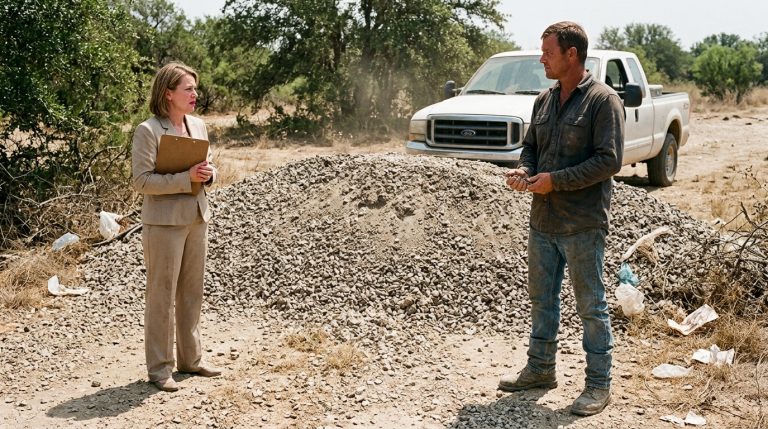
Beverly Cratch stood opposite me, holding her clipboard to her chest like a holy book. Her pastel polo was vibrant, an insulting splash of spring in a world of gray. She wasn’t just standing there; she was occupying the space, her posture locked in that stiff, practiced rigidity of someone who has finally found a victim small enough to crush.
“That spot isn’t yours anymore,” she said. Her voice was thin, brittle as dead leaves. “Move the chair. Now.”
I didn’t look at her. I looked at the blue paint, the faded, chipped wheelchair symbol that had been my anchor for three years. It was a simple marking, but it represented the difference between being a member of this community and a prisoner in my own townhome.
“Beverly,” I said, my voice low, stripped of any inflection. “That’s my designated accessible space. The board signed the approval. You signed the approval. Three years ago.”
She tapped the clipboard. Her nails were manicured, sharp. “Administrative review,” she countered, the phrase rolling off her tongue with a practiced, rehearsed smoothness. “Pending verification of your current status. I’m afraid your claim to this space is no longer valid.”
I watched her eyes. They weren’t looking at me; they were looking through me, focused on the imaginary victory she had scripted in the quiet corners of her mind. She pulled her phone out—a sleek, silver thing—and put it on speaker.
“Unauthorized vehicle in Space 7,” she said to the void. She didn’t sound like a neighbor; she sounded like a prosecutor delivering a verdict. “Tow it. Now.”
Eleven minutes.
That was the time it took for the truck to round the corner, its engine a low, aggressive rumble that shook the ground beneath my feet. As the driver backed in, his face obscured by the shadow of his cap, I didn’t reach for my keys. I reached for my phone. I didn’t scream. I didn’t beg. I stood still, my internal focus narrowing until the world became nothing but the sound of the chains rattling against the chassis of my SUV.
The winch groaned, a metallic, teeth-grinding sound, and my vehicle began to lift, swinging slightly as the tires cleared the pavement. Beverly stayed, her arms crossed, watching with a hollow satisfaction that felt like a poison. She was winning the moment, but she had no idea she’d just invited a soldier into a war she couldn’t possibly win.
I recorded it all. The angle of the truck, the license plate, the way Beverly tilted her head, watching the SUV rise as if it were her own private sacrifice to the gods of order. I felt the sharp, stinging cold of the morning, but beneath it, a cold, hard resolve crystallized in my chest.
She turned to leave, her job done. But as she walked past me, the clip of her shoes on the driveway sounded like a countdown.
“You’re a tenant, Garrett,” she murmured, a final, chilling barb. “And tenants are temporary.”
I stayed until the truck was a fading hum on the horizon, staring at the empty space. It wasn’t just a parking spot anymore. It was a front line. And she had just handed me the first piece of intelligence I needed to dismantle her entire world.
CHAPTER 2: The Geometry of a Threat
The coffee was a black, bitter pool of oil in the bottom of the mug. I didn’t drink it. I watched the steam curl into the stagnant air of my kitchen, my mind replaying the scene at Space 7. It wasn’t the anger I was focusing on—anger was a volatile propellant that burned out too fast. I was looking for the geometry of the mistake.
Beverly hadn’t just acted on a whim; she had executed a drill. The precision of the tow company’s response—eleven minutes—wasn’t civilian. It was coordinated. It was a tactical deployment designed to maximize psychological impact, the kind of move someone makes when they believe they are insulated by a firewall of authority.
I shifted in my chair, the rubber tips of my prosthetics resting against the linoleum. My stumps were burning. The cold had a way of seeking out the old trauma, whispering to the nerves that had been severed years ago in the dust outside Fallujah. The sensation brought with it a sudden, involuntary memory: the sound of the IED blast, the way the world had tilted sideways, the smell of burnt rubber and copper. I clamped down on the thought, forcing it back into the dark recess where it belonged.
Focus on the structure, I told myself. The current problem is local.
I reached for my laptop, the screen lighting up to reveal the messy digital architecture of my life. My finances, my medical records, the scanned PDF of the original HOA board meeting minutes from three years ago. I pulled them up, side by side.
The original approval document was clean, signed by the then-president and countersigned by Beverly Cratch in her capacity as an board member. It was a contract, plain and simple. Yet, she was now invoking an “administrative review.” I knew the bylaws well enough to know there was no such provision for the unilateral revocation of a disability accommodation. There was a process—a hearing, a notice period, an appeal—but that would require time and transparency, two things Beverly clearly had no intention of providing.
She was playing a game of attrition. She wanted me to exhaust myself, to lose the will to fight back until I simply stopped leaving the house, effectively sealing myself in.
I started a new document. I began to map it out: the timeline of her comments, the dates of the “casual” remarks at the neighborhood barbecue, the instances where she’d hinted at “accommodation abuse.” It was a pattern of harassment, calculated to build a narrative of illegitimacy. She was painting a target on me, and in a community of forty-two townhomes, rumors were more dangerous than any weapon I’d faced overseas.
My phone chimed on the counter. A notification from the neighborhood Facebook group.
Beverly Cratch: Just a reminder to all residents, we are currently reviewing all community space usage to ensure equitable access. Please be patient as we enforce our parking policies for the benefit of all members.
Equitable access. The phrasing was precise, designed to sound reasonable to anyone who didn’t know the truth. I closed the tab. I didn’t need to argue with her online. Digital noise was just more distraction.
I needed to see who else was being targeted. If she was using the “review” to clear the lot, I couldn’t be the only one.
I stood up, the movement a slow, deliberate calculation of weight and balance. I checked my supplies: a thermos of coffee, a notebook, and my phone. I would need to walk the complex, not just to look at the parking spaces, but to look at the people. There was a specific kind of resignation that appeared in the eyes of someone who had already given up, a flicker of defeat that I needed to find.
Stepping out onto my small concrete porch, the air bit into my cheeks. The sun was pale, thin as parchment, failing to provide any real warmth. I walked down the path toward the common area, my gait slow and measured. Every step was a negotiation with the prosthetics, a constant adjustment to ensure the weight was distributed evenly so the skin wouldn’t break down before noon.
I saw Cornelius Brandt standing on his porch three units down. He was leaning heavily on a cane, his posture hunched, his gaze fixed on the empty space in front of his home where a handicapped sign had been pulled from the ground, leaving only a jagged, rusted stump in the grass.
He didn’t notice me at first. When he did, he didn’t smile. He just stared at me, his eyes clouded with a mixture of resentment and exhaustion.
“They’re painting the curbs tomorrow,” he said, his voice gravelly. He didn’t ask how I was. He didn’t offer a greeting. He just pointed with his cane at the freshly dug dirt near his door. “She told me the city required it.”
I looked at the ground. There was no city ordinance requiring curb painting in our private development. She was rewriting the environment, one small, ugly change at a time, making it feel less like a home and more like a facility.
“I’m fighting it, Cornelius,” I said, my voice steady.
He let out a dry, hacking laugh that had no humor in it. “You’re a veteran, Garrett. You’ve got the stomach for it. But you look at the board… you look at how they all sit there and nod when she speaks? You aren’t fighting a woman. You’re fighting the floor beneath your feet.”
He turned and retreated into his home, the door clicking shut behind him with a finality that made my chest tighten. I stood there on the pavement, feeling the weight of the silence. He was right. The board was the floor, and Beverly was the architect of the collapse. If I wanted to save my spot, I couldn’t just fight the HOA president; I had to expose the instability of the entire structure.
I looked back toward my unit, toward the space where my SUV had been towed. I needed more than just a lawyer. I needed to know exactly what was hidden in the records—the things she was so desperate to protect that she would go to these lengths to enforce her “equitable access.”
I took a deep breath, the cold air stinging my lungs, and turned toward the management office, hidden behind the clubhouse. It was time to stop watching the game and start dismantling the board’s foundation.
CHAPTER 3: The Paperwork Trail
The door to the management office was locked, but the glass was thin. Through it, I could see the administrative assistant’s desk, buried under a landslide of envelopes and HOA notices. I leaned against the doorframe, letting the fatigue pull at my lower back. I was standing on borrowed time today. The skin around my left residual limb was beginning to burn, a warning signal I had learned to respect long ago, but I couldn’t turn back. Not now.
I scanned the lobby. No cameras. Beverly had always touted “cost-saving measures” when the suggestion of security upgrades came up in meetings. At the time, I’d thought she was just being cheap. Now, I saw the strategy for what it was: a lack of accountability.
I reached into my pocket, fingers brushing against the master key card for the building’s common areas—a relic from my first year here when I’d volunteered for the landscaping committee. I swiped it. The lock clicked, a sharp, metallic sound that seemed to echo down the empty hallway like a gunshot. I pushed the door open and stepped inside, the heat from the office’s radiator hitting me like a wall.
The records room was at the back, a cramped space stuffed with filing cabinets that looked like they hadn’t been opened since the complex was built in the late nineties. I started with the most recent year, pulling drawers that groaned under the weight of accumulated neglect.
There was nothing in the obvious places. No “Parking Permits” folder, no “ADA Compliance” log. It was as if the paper trail had been scrubbed clean.
If I were hiding something, where would I put it? I thought.
I ignored the labels on the drawers and started looking for irregularities. I found it in a cabinet marked “General Maintenance – 2018.” It was a file, tucked behind a thick binder of invoices for roof repairs. The folder was unmarked, its edges yellowing and slightly curled, as if it had been handled frequently.
I pulled it out. Inside were documents that turned the air in the room cold.
There were copies of the federal grant applications for the 2018 parking lot renovations. But attached to them were internal memos—drafted by the board, and specifically annotated by Beverly—concerning the “allocation” of grant funds. They hadn’t used the full amount for the mandated accessibility upgrades. Large portions had been diverted into “aesthetic enhancements” for the clubhouse and administrative offices.
But it was the handwritten note at the bottom of a summary page that stopped my breath. Total compliance liability: ~$180k. Keep the ramp slope variance off the final report to ensure disbursement.
She hadn’t just neglected the rules. She had committed fraud. She had knowingly signed off on work she knew was non-compliant, pocketing the difference in the name of making the clubhouse look like a luxury resort.
I heard a sound. A faint, rhythmic tapping from the hallway—the distinct, sharp click of heels on tile.
I didn’t panic. Panic was for people with options. I moved with the precise, practiced economy of someone who had learned to navigate a battlefield. I slid the documents back into the folder, tucked it into my jacket, and closed the drawer. I didn’t rush. I walked toward the side exit, my steps measured, heart rate dialed down to a rhythmic, steady thump.
I slipped out just as the office door at the front of the complex swung open.
I moved behind the row of hedges that lined the parking lot, keeping low. Through the gaps in the branches, I saw Beverly. She wasn’t alone. She was walking with a man in a stiff, dark suit—not the tow driver, but someone else. Someone who carried a briefcase like it was a shield. They walked toward the clubhouse, deep in conversation. Beverly’s gestures were expansive, nervous, her head tilted toward him in that subservient way she reserved for people she feared.
She wasn’t just managing the HOA. She was negotiating her own survival.
I made it back to my townhome, the physical toll of the excursion finally hitting me. My prosthetics felt like lead weights. I collapsed into my kitchen chair, pulling the folder onto the table. My hands were shaking, not from fear, but from the sudden, sharp clarity of the truth.
The parking spot wasn’t a battleground. It was the crack in the facade. She had been terrified of me parking there because the accessible space was the only part of the lot that actually met the federal standards she’d been forced to acknowledge on paper. Every time I parked in Space 7, I was a living, breathing audit. I was a reminder that she hadn’t done the work. I was the one variable she couldn’t account for, the one person who kept showing up in the exact place where her lies were most visible.
I opened the folder again, my eyes tracing the signatures. There it was. Her name, right next to the fraudulent compliance declaration.
I pulled out my phone and dialed Franklin. He picked up on the second ring, his voice calm and clinical.
“Garrett? You sound like you’ve been running.”
“I’ve got the foundation, Franklin,” I said, my voice tight. “And it’s rotten all the way through.”
I didn’t wait for him to ask questions. I began to list what I had—the grant diversions, the ignored safety mandates, the signed admissions of fraud. As I spoke, I watched the reflection of the streetlamp in my window, a single, piercing point of light in the darkness. I was no longer just a tenant being pushed around by a petty tyrant. I was a witness.
The weight of the prosthetics, the burning in my stumps, the exhaustion—it all faded into the background. For the first time since I’d arrived in Maplewood, I felt a sense of focus so sharp it felt like a blade.
“Get it to me,” Franklin said, his voice dropping into that quiet, deadly register. “And Garrett? Do not confront her again. If she knows you have this, she won’t just tow your car. She’ll burn this place to the ground to keep it buried.”
“She’s already burning it, Franklin,” I replied, looking out at the rows of identical, quiet homes. “I’m just the one holding the match now.”
I hung up, the silence of the kitchen settling back in around me. I felt the folder under my hand, the paper cool and solid. It was just a stack of documents, but in the right hands, it was a wrecking ball. I stared at the door, waiting for the night to pass, knowing that the next move wasn’t mine—it was theirs. And for the first time, I wasn’t the one waiting for the tow truck. I was waiting for the end.
CHAPTER 4: The Boardroom Ambush
I didn’t head for the clubhouse via the main thoroughfare. I took the perimeter path, the one that skirted the edge of the community’s detention pond, where the reeds were tall and the light was choked by the late-afternoon shadows. My prosthetics moved with a rhythmic, mechanical click, a sound that seemed abnormally loud in the quiet of the neighborhood. Every step was a test of endurance; the friction against my stumps was constant now, a dull, throbbing reminder of the price I was paying to remain standing.
But when I reached the rear of the clubhouse, I stopped. The blinds in the main meeting room were pulled, but the gap in the middle was just enough to see the internal light. There were more cars in the lot than there should have been. A silver sedan with state plates sat right in the prime spot, and the interior of the meeting room was already buzzing with voices.
They weren’t waiting for the special meeting. They were holding an emergency session, likely triggered by Beverly’s panic after she realized the records room wasn’t as secure as she’d assumed.
I couldn’t just walk in with the folder. If I approached now, she’d have security—or whatever lackeys she’d managed to bully into compliance—escort me off the property before I could reach the table. I needed to adjust. The confrontation had to be public, but it had to be on my terms.
I retreated into the shadow of the brick clubhouse wall, pulling my phone out to message Franklin. My thumbs felt stiff, the cold finally reaching my nerves, but I typed quickly. Emergency session happening now. She knows. Advise.
His reply came back within seconds: Do not enter alone. Wait for the witnesses. Do not surrender the documents.
I stood there in the dark, the wind whistling through the gap in the building’s vents. I could hear Beverly’s voice through the wall—shrill, frantic, losing its practiced veneer of authority. She was talking about “legal threats” and “unauthorized access.” She was trying to frame the search for the truth as a criminal act.
That’s the move, I thought. She’s going to frame me for the break-in.
The realization hit me with the force of a physical blow. If I walked in there now, I wasn’t just a whistleblower; I was a suspect. She was building a wall of bureaucratic immunity, and she was using the police and her board majority to insulate herself.
I looked at the folder. The documents inside were my only leverage, but they were currently just paper—evidence of a crime that no one in that room wanted to acknowledge. I needed an audience.
I turned back toward the path, but stopped when I saw a flicker of movement near the entrance. Opel Whitmore was walking toward the clubhouse, clutching a thick envelope of her own. She looked determined, her chin held high, her eyes scanning the parking lot with a wariness that betrayed her outward calm.
I didn’t call out to her. I waited until she was closer, then stepped from the shadows. She gasped, nearly dropping her envelope, before her expression shifted to one of grim recognition.
“Garrett,” she whispered, her voice sharp. “They’re in there, tearing everything apart. They’ve locked the doors, and they’re talking about revoking the parking permits for anyone who’s signed the petition.”
“They don’t have the legal authority to do that, Opel,” I said, my voice steady, though my heart was hammering against my ribs. “But they’re trying to create a fait accompli before the special meeting.”
“What do we do?” she asked, clutching her envelope tighter. “The board is in there, and they’re voting. Beverly has them terrified.”
I looked at the clubhouse lights, then down at the folder in my hand. “We don’t go in as petitioners,” I said. “We go in as a matter of record.”
I pulled out my phone and started recording, the red light glowing in the dim night air. “Stay close. We’re not going to ask for a vote. We’re going to file a formal complaint into the official record. And we’re going to make sure the record stays on.”
We walked toward the entrance. My gait was slower now, the burning in my legs reaching a peak that made my vision swim, but I didn’t slow down. I needed the weight of my steps to be absolute. I needed to look like I belonged there, like I was the one who held the keys to the future of the community.
As we reached the door, I didn’t knock. I pulled the handle. It was locked, but the glass was reinforced—standard, secure. I tapped my prosthetic against the glass, a sharp, jarring sound that cut through the conversation inside. The room fell silent.
Beverly turned, her face a mask of calculated fury. She walked toward the door, her pace brisk, her hand reaching for her phone.
“Garrett,” she said, her voice dripping with venom. “You are not permitted here. This is a private board session.”
“It’s a meeting about community property, Beverly,” I replied, my voice echoing in the small lobby, carried through the glass. “And I think the community has a right to know exactly what was done with their money.”
I held the folder up to the glass. For a second, the blood drained from her face, leaving her features tight and drawn. It was the look of a predator who realized the trap had been sprung. She didn’t open the door. She looked back at the board members, then at the man in the dark suit who was sitting at the head of the table.
He looked at me, then at the folder, and slowly stood up. He didn’t look angry. He looked calculating. He walked toward the door, his movements fluid and precise.
He didn’t open it. He just leaned in close, his face inches from mine, and whispered, “Whatever you think you have, it’s not enough to stop the vote.”
“We’ll see about that,” I said, my voice dropping to a low, cold register.
I turned to Opel, who was standing behind me, her eyes wide. “Get the neighbors, Opel. Tell them the record is being set tonight, and if they want a voice, they need to be in this room.”
I stood there, the folder held tight, my legs screaming in protest, watching them watch me. The board room was silent, the ticking of the wall clock the only thing keeping time. I wasn’t just standing my ground anymore. I was waiting for them to make the move that would ensure their own destruction.
CHAPTER 5: The Federal Breach
I didn’t move. I couldn’t. The friction of the prosthetics against my skin had reached a fever pitch, a searing heat that made every micro-adjustment a feat of sheer will. My knuckles were white as I gripped the folder, the cardboard soft from the dampness of my palms. Behind me, the muffled murmurs of neighbors began to swell, the sound of footsteps on the pavement growing—a slow, steady tide of people finally deciding that their silence had a price.
Beverly didn’t look at the door anymore. She looked behind her, toward the man in the suit. He remained standing, his posture unchanged, a statue of indifferent professional cruelty. He reached into his briefcase and produced a sheet of paper, sliding it toward the center of the table with a flick of his wrist.
“This meeting is closed,” he said, his voice flat, designed to be heard only by the board members. “Any further disruptions will be handled by law enforcement.”
He was trying to shrink the room, to make this about a private violation of policy rather than a public theft of community trust. I tapped the glass again, harder this time. My prosthetics were screaming—the muscles in my thighs twitching with the unnatural strain—but I locked my knees.
“The records are public, Beverly!” I shouted, my voice cutting through the lobby. “The grant agreements, the fraud, the missing funds—it’s all in here. You aren’t closing a meeting. You’re closing a crime scene.”
A murmur erupted from the crowd behind me. I could hear Warren Taft’s voice, clear and indignant, questioning the legality of the closed session. The tide was turning, but it was slow, agonizingly slow. I needed them to see the folder. I needed them to see the proof that the authority Beverly wielded was a mask made of paper and lies.
Suddenly, the lobby door didn’t open. The side door—the one leading from the kitchen—burst wide, and an older woman in a sharp navy blazer stepped into the lobby. She didn’t look at me. She didn’t look at Beverly. She walked straight to the board room entrance, pulled a badge from her pocket, and displayed it to the man in the suit.
It was the HUD investigator.
The man in the suit froze. Beverly didn’t just stop talking; she seemed to physically deflate, her shoulders slumping as if the very air had been sucked out of the room. The investigator didn’t ask for permission. She pushed the glass door open, and the rush of air—warm, stagnant, and smelling of ozone—poured out into the lobby.
I stepped inside. My prosthetics clattered on the tile, a harsh, rhythmic sound that drew every eye in the room. I walked to the table, my pace uneven but relentless. I didn’t acknowledge Beverly. I didn’t look at the man in the suit. I laid the folder in the center of the table, directly over the documents they had been frantically shuffling.
“This is the record,” I said, my voice quiet, cutting through the sudden, suffocating silence of the room. “The grant diversion, the deliberate non-compliance, the signatures that tied the community’s future to a lie.”
Beverly reached for the folder, her hand trembling. I placed my own hand over it, pressing down with the weight of someone who knew exactly what that pressure meant. She pulled back as if burned.
“You have no right,” she whispered, the words barely audible. “I was saving this place. I was protecting the value…”
“You were protecting yourself,” I interrupted, looking her in the eyes. For the first time, she looked small—not the HOA president, not the keeper of the parking spots, not the arbiter of neighborhood aesthetics—just a terrified woman staring at the ruins of her own construction.
The HUD investigator stepped forward, pulling a digital recorder from her bag. She looked at the folder, then at me. “Mr. Dillard? I believe we have a significant amount of ground to cover.”
The board members sat like stone statues. Some of them looked down, unable to meet my gaze. Others looked at Beverly with a dawning, horrified realization. The man in the suit closed his briefcase, his face devoid of emotion. He knew the fight had shifted from policy to statute, and he was already calculating the distance between his firm and the impending disaster.
I stood there, the heat in my legs finally peaking, the pain becoming a cold, detached background hum. I had reached the end of the line. I didn’t feel triumph. I felt an immense, overwhelming stillness. I had brought the facts, I had stood my ground, and I had refused to let my life be made any smaller.
As the investigator began to question the board, I stepped back toward the wall, leaning against the cold surface to relieve the weight on my legs. I watched Beverly as she stared at the empty space on the table where her authority used to be. The storm had passed, and all that remained were the cold, hard facts, laid out for everyone to see. I had done my part. The rest was just the law, doing what it was always supposed to do.
CHAPTER 6: The Weight of Order
The process of the investigation was not the cinematic crash I had imagined in the heat of my anger. It was a slow, agonizingly precise dismantling. The HUD investigator, a woman named Miller who moved with the patience of a glacier, spent the next three hours cataloging every discrepancy. She didn’t shout. She didn’t look for drama. She simply laid out the documents—the forged grant applications, the diverted funds, the doctored parking assessments—and asked the board members, one by one, to explain the mathematical impossibility of their budget.
Beverly sat in the corner, her posture no longer rigid. She looked diminished, the pastel polo now looking like a costume from a play that had been canceled halfway through the final act. She didn’t speak. When she finally opened her mouth to provide an explanation, the words were thin, disjointed justifications that crumbled under the weight of Miller’s simple, factual rebuttals.
I watched it happen, leaning against the cold wall. The physical pain in my legs had faded into a dull, rhythmic throb, a steady reminder that I had remained upright. I realized then that my victory wasn’t in the investigator’s findings; the victory was in the fact that I had not allowed myself to disappear. I had forced the world to acknowledge the reality of my existence, and in doing so, I had stripped away the petty tyranny that had tried to legislate me out of my own life.
The board voted—unanimously—to initiate a formal audit and to immediately reinstate all suspended accessibility accommodations. Beverly didn’t wait for the motion to carry. She stood up, gathered her clipboard, and walked out the door without looking at anyone. The room didn’t erupt in cheers. There was no celebratory applause. There was only the weary, quiet sound of people realizing the damage that had been done and the work that would be required to fix it.
Miller looked at me before she left. “The grant audit will take months,” she said, her voice professional, almost detached. “But the community is now officially on notice. The policy changes will be enforced.”
I nodded. It was enough.
The weeks that followed were not filled with triumph, but with the quiet, grueling labor of reconstruction. Shirley took over the president’s seat, her demeanor cautious and sincere. She and Opel worked for hours in the management office, untangling the mess of the previous administration. I was there, too—not as a leader, but as a consultant. I helped draft the new accessibility guidelines, ensuring that the mistakes of the past were physically impossible to replicate. We repainted the blue symbols in the lot, the paint fresh and vibrant, a sharp contrast to the dull asphalt.
One afternoon, late in the summer, I was out in Space 7. My SUV was parked straight, the hand controls functioning perfectly. I was leaning against the fender, catching the sun, when Cornelius Brandt pulled up in his new silver sedan. He didn’t rush. He climbed out slowly, his movements careful, and walked to the accessible space next to mine. He paused, looked at the blue paint, then looked at me.
He didn’t offer a grand speech. He just nodded, a small, tight movement of his head, and started to walk toward his townhome.
I looked down at my own legs, then at the prosthetic limbs that supported me. They weren’t a sign of weakness; they were a testament to the fact that I had survived things far worse than a petty HOA board, and that I would survive this, too. I walked to the edge of the lot and knelt down, pulling a small, rusted piece of the old parking sign out of the dirt—a jagged bit of metal I had found the day the crew finished the repairs.
I held it in my hand, feeling the rough, oxidized edges against my palm. I went back to my porch, took my toolbox, and used a small metal file to smooth the sharp edges until it was flat and clean. It was a small act, a simple repair, but it felt meaningful. I placed the smooth piece of metal on my kitchen shelf, a physical reminder of the friction that had finally been smoothed away.
That evening, the house was quiet. The sun set behind the trees in a long, golden smear of light, the shadows lengthening across the carpet. I sat at my table, the coffee in my mug warm and steady, and for the first time in years, the silence didn’t feel like a threat. It felt like space—a wide, open expanse where I could finally breathe.
The struggle had changed me, but it hadn’t broken me. I was still here. The spot was still mine. And the world, as small as it was, felt exactly as ordered as it needed to be. I took a sip of the coffee, leaned back in my chair, and let the quiet hold me.