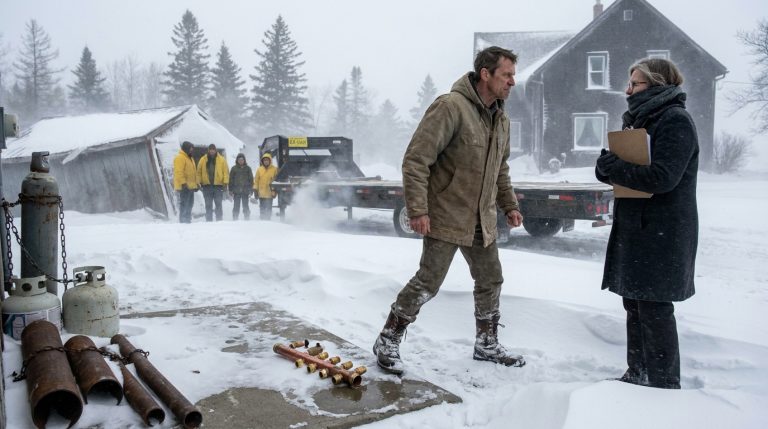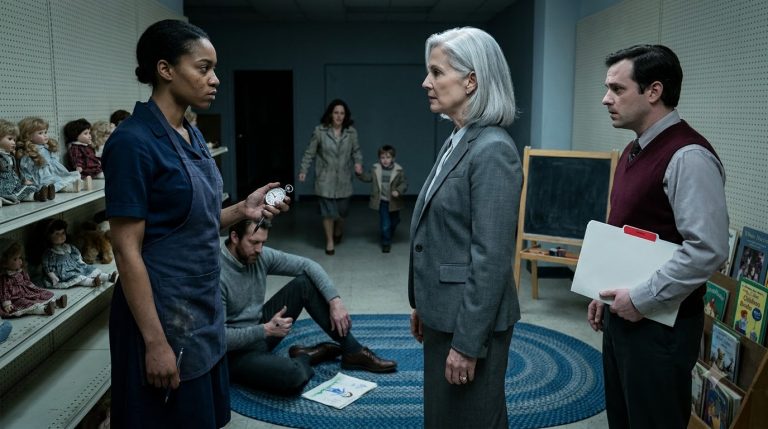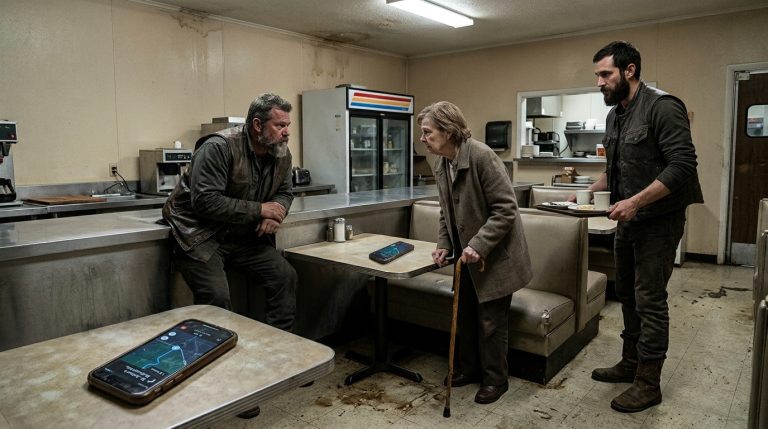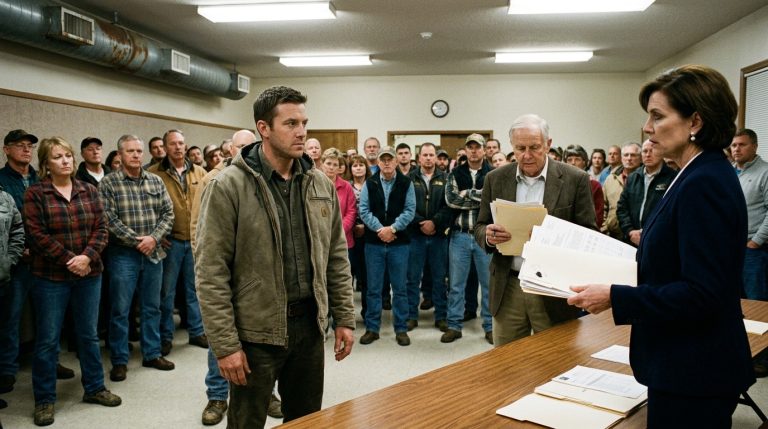
The Iron Cradle: A Legacy Secured Through the Friction of the Michigan Frost
CHAPTER 1: THE COLLAPSE AT THE OAK ALTAR
The smell of old paper and damp wool always settled lowest near the fiction stacks, where the heat from the floor vents couldn’t quite reach. Elena kept her fingers tucked inside the frayed lining of her cuffs, her thumb pressing against the numb, blackened skin of her index finger. It was 4:36 p.m. on a Tuesday, and the light coming through the high arched windows of the Lakeside Public Library had the color of dirty ice.
She had been counting the seconds by the rhythmic, heavy thud of the date stamp at the main desk. Dorothy’s hand was steady—it had been steady for thirty-four years—but Elena’s knees were not. The air inside her chest felt thin, sharp, like she was breathing in crushed glass from the subway grates she’d left at dawn. Eleven months of concrete floor and frozen iron had finally worn through the soles of her boots, leaving only the stiffened cardboard she’d stuffed inside the heels.
A man three tables over turned a page of his newspaper with a crisp, dry snap. To her left, the spine of Where the Crawdads Sing sat slightly askew on the processing cart, its blue cover faded where countless hands had rubbed the corners raw. She had tucked the note forty minutes ago, pushing the square of notebook paper deep into the gutter of page one hundred and eighty-seven, right where the binding glue had started to crack from age. It was the fifty-second square. The paper was rough against her skin, torn from a spiral notebook she’d found in a dumpster behind the transit hub, its margins stained with grey grease.
Her backpack with the split zipper hung from her shoulder like a sack of wet salt. When she tried to shift her weight to the left, her ankle refused the command. The transition from the biting wind outside to the dead, heavy air of the reading room didn’t bring warmth; it only brought the realization that her body had stopped trying to fight the frost. The gray coat, stiff with salt from the Michigan sidewalks, felt less like clothing and more like a iron mold casting her into the floor.
“Elena?”
The voice was distant, muffled by the sound of her own blood rushing through her ears like gravel sliding down a chute. It might have been Dorothy. It might have been the shadow of her mother from sixteen months ago, before the metal-on-metal screech on the interstate changed the color of her world.
The edge of the oak table didn’t catch her. It slid past her cheek, a cold, polished surface that smelled of lemon oil and dust. Her shoulder hit the linoleum first, a dull, unyielding thud that didn’t hurt because the nerves had already gone quiet. As her vision narrowed to a single speck of yellow light on the baseboard heating strip, she heard the soft, distinct sound of a book falling from the cart above her, its pages fluttering open like the wings of a heavy, grounded bird.
CHAPTER 2: THE WEIGHT OF THE KEY
“Don’t touch that valve, Henderson. The packing nut is ancient, and if it shears, we’re dredging the basement by five o’clock.”
Dorothy didn’t look up from her knees. The concrete under her stockings was cold enough to sting, the grey grit of eighty years of coal dust and floor sweepings grinding into the weave of her fabric. “The line’s already dry, Carl. It’s been rattling since the freeze hit on Sunday.”
She squeezed her eyes shut against the sharp smell of old lime and damp iron. The space under the third stall sink was tight, a cramped stone cubicle designed before the city even had an asphalt plant. Her knuckles scraped the raw edge of a rusted iron bracket as she reached deeper into the dark, her fingers tracking the cold, damp sweat of the intake pipe.
Her heart was a heavy, irregular hammer against her ribs, the noise of it competing with the low, grinding vibrations of the transit lines running forty feet beneath the library foundation. Elena’s note was tucked into the tight pocket of her cardigan, the small square of paper stiff and sharp against her chest like a shard of slate. Third stall, women’s restroom. The key is taped inside the cabinet door.
The cabinet door wasn’t wood; it was heavy, stamped sheet iron that had rusted thin along the bottom flange. When Dorothy pulled, the hinge gave a sharp, metallic screech that left a fine dusting of orange scales across her wrists.
“You’re going to break that latch,” Carl grunted from the doorway, his boots shifting on the wet linoleum. The smell of his tobacco and engine grease drifted into the stall, thick and grounding. “The city ain’t replacing anything in this ward until the budget clears in April. Leave it for the morning crew.”
“The morning crew doesn’t look where they’re supposed to,” Dorothy said, her voice dropping into the flat, rhythmic cadence she used for difficult patrons.
Her fingers found the packing tape. It was thick, yellowed with age, and brittle from the constant draft through the floorboards. Beneath the adhesive layer, the cold profile of a small brass key bit into her thumb. Stamped directly into the face of the metal was a single digit: 4.
But it wasn’t alone. Dangling just above the tape from a frayed wire loop was a circular piece of stamped steel—a plumbing inventory tag from 1994, its edges notched with primitive file marks. Dorothy’s thumb caught on one of those notches, the copper burr drawing a bead of dark blood before she could pull back. She didn’t wipe it. She pressed her thumb against the brass key, gluing her skin to the metal with her own stickiness, and ripped it free from the iron panel with a dry, papery snap.
“What’ve you got there?” Carl asked, his shadow lengthening across the stone partition as he leaned in. His eyes, rimmed with the grey soot of the maintenance tunnels, locked on her closed fist.
“A spare for the intake valve,” Dorothy lied, the words tasting like copper in her mouth. She stood up slowly, her knees popping with a sound like dry kindling. She wiped her hands on her apron, the orange rust stains leaving long, dirty streaks across the white linen. “Go lock the front doors, Carl. It’s past nine, and the wind is picking up from the river.”
He stared at her for three seconds, his jaw working on a piece of dead gum. He knew the building’s layout better than the architects who drew it; he knew there wasn’t an intake valve within twenty feet of the restroom stalls. But he also knew the look Dorothy gave when a patron tried to hide a bottle of cheap gin behind the encyclopedias. It was the look that closed arguments before they started.
“Don’t forget to cut the lights in the annex,” he said, turning his heavy shoulders toward the corridor. His boots made a slow, wet sucking sound as he walked away.
Dorothy waited until the heavy oak fire door clicked into its frame before she opened her palm. The key was small, no longer than her middle finger, but the weight of it felt absolute, like a lead sinker dropped into a well. She reached into her pocket, pulled out her phone, and scrolled past the city library board, past the maintenance line, until she found the name Michelle Park.
The library was dead silent now, save for the ticking of the main regulator clock in the lobby. Outside, the wind hit the stained-glass windows over the circulation desk with a loose, rattling vibration.
She pressed the dial icon. The ring was long, hollow, bouncing through the empty stone corridors of her mind before a voice cut through the static.
“Dorothy? It’s late. Is everything all right with the boiler?”
“The boiler is fine, Michelle,” Dorothy said, her voice dropping into the low register reserved for the back rows of the stacks. She walked toward the frosted glass of her office door, her eyes fixed on the dark silhouette of the returned-book cart. “But I need you to find your husband. Tell him I have the receipt for the Bennett girl’s estate, and the lock is at Community Trust.”
There was a sharp catch of breath on the other end of the line—the sound of a woman who spent forty hours a week looking at court dockets and emergency removal orders. “Wolf is at the garage in Delray. He’s working on a cylinder head.”
“Tell him to clean his hands,” Dorothy said, her fingers tightening around the brass number four until the edges left a deep, white indentation in her palm. “The girl didn’t run. She was cleaned out.”
CHAPTER 3: FORENSIC FRICTION
The heavy tumblers inside the vault door groaned with a dry, metal-on-metal friction that vibrated right through Daniel Wolf Hayes’s thick-soled boots. Gregory Simmons didn’t use a digital keypad; he used a long, notched bronze master key that looked like it belonged to a nineteenth-century locomotive. The bank manager’s hands were steady, but the smell of sour sweat clung to his wool suit coat, cutting through the heavy scent of mineral grease and oxidized brass that lived inside the vault walls.
“The time-lock cleared four minutes ago,” Gregory muttered, his shoulder straining against the massive wheel. The outer rim of the steel housing was pitted with tiny pockets of dark oxidation where decades of humid Michigan summers had galled the plating. “But if this key shears off in the secondary gate, Wolf, we’re both explaining it to the regional auditors on Monday morning.”
“The key won’t shear if you don’t jerk the leverage,” Wolf said. His voice was a flat rasp, leveled by twenty-two years of tracking bad paper through the state’s industrial corridors. He stood with his arms crossed over his faded leather vest, the thick cowhide creaking with every breath. His eyes didn’t look at the manager’s face; they watched the center axle of the vault wheel, noting an unusual, deep center groove that had been filed into the steel pin—a non-standard modification that looked too fresh to be original maintenance.
Gregory gave a final, rhythmic heave. The internal brass dogs dropped into their recesses with a sharp, heavy clack that sounded like an iron gate slamming shut on stone. The secondary cage swung outward, its hinges weeping a thin trail of black, carbonized lubricant onto the concrete floor.
“Box four-forty-seven,” Gregory said, pointing a gray finger toward the lowest tier of safety deposit nests where the steel boxes were stacked like grey bricks in a furnace wall. “You’ve got the beneficiary key from the library. I supply the bank master. No one logs this entry on the weekend sheet, Wolf. I’m stretching the line as far as it goes.”
Wolf didn’t offer a thank you. He didn’t waste the breath. He knelt down onto the gritty tile, his knee joints clicking against the floor. The brass number four he had taken from Dorothy’s palm felt small, heavy, and cold against his calloused skin. He lined up the guide groove with the left-hand keyway, while Gregory inserted the long bank key into the right.
“On three,” Wolf said. “Turn away from the hinge.”
The metal fought them. For a half-second, the internal pins inside the small lock cylinder bound tight, seized by a year’s worth of cold cellar dampness. Wolf applied a steady, rotational pressure with his thumb, feeling the microscopic friction of the brass wafers sliding over the notches. Then, the resistance broke with a clean, dry snap.
He pulled the narrow sheet-iron box from its sleeve. The bottom of the container scraped against the steel track, flaking off tiny slivers of grey zinc plating that dusted his knuckles. It had the dead weight of dense paper—not coins or heavy jewelry, but the dull, thick resistance of bundled ledger sheets.
He set the box on the scarred oak inspection table in the center of the vault. Gregory stood by the door, his fingers twitching against the seam of his trousers, his eyes darting toward the security mirror in the upper corner of the ceiling. “Five minutes, Wolf. That’s all the clearance the internal loop gives me before the monitoring station notices the secondary gate is unpinned.”
Wolf flipped the metal latch. Inside lay a single, fat manila envelope, its edges swollen and bound tight with three thick rubber bands that had begun to rot and fuse into the paper surface. He didn’t use a knife; he used the broad blade of his thumb to snap the rubber cords, the old elastic cracking like dry twigs.
The first document out was a hard-bound ledger book with a dark green canvas spine. It looked official, the kind of book a small-town contractor used to balance fuel receipts and weekly labor payrolls. Wolf opened the cover, his eyes skimming past the initial columns of figures.
The handwriting inside was thin, precise, and completely foreign to the teenager currently fighting for breath at Mercy General. It was Thomas Richards’s script—thick black ink, every zero written with a jagged tail that looked like a hook.
“Look at this,” Wolf muttered, his finger tracing a column labeled Project Capital Allocation – Woodland Property.
Gregory leaned over his shoulder, the smell of his mint gum rising into the cold air. “That’s forty-six thousand dollars marked as a direct transfer to an escrow account under the girl’s name. It says here it was for a localized residential investment. A future home.”
“It’s a decoy,” Wolf said, his jaw hardening until the gray whiskers along his throat bristled. He turned the page, his thumb searching for the friction of overlapping margins. He found it three leaves deeper—the edge of a separate, printed sheet that had been glued over the original ledger lines with heavy rubber cement. He wedged his fingernail beneath the seam, peeling back the top layer with a slow, dry tearing sound.
Beneath the false ledger sheet lay the raw, unedited statement from an offshore gaming terminal based out of a Caribbean jurisdiction. The forty-six thousand dollars hadn’t gone to an escrow company; it had been cleared through a clearinghouse in Montreal three hours after it left the Bennett trust account, settled as a lump-sum payment to satisfy a running debt on an international sportsbook.
“He’s running a dual ledger system,” Wolf said, his voice dropping into a register that made Gregory step back toward the iron threshold. “He leaves this green book in the box so if the girl ever gets smart enough to check the bank, she sees a paper trail that looks like long-term property management. It covers the withdrawal sizes perfectly. But the backing sheets are pure blood.”
“Jesus,” Gregory whispered, his face turning the color of wet lime under the vault’s low-wattage bulb. “He didn’t just spend it. He gamed it away while she was sleeping on the transit line.”
Wolf didn’t look up. He pulled his phone from his belt, his thumb hitting the camera interface. He didn’t take artistic shots; he framed the pages flat against the oak surface, capturing the torn edges of the rubber cement, the jagged tails of Richards’s zeros, and the specific confirmation codes from the sportsbook terminal. The shutter clicked seven times, a sharp, digital sound that echoed off the safety deposit doors like small stones hitting a tin roof.
He stuffed the original sheets back into the manila envelope, smoothed the rotted rubber bands back into place, and slid the box back into its dark nest. The metal door clicked shut, the lock resetting with a dull, heavy clink.
“We go to Gonzalez now?” Gregory asked, his hand trembling as he took the master key back from the mechanism.
“No,” Wolf said, stepping out of the cage into the dark corridor where the smell of rain and iron was growing stronger. “Gonzalez handles the paperwork after the border is set. Right now, I need Thunder to call the iron valley chapters. If Richards sees the cops first, he burns the rest of the book. We block the driveway before he gets the chance to clear the kitchen.”
CHAPTER 4: THE IRON GATHERING
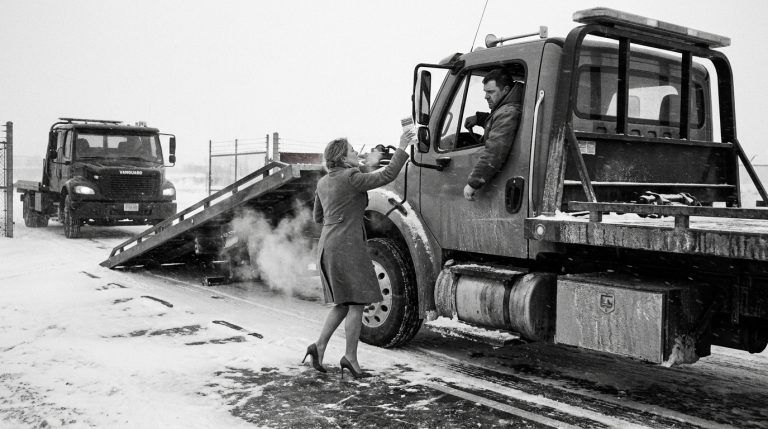
“Move the support trucks past the drainage ditch, Marcus. If that asphalt gives way under the weight of the rigs, we’ll block the emergency lanes before the state transports even hit the exit ramp.”
Raymond Thunder Kowalski didn’t raise his voice to cut through the idle of fifty big-twin engines. He didn’t have to. He stood on the cracked concrete curb outside the secondary entrance to Mercy General Hospital, his boots covered in a fine layer of dry salt from the interstate. The cold wind off the Detroit River carried the smell of raw kerosene and unwashed road grit, whipping the gray hair of his beard against the heavy cowhide of his collar.
“The valley crews just cleared the perimeter fence,” Marcus Stone grunted, swinging down from a machine that looked like it had been put together from salvaged foundry parts. The primary engine block carried a raw, unpolished finish, its serial plate showing an unusual, ground-down edge where the original casting numbers had been manually reset. “We’ve got eighty more bikes holding the western grid. If Richards tries to slip past the side clinics in a commercial vehicle, his tires won’t make it twenty feet before they drop into the utility trenches.”
Raymond watched a line of headlights cut through the dirty river fog. This wasn’t a rally; it was an extraction layout. The machines didn’t carry chrome or custom paint; they were utility tools covered in industrial primer, their frames pitted with the rust of three winter seasons spent running through the salt belts. The weight of four hundred men gathering in a sterile suburban parking zone didn’t look like an outlaw display—it looked like a shift change at a heavy stamping plant, silent, rhythmic, and heavy with the threat of muscle.
“Wolf’s still on the radio with Gonzalez,” Raymond said, his hand checking the heavy steel zipper of his vest. The brass teeth were packed with dry grease, locking out the wind. “The bank documents are already filed with the state prosecutor’s desk. But the prosecutor works on court hours. We work on the countdown. The kid’s got thirteen days left until she hits eighteen, and Richards knows exactly how much ice is left on the river.”
“The kid’s stable,” Luis Shepard Ramirez said, stepping out from the double glass doors of the clinic’s side corridor. He had a clipboard tucked under his arm, the metal clip rusted red along the spring. His fingers were stained with dark grease from the shop floors he handled during the week. “The nurses have her under three layer-blankets. Pneumonia’s settling into her left lung, but her pulse is holding. She asked why the windows were shaking.”
“Tell her it’s just the generator trucks clearing the line,” Raymond said. His jaw set into a hard line that showed the scars from an old grinder kickback under his chin. He looked out at the rows of iron. The men weren’t moving. They sat on their leather saddles with their coats buttoned to the chin, their gloved hands resting on the cold metal of their gas tanks. Every five minutes, a different sector would crack a throttle to keep the plugs from fouling in the damp air, a low, mechanical growl that bounced off the brick walls of the emergency ward like artillery fire.
“We got a problem with the title ledger Wolf pulled,” Shepard muttered, leaning his shoulder against the rusted frame of the outdoor lighting post. “Wrench ran the clearinghouse codes through the state registry while you were out checking the lines. That real estate escrow entry for the forty-six grand? It’s registered to an old industrial parcel down in Delray. A scrap warehouse. But the deed didn’t clear through a standard escrow house. Richards used a secondary lien company that folded three weeks ago.”
Raymond’s hand stopped on his pocket line. “The money’s already out of the state, then.”
“Wrench thinks so,” Shepard said, his teeth clicking together against the cold. “He says the scrap yard is a blind. Richards probably used the physical location to sign for legal mail while he was shifting the cash to the betting syndicate. If the county investigator looks at the surface file, it looks like a bad property investment. A business loss. You can’t jail a guardian for making a poor real estate play, Raymond. The system logs it as a civil dispute and moves on.”
“Wolf’s got the backing sheets from the sportsbook,” Raymond said, his voice dropping below the mechanical hum of the idling machines. “He peeled the rubber cement off the ledger. The real numbers don’t lie.”
“They don’t lie to us,” Shepard replied, looking back through the frosted glass toward the room where Elena lay under the blue glow of the clinical monitors. “But if Richards’s lawyer claims the sportsbook statements were planted in that bank box by someone else to frame him, the judge has to hold the evidentiary hearing before the arrest warrant sticks. That takes thirty days. By then, the girl’s eighteen, the trust dissolves into his estate as the primary fallback, and she’s looking at a blank wall while he clears his passport.”
The sound of a heavy diesel engine broke the rhythm of the parking lot. A dark sedan with unpolished steel wheels turned past the entrance gate, its tires kicking up loose slag from the unpaved shoulder. The driver didn’t use his turn signals. He kept the lights low, the black paint of the body covered in a crust of dried road salt that blurred the registration tags.
Marcus Stone didn’t wait for an order. He shifted his weight, his heavy boots grinding into the asphalt as he cleared his kickstand. Behind him, thirty machines shifted simultaneously, their exhaust notes dropping into a deep, syncopated roar that cleared the birds from the clinic roof. They didn’t surround the car; they simply dropped into a three-deep line across the main exit lane, their steel bumpers forming an unyielding barrier of dead iron against the road.
“He’s here to look,” Marcus said, his eyes tracking the dark glass of the sedan’s front windshield. “He wants to see if the library note actually brought anyone out into the cold.”
Raymond didn’t move from the curb. He reached into his coat and pulled out a small piece of chalk from his pocket—the same white tallow chalk he used to mark iron frames for welding. He didn’t look at the driver. He walked slowly to the edge of the asphalt line, knelt down with his joints groaning against the dampness, and drew a thick, white cross directly onto the stone five feet in front of the car’s front bumper.
The sedan stopped. The brakes gave a long, high-pitched metallic squeal as the pads bit into the rusted discs. The driver didn’t roll down the glass, but the reflection of the dashboard light showed a pale face, a dark wool cap, and two hands gripped tight around the steering wheel until the knuckles were white.
“Thirteen days,” Raymond said to the closed window, his voice carrying through the iron vibration of the bikes. “You’ve got exactly thirteen days to think about how fast this stone gets cold.”
CHAPTER 5: THE EXTRACTION AT WOODLAND AVENUE
The rear bumper of the unmarked transport hit the curb at 2847 Woodland Avenue with a blunt, metallic jar that sent a spray of grey slush across the frozen lawn. Detective Maria Gonzalez didn’t open her door until the auxiliary line of bikes completed the semi-circle around the driveway, their low, heavy idle vibrating the rusted wrought-iron porch railings of the old Bennett homestead.
The gravel under Wolf’s boots gave a sharp, grinding crunch as he swung off his machine. The house was an old two-story brick colonial, its gutters sagging under the weight of uncleaned autumn leaves that had frozen into a solid, black mass. On the porch, a broken plastic tricycle lay tipped on its side, its faded red seat pitted with grey rot. This was the dirt, the slow wear of an estate being eaten from the edges while the city looked the other way.
“The side door’s locked from the inside with a heavy deadbolt,” Wolf said, his voice flat under his collar. His boots left deep, grey impressions in the hard crust of snow as he walked toward the front entrance. “The rear basement windows have steel security bars, but the mortar around the frames is flaking away to dust. If he tries to drop down through the coal chute, he’ll jam himself in the iron grate.”
Gonzalez adjusted the heavy nylon belt of her utility vest, the plastic buckles clicking with a dry snap in the winter air. She carried the folded arrest warrant in her left pocket, the heavy bond paper stiff against her side. “We handle the threshold, Wolf. Your people hold the perimeter line at the sidewalk. I don’t need a procedural dispute on the record when the defense attorney reviews the logging sheets.”
“The street is locked down,” Wolf replied, his eyes tracking the dark, uncurtained windows of the second floor. “He isn’t moving an inch of steel past the curb.”
The front door didn’t yield to the first knock. Gonzalez used the solid iron heel of her flashlight against the peeling white paint of the center panel, the impacts throwing small, dry flakes of lead-based primer onto the welcome mat. From inside, the only response was the dull, rhythmic thud of an old refrigerator compressor struggling against a failing fan blade.
“Thomas Richards!” Gonzalez’s voice was a professional rasp, cutting through the low hum of the idling engines behind her. “State Police. Open the door. I have an authorized warrant for aggravated financial exploitation and grand larceny.”
A curtain shifted on the right-hand window—a thin piece of yellowed lace that had dropped from its middle track. A pale face appeared behind the salt-filmed glass, stayed for two seconds, and vanished back into the grey dark of the interior. A second later, the deep, heavy bolt inside the lock assembly turned with a dry, screeching slide of unlubricated brass.
The door swung back six inches, stopped by a rusted safety chain that strained against its mounting screws. Thomas Richards looked through the gap, his eyes bloodshot, a half-empty tumbler of dark amber liquid held loosely in his right hand. The cuff of his wool shirt was frayed, the grey threads stained with dried grease from a kitchen counter.
“What is this?” Richards asked, his voice thick, his jaw working against a dry cough. “I’m the legal guardian here. This is private property. You can’t park those machines on my easement without a county order.”
“The easement is municipal, Richards,” Gonzalez said. She didn’t waste muscle on the chain. She wedged her boot into the jamb, her thick sole preventing the door from snapping shut. “Unpin the link. The grand jury issued the indictment three hours ago. The bank records from Community Trust are already logged into the evidence file.”
“The bank box was private,” Richards muttered. He didn’t look at Gonzalez; his eyes drifted past her shoulder to where Wolf stood on the bottom step, his arms crossed over his leather vest, his shadow stretching across the snow like an iron bar. “There’s nothing in those ledgers but legitimate property investments. I have receipts for every dollar allocated to the Delray development project. It’s all legal infrastructure management.”
“The Delray development is a scrap yard with an unlisted tax lien, Richards,” Wolf said, his voice dropping into a register that made the glass in the door frame rattle. “The Montreal sportsbook receipts were glued under the green canvas backing sheet. We peeled the paper. The transaction numbers match the electronic withdrawals from the primary trust account down to the second.”
Richards’s hand gave a short, spasmodic twitch, a splash of amber liquid sloshing over the side of his glass and dripping onto the unwashed hardwood floor inside the hall. He reached back with his left hand to force the door against Gonzalez’s boot, but the wood gave a sharp, splitting crack along the lower hinge as the collective weight of the officers pressed forward.
The safety chain didn’t break; it pulled the entire cedar door frame out of its plaster molding with a dry, powdery explosion of old lime dust.
Richards stumbled backward into the dark hallway, his tumbler hitting the floor and shattering into thick, heavy shards of green glass. Before he could clear his boots from the wreckage, the two uniformed officers had his wrists pinned against the peeling wallpaper of the corridor. The steel cuffs went on with a rapid, double click-click that sounded exactly like the vault gate at the bank.
“You have the right to remain silent,” Gonzalez recited, her fingers already unzipping her document pouch to log the entry time. “Anything you say can and will be used against you.”
“The girl was troubled!” Richards shouted, his head pressed hard against a framed photograph of Elena’s parents that hung askew on the wall. His breath left a rapid, expanding circle of steam on the glass cover. “She ran away! I spent thousands trying to track her through the county services! The ledger reflects the logistical cost of securing her future!”
Wolf stepped over the broken glass in the entryway, his eyes focused on a dented, unbranded aluminum lockbox that sat half-visible under the small telephone bench in the hall corner. He didn’t touch it—he knew the rules of the grid—but he pointed down with his thumb.
“The secondary book is in that aluminum box,” Wolf said to Gonzalez. “The one with the altered serial line on the latch. That’s where he keeps the direct routing codes for the offshore gambling syndicate. The green ledger at the bank was just the front window.”
As the officers hauled Richards out onto the porch, his orange-soled jail slippers sliding through the frozen slush, the four hundred men on the street remained perfectly still. No one cheered. No one revved an engine. They simply sat in their leather saddles, their arms crossed, their silent grey eyes following the predator as he was shoved into the hard plastic seat of the transport vehicle.
Raymond Thunder Kowalski stood at the gate, his hand resting on the rusted latch of the picket fence. As the police car pulled away into the river fog, its tires spinning for a brief second on the grey ice of Woodland Avenue, Raymond looked back at the darkened front door of the house.
“The house stays locked,” Raymond said to Marcus Stone, who was already pulling a heavy steel cable lock from his saddlebag. “We wrap the chain around the main pillars. If his legal team tries to clear the files before the forensic team gets the warrant for the structure, they’ll have to cut through three hundred pounds of industrial iron first.”
CHAPTER 6: THE AUDIT OF THE SPOILS
“The primary ledger doesn’t square, Wolf. Not even close. Look at the friction on these margin lines.”
Kevin Wrench Patel threw a heavy, cold binder down onto the rusted surface of the zinc welding table. The impact sent a tiny, sharp cloud of iron dust swirling into the path of the bare halogen bulb hanging from the warehouse ceiling. The air inside the east side clubhouse smelled of stale diesel exhaust, kerosene heat, and the sharp, chemical sting of cold lubricating grease. It was 7:14 p.m., and the temperature inside the uninsulated walls was dropping faster than the oil pressure on an old flathead.
“The bank box documents show exactly one hundred and eighty-seven thousand pulled over seventeen months,” Wolf said, his boots grinding a stray copper washer into the grit on the concrete floor. He kept his gloved hands shallow in his pockets, his gaze fixed on the hard white glare of the laptop screen Wrench had propped up on a stack of tire rims. “That matches the cash vouchers Gregory Simmons pulled from the safe deposit logs. What’s bleeding?”
“The cash isn’t the problem,” Wrench spat, pulling a thick grease pencil from behind his ear to circle a row of red transaction figures. “The problem is the velocity. Look at the dates on these offshore sportsbook accounts. Richards wasn’t just losing the money; he was clearing it into a specific, closed-end clearinghouse registered in the Caymans. The ledger we found under the telephone bench has a separate routing sequence stamped into the leather spine. It doesn’t clear through the bank at all.”
Thomas Anker O’Brien stepped up to the edge of the table, the canvas sleeves of his work coat scratching against the zinc trim. He adjusted his glasses, his eyes tracking the forensic trail with the cold, unblinking mechanics of a man who spent his days looking at fraudulent corporate structures. “He’s right. The forty-six thousand dollars marked for the Delray scrap yard wasn’t a bad investment play. It was a secondary margin call. The sportsbook syndicate didn’t take cash for that block; they took a lien on the family home’s deed. Richards signed the transfer paperwork four months ago using a forged signature block under the girl’s deceased mother’s name.”
Wolf’s jaw tightened until the grey skin along his cheekbones turned the color of dry slag. “The deed is gone?”
“The deed is fractured,” Anker said, his thumb flicking a scrap of charred paper he’d fished out of the clubhouse’s cast-iron barrel stove. The fragment carried three hand-inked characters and the corner of an official county seal. “The lienholder filed a pre-foreclosure notice with the city clerk’s office on the first of the month. That’s why Richards was waiting for March third. He didn’t just need the girl to drop out of the system so he could inherit what was left of the cash; he needed the estate clean so he could surrender the physical property to the syndicate without an estate auditor checking the original signature lines.”
“The girl doesn’t have a house to go back to,” Wolf muttered, the reality settling into the room with the heavy, unyielding weight of a collapsing iron beam. “Even if the state puts him in orange scrubs for the grand larceny, the civil courts lock the real estate until the liquidation clears the lien. That takes years. She’s eighteen in less than two weeks, and she’s starting at absolute zero.”
“Not zero,” Wrench said, hitting a key that sent a cold blue graph stretching across the monitor. “Richards has a three-year-old heavy transport truck parked in a commercial lot down by the docks. The title is still clean—he couldn’t leverage it because the registration was tied to his business partnership with her father. If the prosecutor moves for immediate asset tracking before the defense files for bankruptcy protection on Tuesday, the county sheriff can seize the rig and the Rolex watch he left in his bathroom drawer.”
“The watch is gold plating over iron,” Wolf said, his voice flat. “I checked the casing marks when Gonzalez was loading the bags. It’s a counterfeit. He gamed himself out of the real assets six months ago. The only thing with weight in that house is the copper pipe in the walls and the scrap value of the truck.”
The steel fire door at the end of the bay rattled, its heavy latch sliding back with a wet, heavy click. Luis Shepard Ramirez walked into the glare, his coat covered in a fresh sheen of river sleet. He didn’t drop his keys; he kept them gripped tight in his fist, the iron rings clicking against his knuckles like brass spacers.
“The prosecutor just called from the precinct,” Shepard said, his breath forming a grey cloud under the low bulb. “Richards’s public defender found a loophole in the emergency placement order. Because the girl’s seventeen and technically registered as an active runaway in the adjacent county’s computer system from last September, the county social worker can’t clear her for the transitional housing program without a formal signature from the original guardian of record. That’s Richards.”
Anker let out a dry, rattling laugh that sounded like a loose heat shield. “He’s sitting in a county holding cell on a quarter-million-dollar bond, and the system still asks him for authorization to feed the person he stripped.”
“The law doesn’t care about the grease on the floor, Anker,” Shepard said, stepping over to the table and leaning his weight against the cold metal rim. “It only cares about the ink on the line. If Richards refuses to sign the release form from his cell tomorrow morning, the county has to move her to a juvenile retention facility in Green Bay until her birthday hits on March third. They won’t keep her at Mercy General past Monday. The beds are full.”
Wolf reached down, his fingers tracking the deep file mark on the plumbing tag he’d kept from the library stall sink. The metal was cold, sharp, and real. “He won’t refuse to sign.”
“How do you figure that?” Wrench asked, looking up from his rows of numbers. “He knows every day she’s stuck in a state facility is a day his lawyer can use to tie up the forensic audit. If she can’t meet with Chen to verify the sportsbook statements before the grand jury reconvenes, the indictment defaults to a standard fraud charge. He gets bail dropped to ten percent cash, walks out, and clears his remaining accounts before noon.”
“He’ll sign because he’s a collector,” Wolf said, his voice dropping into a register that made the auxiliary generator in the corner seem quiet. “And collectors understand exactly what happens when the delivery truck stops running. Shepard, get the transport rig ready. We’re parking twelve machines outside the county jail administrative wing at dawn. If his lawyer wants to file paper, he can file it on the hood of a police car while four hundred thousand pounds of iron are clearing the lane.”
CHAPTER 7: THE RECLAIMED BENCH
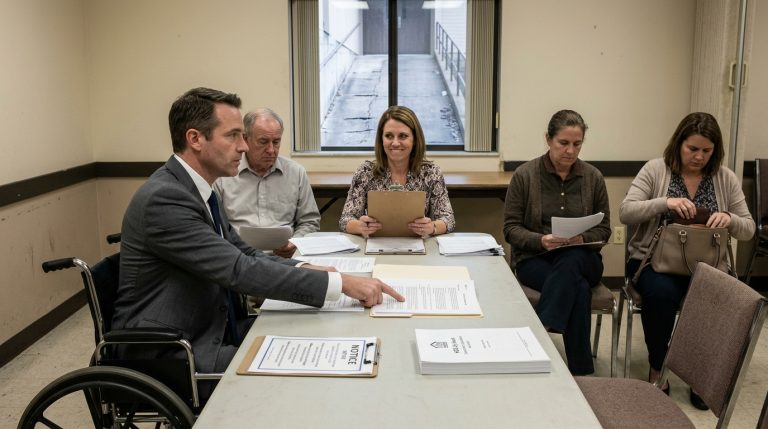
“The defense is moving to strike the Montreal sportsbook routing slips, Chen. If those logs don’t clear the authentication hurdle in the next ten minutes, Richards’s counsel walks the jury right back to the Delray scrap property narrative.”
Elena didn’t look at the man who spoke. She kept her eyes focused on her own right hand, where the thin white ridges of the frostbite scars ran across her knuckles like salt trails on asphalt. She was sitting in the witness room adjacent to Courtroom 3B, her back pressed against the cold, unpolished limestone wall. The air in the courthouse smelled of floor wax, wet heavy wool coats, and the sharp, vinegar tang of old ink. It was May 17th, and the high windows were gray with the promise of a spring downpour that couldn’t quite break the atmospheric pressure.
“The slips are tied directly to the aluminum box we pulled from the hallway floor,” David Chen said. The assistant prosecutor didn’t use a leather briefcase; he carried his files in a battered steel surveyor’s case, its corners pitted with gray rust from years of transport in municipal trunks. He was sorting through a stack of certified bank microfilms, the dry paper scratching against his thumb with a sound like a trowel scraping dry mortar. “Gonzalez secured the warrant verification from the Montreal clearinghouse supervisor at dawn. The defense can rattle the lock all they want, but the pins are already set.”
“They’re going to call her up before the morning recess,” Luis Shepard Ramirez muttered from the corner. He sat on a low wooden bench, his leather vest creaking as he leaned forward, his heavy knuckles resting against his knees. His eyes tracked a small, unpolished steel pin that had been driven into the courtroom balustrade just outside the door frame—a rough, hand-filed structural marker that mirrored the notches on Wrench’s clubhouse tools. “The kid’s got the layout down, Chen. But Richards is sitting ten feet from the podium. He hasn’t taken his eyes off the gate since the bailiff unpinned the transport chains.”
Elena reached down to check the zipper of her sweater. It was a simple gray wool piece Dorothy had bought her from the thrift shop behind the rail yard—coarse, thick, and heavy enough to block the draft coming through the floorboards. “I’m not looking at his eyes,” she said. Her voice was thin, leveled by the months of quiet recovery in the Anderson house, but it carried the flat, hard edge of a chisel striking stone. “I’m looking at the ledger.”
The door to the witness room gave a short, metallic rattle as the deputy turned the brass handle. “Bennett. The state is ready for the foundation testimony.”
The walk down the short corridor to the stand felt like moving through a machine shop during a maintenance shutdown. The air was thick with the breathing of twelve jurors packed into a oak box that creaked with every shift of their weight. In the second row of the gallery, twelve members of the chapter sat in perfect, motionless alignment, their faded cowhide vests dark against the sterile white paint of the courtroom walls. Raymond Thunder Kowalski sat at the center line, his heavy arms crossed over his chest, his gaze fixed on the front edge of the judge’s mahogany bench.
Elena took the step up to the witness enclosure, her boots making a sharp, dry thump on the uncarpeted riser. The wood under her hand was cold, smoothed down by decades of nervous palms, its grain pitted with tiny pockets of old varnish that had flaked away to grey dust.
“State your name for the record,” Chen said, standing three feet from the rail. He didn’t use a microphone; his voice had the flat, unhurried volume of an appraiser inventorying a warehouse yard.
“Elena Rose Bennett,” she said.
“Miss Bennett, I want you to look at the document marked State’s Exhibit Four-B,” Chen said, sliding a heavy, clear plastic sleeve across the oak counter. Inside lay the green canvas-bound ledger book Wolf had extracted from safe deposit box 447. “Do you recognize this object?”
“Yes,” Elena said. Her eyes didn’t drift to the defense table, where Thomas Richards sat with his fingers hooked into the collar of his shirt, his jaw shifting rhythmically as he chewed the inside of his cheek. “That’s the ledger my guardian kept in his desk at the Woodland house before he changed the deadbolts in March.”
“The defense has argued that the entries tracking forty-six thousand dollars to an escrow account in Delray represent a legitimate property management plan for your future benefit,” Chen said, his voice dropping into a register that made the court reporter’s machine click in rapid succession. “Did you ever authorize or receive documentation regarding a residential investment in that district?”
“No,” Elena said. She turned the sleeve over, her thumb pressing against the plastic where the green backing sheet had been peeled away to reveal the raw sportsbook logs beneath. The ink on the hidden sheets was blue, faded, and marked with the jagged tails of Richards’s zeros. “There wasn’t an investment. There was only the scrap yard lien. He used the physical address to sign for the tax notices so the notices wouldn’t be mailed to the library or the social services center where I was trying to file the tracking applications.”
The defense attorney stood up, his leather heels clicking hard against the linoleum. “Objection. The witness is drawing conclusions regarding municipal tax liens that are outside the scope of her personal knowledge.”
“The knowledge is in the foundation, Your Honor,” Chen said without looking back. “The state has already entered the certified filings from the city clerk’s office showing the lien was executed using a forged signature under the name of David Bennett—the witness’s deceased father. The witness was living on the Jefferson Avenue heating grates while the suspect was using the family home as collateral to clear his margin debt with the Montreal clearinghouse.”
The judge didn’t use her gavel. She merely tapped the side of her pen against the unvarnished oak block on her desk—a dry, rhythmic sound that cut through the low murmur in the gallery like a hammer hitting a nail. “Objection overruled. The witness may answer as to what she observed regarding the mail delivery.”
Elena looked straight at Richards then. For the first time in sixteen months, the space between them didn’t feel like a frozen subway tunnel where she was hiding her boots from the wind. It felt like an accounting desk.
“The mail didn’t come to the house anymore after August,” Elena said, her voice dropping into the steady, unyielding rhythm of the library regulator clock. “He had it routed to a post office box near the greyhound terminal. I found the brass box key hidden inside his tire iron sleeve in the garage before he threw me out with fifty dollars. He didn’t lose the money on a bad property play. He gamed it out until the walls were bare, and then he waited for the winter to finish the clean-out.”
Richards didn’t jump up. He didn’t shout. He merely let his head drop two inches, his forehead resting against the yellow legal pad where his lawyer had been scribbling notes about procedural delays. The yellow paper remained clean. There were no more extensions left on the grid.
CHAPTER 8: THE NEW THREAD
The third-grade textbook had a split fabric spine that let out a tiny puff of grey adhesive dust every time Marcus turned the page. Elena watched the boy from the edge of the low laminate work table, her fingers tapping rhythmically against the plastic border of her visitor badge. The afternoon air inside Lincoln Elementary smelled of industrial lemon cleaner, wet floor rugs, and the sharp, hot scent of ancient radiators working overtime against the early winter draft. It was six months since the verdict had cleared the docket, but the weight of the city didn’t change with a court stamp; it just shifted to a different shoulder.
“Look at the margin layout on problem three, Marcus,” Elena said, her voice dropping into the flat, even cadence she had learned from Dorothy behind the circulation desk. “You don’t have to carry the index number over the line if the column baseline is already dry. Just align the zeroes.”
The boy didn’t look up from the yellow paper. His fingers were short, the nails clipped low and edged with fine borders of grey soot from an old wood-smoke furnace. His coat—a oversized navy canvas piece with a missing plastic tooth in the primary zipper track—hung off the back of his chair like a sack of damp sand. He had been sitting in the back row for three weeks, his answers arriving in short, transactional grunts that matched the specific silence Elena had kept for eleven months on the grates.
“My uncle says the columns don’t matter if the yard manager doesn’t log the delivery slip anyway,” Marcus muttered, his pencil dragging a heavy, blunt graphite line across the grid paper.
Elena’s gaze fixed on a small object half-tucked into the broken lining of the boy’s textbook sleeve—a narrow, hand-notched brass card key that carried three primitive notches along its long edge. It wasn’t a standard residential key; it was a tracking index tag used for commercial storage lockers down by the river docks, the metal oxidized down to a dark, oily brown. She knew the texture of that specific brass. She knew the exact weight of a life that had to be filed away in hidden corners where the county inspectors didn’t check.
“The yard manager logs what he’s paid to log,” Elena said, her voice dropping into a register that made the lead teacher, Mrs. Patterson, pause by the chalkboard three rows away. “But the backing sheets don’t go away just because the office box is locked. Someone always counts the iron.”
She reached into her backpack—the new one, with heavy brass slides that shut with a clean, mechanical lock—and pulled out a narrow stack of printed index cards. They weren’t decorative. They were stiff, white cardstock cut down to library size on the heavy manual paper cutter in Dorothy’s office, their edges rough and straight. Each card carried her name, a phone line routed directly to the clubhouse annex desk, and a single, ink-stamped line across the center: If you need help, I believe you.
She didn’t hand the card to the boy’s fingers. She didn’t force a choice he had been trained to reject by the system outside the glass doors. She simply slid the white corner into the split fabric of his textbook spine, right next to the notched brass key, until the paper sat flush with the binding glue.
“Dorothy’s at the desk until nine tonight,” Elena said, her thumb smoothing down the dry canvas of the book cover. “The heat vent in the fiction alcove is still clear, and the water line under the stall doesn’t rattle anymore. If the walk down from the scrap yard gets too cold before the transit trucks clear the lane, you look for the red coat by the processing cart.”
Marcus stopped his pencil. His eyes, dark and rimmed with the exhaustion of a household running on survival hours, tracked the white edge of the paper for three seconds. He didn’t pull it out. He didn’t drop it in the waste bin. He merely closed the book with a heavy, dry snap that sounded exactly like the small brass key hitting the sink cabinet panel six months ago.
“The wind is coming off the river early today,” the boy whispered, his shoulders tightening under the canvas coat as he shoved the book into his frame pack.
“Let it come,” Elena said, standing up as the dismissal bell broke the classroom silence with a loud, mechanical ring that vibrated right through the concrete floor. “We’ve already reinforced the door.”
As the children filed out into the grey November slush, their boots leaving long, wet salt trails across the linoleum, Elena walked to the window. Outside, parked along the municipal curb past the school fence, a single heavy transport truck sat idling in the fog, its clean chrome stack throwing a thin, steady line of dark exhaust into the cold air. Luis Shepard Ramirez sat behind the wheel, his gloved hand resting flat on the steering rim, his eyes tracking the exit door with the unblinking watch of a guard who didn’t plan on moving until the grid was clear.
Elena pulled her red coat off the hook by the door. The fabric was thick, bright, and fitted tight against the cold, impossible to miss against the grey brick of the city. She didn’t look back at the empty desks; she walked straight out into the wind, her boots hitting the concrete with a solid, unyielding friction that knew exactly how much iron it took to hold the ground.