The Architect of Silence: A Bitter Siege for the Soul of the Forest and Soil
CHAPTER 1: THE WEIGHT OF A SMILE
The sun was doing its best to bleach the color out of the world, but the woman in the tailored gray suit brought her own shade of cold. She stood on my porch, an anomaly of sharp lines and synthetic perfection against the weathered, honest wood of the house my grandfather had built. Her sunglasses acted like two polished obsidian mirrors, reflecting my own guarded expression back at me.
“We’ll see who has the right,” she said. It wasn’t a question. It was a weather report for the coming storm.
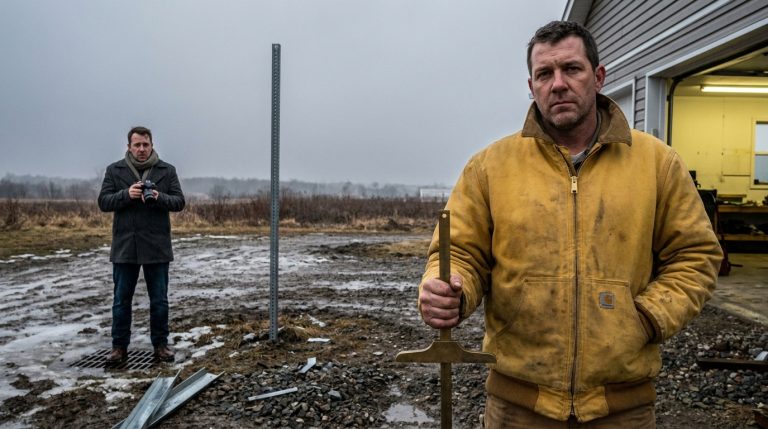
I didn’t step back. I didn’t offer the polite, weary deflection most people gave when faced with the HOA’s glossy folders. I kept my hands in the pockets of my canvas jacket, feeling the rough texture of a survey stake I’d pulled from the perimeter line that morning.
“The right to what, Alice?” I asked, keeping my voice level, though my heart was a rhythmic hammer against my ribs. “To pave over a century of root systems? To turn a sanctuary into a commute?”
She smoothed the edge of her clipboard. It was a sterile, sharp-edged thing, and the way she held it made me think of a scalpel. She didn’t look at the trees, the sprawling, ancient oaks that were currently casting long, jagged shadows across the grass. She looked past them, through them, already seeing the concrete she intended to pour.
“Maple Ridge isn’t just a neighborhood, Aiden. It’s a legacy of growth,” she replied, her tone as smooth and dangerous as ice. “Growth requires sacrifice. Some of it is… logistical.”
“Logistical,” I repeated, tasting the acid in the word.
I looked down at the porch floor. A single survey stake, painted bright, warning orange, lay near the threshold. I hadn’t put it there. Someone had placed it silently while I was busy with the morning bird count, a marker of intent—a literal line in the dirt that shouldn’t have been there. It was the first physical discrepancy of the day, a jagged error in the geometry of my peace.
She turned to leave, her heels clicking against the wood with a sharp, rhythmic precision that echoed long after she reached the gravel path. She didn’t look back. She didn’t have to. She moved with the predatory confidence of someone who had already decided the land was dead, simply because it didn’t have a price tag she couldn’t print.
I watched her walk toward the pastel-colored suburban sprawl that had crept to my border like a slow, manicured fungus. As she disappeared around the bend, the silence of the forest returned—but it felt different. It felt brittle. And then, from somewhere deep in the treeline behind my house, came the faint, high-pitched whine of a drone rotor, hovering, watching, waiting for the first sign of my fatigue.
CHAPTER 2: THE VULTURES EYE
The sound was a dry, insectile buzzing that chewed at the silence of the forest. It wasn’t the natural rustle of wind through oak leaves or the distant, mournful cry of a hawk. It was a synthetic, high-frequency whine—a drone hovering somewhere above the canopy, its presence an invisible finger pressing against the back of my neck.
I didn’t look up immediately. Looking up was a reaction, and reactions were exactly what they wanted. Instead, I turned back toward the house, my boots crunching rhythmically on the dry pine needles. The forest floor here was a labyrinth of history, a complex, ancient architecture of root and decay that I knew better than the palm of my own hand. But the air felt thin today, charged with the static of unwanted surveillance.
As I reached the porch, a sudden, sharp memory flared—a flash of my grandfather’s face, etched with the deep lines of a man who had survived a different kind of war. “Aidan,” he had said once, while showing me how to clear a blocked drainage channel, “if someone wants to take your ground, they don’t start with the fence. They start by convincing you that the ground is already theirs to fix.”
The words felt like a physical weight, heavier than the survey stake still in my pocket. I looked at the edge of the property line, where the vibrant, unkempt green of my woods collided with the sterile, manicured turf of Maple Ridge. I saw a cluster of survey flags, thin wires topped with neon plastic, fluttering in the breeze. They hadn’t been there at dawn. I walked toward them, the drone’s hum shifting in pitch, tracking my movement like a curious, malevolent eye.
I reached the first flag and yanked it from the earth. The resistance felt like tearing a scab off a wound. Beneath the flag, the soil wasn’t just dirt—it was damp, unnaturally so, even though we hadn’t seen rain in weeks. I knelt, pushing aside the leaf litter. There was a depression here, a subtle, man-made contour that shouldn’t have been part of the natural slope. My grandfather’s words echoed again. This wasn’t just a boundary dispute. They were re-engineering the topography. They were preparing for a deluge I hadn’t been told about.
I stood up, the damp soil staining my fingers, and looked directly at the camera lens I knew was hidden somewhere on the drone’s underbelly. I didn’t hide my face. I wanted them to know I had seen the dirt. I walked back to the house, my pace deliberate and slow, refusing to break into a run. Every step was a tactical calculation.
Inside the house, the air was cool and smelled of old paper and cedar. I went straight to the study—the room that held the physical proof of my rights. I ignored the modern laptop on the desk and reached for the heavy, leather-bound tube holding the original land surveys from the late thirties. As I unrolled the brittle vellum, the texture of the paper beneath my fingers felt like armor.
I cross-referenced the coordinates with the drainage maps I’d printed from the county archives earlier that week. The discrepancy was small, a fraction of a degree, but it was enough to shift the entire water table flow toward the western basin—exactly where the development’s proposed corridor would cut. They weren’t building a path to the highway; they were building a spillway.
My phone vibrated on the desk, a sharp, jarring noise in the quiet room. A text from an unknown number: “The boundary isn’t just about land, Mr. Sloan. It’s about infrastructure. Don’t be a casualty of progress.”
I didn’t reply. I dropped the phone into a metal kitchen pot and slid the lid on, muffling the signal. I didn’t need their messages. I had the maps, the damp soil, and the sound of the drone still vibrating in the air outside. The game had shifted from a polite threat to a calculated war of attrition, and for the first time in years, the forest didn’t just feel like a sanctuary. It felt like a trench.
I walked to the window, the glass cold against my forehead. The drone had moved, hovering now just above the clearing where the oldest oak tree stood, its rotors casting a distorted, flickering shadow across the trunk. They were waiting for me to react, waiting for me to break. Instead, I picked up a pencil and began to mark the exact locations of the unauthorized stakes on the original deed.
If they wanted to change the shape of my land, I would give them a masterclass in geometry. I wasn’t going to just watch them; I was going to map every inch of their fraud until the foundations of their entire development began to look as shaky as the promises they’d made to the residents of Maple Ridge.
CHAPTER 3: THE PAPER TRAIL
The graphite snapped. It was a clean, jagged break that sent a splinter of lead skittering across the brittle vellum of my grandfather’s original survey. I stared at the mark I’d just made—a dense, dark smudge over the western basin. My hand was shaking. Not from fear, but from the sudden, sharp clarity of the realization.
I sat back in the creaking wooden chair, the sound of the house settling around me. Outside, the drone’s hum had finally receded into a distant, mocking buzz, but the tension it had left behind was still wired into the very air. I looked at the maps again, lining up the county’s drainage projections with the HOA’s “Phase 4” expansion grid. It was perfect. Too perfect.
The corridor they were demanding didn’t just cut through my land; it channeled the entire runoff from the newly paved streets of Maple Ridge directly into the heart of my forest. If they paved that 50-meter slice, the heavy, manicured slopes of the development would act like a slide, dumping thousands of gallons of diverted stormwater into the lowest point of my property—my house.
They weren’t just taking the land; they were ensuring that even if I won the legal right to keep the acreage, I wouldn’t be able to live on it. They were weaponizing the water.
I stood up and paced the narrow confines of the study. My boots felt heavy, grounding me, yet my thoughts were racing. I needed to see what the private investigator had actually found. I walked over to the floor-safe, hidden behind a stack of weathered biological journals, and dialed the combination with practiced, steady fingers. The heavy steel door swung open with a dry, metallic protest. Inside, the manila folder sat like a bomb.
I pulled it out and spread the contents across the desk. There were emails, mostly dry bureaucratic correspondence between the HOA board members and a third-party contracting firm I hadn’t heard of before: Apex Earthworks. I recognized the name from the trucks I’d seen idling near the development’s perimeter fence.
I flipped through the pages until I reached the back—the records of financial transactions. My eyes narrowed. The payments weren’t coming from the HOA’s general fund. They were being funneled through a series of shell accounts that traced back to a holding company registered to a name that made my blood run cold: Strange & Associates. Alice wasn’t just the HOA president; she was the architect of the firm that stood to profit the most from the “clearing” and “grading” of my forest.
It was a conflict of interest so profound it was practically a confession. But as I traced the routing numbers, a cold, creeping doubt began to settle into my gut. Something wasn’t right. The scale of the money involved was astronomical—far more than any simple suburban expansion would warrant. I looked at the maps one more time, focusing on the boundary line where my land met the development.
I noticed a detail I’d missed before. A small, shaded area labeled “Restricted Access – Utility Conduit.” I grabbed my magnifying glass, the lens distorting the fine, cramped ink of the county survey. There, buried in the legal jargon of a thirty-year-old addendum, was a reference to a fiber-optic relay station buried somewhere beneath the western basin.
My perception of the room shifted. The bookshelves, the desk, the very floorboards suddenly felt precarious. I had been looking at the land as a biologist, as a steward of roots and soil. I hadn’t been looking at what might be buried underneath.
I walked to the window and looked out at the forest. The shadows were lengthening, turning the trees into stark, looming silhouettes against the dying light. I realized then that my paranoia wasn’t just a reaction to the drone; it was a necessary survival instinct. I wasn’t just fighting a neighbor; I was standing on top of something they couldn’t afford to have exposed.
I pulled out my burner phone. It was time to stop being polite. I dialed the private investigator, my voice dropping into the cold, sharp register of a man who had finally stopped playing by their rules.
“I have the maps,” I said, ignoring the usual pleasantries. “And I think I know why they’re so desperate to clear that corridor. It’s not about the highway, and it’s not just about the drainage. It’s about the easement beneath the basin. Find out who owns the rights to the utility line that runs through that sector. And do it yesterday.”
I hung up, the silence of the room rushing back in, heavier than before. The stakes had just fundamentally changed. I wasn’t just protecting a forest anymore; I was potentially sitting on a piece of leverage that could tear the entire HOA administration apart. I walked to the front door, my hand resting on the heavy deadbolt, and listened.
The forest was quiet—too quiet. The birds had stopped their evening chorus. I felt a sudden, sharp prickle of cold on my skin, the unmistakable sensation of being watched from the treeline. I didn’t turn on the porch light. Instead, I grabbed my heavy-duty flashlight and stepped out into the darkness, ready to see exactly what had finally come to knock on my door.
CHAPTER 4: THE DRAINAGE BASIN STANDOFF
I stood on the porch, my hand still gripping the cold, iron deadbolt, when the lights went out. The darkness wasn’t a gradual fading of evening light; it was a physical weight that dropped over the yard, a sudden, absolute absence of visibility that turned the world into a canvas of shadows.
I didn’t move. Moving would be a mistake. Instead, I waited, my pulse a steady, measured thrum in my ears. I felt the sharp bite of the night air against my face, smelling the damp, earthy scent of the forest that I now knew was being poisoned by intent.
There was a sound—a soft, metallic snick from near the edge of the porch, like the deliberate snip of wire cutters.
“I know you’re there,” I said, my voice barely more than a whisper, yet it carried the flat, unyielding tone of a man who had nothing left to lose.
No one answered. The only sound was the rustle of leaves where the boundary of my woods met the manicured edge of Maple Ridge. I didn’t reach for a weapon—I didn’t have one—but I reached into the pocket of my jacket and clicked on my heavy-duty, high-lumen tactical flashlight.
The beam hit the darkness like a physical blow. It slashed through the night, white and unforgiving. I swept the light across the yard, expecting to see a trespasser, but the clearing was empty. Then, the beam caught it: the drainage grate at the far edge of the property, the one that led into the western basin. It had been tampered with. The heavy iron cover was offset, revealing a hollow space beneath that should have been sealed solid.
I stepped off the porch. The grass under my boots felt slick, the damp soil already beginning to churn under the weight of the night’s activity. As I moved toward the basin, the beam of my light flickered, then stabilized. I could see the fresh churn of earth, the distinct, boot-heavy tracks leading from the development’s perimeter fence directly to the grate.
They weren’t just probing anymore. They were actively redirecting the flow.
I reached the basin and knelt, the rough, wet edges of the concrete scraping against my shins. The cavity beneath the grate was filled with black, industrial-grade piping, an unauthorized modification that snaked deep into the ground. It wasn’t just a drainage fix; it was a subterranean bypass. I shone the light down the pipe. It was massive—wide enough to swallow the runoff of an entire neighborhood—and it pointed directly toward the low point of my foundation.
Clack.
The sound of a heavy door slamming shut echoed from the development side of the fence. A flashlight beam, stronger than mine, blinded me from the treeline.
“You’re out of your depth, Mr. Sloan,” a voice called out. It was familiar—smooth, controlled, and utterly devoid of empathy. It wasn’t Alice, but it carried the same cadence of detached, corporate arrogance. A man stepped into the periphery of my light, dressed in dark work gear, his face obscured by the high-intensity glow of his own beam.
“This isn’t a drainage fix,” I retorted, standing up. My shadow stretched long and distorted against the trees. “It’s a liability, and you’re trespassing on private property.”
“We’re ‘remedying a structural deficiency’,” the man said, taking a step forward. He didn’t look like a construction worker; he moved with the practiced, predatory grace of a professional closer. “Your land is a bottleneck. We’re simply easing the flow. If you fight this, the court won’t see a biologist protecting a tree. They’ll see a man holding up critical infrastructure that prevents flooding for three hundred families.”
He was good. He was selling the Layer 1 decoy so well that for a second, I almost believed he was the one in the right. But I looked back at the pipe—the industrial-grade diameter, the depth of the burial—and I knew better. This wasn’t about flooding for the neighborhood. It was about clearing a path for whatever they had buried under the relay easement.
“Three hundred families,” I said, my voice hardening. “Is that what they told you? Or did they just give you a paycheck to look the other way while they dig up the past?”
The man hesitated. It was a subtle, almost imperceptible hitch in his posture—a flicker of doubt. I had touched a nerve.
“This is done,” he muttered, his hand moving toward his radio.
“It’s not done,” I said, and before he could signal his team, I did the only thing I could do. I swung my heavy-duty flashlight and struck the base of the nearest support post for the temporary fencing they’d erected. The wood snapped with a sharp, echoing crack, and the entire structure collapsed, triggering a chain reaction that sent the warning markers and the unsecured piping sliding back into the ditch, creating a chaotic, noisy obstruction that blocked his path.
He swore, struggling to scramble over the mess. I didn’t stay to argue. I turned and ran back toward the house, my lungs burning, the darkness suddenly my greatest ally. They had expected a polite, intellectual protest. They hadn’t expected me to turn their own infrastructure into a hurdle.
I burst through the back door and slammed the bolt home, leaning against the wood, gasping for breath. The house was silent, but it felt different now. I wasn’t just a homeowner. I was the last line of defense, and for the first time, I knew exactly where to strike back.
CHAPTER 5: THE COURTROOM CRUCIBLE
The air in the courtroom was stagnant, thick with the scent of floor wax and the low, muffled hum of people waiting for a verdict that had already been decided in the backrooms of the city. I sat at the mahogany table, my blazer feeling stiff and foreign against my skin. Across the aisle, Alice Strange sat like a statue in a suit of sharp, tailored gray. She didn’t look at me. She didn’t have to. She was surrounded by a phalanx of legal counsel, their movements synchronized, their expressions polished to a mirror finish.
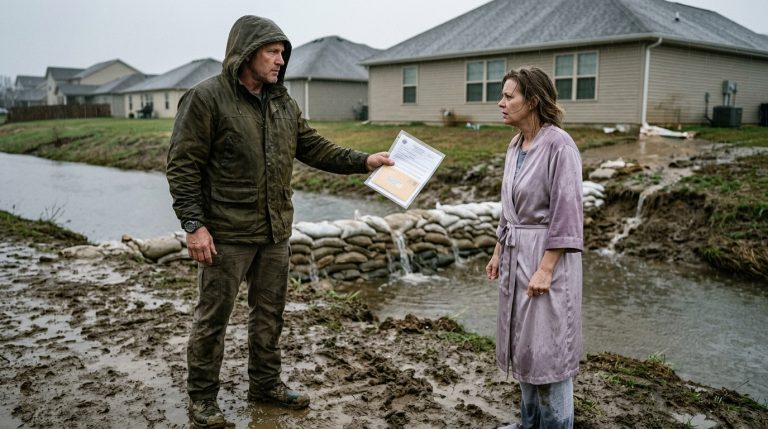
I reached into the leather bag at my feet. My fingers brushed against the rough texture of a document I’d salvaged from the mud near the drainage basin the night before. It was a permit, crumpled and damp, but the watermark of the county clerk’s office was unmistakably clear. It wasn’t a drainage permit. It was a zoning variance for a fiber-optic relay station, signed by the clerk himself and dated three years prior—well before the HOA’s current expansion plan existed.
The judge—a man with heavy, tired eyes—tapped his gavel. “Mr. Sloan, you may proceed with your argument.”
I stood. My legs felt heavy, as if I were moving through water. I didn’t look at the judge. I looked at Alice. “Your Honor,” I began, my voice steady despite the adrenaline spiking in my chest, “the defense claims that the development project is a necessary infrastructure upgrade to manage local flooding. They’ve framed this as a case of public safety versus individual stubbornness.”
I pulled the permit from my bag and laid it on the table. It looked small, insignificant against the sprawling, official-looking charts the HOA had plastered on the wall behind them. “But this is not a drainage project. It is a cover for a private easement, hidden beneath the guise of ‘public infrastructure’ to bypass the oversight that a proper zoning review would have required.”
A ripple of murmurs moved through the gallery. Alice didn’t flinch, but the lawyer beside her leaned in, whispering urgently into her ear. She turned her head, her gaze finally meeting mine. There was no fear in her eyes, only a cold, calculated interest, as if she were assessing a chess move she’d already anticipated.
“Mr. Sloan,” the judge interrupted, his tone dry, “relevance?”
“The relevance, Your Honor, is the fraud,” I said, my voice rising. “They aren’t trying to save the neighborhood from a flood. They are trying to extract a private asset that was signed over in a backroom deal before the development even broke ground. If you allow them to clear this corridor, you are not approving a drainage basin. You are destroying a historic forest to facilitate a private payday for the people sitting across from me.”
I walked toward the defense table, stopping just short of Alice. “Is that right, Alice? Is that what this ‘legacy’ of growth is really about? A payoff for the zoning variance you needed to secure the relay?”
The courtroom went dead silent. The air seemed to crystallize. For a moment, the mask slipped. I saw the flash of something—not just arrogance, but the raw, naked fear of someone who had gambled everything on a deception and was now watching the cards reveal themselves. She opened her mouth to speak, but the words faltered.
The judge leaned forward, his tired eyes suddenly sharp. He looked at the permit I had submitted into evidence. He looked at the maps on the wall. The HOA’s lawyer stood up, his face flushed, starting a frantic objection, but the judge raised a hand to silence him.
“Mr. Sloan,” the judge said, his voice quiet, “who provided you with this document?”
“I found it, Your Honor,” I said, my voice unwavering. “Right where they thought it was safely buried.”
I looked back at Alice. She was staring at the document on the judge’s bench as if it were a physical blade pressed against her throat. The orderly, sterile architecture of her plan was coming apart, not because of a grand speech, but because of a single, forgotten piece of paper. The shift in the room was palpable—a turning of the tide. The lawyers who had been so confident, so dismissive of the ‘woodland hermit,’ were now scrambling, their papers shifting, their whispers frantic.
I took a breath, the weight in my chest beginning to lift. I had expected a long, protracted fight, but the foundation was already cracked. I had forced them into the open, and for the first time, they were the ones who looked out of place in the sterile, unyielding light of the law. I walked back to my seat, feeling the eyes of the room on me. The endgame had begun, and for the first time since this started, I was the one holding the momentum.
CHAPTER 6: THE QUIET AFTERMATH
The walk to the car was a blur of flashing cameras and shouted questions, but the noise felt distant, like a television left on in another room. I didn’t stop for the reporters. I didn’t owe them a soundbite, and I certainly didn’t owe Alice Strange the dignity of a final word. I simply unlocked the truck, the metallic click of the key echoing in the suddenly vast parking lot, and drove away.
The drive back to the forest was slow. Every mile felt like shedding a layer of armor I’d been wearing for months. When I finally turned onto the dirt track that led to my grandfather’s house, the canopy of trees closed over me, the filtered light casting dappled, golden patterns on the hood of the truck. The air here smelled different—pine, damp earth, and the faint, metallic scent of ozone that always followed a storm. The house stood exactly where I had left it, the porch still leaning a fraction to the left, the roof still patched, but for the first time in an eternity, it didn’t feel like a bunker. It felt like a home.
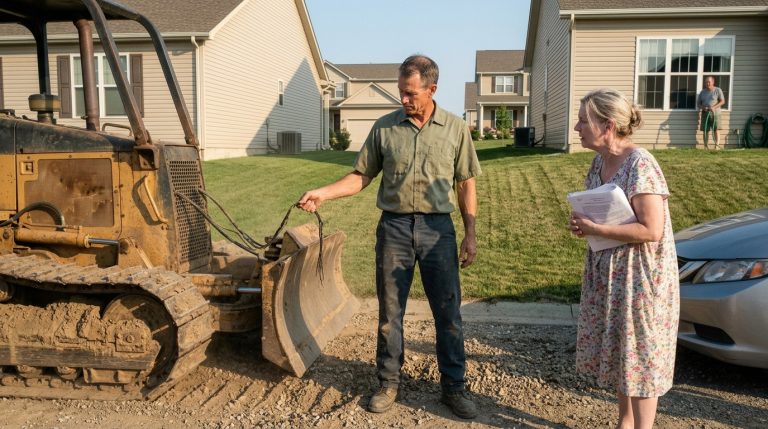
I stepped onto the porch. The boards under my boots didn’t shiver this time; they were steady. I walked to the edge of the property line, where the forest met the manicured turf of Maple Ridge. The heavy, industrial pipes I’d caused to collapse in the night had been cleared away, and the disturbed earth was being leveled by a small crew of workers—not the ones from Apex, but local laborers who looked up and offered a tentative, respectful nod as I approached.
I didn’t acknowledge them, but I stood there for a long time, watching the work. The “corridor” was dead. The legal documents I’d brought from the courthouse would ensure that no such development would touch this ground for the duration of the current zoning cycle, and likely much longer. The “infrastructure improvement” had been exposed for what it was: a desperate, fraudulent maneuver to settle a decades-old political debt between the county clerk and the firm backing Alice Strange. Alice herself had been stripped of her position, and the investigations—now public—were dismantling the HOA’s influence board by board.
I walked to the patch of ground where I’d found the permit. I knelt, the soil cool against my palms. I wasn’t just checking the boundary; I was reclaiming the history of the place. I pulled a small trowel from my jacket pocket—a tool I used for transplanting rare wildflowers—and began to carefully pat the earth back into place, smoothing out the scars of the construction. It was a slow, deliberate motion, a physical act of repair that grounded me in the present.
The house creaked behind me, a low, familiar sound that was no longer a threat, but a settling. I thought about Alice. She had moved away three days ago, a ghost in her own neighborhood, leaving behind a legacy of empty promises and broken contracts. She had believed that power was something you could manufacture with clipboards and blueprints, that truth was merely a variable in an equation of growth. She hadn’t understood that true power is tethered to the ground, to the long-standing, quiet roots of things that don’t need a committee to justify their existence.
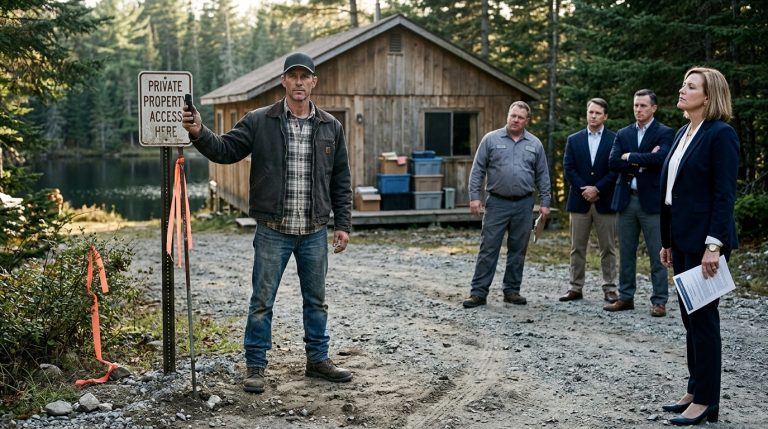
I stood up, brushing the dirt from my jeans. The fence I had built along the boundary was standing firm, a clear, unequivocal barrier between my world and the one that had tried to consume it. I had installed the cameras and the signs, and while some might call it paranoia, I called it clarity. I had fought, not because I was a hero, but because there was no other option. When the storm hits, you either step aside and let the history get paved over, or you dig in.
I walked back to the porch and sat on the swing, the chains groaning softly in the breeze. I pulled a bottle of whiskey from the shelf near the door—a gift from the elderly neighbor who had thanked me after the verdict—and poured a small, amber measure into a glass. The sun was beginning to dip below the treeline, bleeding a deep, bruised purple across the horizon.
The forest was silent. Not the empty, threatening silence of the standoff, but the heavy, vibrant quiet of a living, breathing thing. I heard the snap of a twig—a deer, perhaps, or a fox—making its way through the underbrush. I raised the glass to the darkening woods.
“Let them try,” I murmured.
The weight of the last few months seemed to evaporate in the cool evening air. I realized then that my grandfather hadn’t just left me an inheritance of trees and soil; he’d left me the understanding that peace isn’t a passive state. It’s something you hold, something you defend with every bit of stubbornness you have. I had saved the forest, but in the process, I’d found the resolve to finally stand on my own ground.
I set the glass on the porch railing and watched the first stars begin to prick through the canopy. The house was solid, the land was safe, and for the first time in years, the future didn’t look like a threat. It looked like a long, steady stretch of peace, waiting to be lived.