The Weight of the Paper Trail: A Cold Reckoning for the Gates of Blackwood Estates
CHAPTER 1: THE FIRST SNAP
The morning air held that particular sharpness that comes just before the sun clears the tree line. It smelled of damp earth and coming heat, but the silence—the heavy, private silence I’d paid to inhabit—was shredded by the mechanical cough of an idling excavator.
I stood by the edge of my gravel drive, my boots sinking slightly into the soft, unkempt shoulder of the lane. Thirty yards away, a man in a high-visibility vest was tightening his grip on a pair of heavy-duty bolt cutters. He didn’t look at me. He didn’t need to. He had his orders, and in his world, orders were an armor that made him untouchable.
Beside him, a white SUV sat parked at an angle that effectively blocked the only path out of my property. Pamela Wexler stood ten feet away, her posture as rigid as the decorative iron gate that defined the Blackwood Estates boundary. She was holding a steaming coffee cup, her eyes shielded by designer lenses that turned the world into a muted, gray reflection. She wasn’t looking at the land. She was looking at her phone, her thumb dancing across the screen with the practiced rhythm of a conductor.
I didn’t yell. I didn’t run. I reached into my pocket, keyed the record function on my device, and let the silence hang between us, heavy and metallic.
Crack.
The chain gave way. The metal links fell into the dirt with a final, unceremonious thud. The gate swung inward, invading the space I had meticulously maintained as mine.
“Stop right there,” I said. My voice wasn’t loud, but it possessed the flat, controlled cadence of a man who spent years recording the truth for a living. It cut through the idling diesel hum of the excavator.
The foreman froze, the bolt cutters still hanging limp in his hands. He glanced toward Pamela, his eyes searching for permission to finish the job. She took a slow sip of her coffee, the steam drifting toward the trees, and offered him a subtle, almost imperceptible nod.
“Don’t make this theatrical, Mr. Walker,” she said, her voice smooth, polished, and utterly devoid of sincerity. “This is routine safety work. We’re just clearing the path.”
I looked at the excavator bucket, then at the way the contractor’s heavy treads were already crushing the painted survey flags I’d placed along the boundary. The reality was clear: they were moving fast, hoping to turn my land into a utility road before the ink on my deed could fully dry. They believed the speed of their violation would outrun the weight of the law.
They were wrong. I began to walk, keeping my movements precise, my breathing steady. I didn’t step onto their path, but I stayed close enough to see the serial numbers on the machinery and the mud clinging to their boots. Every step I took was a data point; every movement they made was evidence.
As I pulled out my phone to frame the excavator against the property line, the screen flickered. A notification pinged: a message from the county recorder. Attached was the latest filing from Blackwood. I glanced at it—a new “easement” notice—and felt the cold, sharp truth settle in my gut. They hadn’t just come to cut a chain; they had come to overwrite reality.
I looked back at Pamela. She was smiling, but it wasn’t a smile of victory. It was the smile of someone who hadn’t yet realized they were holding a map to a place that no longer existed.
“You’re not clearing a path, Pamela,” I said, my gaze locking onto hers. “You’re opening a file.”
CHAPTER 2: THE PAPER WAR
The house was still, save for the rhythmic, metallic ticking of the kitchen wall clock—a sound that usually provided a sense of order. Tonight, it felt like a countdown.
I sat at the kitchen island, the overhead pendant light casting harsh, clinical shadows across the documents spread before me. My phone rested to my right, screen dark, but my mind was playing back the last ten minutes: the way Pamela’s eyes had tracked the movement of the excavator, the absolute absence of hesitation in her posture when the chain snapped. She hadn’t been acting like a homeowner protecting a border. She had been acting like a field commander clearing a tactical path.
I pulled the “Courtesy Compliance Packet” toward me. It was thick, bound in a heavy-duty plastic sleeve that felt unnecessarily expensive. I flipped to the back, to the exhibit images. They were crisp, professional, and entirely deceptive. By cropping the frame to focus solely on the fence line, they’d erased the true scale of the topography. It was a classic administrative misdirection—using the lens to lie.
My fingers traced the edge of the printed plat. I needed the raw, unedited data, but when I reached for my tablet to pull the county’s archived surveyor logs, the screen went black. A simple power flicker, a momentary lapse in the grid—or perhaps just the fragile reality of living on the edge of a rural grid. It didn’t matter. The delay stung, a sharp bit of friction that turned my focus back to the physical documents. I didn’t need the digital backup to know what was wrong.
I picked up my red pen. The ink felt heavy, visceral. I began to mark the points where their images failed to align with the topography I knew by heart. The “emergency egress” they claimed was an obstruction sat directly over a natural depression in the land—a basin that, during the heavy rains we had last year, had turned into a miniature, localized swamp.
I paused, the pen hovering over the paper. The pieces began to click into place. Blackwood Estates wasn’t interested in the lane because it was “convenient.” They were desperate because their own land was failing. They had built their subdivision too low, too fast, and with a drainage plan that relied on land they didn’t own to absorb the overflow. The fence wasn’t in the way of a road; it was in the way of their liability.
The phone buzzed, a sharp vibration against the granite countertop. I didn’t answer it. I watched the caller ID: an unknown number from a local exchange. It was likely a “neighborly” inquiry from one of Pamela’s board members, a soft-spoken precursor to a formal threat. I let it vibrate until the room was silent again.
I stood up and walked to the window. The moonlight caught the white SUV’s tracks in the soft earth of my drive, long, jagged gouges that looked like wounds in the dark. They had taken the first step. They had forced the entry. That gave me the right to demand the audit.
I pulled my laptop from its sleeve and bypassed the tablet. I didn’t need the automated logs; I needed the raw historical building permits from when Blackwood was first annexed. I navigated to the county registry, my movements fluid, efficient, driven by the cold logic of the predator-prey dynamic. If Pamela was the predator, she was playing a game of intimidation. I was playing a game of architectural history. Every cubic foot of dirt she moved was a violation that left a digital footprint.
I typed in the subdivision’s original filing number. The database spun, the cursor blinking with an agonizing, mocking patience.
Click.
The file loaded. I didn’t look for the rules or the covenants. I looked for the storm-water management plan. There it was: a dotted line representing a “potential detention area,” dated five years before the current HOA even existed. It was a project that had been denied, stalled, and eventually buried.
Pamela wasn’t fighting for the safety of her neighbors. She was trying to revive a dead, rejected infrastructure plan to save her own property value from a flooding basement.
I picked up the red pen again and circled the rejection stamp on the old file. The paper felt fragile, thin, and brittle, but under the harsh light of the kitchen, it looked like a weapon. The adrenaline began to fade, replaced by a much sharper, quieter clarity.
She had brought the fight to my gate. I would finish it in the courthouse. I saved the file, mirrored the drive to an external cloud account, and closed the laptop. The ticking clock seemed to slow. I wasn’t just defending a fence anymore; I was preparing to dismantle an entire foundation of lies.
I walked to the back door and looked out toward the creek. The trees were black silhouettes against the star-dusted sky. I could hear the faint, persistent murmur of the water, flowing exactly where it always had, indifferent to the property lines, the HOA boards, and the desperate, hollow ambitions of the people who thought they could own the truth.
I turned back to the kitchen, my movements deliberate. I needed to document the damage to the burm tomorrow at first light—not just for the record, but to confirm the exact nature of the excavation.
The battle wasn’t won. It had only just begun to bleed into the light.
CHAPTER 3: THE EVIDENCE LOOP
The dawn light was thin and gray when I pulled my truck to a stop just short of the main gate. I didn’t drive onto the property. I left the engine idling, the heater humming softly, and stepped out into the damp, biting air. The morning mist clung to the trees, muting the world, but it couldn’t hide the jagged scar in the earth where the excavator had crossed the line.
I walked the perimeter, my boots crunching on the frost-dusted gravel. The atmosphere felt heavy, expectant, like the quiet before a thunderclap. This was the theater of their operation, the exact point where they thought they could rewrite the survey. I knelt by the burm. The mud here was still fresh, dark, and churned by heavy treads, but something else caught my eye—a sharp, deep indentation in the soil that didn’t match the excavator’s teeth.
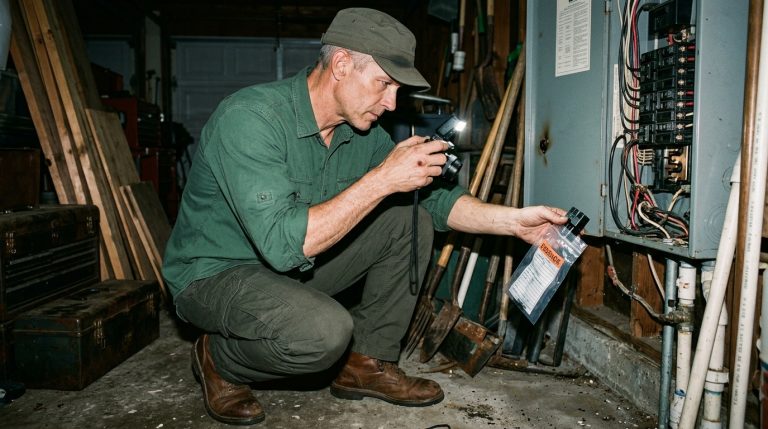
I crouched, drawing my camera. It was a boot print, large and industrial, pressed deep into the sediment. It didn’t belong to the crew that had been here before. It was isolated, positioned near the marker flags I’d placed the day before—flags that had been uprooted and discarded in the brush. Someone had been back here since the trespass, walking the line with a surveyor’s intent.
I took the shot, the shutter’s mechanical click sounding unnaturally loud in the hollow silence. They were checking their work. They were worried that the cut wasn’t deep enough, or perhaps they were measuring how much of the creek they could legally choke before the county took notice.
My hands were steady, but the cold had reached my bones. I moved toward the broken gate, where the chain hung like a severed nerve. I framed the damaged post, then zoomed in on the splintered wood where the bolt cutters had bitten deep. Everything was documented. Everything was mapped.
A low, guttural roar drifted through the trees from the subdivision side. A truck—a flatbed, loaded with heavy, treated timber. They were coming back.
I retreated into the shadow of the thicket, my heart keeping a slow, rhythmic pace. I didn’t need to confront them. I needed to see them. I watched as the flatbed crawled down the lane, a man in a neon vest jumping out to scout the path. He didn’t look like a construction worker; he moved with the arrogant, clinical precision of someone who believed they were doing maintenance on their own property.
He stopped exactly where I had been kneeling moments ago. He stood there for a long beat, his eyes scanning the mud. I held my breath, the scent of wet iron and pine filling my lungs. He reached down, picked up one of my discarded survey flags, and snapped the plastic stick in half. A simple, petty act of erasure.
He signaled back to the driver. The flatbed lurched forward, the heavy wheels grinding into the churned-up earth.
Therefore.
They were moving forward because they believed no one was watching.
But.
They had no idea that every movement they made was being logged into a digital ledger that was already moving toward the county engineer’s desk.
I watched them begin to unload, the heavy clatter of treated posts hitting the dirt signaling the start of their “safety improvements.” Each post was a new piece of evidence, a physical manifestation of their bad faith. I recorded the truck’s plate, the company logo on the door, and the compliance man standing off to the side, his phone pressed to his ear, his face tight with the same strained, performative authority I’d seen on Pamela.
My phone screen glowed. An incoming email from the county clerk. Permit status: Still empty. Nothing pending, nothing approved.
I tucked the phone away and backed deeper into the treeline. I had enough for the foundation. Now, I needed to see how they would try to justify the placement of the posts. I tracked their movements through the leaves, noting how the compliance man walked the creek edge, pointing, gesturing, trying to force the geography to conform to his drawings. He was trying to solve a drainage problem with wood and ego.
The cold began to seep through my jacket, but I didn’t leave. I remained still, a shadow among the trees, watching them carve their error into my land. They were digging a hole for themselves, and they were doing it with such frantic, arrogant speed that they didn’t even notice the camera lens tracking their descent.
The foreman barked a command, and the excavator started up, its arm reaching toward the creek bed. I captured the bucket’s first bite, the muddy spray, the intentional destruction of the riparian buffer. It was reckless. It was illegal. And to the county, it would look like a death warrant for the project.
I let them work. Every minute they spent here was a minute of recorded evidence I could feed into the injunction. I watched until the shadows began to stretch, then turned and moved silently toward the tree line, leaving them to their work. I had seen enough to map the next move. They wanted to build a barrier? Let them. I would build a case so heavy it would collapse the entire subdivision board under its own weight.
I walked back to my truck, the silence of the woods returning the moment I stepped away from their noise. I didn’t look back. I had the sequence. Now, I just had to wait for the system to catch up to the reality I was building.
CHAPTER 4: THE INFILTRATION
The air in the county records office was devoid of moisture, a sharp contrast to the damp, churned mud I had left behind. The scent of ozone and dry toner triggered a phantom ache in my shoulder—a relic of a case from ten years ago where a developer had tried a similar gambit, using a chain, a bulldozer, and a complete disregard for the surveyor’s original plot. Back then, I’d been the one arriving in a patrol car, my badge providing the shield. Today, I was here as a private citizen with nothing but a thumb drive and a cold, disciplined fury.
I sat at a cramped, laminate-topped desk, the monitor glowing with the raw, unfiltered data of Blackwood Estates’ original annexation file. Beside me, my own laptop was open, the connection bridged to the clerk’s server through a secure, non-public port. I was looking for the “forgotten” files—the drafts that never made it into the public-facing record.
The hum of the office—the clatter of a heavy-duty copier, the rhythmic tap of a clerk’s keyboard—felt distant, like sound coming from under water. My eyes darted across the rows of metadata, searching for the specific timestamp that would bridge the gap between Pamela’s “emergency” declaration and the actual board vote.
I found the folder: Internal_Board_Comm_Drafts. It was a repository of mess. Draft invoices, half-finished emails, and internal memos that were never meant to see the light of day. I started with the invoice I’d already suspected, the one with the contractor’s notes attached. I double-clicked. The file opened, but the metadata pane was empty.
I paused, my breath hitching. Empty.
They hadn’t just deleted the file; they had scrubbed the container. This was a level of technical sophistication that didn’t match an HOA board. It matched someone who knew how to hide evidence in the infrastructure of the system itself. This wasn’t just Pamela; this was a deliberate, institutional effort to ensure that if the fence ever came down, the paper trail leading back to the original drainage failure would vanish with it.
I leaned back, the plastic chair creaking. I closed my eyes for a second, letting the tension in my neck subside.
CHAPTER 4: THE DIGITAL SEEP
The dashboard clock read 02:44 AM. The world outside the windshield was a void of black trees and silvered mist, but inside, the screen provided a harsh, unflattering clarity. I sat in the driver’s seat, the steering wheel cold against my palms, staring at the file I’d pulled from the board’s unsecured server.
The invoice draft was a mess of internal notes and contradictory dates, but it was the metadata that held the edge. Created by “Admin_01,” modified by “P_Wexler,” and accessed—twice—by a user ID that didn’t appear on any of the public board rosters.
I scrolled through the file properties. The ‘accessed’ timestamps were frantic, occurring in the dead of night, just hours before Pamela’s first “Courtesy Compliance” packet hit my mailbox. Whoever this was, they had been watching the board’s internal moves with the same tactical precision I was now applying to the defense of my land. They weren’t just a leak; they were a counter-force.
I felt a prickle of static in the back of my neck. I had entered this property alone, believing I was fighting a localized dispute against a single ego-driven HOA president. Now, I was looking at evidence of an internal schism that reached deep into the subdivision’s governing core. Pamela wasn’t just failing to contain the drainage issue; she was losing control of her own house.
I pulled the file onto an encrypted drive, the progress bar a thin, crawling line of white. Outside, the wind picked up, rattling the dry branches against the truck’s roof. It was a rhythmic, scratching sound, like fingernails on a chalkboard. I stayed still, letting the darkness of the cabin keep me invisible to anything that might be moving on the access lane.
Why leave the invoice for me to find? If this “Admin_01” was an ally, why didn’t they come forward?
I tapped the screen, opening the email chain attached to the invoice draft. There was a forwarded note, hidden in the BCC field: “If the owner holds firm on the fence, we push for the emergency easement. It’s the only way to divert the runoff from Phase 3.”
Phase 3. The subdivision’s latest expansion.
The pieces rearranged themselves in my mind with the cold, clicking precision of a lock. This wasn’t about an access road. This was about a massive, structural engineering failure that threatened the foundations of the homes in the new, profitable sector of Blackwood Estates. Pamela was being used as the blunt instrument to clear the path, to force the land to accept the water the developers had ignored during the original planning.
I checked the timestamp on the forwarded note. It originated from a server at the development firm, not the HOA. The board wasn’t leading the charge; they were being steered.
I leaned back, the leather seat creaking. I had my decoy secret—the board’s illegal vote and the manufactured emergency. But behind it was something much larger, a systemic corporate liability that would make the HOA’s local drama look like a footnote in a lawsuit. If I played this right, I wouldn’t just be restoring my fence. I would be providing the detonator for a collapse that would take the developer and the board down together.
A pair of headlights swept across the canopy of trees ahead, a sudden, blinding flash of white that hit my mirrors. I didn’t reach for the ignition. I lowered my head, the brim of my cap hiding my face, and watched as a dark sedan slowed to a crawl at the entrance of the gate.
It wasn’t a contractor’s truck. It was a luxury model, silent and heavy. It stopped right where the bolt cutters had done their work. The driver’s window rolled down, and for a long moment, the person inside just looked at the damage. The silhouette was too thin to be the foreman, too composed to be a panicked resident.
They weren’t here to work. They were here to audit the progress.
I held my breath, my hand hovering over the camera mounted on the dash. I didn’t need to be seen. I needed to see. The driver turned their head, scanning the trees, their face partially illuminated by the dashboard glow. It was a man, middle-aged, his features sharp, focused, and utterly devoid of the frantic energy that defined Pamela’s crew.
He didn’t get out. He simply looked, nodded once—a gesture of grim professional approval—and rolled the window back up. The sedan pulled away, the taillights fading into the mist as quickly as they had appeared.
I sat in the silence, the weight of the moment pressing down. They were already planning the next phase of the encroachment. My “evidence” was a start, but it was nowhere near enough to stop someone who was clearly operating with the backing of the development firm itself.
I put the truck in gear and started the engine, the low rumble of the motor barely audible over the wind. I didn’t head for the main road. I drove slowly, staying off the pavement, maneuvering the truck into a dense cluster of oaks near the property line. From here, I could see the entire lane without being spotted.
I was no longer just the owner of a parcel of land. I was the observer of a collapse. I opened the file again and began to cross-reference the names of the board members against the development firm’s primary investors.
The screen glowed, the blue light reflecting in the dark glass of the windshield. I had names. I had a motive. And now, I had a target that was much bigger than a suburban gate.
CHAPTER 5: THE PREHEARING CALM
The rain began as a tentative tapping, then escalated into a relentless, rhythmic deluge that turned the gravel lane into a sluice. I sat in the cab of my truck, watching the wipers struggle against the sheer volume of water. The temperature inside the vehicle dropped, the air smelling of wet iron and ozone—the scent of a landscape under duress. My laptop sat on the passenger seat, the screen dimmed, the encrypted drive safely tucked into my jacket pocket.
I checked the time. The emergency injunction hearing was less than four hours away.
The truck’s tires spun once, a sharp, metallic screech of rubber on slick stone, before catching traction. I didn’t head for the main road. I navigated the familiar turns, the headlights cutting through the driving rain like twin swords. Every dip in the gravel, every narrow corner, was a familiar geography I’d defended for years. But tonight, the land felt different—volatile, ready to give way.
I reached the primary drainage point, the very edge where Pamela’s team had been excavating. The water was pooling here, thick and silt-heavy, unable to flow into the blocked creek bed. It was exactly as I’d suspected. They hadn’t just removed a fence; they had effectively built a dam. If the storm continued at this intensity, the water wouldn’t just drain; it would tear through the property, eroding the very foundation of the “emergency lane” they were so desperate to secure.
I stopped the truck. I had to see it.
I pulled on my gear—the heavy, rubberized jacket, the grip-soled boots—and stepped out into the gale. The wind whipped the rain into a stinging spray. I moved toward the burm, my footsteps heavy and measured. The sound of the rushing water was deafening, a roar that drowned out the world.
My flashlight beam sliced through the darkness, illuminating the churned mud. It was worse than I’d imagined. The “safety improvements” had created a funnel. The water was surging over the makeshift posts, carving a fresh, deep channel that led directly toward the Blackwood Estates’ border. They had ignored the topography, and now the topography was responding with force.
I held the camera up, shielding it from the rain. I needed the shot of the water breaching the boundary. It was the physical proof that their work wasn’t safety; it was environmental sabotage.
Crack.
A limb from a nearby oak, heavy with the weight of the storm, snapped and plummeted into the creek bed, inches from where I stood. I didn’t flinch. I waited for the wood to settle, then captured the footage: the water rushing over their installed posts, the mud collapsing into the current, the total, visible failure of their design.
This was the “failure” I needed for the hearing. It was more than a legal argument now; it was a physical manifestation of their arrogance.
I turned back toward the truck, the rain soaking through my jacket, the cold seeping into my skin. Every step was a tactical decision. The mud pulled at my boots, wanting to hold me here, but I broke free, my movements precise. I reached the driver’s door and climbed in, the interior warm and dry, a sterile, quiet sanctuary.
I set the truck into gear and pulled onto the road. The storm was worse now, the road a series of black ribbons through the dark. I didn’t drive fast. I drove with the focus of a man who knew that one wrong turn could lose the case.
My phone chimed—a notification from the clerk. Hearing confirmed: 9:00 AM. Courthouse, Room 402.
I took a deep breath. I had the files. I had the photographic evidence of the storm damage. And more importantly, I had the internal metadata that linked the board’s panic to the developer’s secret agenda.
Pamela wanted to fight this as a neighborly dispute over property lines. I was going to hand the judge a folder that defined it as a case of criminal negligence and systemic fraud.
I glanced at the passenger seat. The laptop was dark, but the data it held was a slow-acting poison for the HOA’s defense. I felt the familiar, cold satisfaction of the hunt. I wasn’t just defending my land; I was using their own tools—their greed, their speed, their disregard for the natural world—to build their trap.
The storm roared around me, a chaotic, blind force, but behind the wheel, I was the only thing that was still. The courthouse was waiting, and I had everything I needed to make sure the truth was heard, loud and undeniable, regardless of how much noise they tried to make.
The road ahead was clear, a long, winding stretch of asphalt disappearing into the dark. I accelerated, the hum of the engine a steady, grounding vibration. The “Inhale” of the preparation was over. Now, I was moving toward the exhale—the confrontation.
The rain began to let up, leaving behind a world that was slick, dark, and waiting for the morning. I kept my eyes on the horizon, the plan etched in my mind, the evidence secure. Everything was in place.
CHAPTER 6: THE HEARING
The lobby air was dead—recycled, thin, and smelling faintly of industrial wax. I walked toward Room 402, my boots making no sound on the polished floors. My internal clock was ticking. I had four hours of footage, three months of permit logs, and the damning metadata chain tucked into the folder, but as I rounded the corner, the sight of Pamela Wexler stopped me cold.
She wasn’t alone. She was standing with the man I’d seen in the sedan—the driver from the gate. They were whispering, their heads tilted together in a practiced, intimate display of shared confidence. The man leaned in, handing her a leather-bound folio that looked more like a judge’s docket than an HOA compliance file.
I stopped behind a pillar, watching them. The man straightened, his suit sharp, his posture devoid of the suburban anxiety that usually permeated Pamela’s camp. He wasn’t a board member. He was a corporate fixer, the kind of person who specialized in making civil disputes disappear before they could reach a real courtroom.
I felt a sudden, sharp coldness in my chest. If he was here, it meant the board wasn’t just losing control—they were being absorbed.
I walked into the room, my presence a deliberate ripple in the stagnant air. The hearing officer, a man with a tired face and eyes that had seen too many petty boundary disputes, gestured for us to take our seats. Pamela looked up, her expression shifting instantly into the mask of the put-upon, aggrieved neighbor. The Fixer didn’t look at me at all; he simply sat, opened his folio, and began to arrange his pens with a precision that bordered on the ritualistic.
The hearing began with the expected rhythm: the HOA lawyer presenting the “safety” narrative, their voice rising and falling in perfect cadence. They painted me as the obstructionist, the man who stood in the way of community drainage—a minor, local nuisance.
I kept my gaze fixed on the Fixer. He was the key. While the lawyer droned on about “emergency egress,” he was sliding documents across the table to the hearing officer—papers that were stamped with the developer’s seal, not the HOA’s.
It was a setup. The hearing officer wasn’t going to rule on the evidence; he was going to rule on the “administrative convenience” of the development firm.
When it was my lawyer’s turn, he stood. He was good—measured, concise, and armed with the permit logs. But as he started to present the timeline of the board’s post-dated vote, the hearing officer interrupted.
“Counsel, we are here for an emergency access determination, not a review of internal board procedures,” the officer said, his voice flat. He didn’t even look at the evidence. He glanced at the Fixer, who gave a nearly imperceptible nod.
I felt the ground shift. The “decoy” secret—the illegal vote—was being dismissed as irrelevant. They were closing the trap.
I leaned forward, my hand resting on the folder. I could see the path they were clearing: a ruling that would mandate “emergency access” regardless of the ownership, based on a fabricated need for storm-water management. Once the ruling was in place, the developer could bypass the county entirely.
I caught the eye of the Fixer. He finally looked at me, a brief, cold smile flickering across his lips. He knew I had the evidence, and he knew it wouldn’t matter. The system wasn’t broken; it was operating exactly as they’d engineered it.
I didn’t wait for my lawyer to finish his argument. I stood up. The sound of the chair scraping against the floor caused a dozen heads to snap in my direction.
“Your Honor,” I said, my voice quiet but cutting through the hum of the room. “The board’s procedure is the only relevant issue. Because the board didn’t vote on an emergency. They voted on a liability transfer to cover a systemic drainage failure in Phase 3 of the development.”
The room went deathly still. The Fixer’s hand paused in the air.
“That is a reckless accusation, Mr. Walker,” the HOA lawyer spat, his face flushing.
“It’s not an accusation,” I said, opening the folder and sliding a copy of the internal metadata toward the hearing officer. “It’s a timeline.”
The Fixer’s eyes darted to the folder. He wasn’t smiling anymore. He knew what that metadata contained: the link between the board’s desperation and the developer’s secret agenda.
The hearing officer looked down at the paper, then back at me, his fatigue replaced by a sudden, sharp wariness. He picked up the page, the sound of the paper sliding across the wood amplified by the silence. He read it, then looked at the Fixer, then back to the page.
The room held its breath. I had forced the issue, shattering their curated narrative. But as I watched the officer’s hand tremble slightly, I realized the gamble was far from won. They had the power, but I had the truth—and the truth was now the only thing left on the table.
CHAPTER 7: THE CRACK IN THE FOUNDATION
The silence in the room wasn’t empty; it was pressurized. The hearing officer’s gaze shifted from the internal metadata back to the Fixer, whose composure remained ironclad, though a single, rhythmic twitch in his jaw betrayed the internal temperature of the room.
“Mr. Wexler,” the officer said, his voice dropping an octave, “this metadata suggests a direct link to the developer’s internal servers. How do you account for this document being accessed by an external development account two hours before the board’s emergency meeting?”
The Fixer stood, slowly, deliberately. He didn’t look at the officer. He looked at me, a brief flash of something—contempt, maybe, or simple recognition of a match—crossing his eyes. “That, Your Honor, is a misinterpretation of a standard data-sharing protocol. Our developers often host the board’s digital assets. It’s a matter of administrative efficiency.”
“Administrative efficiency,” I repeated, the words tasting like copper in my mouth. I stood up, moving toward the table. “You mean a matter of institutional control.”
The Fixer didn’t flinch. “You are straying into speculation, Mr. Walker. The board has a mandate to maintain the community’s infrastructure. Your fence is a physical obstruction of that mandate. Period.”
Before the officer could respond, the Fixer’s phone buzzed. It was a sharp, electronic chirrup that sliced through the room. He glanced at the screen, and for a fraction of a second, his shadow—his perfect, manufactured calm—shattered. He whispered something into the phone, the words indistinguishable, but the tone was urgent, jagged. He looked up, his eyes meeting Pamela’s, and gave a sharp, imperceptible shake of his head.
He’s pulling the plug.
I moved, not toward him, but toward the side door. I had heard the board secretary’s voice in the hall moments before, frantic and muffled. I slipped past the bailiff before anyone could register the motion.
The hallway was dim, the fluorescent lights flickering. The secretary, a woman I’d seen in the background of every board meeting, was leaning against the wall, her phone pressed to her ear, her face ashen. “They’re already blaming us,” she was hissing into the receiver. “The developer’s lawyers are wiping the server. If we go down, we go down alone. He said to walk away.”
I stopped in the shadows, my presence a cold weight in the hallway. She looked up, the color draining from her face as she saw me. The phone slipped from her hand, clattering against the marble floor.
“The server,” I said, my voice low. “How long?”
“They’re scrubbing it,” she whispered, her eyes darting toward the hearing room door. “Everything. The invoices, the email chains, the drainage reports. He promised them a clean slate.”
The connection—the internal leak—was closing. If I wanted the core truth, the proof of the systemic failure that dwarfed the fence, I had to act now. I didn’t need the hearing anymore. The hearing was a distraction, a staged performance meant to keep me contained while they erased the evidence of the developer’s negligence.
I turned back toward the hearing room, but the Fixer was already there, stepping into the hall with an easy, predatory grace. He saw the secretary. He saw me. He didn’t look surprised; he looked bored.
“It’s over, Walker,” he said, checking his watch. “The injunction will be granted, the fence will be removed, and by the time you realize what’s happened, the site will be fully remediated. You’re fighting a shadow.”
“I’m fighting the architecture of a lie,” I said, my voice steady, my pulse thrumming in my ears. “And you just admitted the server was live.”
He laughed, a sound like dry gravel. “Metadata is just numbers. Numbers can be changed. Proof requires a system that still exists.”
He started to walk away, his heels clicking against the stone with rhythmic confidence. He thought he was walking toward his car. He didn’t realize he was walking toward the mistake that would define his end. I reached into my pocket, pulled out the encrypted drive I’d mirrored in the truck—a full, bit-for-bit capture of the server I’d pulled before their scrub script could finish its job.
I didn’t call the police. I didn’t call the judge. I just looked at him, my gaze unwavering.
“You’re right,” I said, holding the drive up so he could see it in the dim hallway light. “Numbers are just numbers. But they’re very hard to delete once they’ve been verified by a third party.”
The Fixer froze. The arrogance in his posture shifted, sharpened into something else—a sudden, cold realization that his exit strategy was as faulty as the drainage plan he’d tried to cover up. The hallway felt suddenly small, the air thick with the smell of ozone and approaching collapse. The game had changed. He wasn’t the hunter anymore.
CHAPTER 8: THE RETURN TO SILENCE
The Fixer looked at the encrypted drive, his face settling into a mask of hollow, brittle defeat. The arrogance that had fueled him—the assumption that he was playing a game of power against a lone, desperate man—had evaporated, leaving behind the stark, unadorned reality of a man facing professional and legal annihilation.
“You think this changes anything?” he asked, though his voice lacked the sharp, serrated edge it had carried only moments before. “The drainage issues in Phase 3 are already being mitigated. The board will be disbanded by Friday. You’re holding onto a ghost, Walker.”
“I’m holding onto the evidence of a crime,” I said, my voice quiet, devoid of the theatrics he was used to. “The drainage issue wasn’t an ‘issue.’ It was a design choice to maximize profit at the expense of the land. And that drive contains the proof that the HOA wasn’t just a partner—they were a silent accomplice.”
I walked past him, my stride long and even. I didn’t look back to see him crumble. I walked straight to the hearing room, where Pamela was still sitting at the table, her hands clutching her handbag with a death-grip. When she saw me, her eyes flickered to the Fixer, then to the empty hallway behind me. The color fled her face until she was as pale as the cream blazer she wore.
I didn’t need to say a word. I set the drive on the table, right in front of the hearing officer. “The record is incomplete,” I said, my voice carrying into the corners of the room. “The board’s vote was a distraction. This contains the reality.”
The hearing ended twenty minutes later in a flurry of hushed, panicked exchanges. The injunction was not just granted; it was expanded to a full stop-work order. County engineering arrived before I even reached my truck.
A month later, the world had settled back into its natural rhythm.
The heavy equipment had long since been hauled away, leaving behind scarred, torn earth that now looked like healing wounds. I spent that Saturday morning by the gate, the air crisp and clear, smelling of pine and the deep, clean scent of the creek. The sun warmed the back of my neck as I worked.
I took the old iron gate—the one the foreman had tried to mangle—and began the repair. The hinge was stiff, rusted, and defiant, but I took my time, cleaning away the grit, re-seating the pin, and applying a heavy coat of fresh oil. It was a slow, methodical process, a physical meditation that allowed me to feel the restoration of the boundary in every movement.
The creek ran clear, the water tumbling over the rocks with a low, melodic murmur. It was the sound of a world that had reclaimed its own logic.
My wife walked up the gravel path, a basket of sandwiches over her arm. She didn’t say a word, just watched me work. She knew that this wasn’t about the fence; it was about the peace that came with knowing the ground you stood on was unequivocally your own. She sat on the bank, watching our kids skipping stones into the basin, their laughter echoing against the trees, clean and unburdened by the politics of the subdivision next door.
I clicked the gate shut. The iron latch engaged with a solid, resonant thunk—a sound of absolute finality.
I sat down on the grass, the warmth of the sun soaking into my clothes, and looked at the parcel. The land was quiet. The orange notice, once a jagged irritant, had been replaced by a simple, hand-painted ‘Private Property’ sign I’d set back at the line. It wasn’t an act of aggression; it was an act of ownership.
I thought of the Fixer, the board members, and the developer whose plans had dissolved into a mess of digital static. They had tried to build their success on a foundation of manufactured emergencies and borrowed land, never realizing that the land itself had a memory.
I picked up a flat stone and sent it skipping across the surface of the creek. It hit the water four times before sinking into the deep, quiet dark of the basin. The ripples expanded, pushing against the banks, distorting the reflection of the trees for a heartbeat before fading back into stillness.
“You look like you’re home,” my wife said, leaning against my shoulder.
“I am,” I replied.
There were no more files to open, no more records to cross-reference, and no more voices to monitor. For the first time since the day the first post was driven into my land, there was nothing to calculate. There was only the creek, the wind in the trees, and the long, slow peace of the afternoon.
The struggle had been loud, frantic, and exhausting, but the silence that followed it was the deepest, most satisfying thing I had ever known. I closed my eyes and listened to the land breathe, a steady, rhythmic pulse that finally, perfectly, belonged to no one but the earth itself.